

Overview
Hands-On with the Canon 90D and M6 Mark II |
by Mike Tomkins
Mirrorless might get all of the buzz nowadays, but a quick glance at the sales numbers is enough to tell you that DSLRs are still the bread and butter of the interchangeable-lens camera market. Globally, SLR cameras made up almost 2/3 of all interchangeable-lens camera sales from Japanese manufacturers last year. And in the Americas that gap is even greater, with almost three out of every four ILCs sold still featuring a reflex mirror.
Yet while the mirrorless camera market has been growing more competitive each year, the DSLR market is dominated by just two brands: Canon and Nikon. (Pentax, Sigma and several medium-format manufacturers still make DSLRs too, but their sales are relatively miniscule by comparison to these two brands.) Clearly, then, the SLR market remains important to Canon, and to its customers as well.
Blows the 7D II away for resolution and rivals its flagship burst performance, too

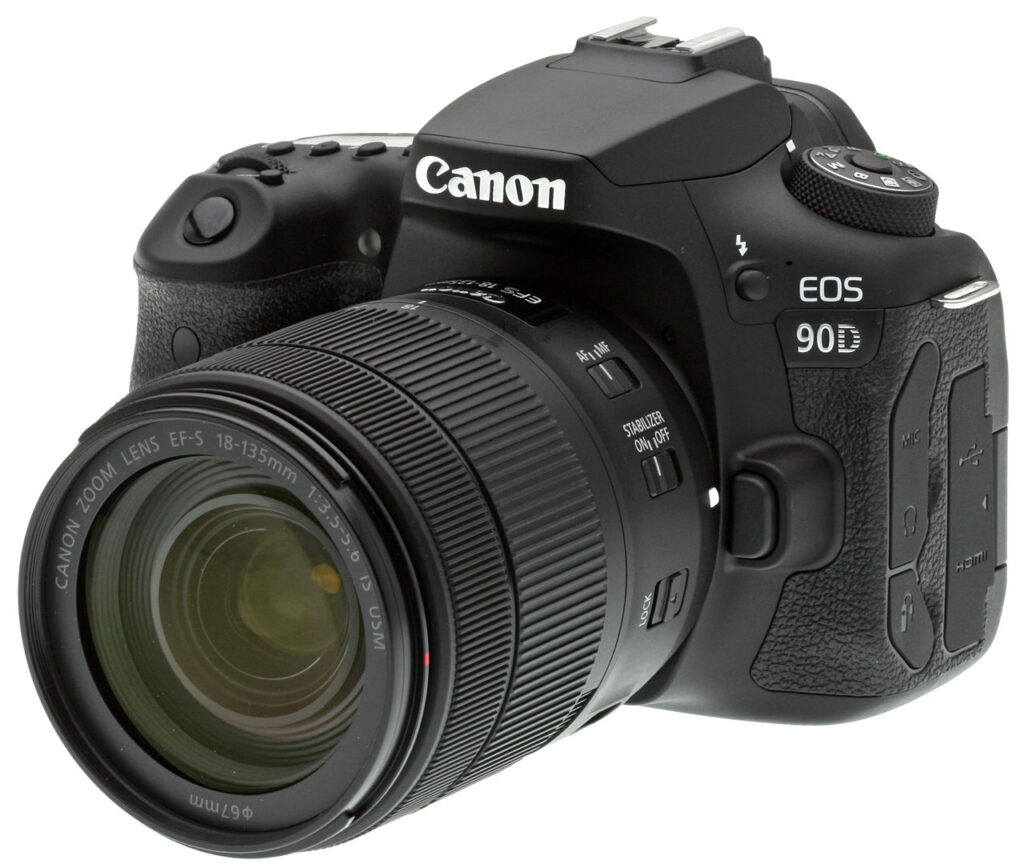
And now, the Canon EOS 90D arrives as the latest addition to the company's DSLR lineup. A replacement for the rather long-in-the-tooth 80D, which launched some 3.5 years ago now, the 90D brings with it a brand-new 32.5-megapixel, sub-frame (APS-C) imaging pipeline that's at once higher resolution, and yet can shoot significantly faster for far longer. In fact, it can now not only match the 10 frames-per-second burst capture performance of the company's APS-C flagship 7D Mark II, and simply demolishes it in terms of outright resolution while retaining similar burst-capture buffer depths, for raw shooters at least.
And that's not all. The EOS 90D also adds support for 4K, HDR and high frame-rate video capture, and boasts a speedier UHS-II compliant SD card slot, as well. It also promises much better battery life, and there are plenty of other more minor improvements over the old model, too. There are also a couple of areas in which the 80D bests the 90D just slightly, such as its auto popup flash strobe, its fractionally faster startup and ability to function in higher ambient temperatures up to 113°F (45°C), versus the 104°F (40°C) limit of the 90D.

The same sensor as in the mirrorless EOS M6 II, but with important differences
The brand-new 32.5-megapixel imaging pipeline which makes its debut in the Canon 90D is shared with the simultaneously-announced Canon M6 Mark II. If you're in that fast-growing minority which prefers the compact nature and live view-centric design of a mirrorless camera to the handling and optical viewfinder of a DSLR, then you'll want to consider that camera instead. (Note that an EVF accessory is available for the M6 II, but will add to both its cost and bulk.)
Doing so will score you even greater burst-shooting performance at a manufacturer-rated 14 fps, but Canon tells us that the dedicated AF sensor of the 90D should still have a slight edge when it comes to tracking performance, so depending on your subjects and focusing setup that performance gap may well be narrower.
Obviously, you'll also find a much less generous handgrip and fewer physical controls on the M6 II, and the 90D will also give you a more versatile tilt/swivel-articulated LCD monitor, in place of the M6 II's tilt-only screen. And the 90D will also accept both EF and EF-S mount lenses natively, whereas the M6 II works only with the much smaller EF-M lens lineup out of the box, and requires a pricey and somewhat bulky adapter to shoot with EF or EF-S lenses.

A modestly restyled body adds one new control (but there's a catch)
Comparing the Canon 90D side by side with its predecessor, the two cameras look very similar indeed. The new dust and splashproof body is just fractionally wider and less deep, and a little bit lighter too, but you're not likely to notice either change unless comparing them carefully against each other. Their control layout is almost identical, too, although there are a couple fewer positions on the 90D's mode dial, and it adds one new control on the rear panel, with a couple of others moving positions a bit to make room for it.
On the mode dial, you'll no longer find a Flash Off position, as the flash strobe can no longer be raised automatically. Instead, there's a new mechanical release button in place of the 80D's electronic release button, and to prevent flash you simply lower it against the top of the pentaprism viewfinder housing. And the 80D's Creative Auto position is also absent from the Canon 90D's mode dial.
Moving to the rear of the camera, you'll find that as well as the existing multi-controller pad which still sits inside the quick control dial, there's also a new joystick control -- but sadly, there's a gotcha here. This newly-added control serves as a duplicate of the multi-controller pad. That is to say that however you configure one of these controls, the other will share the same function, which seems like a bit of a missed opportunity for customization.
To make space for the new joystick, the quick control button has taken over the spot previously occupied by the playback button. This, in turn, has jumped down alongside the delete button, which along with the lock lever has moved rightwards a little to free up room for its new neighbor.

A deeper dive into the new imaging pipeline in the Canon 90D
We mentioned near the outset of this article that the Canon 90D sports a newly-developed, 32.5-megapixel, APS-C sized image sensor which is identical to that used in the mirrorless EOS M6 II. Compared to the 80D's 24.2-megapixel sensor, the new chip is just fractionally smaller but has significantly higher resolution.
The total pixel count is 34.4 megapixels, and individual pixels measure 3.2μm on each side, versus 3.72μm on the 80D's sensor, giving them a surface area that's about 1/4 smaller than before. The sensor has a 3:2 aspect ratio and Bayer RGB color filter array, and is overlaid with an optical low-pass filter that helps prevent moire and false color artifacts at the expense of some finer image detail.
In concert with a DIGIC 8-class image processor which debuted with the EOS M50 in early 2018, the Canon 90D promises a huge step forwards in performance. (By way of comparison, the 80D was based around a DIGIC 6 chip, meaning that the 90D has skipped the DIGIC 6+ and DIGIC 7 generations entirely.)

A new C-Raw file format promises raw burst depths that trounce the 7D II
Thanks to the new sensor and processor pairing, the Canon 90D can shoot at up to 10 frames per second regardless of whether autofocus is active between frame, matching the performance of the APS-C flagship EOS 7D II and besting the 80D's 7.0 fps with focus locked by a country mile. And it can do even a little better in live view mode with autofocus disabled at 11 frames per second. (Enable AF with live view and the rate falls to 7 fps, though.)
And despite its far higher resolution, it actually manages to roughly equal Canon's manufacturer-rated raw burst depths for the 7D II and 80D, with the 90D promising to offer as many as 25 raw frames in a burst. (Canon technically rated the 7D II for 24 raw frames to SD card, or 31 frames to UDMA7 CompactFlash, but we couldn't match that latter figure in our own testing and scored 26 frames with a UHS-I SD card, which is pretty similar to the rating of the 90D here.)
And you can get even greater raw buffer depths if you're willing to switch to Canon's technically lossily-compressed C-Raw mode, which is a new addition in the 90D. We say "technically" because in our experience of past C-Raw compatible models, we've found it challenging to spot much difference from standard raw other than the significant reduction in file sizes (and attendant increase in raw burst depths). Shooting in C-Raw format, Canon predicts as many as 39 raw frames in a burst.
As for JPEG shooters, with a UHS-II SD card Canon predicts as many as 58 large/fine JPEG frames in each burst. The 7D II, in fairness, is in a class of its own here with a manufacturer-claimed 130 large/fine frames in a burst to SD card, and over a thousand if shooting to UDMA7 CF. And even the 80D is manufacturer-rated for 110 JPEG frames in a burst to UHS-I. But then, those cameras also have about one-third lower resolution than does the 90D. Still, if you're a JPEG shooter given to long bursts, you're going to notice a reduction in burst depth.
(Click here to see our Canon 90D lab performance testing results.)

A broader sensitivity range, despite the significant resolution increase
Like the 80D before it, the Canon 90D has a native sensitivity of ISO 100-equivalent. At the other end of the scale, though, the 90D can roam all the way up to ISO 25,600 without needed to enable an expanded sensitivity range, where the 80D topped out at ISO 16,000 unless ISO expansion was enabled and couldn't go beyond ISO 25,600 even if it was. Expand the range to its maximum and the Canon 90D will now reach ISO 51,200-equivalent.
Dedicated autofocus similar to the 80D, but there are some improvements
Although its dedicated autofocus sensor is unchanged since that of the 80D, the 90D does bring with it an uprated Dual Pixel CMOS AF system using a vast array of on-chip autofocus points covering most of the sensor surface.
The standalone phase-detection AF sensor underlies a 45-point, all cross-type AF system with microadjustment support. Of those 45 points, 27 of them are functional to f/8, including nine cross-type points. And in concert with an uprated metering sensor which we'll be coming to in a moment, the Canon 90D can also offer EOS iTR face-priority autofocus even when shooting through the optical viewfinder.
Shoot in live view mode, though, and you'll have access to a whopping 5,481 manually-selectable AF points covering 100% of the frame height, and 88% of its width as well. That means you can position your subject almost anywhere within the image frame, and still get phase-detection AF for a quick and accurate focus lock.

A much higher-res metering sensor for better exposure and iTR autofocus
In place of the 63-zone, 7,560 pixel metering sensor in the 80D, the Canon EOS 90D sports a new 216-zone, 220,000-pixel metering sensor. This much higher resolution is not only useful for more accurately determining the best exposure for your image, but also enables the aforementioned EOS iTR face-priority AF function.
In live view mode when using the main image sensor for metering, the EOS 90D offers 384 (24 x 16) zones. By way of comparison, the 80D yielded 315 zones when shooting with live view.
A new electronic shutter and a bunch of added creative tools, too
Although its mechanical shutter mechanism looks to be much as in the 80D, with a top shutter speed of 1/8,000-second, the Canon 90D can manage even faster with an electronic shutter. Enable this option, and you'll gain access to a top speed of 1/16,000-second.
While most exposure and creative options are pretty similar to its predecessor, there are several new additions. First of all, there are two new drive modes, for continuous panning and continuous self-timer, respectively. There's also a new focus bracketing tool, as well as additional scene modes for group photos and panning shots.

With the exception of the aforementioned manual popup mechanism, the built-in flash is unchanged from that in the 80D, with a guide number of 39.4 feet (12m), 28mm-equivalent coverage and +/- 3EV of flash exposure compensation in 1/2 or 1/3 EV steps. The built-in flash can also act as an autofocus assist lamp, unless an external strobe with AF assist beam is attached, in which case that will be used instead.
Much the same viewfinder and LCD panel as in the previous generation
The Canon 90D's thru-the-lens optical viewfinder and LCD panel both look to be much the same as those in the 80D, although specs do differ just slightly for the LCD panel size, suggesting the specific panel used may have been changed. The optical viewfinder has 0.95x magnification and a 22mm eyepoint from the viewfinder lens, and has a manufacturer-rated 100% coverage horizontally and vertically for 3:2 aspect ratio images. A -3 to +1m-1 diopter correction function is provided to cater to those with less-than-perfect eyesight.
And beneath the viewfinder, you'll discover a 3.0-inch, 3:2-aspect LCD monitor with a resolution of 1.04 million dots. This, too, has a claimed 100% coverage, as well as wide 170-degree viewing angles horizontally and vertically. An anti-smudge coating is overlaid on the cover glass, as well as a touch-sensitive overlay that allows the display to be used to select subjects, and so on. There's also a seven-step manual brightness control, and the screen is mounted on a tilt/swivel articulation mechanism which allows viewing from a wide range of angles.

4K, Full HD, HDR and high frame-rate video
Video is another area that's received plenty of attention since the 80D, although there's one rather disappointing omission. The Canon 90D can now shoot not just Full HD video, but also 4K ultra high-definition footage too, entirely in-camera. And better still, there's not a mandatory crop associated with 4K video. Instead, you can shoot using the full sensor width, although it isn't yet clear if pixel skipping or binning techniques are employed.
At launch, the 90D did not offer the cinematic 24 frames per second capture rate for both 4K and Full HD footage, however with a firmware update released on October 31, 2019, Canon added a 24p option for 4K and Full HD video. In addition to 24p, you can use 25 or 30 frames per second at 4K, and 50/60 or 100/120 frames per second at Full HD. The high frame-rate 120 fps option would allow up to a 5x slow-motion effect while still providing a 24 frames per second playback rate. It's also possible to shoot high dynamic range movies entirely in-camera, with the 90D varying exposure as necessary to capture highlights and shadows on alternating frames, with the result being stitched in-camera to create a Full HD HDR clip with a playback rate of 30 fps.
Dual Pixel CMOS AF is supported during video capture except for high frame-rate movies, and recording time is normally limited to 29:59 but capped at 7:29 for high frame-rate clips.
Oh, and as well as any lens-based image stabilization on offer, the Canon 90D also sports a digital IS function specific to movie capture. There are two strengths on offer; with the standard strength there's a 90% crop for HD, Full HD or 4K content, or a 70% crop when in enhanced mode. If shooting cropped 4K movies in the first place, this increases the overall crop to 75% for standard digital IS, or 58% in enhanced mode.
Wi-Fi is now supplemented by Bluetooth, and there's UHS-II SD support too!

The 80D already offered in-camera wireless communication, but in the Canon 90D the Wi-Fi radio is now supplemented by a Bluetooth one. This is a pretty common setup these days, though, and offers low-speed, low-power communication via Bluetooth to your Android or iOS phone, and then raises a high-speed (but more power-hungry) Wi-Fi connection automatically as needed to transfer your creations to the phone or to control the camera remotely.
As well as its wireless communications options, the EOS 90D also includes both a Micro-B USB connection for USB 2.0 data transfer, and a Type-C HDMI connection for high-definition video output.

As mentioned previously, images and movies are still stored on a single SD card slot, but it now includes support not just for higher-capacity SDHC and SDXC cards, as well as higher-speed UHS-I types, but also for the significantly faster UHS-II cards, which add a second row of electrical contacts for greater bandwidth.
Power still comes courtesy of an LP-E6N (or, if you have older cells you want to keep using, an LP-E6) battery pack. Battery life looks to be significantly improved, though. Where the 80D was CIPA-rated for 960 shots on a charge through the viewfinder, or 300 frames in live view mode, the 90D simply blows this out of the water. Canon predicts 1,300 frames through the viewfinder on the same battery pack, or 450 frames when using the LCD monitor. That's a one-third improvement through the viewfinder, and a 50% improvement when using live view!
The Canon 90D is compatible with the same external BG-E14 battery grip as the 80D and 70D, and with dual LP-E6N batteries installed, battery life is roughly double the above figures.

Canon 90D price and availability
The Canon 90D went on sale in mid-September 2019 in the US market, with a list price of about US$1,200 body-only, $1,350 with an EF-S 18-55mm f/3.5-5.6 IS STM kit lens, and $1,600 if you opt instead for an EF-S 18-135mm f/3.5-5.6 IS USM kit lens.
In The Box
The Canon 90D + EF-S 18-135mm f/3.5-5.6 IS USM Kit retail box (as reviewed) contains the following items:
- Canon EOS 90D DSLR Camera Body
- Canon EF-S 18-135mm f/3.5-5.6 IS USM Lens
- Canon LP-E6N Lithium-Ion Battery Pack (7.2V, 1865mAh)
- Canon LC-E6 Charger for LP-E6 Battery Pack
- Canon Eyecup Eb
- Canon RF-3 Body Cap for Canon EOS Cameras
- EC2 Wide Camera Strap
- Limited 1-Year Warranty
Performance
Timing and Performance
Excellent performance for its class.
| Startup/Play to Record | ||
|---|---|---|
| Power on |
~0.4 second
|
Time it takes to turn on and capture a shot. |
|
Play to Record, |
~0.2 second
|
Time until first shot is captured. |
Powerup to first shot and switching from Play to Record mode and taking a shot were quite fast, as expected for a DSLR.
| Shutter Response (Lag Time) EFCS (default) / Electronic Shutter |
||
|---|---|---|
|
Full Autofocus |
0.130 / 0.231
second |
Time from fully pressing shutter button to image capture. All AF timing measured with a Canon EF-S 18-135mm f/3.5-5.6 IS USM kit lens at ~50mm. |
|
Full Autofocus |
0.162 / NA
second |
Time to capture while forcing flash to fire. Preflash metering pulses from flash often slow shutter response. |
|
Manual Focus |
0.080 / 0.079
second |
For most cameras, shutter lag is less in manual focus than autofocus, but usually not as fast as when the camera is "prefocused". |
|
Prefocused |
0.057 / 0.056
second |
Time to capture, after half-pressing and holding shutter button. |
|
Prefocused |
0.056 / 0.106
second |
Time to capture, after half-pressing and holding shutter button. |
In terms of the Canon EOS 90D's ability to determine that it's properly focused when shooting the same target multiple times (with no change of focus setting between iteration, to remove the impact of lens AF speed), its full autofocus shutter response was pretty fast for a DSLR. Using the Canon EF-S 18-135mm f/3.5-5.6 IS USM kit lens, we measured only 0.130 second for full AF lag using single point (center) AF-S in the default electronic first curtain shutter (EFCS) mode. Full AF shutter lag with the internal flash enabled increased to 0.162 second to account for the pre-flash metering.
Shutter lag using manual focus was lower at 0.080 second. When "prefocusing" the camera by half-pressing and holding down the shutter button before the final exposure, the 90D's shutter lag was quite low, at only 57 milliseconds.
As you can see, switching to the all-electronic shutter (Silent mode) yielded slower full AF lag times, but didn't have much impact on manual focus and prefocused shutter lag. Note that flash is not supported.
In Live View mode, prefocused lag remained about the same in EFCS mode, but increased to 0.106 when using the all electronic shutter.
To minimize the effect of different lens' focusing speed, we test AF-active shutter lag with the lens already set to the correct focal distance.
| Cycle Time (shot to shot) | ||
|---|---|---|
|
Single Shot mode |
0.24 second
|
Time per shot, averaged over a few frames. |
|
Single Shot mode |
0.31 second
|
Time per shot, averaged over a few frames. |
|
Early shutter |
No
|
Some cameras don't snap another shot if you release and press the shutter too quickly in Single Shot mode, making "No" the preferred answer. |
|
Continuous High |
0.10 second
(10.0 fps); 57 frames; 11.1 seconds to clear* |
Averaged time per shot, then slows down to an average of 0.32s or 3.1 fps when buffer is full with a lot of variation. |
| Continuous High |
0.10 second
(10.0 fps); 27 frames; 5.6 seconds to clear* |
Averaged time per shot, then slows down to an average of 0.26s or 3.9 fps when buffer is full with a lot of variation. |
|
Continuous High |
0.10 second
(10.0 fps); 26 frames; 6.4 seconds to clear* |
Averaged time per shot, then slows down to an average of 0.37s or 2.7 fps when buffer is full with a lot of variation. |
|
Continuous High |
0.10 second
(10.0 fps); 43 frames; 8.5 seconds to clear* |
Averaged time per shot, then slows down to an average of 0.25s or 3.9 fps when buffer is full with a lot of variation. |
|
Continuous High |
0.10 second
(10.0 fps); 42 frames; 10.1 seconds to clear* |
Averaged time per shot, then slows down to an average of 0.36s or 2.8 fps when buffer is full with a lot of variation. |
| Flash recycling |
3.2 seconds
|
Flash at maximum output. |
|
*Note: Buffer clearing times measured with a Sony 64GB SF-G UHS-II SDXC card (R:300MB/s, W:299MB/s). Slower cards will produce correspondingly slower clearing times. Slow cards may also limit length of bursts in continuous mode. ISO sensitivity and noise reduction settings can also affect cycle times and burst mode performance.
|
||
Single-shot cycle times were quite fast on average at or below about 0.3 second for best quality JPEGs or RAW+JPEG files, but it varied a lot. (Note that we no longer test single-shot mode with just RAW files, as the results are usually somewhere in between JPEG and RAW+JPEG modes.)
Continuous High mode speed was quite fast for its class. We measured a consistent 10.0 frames-per-second for all file types, matching Canon's specifications. And that's with continuous AF/AE using the optical viewfinder. A low-speed continuous mode is available as well, rated at 3 fps. The 90D also supports burst capture in Live View mode at up to 11 fps with single-shot AF and 7 fps with continuous AF.
Buffer depths were quite good with our fast Sony 64GB SF-G UHS-II SDXC card at 57 best quality JPEGs, 27 RAW or 43 C-RAW frames. With RAW/C-RAW+JPEG files the buffer depth dropped just slightly to 26 and 42 frames respectively.
Buffer clearing times were decent considering the buffer depth and resolution, ranging from 5.6 seconds after shooting a max-length burst of standard RAW files, to 11.1 seconds for best quality JPEGs. The camera lets you adjust settings while the buffer is clearing, but you can't view just-shot photos until after the buffer clears.
The Canon 90D's built-in flash took an average of 3.2 seconds to recharge after a full-power discharge, which is about average.
Bottom line, the Canon EOS 90D offers very good to excellent performance for its class, with fast startup, quick autofocus, low shutter lag, fast cycle times, very good burst speeds, generous buffer depths and reasonably quick buffer clearing. A very nice all-around performance, especially considering the resolution.
Battery
Battery Life
Excellent battery life.
| Operating Mode | Number of Shots |
|---|---|
|
Still Capture
Optical Viewfinder, CIPA standard |
1,300
|
|
Still Capture
Live View LCD, CIPA standard |
450
|
The Canon 90D uses a custom LP-E6N rechargeable lithium-ion battery for power, and ships with a dedicated battery charger. In-camera charging is not supported.
CIPA-rated battery life with 50% flash shots is excellent for a enthusiast DSLR, at 1,300 shots per charge with the optical viewfinder and 450 shots with the LCD monitor in Live View mode. Still, we recommend you pick up a spare battery for extended outings, especially if you plan on shooting movies or using Live View a lot. An optional battery grip is also available which roughly doubles battery life with two batteries installed.
The table above shows the number of shots the Canon 90D is capable of (on a fully-charged rechargeable battery), based on CIPA battery-life and/or manufacturer standard test conditions.
(Interested readers can find an English translation of the CIPA DC-002 standards document here. (180K PDF document))
Image Quality
Print Quality Summary: The Canon 90D, with its high-res 32.3MP APS-C sensor and new DIGIC 8 image processor, offers great print quality performance, particularly at lower ISOs. Up until ISO 400, the 90D can produce excellent prints with lots of detail and great colors all the way up to 30 x 40 inches. As the ISO rises past this point, we see a steady increase in fine-grained noise and a simultaneous increase in softening due to noise reduction processing. Nevertheless, you can still create fairly large prints at higher ISOs, such as a pleasing 16 x 20 at ISO 1600, and even an 8 x 10 up until ISO 6400. At ISO 25,600, the 90D's maximum native ISO, we see the limit to acceptable printmaking, with a usable 4 x 6 print. The extended high ISO of 51,200 should be avoided for printing purposes due to the high noise and general, overall softness.
 ISOs 100 through 400 all display excellent detail and very minimal noise across this ISO range, offering excellent print quality up to our maximum testable size of 30 x 40 inches. You can see very subtle noise increases at each step up the ISO scale here, but it's truly minimal and doesn't negatively impact the print size performance at all. Noise at ISO 400 is extremely minimal. The 90D's new 32.5MP sensor does a great job resolving detail here at these ISOs, though you can see the faintest hint of pixelation at 30 x 40 inches. For typical viewing distances for such a large print, this isn't an issue.
ISO 800 is where things start to get a little tricky. Image quality is still very good, but noise is now much more noticeable. Noise reduction begins to soften things a bit too much for our taste, particularly at 30 x 40 inches; it's a bit too soft now for our liking, and 24 x 36 is right on the cusp. As we found with the 80D, however, we're more comfortable calling it at 20 x 30 inches at ISO 800. At this size, noise is very well controlled, and the overall print looks great. A 24 x 36 inch print might be possible for less critical applications or with careful post-processing.
ISO 1600 images begin to display a noticeable noise increase, but as with the predecessor, there's a fine-grained appearance to the noise. NR processing is quite refined, not displaying any egregious processing artifacts while allowing a good amount of detail to come through. We do see some detail loss in our trickier test scene objects, like the notorious lower-contrast red fabric, but elsewhere detail and colors remain pleasing up until 16 x 20 inches.
ISO 3200 prints display a bit more softening due to noise now, and while a 16 x 20 might be possible here with some careful post-processing, we're calling it at 13 x 19 inches for this ISO.
ISO 6400 images display stronger noise and noise-related softening now. Higher-contrast detail is still pretty good here, as are colors for the most part, but they don't seem as rich and vibrant as with low ISO images. Prints work well here up to 8 x 10 inches, with an 11 x 14 potentially usable for less critical applications.
ISO 12,800 prints definitely show lots of softening, but the noise reduction processing (at default) does a rather nice job of reducing strong graininess. The downside is softness. An 8 x 10 might work for less important printmaking, but we'll stick with 5 x 7 inch prints at this ISO.
ISO 25,600, the 90D's maximum native ISO, works for a usable 4 x 6 inch print. A 5 x 7 is also possible for less critical applications, but the noise and noise-related softening is very strong now and is less than ideal for pleasing prints.
ISO 51,200 images are very soft and display a lot of noise, preventing us from calling this an acceptable ISO for printmaking. We recommend avoiding this ISO for all critical prints.
Below are crops from our laboratory Still Life target comparing the Canon 90D's JPEG image quality to its predecessor, the 80D. We've also compared it to a number of similar and competing models: The Canon M6 Mark II, which uses the exact same sensor and processor, as well as the competing Nikon D7500 DSLR. We've also included the Olympus E-M5 Mark III for a comparison to a recent Micro Four Thirds camera as well as one of Sony's latest APS-C mirrorless cameras, the A6400.
NOTE: These images are from best quality JPEGs straight out of the camera, at default settings including noise reduction and using the camera's actual base ISO (not extended ISO settings). All cameras in this comparison were shot with our very sharp reference lenses. Clicking any crop will take you to a carrier page where you can click once again to access the full resolution image as delivered straight from the camera.
Canon 90D vs Canon 80D at Base ISO


Canon 90D vs Canon M6 Mark II at Base ISO


Canon 90D vs Nikon D7500 at Base ISO


Canon 90D vs Olympus E-M5 III at Base ISO


Canon 90D vs Sony A6400 at Base ISO


Canon 90D vs Canon 80D at ISO 1600


Canon 90D vs Canon M6 Mark II at ISO 1600


Canon 90D vs Nikon D7500 at ISO 1600


Canon 90D vs Olympus E-M5 III at ISO 1600


Canon 90D vs Sony A6400 at ISO 1600


Canon 90D vs Canon 80D at ISO 3200


Canon 90D vs Canon M6 Mark II at ISO 3200


Canon 90D vs Nikon D7500 at ISO 3200


Canon 90D vs Olympus E-M5 III at ISO 3200


Canon 90D vs Sony A6400 at ISO 3200


Canon 90D vs. Canon 80D, Canon EOS M6 Mark II, Nikon D7500, Olympus E-M5 III, Sony A6400


Field Test Part I
Field Test Part II
On the track & around town: Examining the handling and image quality of Canon's new intermediate-level DSLR

Announced alongside the compact EOS M6 Mark II, the new 90D shares many features with this smaller, lighter mirrorless camera. Both offer the same imaging pipeline (and thus more or less identical image quality performance), both have similar performance specs and the video-shooting features have a lot in common. For photographers and videographers alike, the 90D and M6 II offer a lot of bang for the buck.
In the end, Canon is providing customers with a choice in form factor. Do you prefer a smaller, lighter, more portable camera with an electronic viewfinder? If so then grab the M6 II. If you love a bright optical viewfinder, prominent handgrip and better ergonomics with longer, heavier lenses, then the 90D is probably the better choice.
Let's take a closer look at the new Canon 90D and see how it handles and performs in the field...

While digital cameras come in all shapes and sizes nowadays, it's hard to beat the comfort and balance of a nice DSLR like the Canon 90D. This updated, intermediate-level DSLR, as the model name suggests, is the successor to Canon's popular EOS 80D, and while there are several under-the-hood improvements and new features, the exterior design remains familiar and comfortable, though there are a couple of new updates.
Let's start with the few new features on the exterior of the 90D. The first of which is a new button, or rather the reappearance of one, anyway. We finally see the return a multi-directional (aka joystick) control on the rear of the camera. The joystick control was previously featured on earlier mid-range APS-C cameras, such as the 40D and 50D, but was then removed on 60D. Canon hasn't been the most consistent when it comes to including this handy control across their camera range, though it's often found on their larger DSLRs, such as the 5D Mark IV, 7D Mark II and 1DX Mark II (yet oddly not on the 6D Mark II).
(Editor's Note: We were initially incorrect in stating which prior Canon DSLRs offered a joystick control. We've clarified wording in the above paragraph.)

Personally, I'm a huge fan of the joystick control, as it makes moving your AF point(s) easier and faster. There's a setting in the 90D Custom Function menu (C.Fn III: Custom Controls) where you can program the various buttons and dials around the camera. Within that menu, there's an option to enable "Direct AF point selection" for the joystick (and rear multi-directional pad). This lets you immediately change your AF point position without first having to press the AF point selection button on the top of the camera or on the rear of the camera (the 90D sports two such buttons). One quirk, however, is that the 90D doesn't allow you to separate the functions of the joystick control and the rear multi-directional pad. For example, if you enable "Direct AF point selection" for the joystick, the same function will be enabled on the directional pad. In practice, it's not that big of a deal, but I find it odd that the camera doesn't offer a way to program these two controls separately.
The second design change to the exterior is a deeper, more comfortable grip. The overall dimensions of the camera body aren't that dissimilar to the previous 80D camera. However, Canon's made the body near the grip slightly slimmer, which gives you more room to wrap your fingers around the grip. The result is that you have a fuller, more comfortable, and secure hold on the camera. The camera really feels excellent in the hand.

Other than these two changes, the exterior design and control layout is more or less identical to the 80D. Surrounding the handgrip area are the usual array of easy-to-reach buttons that offer quick access to primary shooting and exposure settings. Along the top of the small LCD info panel on the top deck of the camera, there are dedicated buttons for AF mode, Drive mode (Single-shot, Burst, self-timer, etc.), ISO level, and Metering mode. In front of the top control dial, there is a dedicated AF point selection button, and on the top-rear corner sits a secondary AF point selection button. Oddly, even though there are duplicate buttons, neither of these two AF point selection buttons can be customized to any other function.
On the rear of the camera, again, the user experience is extremely similar to that of the 80D. Apart from the new joystick control, the layout of the control and buttons are nearly identical to the predecessor. The Playback button is moved down to the bottom next to the Delete button to make room for the joystick. Other than that, things are very familiar. The optical viewfinder is the same as the last model, offering approximately 100% coverage and about 0.95x magnification (0.59x in 35mm eq). The articulated rear display, too, is the same 3-inch, touchscreen display that uses a 1,040,000-dot LCD panel. As with the previous model, the articulation and overall build quality of the rear monitor feel sturdy and well-built.
Overall, the handling characteristics of the 90D are pleasing and familiar -- a large grip, a clear optical viewfinder, and a healthy array of physical controls and dials. The 90D feels great in the hand, with comfortable yet robust build quality (that is weather-sealed to some degree) with plenty of easy-to-use controls. It's a classic Canon DSLR experience.

Image Quality
Now, on the image quality side of things, this is where the big change lies when you compare the 90D to its 80D predecessor. The 90D (along with the M6 II) is a major jump in megapixel count compared to all of Canon's previous APS-C cameras, going from an already-pixel-packed 24MP sensor in the 80D to an all-new 32.5-megapixel APS-C CMOS sensor. The 90D is now Canon's highest-resolution APS-C DSLR to date.
Additionally, the 90D sports a much newer, faster image processor, utilizing the latest DIGIC 8 processor over the 80D's DIGIC 6, which gives the 90D improved performance, such as the 10fps burst rate seen on the higher-end the 7D II, as well as improved video shooting features like 4Kp30 capture. Additionally, the new sensor combined with the processor gives the 90D a new native ISO range of 100 up to 25,600, with an expanded high ISO of 51,200.
But are more megapixels always a good thing?


When it comes to sheer image quality performance, all things being equal, the more megapixels, the more detail a camera can resolve. Given a sharp lens, a low ISO and good light, a high-resolution camera can produce very detailed photos. However, higher ISO performance can be concerning the higher the megapixel count becomes as the individual pixel sizes become smaller and smaller as you attempt to cram more and more onto a given sensor area. Despite an increase in pixels, their tinier size gather less light, and generally, that results is worse signal-to-noise ratio and therefore higher noise for a given ISO compared to a similarly-sized sensor with a lower resolution (and thus larger pixel sizes). A past example of this was with the earlier 50-megapixel Canon 5DS R. Despite it being a full-frame camera, Canon pegged its high ISO performance on-par with the APS-C 7D Mark II camera due to their similarities in pixel pitch.


In my time with the new Canon 90D, image quality overall has been quite pleasing. Lower ISO images are sharp and detailed with accurate color reproduction and nice dynamic range performance from the RAW files. I spent some time shooting it harsh, midday sun, and I was relieved to see that I was able to easily recover bright highlight details and boost up some shadows areas without introducing egregious noise.
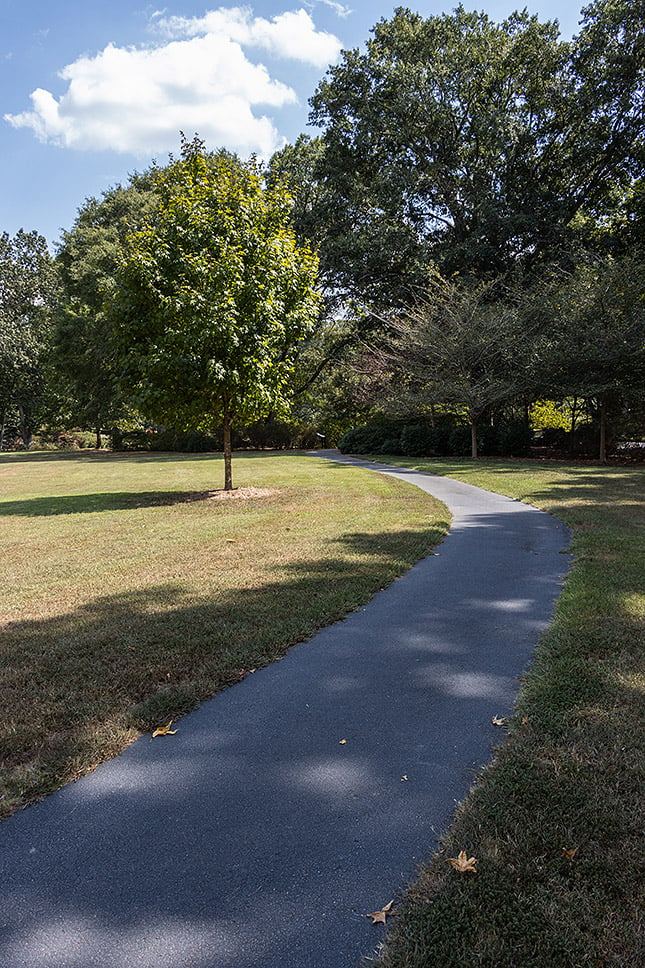

Resolving power is quite good if you have a sharp lens, but as with the vast majority of Canon cameras, the sensor features an optical low-pass filter, which subtly blurs things ever-so-slightly in order to remove or heavily reduce any visible moiré and aliasing artifacts. As such, images weren't as tack-sharp and crisp as I was hoping, but overall, detail is very good for this class of camera.

At the other end of the ISO range, I will say that the 90D does better at lower ISOs. High ISO performance is pretty good, but not outstanding and somewhat disappointing. I was afraid that the high-res nature of the APS-C sensor would impact high ISO performance, and that does appear to be the case here to some degree. Even at moderate ISO levels, such as 800-1600, images show a bit more noise than I was expecting. The noise reduction processing used on JPEGs straight from the camera appears a bit strong for my liking as well, showing noticeable softening and processing artifacts. All that said, the 90D is not terrible at higher ISOs by any means, but it's certainly not its strong suit, unfortunately.


Overall, the Canon 90D's image quality is pretty good, especially if you shoot at lower ISOs. If you shoot primarily outdoors, landscapes, portraiture, or other daytime subjects, the 90D does well for these tasks. The 32.5-megapixel APS-C sensor is an interesting choice, however. The 80D's 24MP sensor, I thought, provided a good balance of detail and higher sensitivity performance -- though even back then, it didn't fare as well as some of its competitors at high ISOs. The increase in megapixel count on the 90D -- and M6 Mark II as well -- seems like a strange direction for this intermediate-level camera, as there doesn't appear to much improvement in high ISO performance compared to its predecessor.
Up Next
That wraps my initial field test of the refreshed Canon 90D. Stay tuned for more!
Field Test Part III
One more time with feeling: Canon's enthusiast DSLR returns for night shooting and video
A few weeks back, we kicked off our review of the Canon 90D with a first field test posted by senior editor William Brawley. In this second field test, I'm picking up the ball from Will to cover some of the remaining points he didn't get a chance to address previously.
If you've not already read that previous field test, you'll want to start there for the full story. In part one, Will shot the enthusiast-oriented EOS 90D DSLR alongside the simultaneously-announced EOS M6 Mark II mirrorless camera at Canon's launch event, which was held at the Michelin Raceway Road Atlanta circuit, giving him some great opportunities to try the 90D for sports shooting. (As well as a chance to compare it against its mirrorless sibling, which actually offers even greater burst performance so long as autofocus is locked from the first frame, although the 90D has the edge when continuous AF is added to the equation.)

Will's first field test also took a good look at the Canon 90D's ergonomics and handling, and especially some of the design changes made since the previous-generation 80D. He also reported on the 90D's image quality in daytime shooting, with a particular focus on how the new, slightly higher-resolution 32.5-megapixel image sensor shared by both the 90D and M6 Mark II compares to the earlier 24.2-megapixel chip from a few years ago. Click here to read part one of the field test for the full story.
What's on tap for part two of our Canon 90D field test
For part two, there are a couple of areas in particular on which I'm going to focus. Firstly and perhaps most importantly, I've been shooting extensively with the 90D in low-light conditions and towards the higher end of its sensitivity range. Will already addressed this a little in his own writeup, noting that he already saw more noise than he was expecting in shots at relatively moderate sensitivities on the order of ISO 800-1600 equivalents, and found himself somewhat disappointed.
But where the imagery Will shot, which you can see in our gallery, was pretty much all confined to relatively low sensitivities, I've now captured a good range of images all the way from sunset to full night conditions, and across the 90D's entire expanded sensitivity range of ISO 100 to 51,200 equivalents. (Since Will already provided a wealth of photos at the lower sensitivities, I've limited those I've added to the gallery to ISO 2000 and above, however.)

The other main area which I'll be focusing on for this second field test is video capture. Here, you'll find both 4K and Full HD clips in both day and night conditions. I've also provided an example of the 90D's full-time video autofocus performance, and tried out its high frame-rate video capture mode as well.
And since Canon answered our call for the return of a cinematic 24p frame rate option -- it added support for 23.98 fps capture impressively quickly, shipping firmware version 1.1.1 just two months after we first posted our preview -- I've added that to the roster of features to try out, as well. (And I've also updated our earlier preview text to note this addition.)
Kudos to Canon for acting so quickly. To be sure, not everyone is going to want to shoot in 24p, and many 90D videographers will likely never touch it. But it's nice to have the option, and now you do.

It's worth considering the M6 II instead, if you want the smallest possible package
I mentioned the Canon M6 Mark II previously, by the way, and it's probably worth noting here that I also reviewed that camera recently. Both the 90D and M6 II share basically the same imaging pipeline, and so not surprisingly, their image quality is also very similar. Hence the choice of which to shoot comes down more to other features like their performance -- as I said, the 90D will have a slight edge here -- and even more importantly, their handling. If you want an optical viewfinder, you're on the right review here. If you prefer the smallest and lightest possible camera body, you'll want to consider the M6 II instead, and I'd recommend reading that review too.
Speaking personally, while I enjoy shooting both types, I'm still a DSLR shooter at heart. My own daily shooters, when I'm not out and about with a review camera, obviously, are mostly DSLR models. And I still prefer the experience of shooting through a good optical viewfinder to that of shooting with an electronic viewfinder or at arm's length, at least in most situations. Out of the pair, I've definitely enjoyed shooting with the Canon 90D more than I did the M6 II.

The 90D is a pleasure to shoot with in low light thanks to its pentaprism finder
But enough of the preamble; it's time to share my thoughts on the 90D after a good bit of time spent shooting in low-light conditions. You'll find a generous selection of my photos from those shoots sprinkled throughout this field test -- largely in order of sensitivity, so the further down the page you read, the higher I'll have cranked the ISO -- and there are still more to be found in the gallery, all the way up to the 90D's expanded maximum sensitivity of ISO 51,200 equivalent.

Click thumbnail for JPEG, or here for raw file
And in terms of its low-light performance, I found the Canon 90D to be a very capable camera indeed. Its glass pentaprism viewfinder is crisp, bright and roomy by the standards of an APS-C DSLR, making it easy to see and frame your subjects even in low light. And AF point selection is a breeze even in total darkness, as a tap of either the AF area or point selection buttons clearly illuminates all AF points within the viewfinder in red, beneath an indication of the current AF area mode.
(Like Will, though, I find it a bit sad that the new joystick control simply duplicates the function of the multi-controller beneath. I'd really like to see Canon allow customization of the multi-controller separately from the joystick, to give quick access to even more functionality.)
High ISO results are perhaps a little disappointing, but certainly acceptable
I also found myself in agreement with Will when it comes to the 90D's high ISO image quality. Although I certainly found it to be acceptable when the sensitivity was dialed up some, just as I did the EOS M6 II, I also found myself a little disappointed that there wasn't a step forwards in terms of high ISO image quality, given that its predecessor's sensor design is now nearing its fourth birthday.
Like the M6 II before it, I felt image quality was very usable all the way to ISO 6400, and even ISO 12,800 was usable in a pinch. But with that said, I did notice some adverse affects of noise reduction even in shots as low as ISO 3200 equivalent, and some noise was noticeable at even lower sensitivities.

A slight tendency towards overexposure, just as for the M6 Mark II
Just as I did for the M6 Mark II with which it shares its imaging pipeline, I felt that the Canon 90D had a slight but noticeable tendency towards overexposure. It's easily corrected by simply dialing in a 1/3 stop of negative exposure compensation by default, though, or can readily be fixed post-capture if you're shooting raw, so even if you're concerned about clipped highlights I don't think it's a significant issue.

Click thumbnail for JPEG, or here for raw file
With that said, it's easier to overlook that in a camera like the M6 II which costs US$850 body-only as of this writing, but with the 90D costing more than a third as much again at US$1,200 body-only, It'd have been nice if the metering system could be tuned to the user's tastes. But again, it's a pretty minor quibble, really.
A swift and confident low-light shooter with capable autofocus
I also found the 90D to perform pretty well in terms of its low-light white balance. For the most part, it handled the complex mixture of different lights around downtown Knoxville well, with the auto white balance system turning in fairly attractive results the overwhelming majority of the time. Towards the highest sensitivities, colors did feel a bit muted though.
And autofocus performance was very good even in low light. I never really had any issues with getting the 90D to focus on my subjects. Even in pretty low light, autofocus was swift, confident and accurate unless my subjects had very little contrast indeed. And with the dioptric correction dialed in, I found it easy to focus manually through the optical viewfinder, as well.
Avoid ISO 25,600 and above, although DXO PhotoLab may soon make them more usable
For my money, the cutoff point in terms of acceptable image quality was around the ISO 6400 to 12,800 mark, depending on the subject and my purposes for the shot. I didn't find ISO 25,600 or 51,200 to be very usable, just as I noted in my M6 Mark II review.

But also as I noted in that review, my current noise processing tool of choice -- the utterly superb PRIME denoising engine in DxO Labs' PhotoLab application -- doesn't yet support the 90D, just as it didn't support the M6 II either. That support is currently slated to arrive in December 2019, and once it does I think there's a very good chance that raw files at ISO 12,800 and even ISO 25,600 will likely prove to be quite useful.

Click thumbnail for JPEG, or here for raw file
I won't know for sure until PhotoLab support arrives, obviously, but I'm optimistic based on its results with past cameras.
But enough of stills, what about video? While the Canon 90D and M6 II share basically the same imaging pipeline -- and therefore, basically the same video image quality and capabilities in most respects -- there are a few ways in which the DSLR bests its mirrorless sibling.
In terms of their basic design, a case could be made for either camera. The M6 II, being smaller and lighter, will be easier to shoot handheld for extended periods without tiring. But the 90D's larger body has a much more generous grip and better-positioned controls that for my money make it the easier of the two to keep steady while shooting, and its tilt/swivel LCD monitor can be seen from a greater range of angles than can the tilt-only screen on the M6 II.
More importantly, though, where the M6 II has only a microphone jack, the 90D supplements this with a 3.5mm headphone jack. This means that you can monitor and manually control the audio levels, making adjustments not just before capture starts, but also during recording. That's a significant advantage for the DSLR over the mirrorless model, unless you prefer to rely on an external device for recording audio anyway.
Good video image quality, both during the day and after the sun goes down
You'll find a variety of video clips shot with the Canon 90D just a little further down the page, as I've still got a few more high ISO images to fit in first. To sum up quickly, though, I was pretty pleased with its image quality for both day and night footage.

4K video is packed with fine detail, and even Full HD video is reasonably crisp, although obviously with much lower resolution than the 4K footage. I didn't spot any of the moire or false-color artifacts that trouble some cameras, and color / white balance were good as well.
Great full-time autofocus for video capture, too

Click thumbnail for JPEG, or here for raw file
The Canon 90D's full-time video autofocus also performs very nicely. You can either select subjects manually using the touch-screen, or allow the camera itself to determine the primary subject as I did in the clip further down the page. Either way, focus shifts are smooth but fairly swift, and the camera detects changes in subject distance well even while panning fairly rapidly.
If you're selecting subjects on the touch screen, you can change the subject during video capture. A white box appears on-screen where you've touched, and that box will then follow your subject as it moves around the image frame. Another tap elsewhere will select a new subject, or you can tap on an icon near the top right of the screen to cancel the subject tracking, returning the camera to selecting where to focus by itself.
And since the screen is very sensitive, it's easy to make these changes without shaking the camera, even when shooting handheld.
Slow-motion video is fun, but rather limited in its capabilities
As well as standard video, the Canon 90D can also record slow-motion footage in-camera. However, unlike some rivals, your choices here are rather limited.
To access high frame-rate recording, you enter the movie recording quality menu, and then enable the high frame-rate option. When you do so, the movie recording size option is greyed out, as you have only a single fixed choice of capture resolution and frame rate, and the output frame rate is also fixed.

High frame-rate video is recorded at Full HD resolution, with a capture rate of 119.9 frames per second, and plays back at 29.97 frames per second. This yields a fixed 4x slow-motion effect, although you could of course adjust the playback rate post-capture to achieve anything from a 2x slow-mo at 60fps to a 5x slow-mo at 24 fps, should you choose to do so. As is typical with in-camera slow-motion / high-frame rate capture modes, no sound is recorded during capture, and so your HFR movies will be totally silent.
All things considered, I found the Canon 90D's video recording feature set to be pretty decent, for an enthusiast-grade camera. It may lack some of the options of higher-end gear, but for its pricepoint offers a good amount of control with great image quality, and the full-time autofocus means you don't have to learn how to pull focus manually to make the most of it.
Download Original 3,840 x 2,160 pixels @ 29.970 frames per second |
Download Original 3,840 x 2,160 pixels @ 23.976 frames per second |
Download Original 1,920 x 1,080 pixels @ 59.940 frames per second |
Closing thoughts on my time with the 90D
I have to say that I've really rather enjoyed shooting with the Canon 90D over the past few weeks. Although I didn't discuss handling much, as this was already covered by Will in the first field test, I found it to be very comfortable in-hand. Its body, while made from fiberglass-reinforced polycarbonate over an aluminum frame, is nevertheless rock solid and free of creak, even if it might not feel as rugged as a metal-bodied camera.
And its vast number of external controls are all quite well positioned and easy to locate by touch, once you have become familiar with them. Still image quality might not lead the pack, but it's certainly very acceptable even once the sensitivity is dialed up somewhat, and performance is great. My quibbles, such as they are, are relatively few and quite minor. Honestly, my biggest complaint -- other than that I'd have liked to see a bit better high ISO image quality and a function for fine-tuning the metering system to taste -- is that I'd like to see Canon provide for better customization of the joystick / multi-controller.
Download Original 3,840 x 2,160 pixels @ 29.970 frames per second |
Download Original 3,840 x 2,160 pixels @ 23.976 frames per second |
Download Original 1,920 x 1,080 pixels @ 59.940 frames per second |
I am definitely holding out hope that they do so, because they've already listened to early reviews once in adding support for 24p video capture in firmware, and improved customization seems like another natural fit for a firmware update. Even as-is, though, this is clearly one very capable camera for a pretty affordable pricetag, and I'd say it would make a great option for Canon shooters looking to upgrade from an older or lower-end Canon DSLR.
Download Original 3,840 x 2,160 pixels @ 29.970 frames per second |
Download Original 1,920 x 1,080 pixels @ 29.970 frames per second, 119.9 fps record rate, 4x slow-motion effect |
Conclusion
Over the years, Canon has had quite a few options for the intermediate-level photographer, ranging from the higher-end Rebel series with something like the Rebel T8i up to the well-equipped EOS 7D Mark II. The Rebel series, even the more advanced models, swing towards the entry-level segment, while the 7D II hits squarely into the more experienced camp of photographers. In fact, the 7D II is squarely in "enthusiast" territory, though it's arguably still a solid choice for the loosely-defined category of "intermediate" photographers.
Sitting right in the middle of this arena, however, has been Canon's long-running "XXD" series of EOS models, such as the 60D, 70D, 80D and now the 90D. The new Canon 90D, like its series of forerunners, hits right in a sweet spot for price, features and build quality. Offering more features, more controls and sturdier construction, the 90D is a more enticing option for more experienced users. Yet, the camera isn't too high-end nor as expensive as, say, the 7D II that it's overwhelming for a somewhat more beginner-level photographer. The 90D is a versatile camera, offering a lot for a wide range of creators, whether you're taking your creativity to the next level or you simply need a reliable, lighter-weight backup camera to a higher-end rig.
The Canon 90D finally refreshes the line, replacing the now somewhat dated 80D from 2016, and with it comes an all-new imaging pipeline, new performance features and better video recording options. In most ways, it certainly beats out its predecessor, but interestingly, it also overtakes or matches the similarly-aging 7D Mark II, which debuted back in 2014 and is still technically Canon's flagship APS-C DSLR.
Read on to see just how the Canon 90D stacked up in our review...
Design & Usability
In general, the Canon 90D looks a lot like its predecessor from its outward appearance, but as a mid-sized DSLR, it's hard for it not to have that familiar shape. Indeed, for the most part, the 90D is strikingly similar to the 80D, with the same basic control layout, hearty handgrip (that's now deeper and even more comfortable), a top-deck info display, dual control wheels/dials, and an articulating rear touchscreen display.
There have been a few minor tweaks, such as revisions to the mode dial and a few rearranged buttons. But the most notable update button-wise is the reintroduction to the handy joystick control, a staff favorite here at IR. Canon did away with the joystick when the 60D came around and it remained absent on subsequent new models until now. It's a really useful control for both menu navigation but most importantly, also for quickly moving the AF point around the frame. And, we're happy to not only have the joystick back, but also for the fact that Canon didn't need to remove other helpful controls to make room for it. The 90D maintains the same rear command dial and multi-directional button control from the 80D as well as all the other primary buttons. That said, you can't customize the functionality of the joystick and multi-controller buttons separately; the two controls are essentially duplicates of each other, which is a bit disappointing.
Elsewhere around the camera, the physical features and, by extension, the overall user experience is very similar to that of the 80D. The controls are plentiful and are easy to operate, and the camera offers plenty of user customization. The viewfinder and the LCD screen are the same as those on the 80D, however. But we're fine with that, as both are great. The viewfinder is excellent for an APS-C DSLR; it's large, crisp and provides nearly 100% frame coverage. Likewise, the rear LCD is perfectly fine. The 3-inch touch-panel is big (most cameras have at least 3.0-inch displays), has a decent screen resolution (not exceedingly high-res, but usable) and offers a very responsive touch performance.
All in all, the Canon 90D offers a pleasing and familiar handling and usability experience -- another classic Canon DSLR.
Image Quality & Video
Now, when it comes to image quality, that's a whole new story compared to the predecessor. With a new 32.5-megapixel sensor, the 90D is Canon's highest-resolution APS-C DSLR released so far. In fact, other then the 50MP 5DS and 5DSR models, the 90D, and M6 II are currently Canon's highest-resolution stills cameras across the board.
With a high-res sensor and a new image processor, the 90D should be able to capture images with excellent fine detail, and for the most part, this is true. Especially at lower ISOs, the Canon 90D offers excellent image quality, with images showing lots of detail, pleasing colors and decent dynamic range performance with good exposure and tonal adjustment flexibility. However, like most Canon DSLRs, the 90D's sensor includes a fixed optical low-pass filter. And while that's handy for combatting ugly moiré and aliasing artifact, it robs some of that finer detail resolving power, and we just don't see as much resolution and detail from this 32.5MP sensor as we'd have hoped. Canon gave us more megapixels, but they are hampered by the low-pass filter.
As the ISO rises, we run into another issue with this higher-resolution sensor, albeit not a severe one by any means. Thirty-two megapixels is a lot of pixels to cram onto a relatively small APS-C sensor size. Generally, all things being equal, the smaller the pixel size, the higher the noise for a given ISO compared to a similarly-sized sensor with a lower resolution (and thus larger pixels). As such, we do see more noticeable noise in 90D images, even at relatively mid-range ISOs, like 800-1600. As mentioned, the 90D is certainly not bad at high ISOs, and we found images are perfectly acceptable even up to around ISO 6400-12,800. But, the Canon 90D is certainly not class-leading when it comes to high ISO performance.
On the video side of the equation, so to speak, the Canon 90D offers a nice set of upgrades over its predecessor, most notably the ability to now shoot in 4K UHD resolution. Further, Full HD recording gets a boost with framerates up to 120fps. Technically, the 90D offers standard Full HD recording up to 60p, while 100/120p is a special high-speed recording mode that automatically plays slowed-down video at 30p. 4K UHD video is offered at up to 30p, though the camera was strangely devoid of the popular 24p (23.98p) framerate for both 4K and 1080p when the camera launched, but Canon quickly and thankfully fixed that issue with a firmware update.
Quality-wise, the Canon 90D shoots pleasing video. 4K footage is crisp with lots of fine detail, as does 1080p. There's also clean HDMI out up to 4K, HDR video at 1080p, in-camera 4K time-lapse and movie filter effects. And just as with previous models, the 90D's Dual Pixel CMOS AF offers fantastic video autofocus. However, the 90D does lack a number of more advanced video features, such as Log recording, multiple bitrate options, higher-quality compression, and unlimited video recording (camera is still capped at 29:59). All that said, for this class of camera, the 90D is well-versed for the casual to advanced video creators. If you're already shooting video with Canon DSLRs, the 90D offers a clear upgrade, especially if you need 4K video.
Autofocus & Performance
The dedicated phase-detect AF system on the 90D remains unchanged compared to the predecessor, offering 45 all cross-type AF points. However, thanks to the camera's updated metering system, the 90D now offers face-detection even when using through-the-viewfinder focusing -- a rare feature on a traditional DSLR. The camera also sports Canon's awesome Dual Pixel CMOS AF system, and an updated one at that, for Live View focusing. It offers well over 5000 user-selectable AF points and nearly full AF coverage across the sensor. Whenever you're shooting through the viewfinder or with Live View, the 90D offers a fantastic AF experience and generally excellent performance. We found AF was fast, accurate, does very well for tracking fast action subjects and works great in low-light conditions. As mentioned, the Dual Pixel CMOS AF tech works wonderfully for video AF, too.
Thanks to its faster, more powerful processor, the Canon 90D certainly offers a bit more oomph than the predecessor model and, in fact, goes square up against the higher-end (though aging) 7D Mark II in terms of performance features for the most part. Continuous burst shooting is now up to 10fps with C-AF using the optical viewfinder, which puts the 90D on-par with the 7D II and faster than the 80D -- pretty impressive given a) the high-resolution sensor and b) that the 90D manages all this with a single DIGIC 8 processor whereas the 7D II required two DIGIC 6 chips. The faster UHS-II card slot (compared to the UHS-I slot of the 80D) surely helped here as well. With Live View shooting, you can get up to 11fps but that's with focus locked at the first frame; you get just 7fps with C-AF here.
Our lab testing showed the 90D easily met Canon's burst shooting specs right on the nose, and buffer depths and clearing times were both impressive, particularly given the high-res images. In addition to the traditional Canon RAW format, the 90D also offers a lossy compressed C-RAW option, which offers a smaller file size and deeper buffer depth. And in our testing, we could barely make out any image quality loss compared to the standard RAW file. Canon states you'll get about 39 C-RAW files before the buffer fills, but our testing showed as much as 43 frames. Standard RAW buffer depth slightly exceeded spec as well as did JPEG. Overall, the 90D offers generous buffer depths, fast clearing times and generally pleasing all-around performance, especially considering the resolution.
Summary
While at first glance, the Canon 90D might just look like the same old DSLR you've seen from the past half-decade or so, and in some ways, you'd be correct. It's a classic Canon DSLR. The 90D offers comfortable ergonomics, great durability, lots of physical controls and user-customization, and of course, familiarity for a lot of photographers out there, plus compatibility with a veritable boatload of Canon EF lenses. No growing pains here like with a number of newer mirrorless camera platforms.
Under the hood, however, there's a clear technological progression for Canon's intermediate-class DSLR. The 90D provides lots of improvements over the previous model, particularly with AF, burst shooting and video recording. The 90D bests the 80D easily, and even matches or exceeds the older 7D Mark II, Canon's reigning flagship crop-sensor DSLR, in many regards. The new 32.5MP sensor is a bit of a head-scratcher, however. Image quality is still generally excellent, but 32.5 megapixels feels a bit excessive for an APS-C-sized sensor. There's still a low-pass filter on the sensor, so you're missing out on some of the resolving power potential, and all those super-tiny pixels hamper the 90D's high ISO performance, at least compared to competing cameras.
All that said, the Canon 90D is still a fantastic camera at the end of the day. Sure it has a few drawbacks, but the camera is still capable of taking great photos, shooting pleasing high-res video, and has excellent AF and performance for all but the most demanding subjects. Combined with excellent build quality and ergonomics, the Canon 90D is an all-around winner, especially for those already in the Canon world. If you want to take your creativity to the next level, going beyond a simple point-and-shoot, an entry-level Rebel camera or, heck, even the previous 80D, the new Canon 90D offers lots of upgrades and new features that are worth considering.
All told, the Canon 90D gets the nod as a Dave's Pick in our book.
Pros
- Highest resolution Canon APS-C camera yet, alongside M6 II
- Very good image quality, especially at low ISOs
- Decent high ISO performance (but see Con)
- Dynamic range is similar to predecessor
- C-RAW (compressed raw) saves space with very little observable quality loss
- Excellent AF performance with both optical viewfinder & Live View
- Face Detection AF with Viewfinder AF
- Dual Pixel AF provides fast AF performance in Live View mode; Works great for video
- Excellent performance for this class of camera
- Fast startup time
- Low shutter lag
- Fast 10fps burst with C-AF
- Electronic shutter option allows for faster 1/16000s shutter speed
- Faster continuous burst shooting than predecessor; similar to flagship 7D II
- Generous buffer depth & fast clearing times
- UHS-II card support
- Dust- and moisture-resistant construction
- Improved ergonomics with deeper handgrip
- Lots of physical controls with good user customization
- Joystick control reintroduced
- Large, responsive touchscreen display
- 4K video added (up to 4Kp30)
- 24p framerate lacking at release but added with firmware update
- Full HD video at 60fps & 120fps (but see Con)
- High Frame Rate Movie (creates slow-mo video in-camera)
- HDR & 4K timelapse movie modes
- Excellent battery life, especially with optical viewfinder (improved battery life over 80D)
- 3.5mm microphone & headphone jacks
- Built-in Wi-Fi & Bluetooth Low Energy
Cons
- Dynamic range and high ISO performance are pleasing, but both still lag the best of competition
- Images are a little soft compared to cameras without an AA filter even with a sharp lens (but they contain fewer aliasing artifacts)
- Live View burst shooting tops-out at 7fps if you want C-AF
- Video not available with higher quality ALL-I format (IPB or IPB Light options only)
- Video format limited to just MP4
- 29min, 59sec continuous video recording limit
- 1080p120 video reserved for high-frame rate mode only
- Single SD card slot (but understandable for this class of camera)
- No in-camera battery charging