
Overview
Sony FE 600mm f/4 GM OSS Field Test
by William Brawley | Posted 06/11/2019
Although the full-frame Sony Alpha system has been around for a few years now, it’s still a fairly new system in the grand scheme of things compared to other full-frame camera manufacturers. As such, Sony has been steadily filling out its FE-mount lens lineup over the years, and now offers an extremely versatile range of lenses across the focal length spectrum.
However, one of Sony’s more recent areas of focus has been to address its lack of pro-grade supertelephoto lenses. Last year, Sony introduced their first such lens, the FE 400mm f/2.8 GM OSS. A classic, sports-centric telephoto prime, the FE 400mm f/2.8 lens is a must-have for serious and professional sports photographers. Alongside the high-performance A9 camera, a 400mm f/2.8 lens was an important addition to the FE-mount lineup. Plus, what made Sony’s particular 400mm f/2.8 lens unique and very impressive was its super-light construction and a balanced optical design that made it a surprisingly hand-holdable lens. In short, it was unlike any full-frame 400mm f/2.8 lens before it.
 |
|
Sony A9: 600mm, f/4, 1/1250s, ISO 1000
|
Sony has now followed up its 400mm pro prime with yet another supertelephoto offering, the FE 600mm f/4 GM OSS. Much like its 400mm f/2.8 GM sibling, the FE 600mm f/4 lens utilizes a very similar design and construction, making it extremely lightweight, balanced and shockingly easy to use handheld. And, according to Sony, this particular lens has been the most requested lens from professional photographers. Much like a 400mm f/2.8 lens, a 600mm f/4 is another must-have lens for any camera and lens manufacturer catering to professional photographers.
I had the opportunity to spend a couple of days shooting with the new FE 600mm f/4 GM at a Sony-organized press event — along with another supertelephoto lens, the FE 200-600mm f/5.6-6.3 G — and I wanted to share some of my first impressions of the lens as well as a handful of real-world sample images.
So, let’s dive right in…
Build Quality & Handling
The overall look and construction of the FE 600mm f/4 GM lens are, by design, strikingly similar to the 400mm f/2.8 GM lens. At the time, the FE 400mm f/2.8 GM was the world’s lightest full-frame 400mm f/2.8 lens — since then, Canon’s managed to shave off a bit of weight on their latest 400mm f/2.8 L III lens to make it a bit lighter than Sony’s offering — and now the FE 600mm f/4 GM is the world’s lightest full-frame 600mm f/4 lens.
 |
Weighing in at only 6.7 pounds (3040g), the Sony 600mm lens is lighter than rival models from both Canon and Nikon, for example. The Canon 600mm f/4L III comes in at 6.72 lbs (3050g) — not much heavier than the Sony — but the Nikon 600mm f/4 tips the scales at a comparatively hefty 8.4 lbs (3810g). Also, despite the 200 extra millimeters in focal length, the Sony 600mm f/4 lens is only five ounces heavier than the Sony 400mm f/2.8!
In the hand, it’s not only the ultralight mag-alloy design that aids in ease of handling and maneuverability, but much like in the 400mm f/2.8, there’s also a thoughtful, deliberate optical design that places more of the lens elements (and thus weight) towards the rear of the lens for better balance. Plus, there’s a large air gap between the lens’ big front element and the rest of the elements that further aids in lightening the overall bulk and moving the balance back towards the lens and camera’s center of mass, thus reducing front-heaviness.
 |
|
Yes, despite being a full-frame 600mm f/4 lens, you can hand-hold it!
|
Just as I experienced with the Sony 400mm f/2.8 lens, the new FE 600mm prime is shockingly lightweight and easy to use handheld — within reason. Don’t get me wrong; this is still a full-frame 600mm f/4 lens. There’s a lot of lens here. The lens is quite big, quite bulky and can feel heavy after use for long periods of use. This isn’t an Olympus 300mm f/4 Pro lens!
 |
|
Sony A9: 600mm, f/4, 1/1600s, ISO 1250
|
Our first of two shooting events with the new lens was at a Red Bulls MLS soccer match. I initially began shooting with the 600mm lens supported on a monopod, but I’m not generally accustomed to shooting on a monopod nor an overly experienced soccer photographer. Having my own movement restricted on the monopod combined with the fast-paced, sporadic movement of the players on the field forced me to ditch the monopod rather quickly. It was much easier to follow the action and frame shots handheld, and being able to do that easily with a full-frame 600mm f/4 lens is just astonishing. In the end, I shot the 600mm f/4 lens handheld for the vast majority of the game, and when shooting wildlife the following day, in fact.
 |
When it comes to the build and optical layout of the lens, the FE 600mm f/4 lens features 24 total lens elements situated into 18 groups. The lens sports some exotic optical elements, including three fluorite elements and two ED glass elements to help combat chromatic aberration. Unlike the 400mm f/2.8, the 600mm lens also uses a large XA element, or extreme aspherical element. The XA element, first seen on shorter Sony GM lenses such as the FE 24-70mm f/2.8, is a Sony-designed, extremely precision-crafted aspherical element that has a very smooth surface that helps maintain sharp image quality and by way of its precise smoothness, clean bokeh without onion-ring artifacts. The 600mm f/4 is the first lens to feature such a large XA optical element.
 |
|
Sony A9: 600mm, f/4, 1/1250s, ISO 1000
|
As mentioned, the Sony 600mm f/4 uses a magnesium alloy barrel for strength, rigidity and lightness. According to Sony, the lens also features “professional dust and moisture resistance.” We’re unsure just how sealed the lens actually is, but given its price point and customer base, the lens should be fairly well protected from the elements. There is a rubberized gasket around the lens mount as well.
External switches and rings are all similar to those the 400mm f/2.8 GM lens. Sony made a point to design the 600mm lens in such a way that the placement of all the controls, switches and customizable buttons are as identical as possible and located in the same place between both lenses. If you’re familiar with the operability of the 400mm f/2.8, the 600mm f/4 should feel no different.
The Japanese-made lens is compatible with both 1.4x and 2.0x teleconverters and features the usual array of controls (AF/MF toggle, focus limiter, focus memory/preset buttons, image stabilizer mode switch, and a programmable function ring). It also has a rear drop-in filter, a reversible lens hood, and a robust tripod collar/foot.
 |
|
Sony A9: 600mm, f/4, 1/1250s, ISO 1600
|
Image Quality & Performance
Although we’ve yet to lab-test this new lens and I was only able to shoot with the lens briefly over the course of a weekend, the image quality from the real-world shots I’ve captured is nothing short of fantastic. And given that the price of the 600mm lens is $13,000, I should expect nothing less.
 |
|
Sony A9: 600mm, f/4, 1/1250s, ISO 100
|
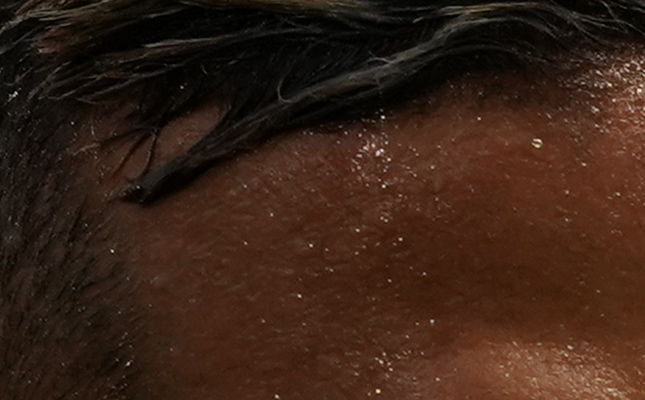
Images are tack-sharp even at f/4, which is the aperture I’d suspect most photographers to use most of the time. The resolving power is fantastic, even with the 24MP A9 body I was using. Shooting both soccer and wildlife, I was thoroughly impressed with the detail I captured — individual hairs on the soccer players, beads of sweats, crisp feather detail from birds in flight and more. Chromatic aberration appears practically nonexistent, as well. As is the case with other Sony G Master lenses, special attention has been given to bokeh quality, and to my eye, the 600mm f/4 GM renders wonderfully smooth out of focus areas.
 |
 |
|
Sony A9: 600mm, f/4, 1/1600s, ISO 1600
|
Autofocus performance is also top-notch, as I expected. Like the 400mm f/2.8, the new 600mm lens uses the same high-speed, high-precision XD Linear Motors for fast, smooth AF performance. Single-shot focus was, for all intents and purposes, instantaneous. Half-press the shutter and boom, focus. Of course, for moving subjects, C-AF performance is the real story, and when using a camera like the A9 that can shoot at up to 20fps, you need a lens that can continuously focus precisely and extremely quickly in order to keep up with these types of burst speeds. The 600mm f/4 is such a lens, at least from what I can tell based on my time with the lens thus far.
 |
|
Sony A9: 600mm, f/4, 1/1250s, ISO 100
|
Shooting unpredictable sports like soccer or birds in flight with a full-frame 600mm f/4 lens makes for tricky shooting due to the incredibly shallow depth of field and super-long focal length. Thankfully, the A9 has terrific subject tracking autofocus, and the 600mm lens works brilliantly on it. I wasn’t left with too many dud photos where the focus was entirely off. Focus tracking felt really accurate and very responsive. For the shots I did miss, it’s hard to know for sure if it was the camera/lens or simply user error.
 |
|
Sony A9: 600mm, f/4, 1/1250s, ISO 125
|
Summary
What to say? The Sony 600mm f/4 GM lens looks to be another outstanding professional-level lens. At $13,000, you should expect nothing less. Yes, the lens is very expensive, but it’s right in-line with other full-frame 600mm f/4 lenses from competing manufacturers. The big difference is usability. The Sony 600mm is a full-frame supertelephoto lens that you can use handheld, and that’s quite a rare feat. Combined with high-speed AF performance and crisp, clear image quality, the Sony FE 600mm f/4 GM is yet another impressive optic for professional Sony Alpha owners.
Description
(From Sony lens literature)
Sony Introduces the New Super-telephoto 600mm F4 G Master Prime Lens
Sony’s Longest Reaching Prime Lens is World’s Lightest in its Class,
Featuring High-performance Autofocus, High Resolution and Beautiful Bokeh
SAN DIEGO — June 11, 2019 — Sony Electronics Inc. today announced another impressive addition to its flagship full-frame G Master™ series lens lineup: the new FE 600mm F4 GM OSS super-telephoto prime lens (model SEL600F40GM).
As Sony’s longest reaching prime lens, the new 600mm includes many of the company’s most advanced optical and mechanical technologies, producing exceptional image quality with extraordinary focusing speed and precision. The FE 600mm F4 GM OSS is also the lightest lens in its class [i], weighing in at approx. 6.71 lbs., and features an extremely balanced design to ensure the best possible shooting experience. Along with the acclaimed FE 400mm F2.8 GM OSS lens, the new 600mm lens gives professional sports, wildlife and news photographers more options for capturing subjects at a great distances with extreme accuracy and detail.

“With two new lenses announced today, our growing E-mount lens lineup now includes 33 full-frame models and 51 lenses in total,” said Neal Manowitz, deputy president for Imaging and Professional Solutions Americas at Sony Electronics. “The tenth model from our flagship G Master series, the new 600mm F4 raises the bar for speed, mobility and control in a super-telephoto prime lens. Combining the extensive 600mm reach with features like 20 fps shooting and AF/AE calculations at 60 times per second on the α9 or extremely high resolution, high-speed performance on the α7R III allow professional photographers to create images that were simply not possible to capture before.”
Fast, Precise and Quiet Autofocus [ii]
To take best advantage of the highly evolved autofocus systems of Sony’s latest full-frame E-mount cameras, the new FE 600mm F4 GM OSS lens features two extreme dynamic (XD) linear motors that drive the lens’ focus group to provide fast, precise AF and reliable subject tracking. These motors are supported by specially developed motion algorithms to minimize lag and instability, as well as to control noise levels, resulting in exceptionally quick, accurate and quiet autofocus performance, allowing the lens to capture dynamic, fast moving athletes or wildlife with ease.

Superb G Master Image Quality and Bokeh
As a member of Sony’s flagship G Master series lenses, this new large aperture super-telephoto prime lens features an incredible level of image quality and detail, with outstanding contrast and resolution maintained all the way to the corners of the image. The unique optical design includes a large extreme aspherical (XA) element that effectively suppress all common telephoto lens aberrations, in addition to three fluorite elements that help to minimize chromatic aberration and suppress any amount of color bleeding. Sony’s latest bokeh simulation technologies and XA element are also utilized to control spherical aberration and help achieve exquisite bokeh.

The lens features an 11-blade circular aperture mechanism that contributes to the high quality of bokeh in images, and it has been coated with Sony’s original Nano AR coating to suppress any unwanted reflections, glare or ghosting in images.
The new FE 600mm F4 GM OSS is compatible with Sony’s 1.4x and 2.0x E-mount tele-converters, producing outstanding imaging performance at extended focal lengths [iii] while maintaining fast, precise AF performance.
Lightweight, Balanced Design
The new super-telephoto prime lens provides a level of portability and maneuverability that has never been achieved before in a lens of its class. Based on technology from the acclaimed FE 400mm F2.8 GM OSS lens, the lightweight design of the new 600mm lens is achieved through the usage of three fluorite elements, with a reduced number of elements deployed at the front of the barrel. Magnesium alloy is also used throughout the lens to help minimize weight and bulk.
Also inherited from FE 400mm F2.8 GM OSS, the new 600mm lens features a lens design that is not front-heavy, reducing moment of inertia that resists rotation and ensuring quicker, more precise panning when shooting handheld or on a monopod.

Durability, Reliability and Control
To withstand the harsh conditions of sporting events and wildlife photography, Sony’s new FE 600mm F4 GM OSS is built with a durable magnesium alloy and a strong, lightweight carbon fiber hood. The lens is dust and moisture resistant [iv], and its front element is coated with fluorine to resist dirt and fingerprints.
FE 600mm F4 GM OSS features an ample number of hard controls on the lens, including customizable focus-hold buttons in four different locations on the lens barrel, which can be programmed for control of features, if desired. There is also a Full-Time DMF switch to immediately engage manual focus at any point, and a focus ring that features Linear Response MF for fine, responsive manual focus.
Additionally, the new lens includes built-in optical stabilization for dynamic action and three different ‘Mode’ settings, including a Mode 3 [v] setting with an advanced algorithm that ensures easier framing when following moving subjects. It also features a function ring with selectable ‘Preset’ and ‘Function’ settings, and a drop-in filter slot that accepts 40.5mm ND and other filter types, as well as the optional VF-DCPL1 Drop-in Circular Polarizing Filter. The VF-DCPL1 filter can be rotated to achieve the desired polarization while installed in the lens.

Pricing and Availability
The FE 600mm F4 GM OSS will ship in August 2019 for approximately $13,000 US and $16,900 CA. It will be sold at a variety of Sony’s authorized dealers throughout North America.
[i] Compared to interchangeable 600mm F4 lenses for 35mm full-frame format camera bodies, as of June 2019. Sony survey
[ii] When the NEX series, ILCE-3000/3500, ILCE-5000/5100, ILCE-7/7R/7S, is attached, the autofocus function is limited. For details, please visit our support site.
https://support.d-imaging.sony.co.jp/www/cscs/lens_body/?area=gwt&lang=en&mdl=SEL600F40GM&cat=3
[iii] Maximum aperture with the 1.4x and 2.0x teleconverters is F5.6 and F8, respectively
[iv] Not guaranteed to be 100% dust and moisture proof
[v] MODE 3 is supported by the latest α9/α7R III/α7 III software version. Refer to the Sony support site for camera body compatibility information
Reader Reviews
- Image quality
- 7/10
- Build quality
- 7/10
- Recommend it
- 100%
- 9/10Recommendedby DaniKear · October 2 2020
Pros: Perfect for indoors low-light portraits
Cons: A bit pricey but not too bad.
Honestly, I think this lens has an undeservedly bad reputation among "technical" reviewers on the internet. I went ahead and bought this lens for a client that needed a bunch of photos of his jobs. The photos turned out very clean actually.
When I purchased it I was worried I would never be able to enjoy a cheaper lens, but I'm finding that's not the case, I'm simply pickier. :P
Reader reviews were submitted by Imaging Resource readers and are shown as written.