Nikon D700 Flash
Flash Test Results
Coverage and Range
A powerful flash, with fairly even coverage. Our
standard shots required about average positive exposure compensation.
 |
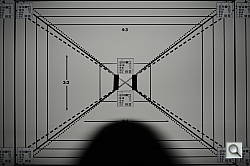 |
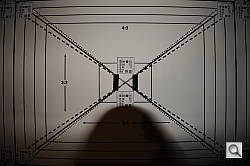
| Flash coverage, 14mm | Flash coverage, 20mm |
 |
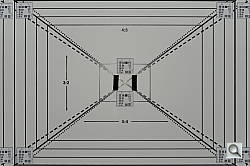 |
| Flash coverage, 24mm | Flash coverage, 50mm |
 |
 |
| Normal Flash, +0.3 EV | Slow-Sync Flash, +0.3 EV |
Coverage. Oddly, Nikon doesn't rate the D700's flash for angular coverage. To get a sense for what its coverage looked like, we attached a Nikkor 14-24mm f/2.8 lens to the camera and shot a series of exposures at different focal length settings. This not only showed that the flash has about enough coverage to handle a 24mm lens, but also showed very clearly one limitation of on-camera flashes in general: They're prone to being shadowed by large lenses. The 14-24mm lens casts a rather large shadow, even at 24mm. (We thought about extending our coverage testing to longer focal lengths, but the 24-70mm f/2.8 lens stuck out even further than the 14-24mm one, so we didn't think the results would be worthwhile.)
Exposure. In the Indoor test, the Nikon D700's flash underexposed our subject just a little at its default setting, requiring a +0.3 EV exposure compensation adjustment. Though results were still slightly dim there, the image at +0.7 EV appeared too unnaturally bright. The camera's Slow-Sync flash mode produced brighter and more even results, though with a stronger pinkish-orange cast from the room lighting, as is appropriate for a pro-level camera: A pro would gel the strobe to match the color temperature of the room lighting. Making the auto white balance hew closer to the flash white balance on flash shots makes sense.
| Manufacturer-Specified Flash Range |
|---|
| 105mm, f/2.8 |
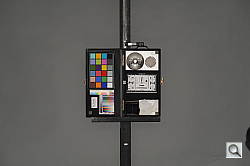 20 feet ISO 200 |
Manufacturer Specified Flash Range Test. In the shot above, the D700 performs about as Nikon says it will, producing a good exposure at a distance of 20 feet with an f/2.8 lens and shooting at its ISO 200 base ISO setting. Our standard test method for flash range uses a fixed setting of ISO 100, to provide a fair basis of comparison between cameras. We've now also begun shooting two shots using the manufacturer-specified camera settings, at the range the company claims for the camera, to assess the validity of the specific claims.
 Fujifilm GFX 50S Review
 Fujifilm X-T3 Review
 Olympus E-M5 III Review


Follow Imaging Resource