
Overview
Pentax K-5 High ISO RAW Image Quality
We look at RAW files converted with dcraw, an excellent freeware raw converter. dcraw usually offers timely support for the latest cameras, but more importantly, it does not apply any noise-reduction, sharpening or other corrections such as geometric distortion correction to the output files as some other converters do. There will always be differences between RAW converters, in terms of the sort of demosaicing algorithms they use (the processes by which they convert the separate Red, Green, and Blue data sets to an array of full-color RGB pixels), but dcraw seems to use a fairly generic algorithm that delivers good sharpness with relatively few artifacts, and can be counted on to not apply any noise reduction if you don't want it to.
See for yourself how the Pentax K-5's high ISO RAW files compare to those from other recent APS-C size sensor models: the Canon 60D, Nikon D7000 and Sony A580. Click on any of the crops below to see the corresponding full-sized image.
| High ISO RAW Comparison with Canon 60D, Nikon D7000 and Sony A580 Daylight-balanced illumination |
||||
|
|
Pentax K-5
|
Canon 60D
|
Nikon D7000
|
Sony A580
|
|
I
S O 8 0 0 |
 |
 |
 |
 |
 |
 |
 |
 |
|
 |
 |
 |
 |
|
|
|
Pentax K-5
|
Canon 60D
|
Nikon D7000
|
Sony A580
|
|
I
S O 1 6 0 0 |
 |
 |
 |
 |
 |
 |
 |
 |
|
 |
 |
 |
 |
|
|
|
Pentax K-5
|
Canon 60D
|
Nikon D7000
|
Sony A580
|
|
I
S O 3 2 0 0 |
 |
 |
 |
 |
 |
 |
 |
 |
|
 |
 |
 |
 |
|
|
|
Pentax K-5
|
Canon 60D
|
Nikon D7000
|
Sony A580
|
|
I
S O 6 4 0 0 |
 |
 |
 |
 |
 |
 |
 |
 |
|
 |
 |
 |
 |
|
|
|
Pentax K-5
|
Canon 60D
|
Nikon D7000
|
Sony A580
|
|
I
S O 1 2 8 0 0 |
 |
 |
 |
 |
 |
 |
 |
 |
|
 |
 |
 |
 |
|
|
Pentax K-5
|
Canon 60D
|
Nikon D7000
|
Sony A580
|
|
|
I
S O 2 5 6 0 0 |
 |
N/A
ISO 25,600 Not Supported |
 |
N/A
ISO 25,600 Not Supported |
 |
N/A
ISO 25,600 Not Supported |
 |
N/A
ISO 25,600 Not Supported |
|
 |
N/A
ISO 25,600 Not Supported |
 |
N/A
ISO 25,600 Not Supported |
|
|
|
Pentax K-5
|
Canon 60D
|
Nikon D7000
|
Sony A580
|
|
I
S O 5 1 2 0 0 |
 |
N/A
ISO 51,200 Not Supported |
N/A
ISO 51,200 Not Supported |
N/A
ISO 51,200 Not Supported |
 |
N/A
ISO 51,200 Not Supported |
N/A
ISO 51,200 Not Supported |
N/A
ISO 51,200 Not Supported |
|
 |
N/A
ISO 51,200 Not Supported |
N/A
ISO 51,200 Not Supported |
N/A
ISO 51,200 Not Supported |
|
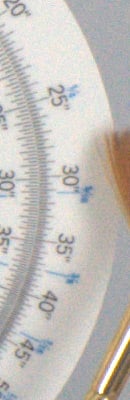
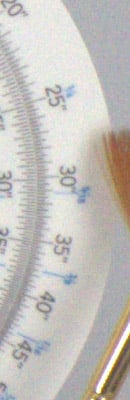
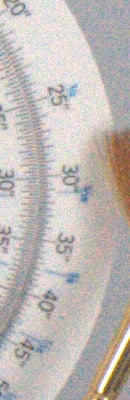
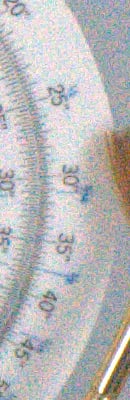
Here, we can see the Pentax K-5 clearly produces the cleanest looking RAW files, though it appears to be applying some noise reduction at higher ISOs (above ISO 1,600), which cannot be turned off. The noise reduction applied is pretty subtle, though, nothing like the heavy-handed approach used in earlier Sony SLRs. Still, it's something we'd rather not see in RAW files, as it does impact fine detail. The Nikon D7000 comes in second in terms of noise performance in this group. The Canon 60D comes in a close third, but its slightly higher resolution should help when it comes to printing at the same size. The Sony A580 places fourth, with the highest noise levels of this group, though it's still fairly competitive.
Here's a comparison of the Pentax K-5 with its predecessor as well as a couple of other semi-professional APS-C models:
| High ISO RAW Comparison with Pentax K-7, Canon 7D and Nikon D300S Daylight-balanced illumination |
||||
|
|
Pentax K-5
|
Pentax K-7
|
Canon 7D
|
Nikon D300S
|
|
I
S O 8 0 0 |
|
 |
 |
 |
|
 |
 |
 |
|
|
 |
 |
 |
|
|
|
Pentax K-5
|
Pentax K-7
|
Canon 7D
|
Nikon D300S
|
|
I
S O 1 6 0 0 |
|
 |
 |
 |
|
 |
 |
 |
|
|
 |
 |
 |
|
|
|
Pentax K-5
|
Pentax K-7
|
Canon 7D
|
Nikon D300S
|
|
I
S O 3 2 0 0 |
|
 |
 |
 |
|
 |
 |
 |
|
|
 |
 |
 |
|
|
|
Pentax K-5
|
Pentax K-7
|
Canon 7D
|
Nikon D300S
|
|
I
S O 6 4 0 0 |
|
 |
 |
 |
|
 |
 |
 |
|
|
 |
 |
 |
|
|
|
Pentax K-5
|
Pentax K-7
|
Canon 7D
|
Nikon D300S
|
|
I
S O 1 2 8 0 0 |
|
N/A
ISO 12,800 Not Supported |
 |
N/A
ISO 12,800 Not Supported |
|
N/A
ISO 12,800 Not Supported |
 |
N/A
ISO 12,800 Not Supported |
|
|
N/A
ISO 12,800 Not Supported |
 |
N/A
ISO 12,800 Not Supported |
|
|
Pentax K-5
|
Pentax K-7
|
Canon 7D
|
Nikon D300S
|
|
|
I
S O 2 5 6 0 0 |
|
N/A
ISO 25,600 Not Supported |
N/A
ISO 25,600 Not Supported |
N/A
ISO 25,600 Not Supported |
|
N/A
ISO 25,600 Not Supported |
N/A
ISO 25,600 Not Supported |
N/A
ISO 25,600 Not Supported |
|
|
N/A
ISO 25,600 Not Supported |
N/A
ISO 25,600 Not Supported |
N/A
ISO 25,600 Not Supported |
|
|
|
Pentax K-5
|
Pentax K-7
|
Canon 7D
|
Nikon D300S
|
|
I
S O 5 1 2 0 0 |
|
N/A
ISO 51,200 Not Supported |
N/A
ISO 51,200 Not Supported |
N/A
ISO 51,200 Not Supported |
|
N/A
ISO 51,200 Not Supported |
N/A
ISO 51,200 Not Supported |
N/A
ISO 51,200 Not Supported |
|
|
N/A
ISO 51,200 Not Supported |
N/A
ISO 51,200 Not Supported |
N/A
ISO 51,200 Not Supported |
|
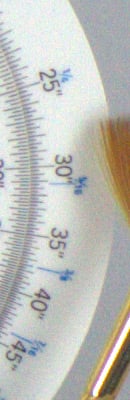
Here, like the JPEGs, we can see just how much better the Pentax K-5 is over its predecessor, the K-7 (which may also be applying subtle noise reduction at higher ISOs), as well as the improvement over the older generation sensors of the Canon 7D and Nikon D300S.