


Overview

The Fuji X-T10 and X-T20 mirrorless cameras have proven to be very popular with photographers for many reasons, not the least of which is that they combine high-end imaging performance with a compact and lightweight form factor. The Fuji X-T30 continues this trend by blending many of the features and performance of the X-T3 with the tried-and-true form of the X-T20. Let's take a closer look at the X-T30, seeing what's new, what has stayed the same and how it fits into the Fujifilm X Series lineup.
Key Features and Specs
- Compact interchangeable lens Fujifilm X Series mirrorless camera
- 26.1-megapixel backside-illuminated APS-C X-Trans CMOS 4 image sensor
- Native ISO range of 160-12,800, expandable to 80-51,200
- X-Processor 4 Quad-Core CPU
- Phase-detect autofocus covering the entire image area
- Up to 8 frames per second continuous shooting using the mechanical shutter
- Up to 20 frames per second continuous shooting using the electronic shutter
- Can capture 16MP images using the electronic shutter at up to 30 frames per second in 1.25x crop mode
- Includes Fujifilm Film Simulations and Color Chrome Effect
- Face-detect and eye-detect autofocus, including face selection and eye-detect in continuous autofocus modes
- 4K DCI/UHD video at up to 30 frames per second
- OLED electronic viewfinder
- 3-inch rear tilting touchscreen
- Built-in Wi-Fi and Bluetooth
Camera Body and Design
The X-T30 is a pretty compact camera. In total, its dimensions (width x height x depth) are 4.66 inches (118.4 millimeters) x 3.26 in. (82.8mm) x 1.84 in. (46.8mm). The height and width are precisely the same as the X-T20, although the X-T30 has slightly more depth due to a revised thumb grip. The weight of both cameras is identical at 13.51 ounces (383 grams) with battery and card.
Dial-based, manual control is an important part of the Fujifilm X Series DNA. The X-T30 continues in this tradition by offering dedicated dials for shooting mode, shutter speed and exposure compensation. There is also a lever for enabling the SR Auto shooting mode, which automatically selects from 58 presets depending upon the subject you are shooting. In terms of command dials, there are two, one on the front and a second on the back. Both of them can be pressed for further functionality.

While the Fuji X-T30 looks the same as the X-T20 from the front, there are important differences between the two cameras when we look at the back. In lieu of the four-way keypad of the X-T20, the X-T30 opts instead for an 8-way joystick. Further, the "MENU/OK" and "DISP/BACK" buttons are relocated. Another important change, one which you will be able to feel immediately, is the redesigned thumb grip. The "Q" button has been relocated to the top of this thumb grip, providing easy access to the customizable Quick Menu.
There are a couple of other differences between the body design of the X-T30 when compared to its predecessor, although they would easily fly under the radar when comparing product shots. The electronic viewfinder of the X-T30 is an 2.36M-dot OLED electronic viewfinder offering 0.62x magnification, like the EVF in the X-T20, although the X-T30's EVF is brighter by a margin of 300 cd/m2 (800 versus 500). Further, the EVF offers a 100 frames-per-second refresh rate in Boost Mode, so it is smoother than the 54.54 frames-per-second refresh rate of the X-T20's EVF. Similarly, the rear two-way tilting touchscreen is 3 inches and has 1.04M dots, but the touchscreen has been upgraded for a faster response time.

Imaging and Performance
The Fujifilm X-T30 uses the same backside-illuminated APS-C X-Trans CMOS 4 image sensor as the Fujifilm X-T3. This sensor offers a native ISO range of 160-12,800 and can be expanded to a range of ISO 80 to 51,200, the same as the X-T3, and image quality is identical.
With the same imaging pipeline as the X-T3, the X-T30 also comes sporting the X-T3's new autofocus system. The phase-detect autofocus system covers the entire image area, which is a very impressive feat. In addition to its full-sensor coverage, the autofocus system is also better in low light than the one found in the X-T20. In fact, the X-T30's AF is rated down to -3 EV, whereas the X-T20 was rated to only -0.5 EV.

Regarding autofocus modes, the X-T30's hybrid autofocus system offers single point, zone autofocus and wide/tracking autofocus modes with changeable point and area sizes. In addition, the camera offers face and eye tracking. The X-T30 allows for direct selection of a primary face within the frame and also offers eye-detection during continuous autofocus. While this feature is not initially available on the X-T3, it was added via a firmware update.
The X-T30 is equipped with Fujifilm's latest quad-core X-Processor 4. With this processor, the X-T30 is a speedy little camera. However, there are many caveats to consider. Firstly, there's a distinction between available shooting speeds when using the mechanical shutter versus the electronic shutter. It is worth pausing briefly here to note that the mechanical shutter has an exposure range of 60 minutes to 1/4,000s and the electronic shutter's range is 4s to 1/32,000s. When using the electronic shutter, the X-T30 will offer faster burst speeds than when using the mechanical shutter, all else equal. There is also a special 1.25x crop mode to consider, which produces 16-megapixel images.

When shooting with the electronic shutter and the 1.25x crop mode, the X-T30 can shoot at up to 30 frames per second. Fujifilm states that the buffer depth is 26 JPEG images or 17 raw files. If you shoot at 20 fps using electronic shutter you can capture full-res images for up to 32 JPEGs or 17 raw images. There is also a special Pre-shot mode, which captures up to 10 images while the shutter is pressed halfway. The camera will then capture up to 68 additional images once the shutter is fully depressed at speeds ranging from 10 to 30 frames per second. At 30 fps, however, you can only capture a dozen post-press frames, for a total of 22 images. Again, this is available only with the electronic shutter and when shooting with a 1.25x crop.
If you want to use the mechanical shutter, the maximum shooting speed is understandably lower, but still pretty quick. When using the mechanical shutter and capturing 26-megapixel images, Fujifilm states that the X-T30 is able to shoot at up to 8 frames per second and capture a total of 90 JPEG images or 18 raw images (lossless compressed or uncompressed). See our Performance page for timing results from the IR lab.

Video
Video has become an increasingly important component of interchangeable lens cameras for most manufacturers, and Fujifilm is following the trend. The X-T30 can capture 4K (both DCI and UHD) video at up to 30 frames per second and 1080p (Full HD) video at up to 120 fps. The X-T30 also offers 10-bit 4:2:2 recording through the camera's HDMI port and 4:2:0 internal recording.
The maximum bitrate is 200Mbps across both 4K and Full HD resolutions. When recording DCI 4K (4096 x 2160) and 4K UHD (3840 x 2160), the maximum clip length is approximately 10 minutes and you can record using 29.97p, 25p, 24p and 23.98p frame rates. In standard shooting mode, Full HD (1920 x 1080) video can be recorded at 59.94p and 50p frame rates in addition to the ones listed above for up to approximately 15 minutes. The high-speed mode is separate and offers up to 6 minutes of recording at 120p and 100p frame rates.

There are many video improvements when compared against the X-T20. For example, when recording 4K UHD video, the X-T30, like the X-T3, records a 6K image and then downsamples it to 4K. Further, it offers 24-bit 48KHz audio recording and Fujifilm's video-focused Eterna Film Simulation, which was first introduced with the Fujifilm X-H1 camera. Face and eye-detect autofocus performance has also been improved.
Connectivity, Storage and Power

The Fuji X-T30 has some changes compared to its predecessor when it comes to ports as well. It still includes a Micro HDMI Type-D port and a 2.5mm stereo microphone/remote release jack, but its Micro-B USB 2.0 port has been changed to a USB-C (USB 3.1 Gen 1) port. It still supports in-camera charging, but also supports a USB-C headphone adapter.
Of course the X-T30 still has a dedicated hot shoe. Regarding the built-in flash, it is a manual pop-up flash with a guide number of 7 at ISO 200 and 5 at ISO 100, the same as the X-T20.
The X-T30 has built in Wi-Fi connectivity, but now includes Bluetooth (Bluetooth LE v4.2). Via the free Fujifilm Camera Remote application, you can wirelessly control the camera and transfer images to your smartphone.
The X-T30 writes to a single SD card, which is still UHS-I rather than UHS-II compliant.

For power, the X-T30 relies upon the NP-W126S lithium-ion battery, the same battery pack as the X-T20. In normal mode, the camera is rated for approximately 380 shots on a charge with the LCD and 360 shots with the EVF. That's up from X-T20's 350 shots for either display. When recording video, the X-T30's battery life is rated for 45 minutes when shooting 4K or Full HD. The X-T20 was rated at 50 minutes for 4K and 60 minutes for Full HD.
Fuji X-T30 versus X-T20
While we have outlined some differences between the Fuji X-T30 and its predecessor, the X-T20, it is worth giving a brief recap of some of the biggest differences.
Camera body: Stylistically, the X-T20 and X-T30 are very similar. They weigh the same, have much of the same control arrangement and have nearly identical dimensions and overall specifications. However, the X-T30 has a revised thumb grip and rear button layout, which includes swapping in an 8-way joystick for the four-way directional pad of the X-T20. Further, while the OLED electronic viewfinder has the same resolution and magnification, the X-T30's EVF is brighter and has a higher refresh rate. The rear touchscreen has the same tilt capabilities and resolution, but the X-T30's touchscreen performance has been improved.

Image sensor: Whereas the X-T20 employed a 24.3-megapixel X-Trans III CMOS sensor, the X-T30 uses the same 26.1-megapixel X-Trans CMOS 4 sensor as the Fujifilm X-T3. Along with the newer sensor, there's a new low native ISO of 160, whereas the X-T20's native range bottomed out at 200.
Autofocus: Like the X-T20, the X-T30 uses a hybrid autofocus system, although the X-T30 has phase-detect autofocus pixels covering the entire image area. The X-T20's phase-detect pixels covered approximately 50 percent of the horizontal image area and 75 percent of the vertical area. Further, the X-T30 low-light autofocus performance is improved, being rated down to -3 EV versus -0.5 EV. Finally, the X-T30 has eye-detect and face-detect functionality, including the ability to select a face in the frame.

Performance: Capable of shooting at up to 30 frames-per-second using its electronic shutter, the X-T30 is 16 frames per-second-faster than the X-T20. Granted, this comes at the cost of a 1.25x crop. Up to 20 fps is possible at full resolution, versus 14 fps for the X-T20. When using their mechanical shutters, both cameras shoot at up to 8 fps.
Video: The Fujifilm X-T20 offered 4K UHD video recording and the X-T30 adds a higher resolution DCI 4K video recording option in addition to offering improved autofocus features and performance. Further, the X-T30 adds a 1080/120p recording option, whereas the X-T20 was capped at 60 frames per second. With respect to video fidelity and color, the X-T30 offers 4:2:2 10-bit video out via HDMI and includes the Eterna Film Simulation, features both lacking on the X-T20.

Fuji X-T30 Pricing and Availability
The Fujifilm X-T30 is available in three color schemes: black, silver and charcoal silver. The first two options, black and silver, became available in March in body only and kit options. The body has a suggested retail price of $899 USD in the United States and $1,199.99 CAD in Canada. There are two kits, each offering a zoom lens. One comes with an XC 15-45mm lens and lists for $999 and $1,299.99 in the United States and Canada respectively. The second comes with the XF 18-55mm lens with prices of $1,299 USD and $1,699.99 CAD. The charcoal silver X-T30, which is available in the same body only and kit options, arrived in stores in late June. Note that street prices as of this writing are about $100 less than the above list prices.
In the Box
The Fuji X-T30 retail kit with XC 15-45mm lens (as reviewed) contains the following items:
- Fujifilm X-T30 Camera Body
- Fujinon XC 15-45mm f/3.5-5.6 OIS PZ Lens
- NP-W126S Lithium-ion Battery Pack
- AC-5VG AC Power Adapter
- Plug Adapter
- USB Cable
- Body Cap
- Lens Caps
- Shoulder Strap
- Strap Clips
- Clip Attaching Tool
- Protective Covers
- Hot Shoe Cover
- Limited 1-Year Warranty
- Camera instruction manual
Optics
Viewfinder Test Results
Accuracy
Very good accuracy from the electronic viewfinder and LCD monitor.

The Fuji X-T30's electronic viewfinder and LCD monitor proved pretty accurate, both showing just under 99% coverage in preview mode, though that's a bit short of Fuji's 100% spec.
The images above were taken from our standardized test shots. For a collection of more pictorial photos, see our Fujifilm X-T30 Photo Gallery .
Exposure
Color
Saturation & Hue Accuracy
Good saturation levels with excellent hue accuracy.
 |
|||
|
ISO Sensitivity
|
|||
| In the diagram above, the squares show the original color, and the circles show the color that the camera captured. More saturated colors are located toward the periphery of the graph. Hue changes as you travel around the center. Thus, hue-accurate, highly saturated colors appear as lines radiating from the center. Mouse over the links to compare ISOs, and click for larger versions. | |||
Saturation. The Fuji X-T30 produces images with accurate, pleasing colors using the standard film simulation (Provia) at default settings. The camera pushes most colors by small amounts, dark red, orange and dark green by moderate amounts, but undersaturates aqua and light purple by just a bit. Default mean saturation at the base ISO of 160 was 107.6% (7.6% oversaturated), which is a little lower than average these days, but quite pleasing and a little more realistic than most cameras. You can of course tweak saturation and/or select a different film simulation mode if the default is not to your taste. Mean saturation remained quite consistent as ISO was increased, reaching a max of 108.8% at the extended ISO of 25,600. Most consumer digital cameras produce color that's more highly saturated (more intense) than found in the original subjects. This is simply because most people like their color a bit brighter than life.
Skin tones. The Fuji X-T30 rendered pleasant Caucasian skin tones when using auto white balance in simulated daylight. Results were quite pleasing, with a healthy-looking pinkish tint. (Here, too, the X-T30's saturation and/or film mode options may come into play for some users, letting them tweak the color of skin tones if they find the default rendering a bit too saturated for their personal tastes. Note that Fujifilm claims their Astia film simulation produces "true-to-life" skin tones.) Where oversaturation is most problematic is on Caucasian skin tones, as it's very easy for these "memory colors" to be seen as too bright, too pink, too yellow, etc.
Hue. The Fuji X-T30 produced only a few color shifts relative to the ideal reproduction of hues, and has excellent hue accuracy overall. The largest shift is in cyan toward blue, however we think it's a deliberate choice by camera engineers to produce better-looking sky colors. Average "delta-C" color error after correction for saturation at base ISO was only 3.85 (lower numbers are better), which is excellent, and hue accuracy remained better than average across the ISO range. Hue is "what color" the
color is.


Sensor
Exposure and White Balance
Indoors, incandescent lighting
Auto and Incandescent white balance were too warm, but much better results with the Manual setting. Slightly above average exposure compensation required.


Indoors, under typical incandescent lighting, color balance was quite warm using the Auto setting, with a fairly strong red/pink cast. Results with the Incandescent white balance setting were also too warm, with a strong yellow/orange cast. The Manual white balance setting was much more accurate, though it had a slight green bias. The X-T30 required +0.7 EV exposure compensation here while most cameras need about +0.3 EV for this scene, though the images are a little bright. Our test lighting for this shot is a mixture of 60 and 100 watt household incandescent bulbs, a pretty yellow light source, but a very common one in typical home settings here in the U.S.
Outdoors, daylight
Very good color and exposure outdoors.
In simulated daylight, the Fuji X-T30 produced very nice color and exposure at default settings. The X-T30's default exposure using aperture priority AE and multi-segment metering was pretty good for our "Sunlit" Portrait shot when using Auto white balance, just a bit hot. This is much better than average exposure accuracy as most cameras need +0.7 EV to keep the face bright for this shot, but it did lead to blown highlights in the mannequin's shirt and flowers. Skin tones were pleasing, with a healthy-looking pinkish tint that's not too overdone with Auto white balance, and Manual (Custom) WB wasn't much different (just a touch warmer in the face, though a bit brighter for some reason). See the "Extremes: Sunlit..." section below to see how the X-T30's Highlight/Shadow Tone and D-Range settings help deal with harsh lighting like this.
Resolution
~3,050 lines of strong detail from JPEGs, about the same from ACR-converted RAW.


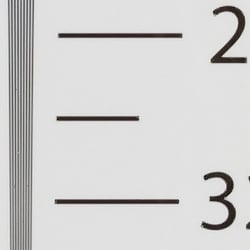

Our in-camera JPEG resolution chart shot revealed sharp, distinct line patterns up to just over 3,050 lines per picture height in the horizontal direction, and to just over 3,050 lines per picture height in the vertical direction as well. Some may argue for higher numbers, but lines begin to merge at higher resolutions. Complete extinction of the pattern didn't occur before the 4,000 line limit of our chart in both directions. Adobe Camera Raw wasn't able to extract any additional resolution, however it did produce slightly lower amounts of luma moiré near the limits of resolution. Interestingly, ACR produced more false colors than the camera's processing, though. And in both versions, we see more than the usual dark or bright pixels between within the lines, which are likely caused by less than perfect interpolation of PDAF photosites. Use these numbers to compare with other cameras of similar resolution, or use them to see just what higher resolution can mean in terms of potential detail.
Sharpness & Detail
Sharp images at default settings, with only minor edge-enhancement artifacts appearing around high-contrast subjects. Mild noise suppression is visible in the shadows at base ISO.

Sharpness. The Fuji X-T30 captures fairly sharp images by default, though there are some minor edge enhancement artifacts visible along high-contrast edges such as the relatively thin but bright sharpening "haloes" around the lines and letters of the bottle label above left. Default sharpening seems to be a good compromise between sharpness and artifacts. Edge enhancement creates the illusion of sharpness by enhancing colors and tones right at the edge of a rapid transition in color or tone.
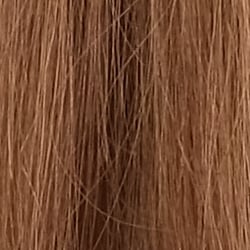
Detail. The crop above right shows low to moderate levels of luminance noise suppression, as the darker areas of the model's hair still show a very good amount of detail. Some individual strands do merge together when local contrast is low and as shadows deepen, but performance here is excellent for an APS-C sensor. The Fuji X-T30 also does a great job at keeping chrominance noise low, better than most Bayer-filtered cameras, but it can struggle to resolve fine detail or accurate color in certain fine subject matter because of its unique color filter arrangement. Noise-suppression systems in digital cameras tend to flatten-out detail in areas of subtle contrast. The effects can often be seen in shots of human hair, where the individual strands are lost and an almost "watercolor" look appears.
RAW vs In-Camera JPEGs
As noted above, the Fuji X-T30 produces fairly sharp JPEG image with very good detail at default settings. Let's see how an Adobe Camera Raw conversion with relatively strong unsharp mask sharpening compares.
|
Base ISO (160)
|
|
 |
 |
 |
 |
 |
 |
|
Camera JPEG, defaults
|
RAW via Adobe Camera Raw
|
In the table above, we compare an in-camera JPEG taken at base ISO (160) using default noise reduction and sharpening (on the left) to the matching RAW file converted with Adobe Camera Raw 9.1 via DNG Converter 11.3 using default noise reduction with quite strong but tight unsharp masking applied in Photoshop. (In this case, we used USM of 300%, radius of 0.3 pixels, and a threshold of 0.)
Adobe Camera Raw does a pretty good job here, but doesn't extract significantly more detail than the camera does, though contrast and subtle detail in the our red-leaf fabric is noticeably better. There is a touch more detail in the mosaic crop and perhaps slightly more accurate colors, but nothing really to write home about, and the in-camera JPEGs look smoother, have better contrast and brighter colors. The strong sharpening required to keep images reasonably sharp does tend to exacerbate noise, though, as can be seen in the background of the first set of crops, however that can be mitigated by experimenting with the sharpening settings, or using some luminance noise reduction. Bottom line: Fuji's in-camera processing is excellent, and there isn't much advantage to shooting RAW in terms of detail reproduction, at least with Adobe Camera Raw and at low ISOs.
ISO & Noise Performance
Excellent high ISO performance for an APS-C sensor.
|
Default High ISO Noise Reduction
|
 |
 |
 |
| ISO 80 | ISO 100 | ISO 160 |
 |
 |
 |
| ISO 200 | ISO 400 | ISO 800 |
 |
 |
 |
| ISO 1,600 | ISO 3,200 | ISO 6,400 |
 |
 |
 |
| ISO 12,800 | ISO 25,600 | ISO 51,200 |
The Fuji X-T30's images are quite clean with good detail up to ISO 800, with low, fine-grained luma noise and very little chroma noise. At ISO 1600, luminance noise is a little stronger as you'd expect, but fine detail is still very good with almost no chroma noise. ISO 3200 shows a larger increase in noise and blurring, but fine detail remains pretty good, again with almost no chroma noise. At ISO 6400 luminance noise becomes more noticeable along with noise reduction artifacts, though noise still fairly fine-grained, and chroma noise is still well-controlled. Image quality appears to drop off more rapidly at ISO 12,800 and above, with progressively more visible noise "grain", stronger blurring and more noticeable noise reduction artifacts. Fine detail at ISOs 25,600 and 51,200 is quite soft with heavy luminance noise accentuated by sharpening artifacts, as well as chrominance noise in the form of large but fairly subtle yellow and purple blotches. All-in-all, high ISO noise performance is excellent for an APS-C camera, though noise appears to be slightly higher than its 24-megapixel predecessor, the X-T20.
We're pixel-peeping to the extreme here though, which isn't always representative of what you see in prints. As always, see the Print Quality section below for maximum recommended print sizes at each ISO.
Extremes: Sunlit, dynamic range and low light tests
Decent dynamic range in JPEGs at default settings. Very good low-light AF performance.


Sunlight. The Fuji X-T30 struggled a bit with the harsh lighting of this test at default settings at the base ISO of 160 (which should be best case). We preferred the default exposure (0 EV) overall here, because the exposure at +0.3 EV exposure compensation was too bright with far too many clipped highlights. Still, at default exposure, a few highlights were blown in the mannequin's shirt and flowers. There are also some very deep shadows, though they don't appear to be clipped to black as abruptly as older Fuji's did. (Fuji's default Provia film simulation is known for high contrast and crushed shadows but it appears it's been tweaked.) Overall, the Fuji X-T30's JPEGs performed about average here in terms of dynamic range, without the help of any highlight and shadow adjustments, nor any dynamic range enhancement (see below).
Because digital cameras are more like slide film than negative film (in that they tend to have a more limited tonal range), we test them in the harshest situations to see how they handle scenes with bright highlights and dark shadows, as well as what kind of sensitivity they have in low light. The shot above is designed to mimic the very harsh, contrasty effect of direct noonday sunlight, a very tough challenge for most digital cameras. (You can read details of this test here.)
Face/Eye Detection
The Fuji X-T30 has the ability to detect faces and eyes, and adjust exposure and focus accordingly. Options available are Face On / Eye Off, Face On / Eye Auto, Face On / Right Eye Priority, Face On / Left Eye Priority and Face Off / Eye Off.
| Face Detection | ||
|
 |
 |
| Aperture Priority Face Off / Eye Off: 0 EV |
Aperture Priority Face On / Eye Auto 0 EV |
Full Auto Mode 0 EV |
As you can see in the examples above, the center image with face and eye detection enabled is actually slightly dimmer than with it off on the left, as the X-T30 tended to expose this shot a little hot by default. Full Auto mode (right) is also a bit bright, but the camera selected a much wider aperture of f/2.8, a faster shutter speed of 1/480s, a higher ISO (320) and used the DR Auto (200%) setting (see below) for better shadow and highlight retention.
Contrast Adjustment
The Fuji X-T30 does not offer a traditional contrast adjustment. Instead, it offers Shadow and Highlight Tone settings, which let you adjust contrast in highlights and shadows independently. There are seven settings each on the X-T30, ranging from -2 to +5.

Shadow and Highlight Tone. Above you can see the effects the seven settings for Highlight and Shadow Tone control on our high-contrast "Sunlit" Portrait shot. Mouse over the links to load the associated thumbnail and click on the links to visit the full resolution image.
Note how the Highlight settings mainly affect the brighter portions of the image, while the Shadow settings impact the darker areas. Both settings can be used simultaneously, giving more flexibility to adjust the tone curve at both ends compared to a single contrast setting. Nice.

D-Range is Fuji's name for their dynamic range enhancement technology. D-Range designed to preserve hot highlights, by exposing for highlights and then boosting mid-tones and shadows. There are three levels: DR100 100% (default), DR200 200%, DR400 400%, as well as an Auto mode which can select DR100 or DR200. DR200 is available at ISO 320 and above, while DR400 is available at ISO 640 and above. Mouse over the links above to load the corresponding thumbnail image. Click on the links to get to the full resolution images.
As you can see the images above, the Fuji X-T30's higher D-Range settings were effective at toning down and preserving highlights. As they say, though, there's no free lunch, because improved highlight retention comes at a cost of increased noise. This is because the camera's sensitivity needs to be raised to take advantage of the D-Range feature, though that's not much of penalty because the X-T30's noise performance is so good. (Note that the Fuji X-T30 does not offer a multi-shot in-camera HDR mode.)


D-Range Priority The Fuji X-T30 offers a mode called Dynamic Range Priority, which appears to be an automatic combination of Highlight Tone, Shadow Tone and D-Range. It offers three settings: Auto, Strong, Weak and Off. Weak is available at sensitivities from ISO 320 to 12,800 and Strong is available at ISO 640 to 12,800. Mouse over the links above to compare settings, and click on the links to access full resolution versions.
Dynamic Range Analysis (RAW mode)
While we once performed our own dynamic range measurements based on in-camera JPEGs as well as converted RAW images (when the camera was supported by Adobe Camera Raw), we've switched to using DxO Labs' results from their DxOMark website. As technology advanced, the dynamic range of modern high-end cameras in some cases exceeded the range of the Stouffer T4110 density scale that we used for our own measurements. DxO's approach based on RAW data before demosaicing is also more revealing, because it measures the fundamental dynamic range of the sensor, irrespective of whatever processing is applied to JPEGs, or to RAW data by off-the-shelf conversion software.
In the following, we use DxO's "Print" dynamic range results, which are scaled based on camera resolution. As the name suggests, this scaling corresponds to the situation in which you print at a given size, regardless of how many megapixels the camera might have. (In other words, if you've decided to make a 13x19 inch print, that's the size you're printing, whether the camera's resolution is 16 or 300 megapixels.) Also note that DxO Labs uses a signal-to-noise (SNR) threshold of 1 when defining the lower boundary of acceptable luminance noise in their dynamic range measurements, which corresponds to the "Low Quality" threshold of the Imatest software we used to use for this measurement.
Unfortunately, DxOMark has not tested the X-T30 as of this writing (and we doubt they ever will). The website photonstophotos.com has however tested the X-T30. As expected, they found its dynamic range to be nearly identical to the X-T3's, and improved over the X-T20's at the low and high ends of the sensitivity range. Compared to the Sony A6400, a leading APS-C mirrorless camera, the X-T30 does at least as good or better across the ISO range. The X-T30 doesn't do quite as well as the aging Nikon D7200 (one of the top performing APS-C DSLRs in terms of DR) at base ISO, though it's pretty much neck-and-neck with the D7200 up to ISO 800, then exceeds it significantly at higher ISOs thanks to its dual gain design. To compare the X-T30's dynamic range with the X-T20, X-T3, A6400 and D7200, click here.
Bottom line: Very good dynamic range for an APS-C camera from RAW files.
Low Light AF. The Fuji X-T30's hybrid autofocus system was able to focus in extremely low light. With our legacy low-contrast AF target, the camera was able to focus down to about -4.4 EV unassisted with an f/2.8 lens in our tests, which is very good. With our newer high-contrast AF target, the X-T30 was able to autofocus down to about -5.6 EV unassisted, which is excellent. The Fuji X-T30 also has a built AF assist lamp, which lets it autofocus in complete darkness as long as the subject is in range and has sufficient contrast.
NOTE: This low-light AF test is conducted with a stationary subject, and the camera mounted on a sturdy tripod. Most digital cameras will fail miserably when faced with a moving subject in dim lighting. (For example, a child's ballet recital or a holiday pageant in a gymnasium.) Thanks to its larger sensor and Hybrid AF, mirrorless cameras like the Fuji X-T30 tend to do better than point & shoots, but you still shouldn't expect a quick autofocus lock with moving subjects.
Built-in Flash
A fairly weak built-in flash.

Our standard Indoor Portrait test scene was well exposed with +0.3 EV flash exposure compensation using Auto ISO at f/4. The camera boosted ISO sensitivity to 2500, though, indicating a fairly weak flash, though that's pretty typical. The relatively high ISO led to quite a warm image with Auto white balance, due to the ambient lighting.
Output Quality
Print Quality
Excellent 30 x 40 inch prints ISO 80-200; a nice 20 x 30 inch print at ISO 1600, and a good 8 x 10 at ISO 12,800
 ISO 80 through 200 prints look terrific at 30 x 40 inches and larger, basically as large as the 26-megapixel resolution can take you at your intended viewing distance before you run out of resolution. The prints display pleasing colors, excellent fine detail and a nice three dimensionality.
ISO 400 delivers superb prints up to 24 x 36 inches. Larger prints are also fine for wall display purposes and less critical applications here, but in order to ensure maximum print quality we recommend limiting your sizes to a maximum of 24 x 36 inches, where you can expect wonderful prints similar to the 30 x 40 inch prints at and near base ISO.
ISO 800 also yields a nice 24 x 36 inch print, which is a terrific size to achieve at this gain setting from an APS-C camera. There is just a trace of mild noise in flatter areas of our test target, and some noticeable loss in contrast detail in our tricky red-leaf fabric swatch (very typical for most all cameras we test by this setting), but the print is still quite good otherwise. For your most critical printing the 20 x 30 inch prints here will tighten up those minor issues.
ISO 1600 images are good at 20 x 30 inches, with similar attributes as found in the 24 x 36 inch prints at ISO 800. Anything larger and you'll likely experience too much in the way of noise and noise reduction artifacts, but remaining at or below 20 x 30 inches will generally do the trick at this setting.
ISO 3200 prints require a reduction to 13 x 19 inches to pass our good seal. Your mileage may vary depending on your subject matter and viewing distance, and you can likely count on 16 x 20 inch prints here for less critical applications. But for anything important you'll want to limit your sizes to 13 x 19 inches and below at this sensitivity.
ISO 6400 is often the turning point for crop-sensor cameras, and even the Fujifilm lines which have historically performed admirably in our Print Quality tests begin to show signs of strain by ISO 6400. The 11 x 14 inch prints here do pass our good seal of approval, but as with virtually all crop-sensor cameras, there's just something "lost" in the noise reduction process for prints by this ISO. Fortunately for the X-T30, there is still good and accurate color representation, which is not something all lines can boast by this ISO.
ISO 12,800 delivers a worthwhile 8 x 10 inch print, which is a nice feat for an APS-C camera to achieve. There is still full color representation and good fine detail throughout, with only minor issues such as a trace of noise in flatter areas of our test target.
ISO 25,600 prints are best kept to 5 x 7 inches or below. This is still a worthwhile achievement for such a high ISO though.
ISO 51,200 yields a worthwhile 4 x 6 inch print, and that's saying something for a crop-sensor camera. Many cameras offer high ISOs that can't produce worthwhile images at their highest settings, and we applaud cameras that can such as the X-T30.
The Fujifilm X-T30 shines in the Print Quality department, matching the more expensive X-T3 at each ISO. You'll experience superb images at large print sizes at the lower ISOs, and can rely on high quality up through at least ISO 3200 for fairly sizable prints. After that the strain of the higher gains does begin to take its toll, but not nearly as bad as we've seen with some other APS-C lines. The X-T30 maintains good color reproduction throughout, and can even print a worthwhile image at its highest gain setting of ISO 51,200. For the money, there are very few cameras better than the X-T30 for sheer image quality and printing prowess.
The images above were taken from our standardized test shots. For a collection of more pictorial photos, see our Fujifilm X-T30 Photo Gallery .
Not sure which camera to buy? Let your eyes be the ultimate judge! Visit our Comparometer(tm) to compare images from the Fujifilm X-T30 with those from other cameras you may be considering. The proof is in the pictures, so let your own eyes decide which you like best!
Performance
Timing and Performance
Excellent overall performance for its class.
| Startup/Play to Record | ||
|---|---|---|
| Power on |
~1.3 seconds
|
Time it takes to turn on and capture a shot. |
|
Play to Record, |
~1.0 second
|
Time until first shot is captured. |
Power on to first shot was slightly faster-than-average for a mirrorless camera, though not as fast as most DSLRs. It's also difficult to accurately time, as there is a shutter pre-press penalty. Play to Record wasn't bad, but also had a pre-press penalty.
| Shutter Response (Lag Time) Mechanical / Electronic Shutter |
||
|---|---|---|
|
Full Autofocus, |
0.060 / 0.080
second |
Time from fully pressing shutter button to image capture, with the lens already at the proper focal distance setting. (All timing performed with the Fujinon 56mm f/1.2 lens.) |
|
Full Autofocus, |
0.163 / N.A.
second |
Time from fully pressing shutter button to image capture. (Bundled flash in Auto mode.) |
| Manual Focus |
0.059 / 0.079
second |
For most cameras, shutter lag is less in manual focus than autofocus, but usually not as fast as when the camera is "prefocused". |
|
Prefocused |
0.051 / 0.067
second |
Time to capture, after half-pressing and holding shutter button. |
The Fuji X-T30's autofocus speed was very fast for a mirrorless camera. The X-T30's full autofocus shutter lag (with the subject at a fixed distance) was only 0.060 second using single point (center) AF-S mode. Note that Boost mode was enabled and Release/Focus Priority was set to Focus Priority for the above tests (unlike most cameras, Fujis oddly default to Release Priority even in AF-S mode).
With the built-in flash enabled, the X-T30's full AF shutter lag increased to 0.163 second to account for preflash metering, but that's still very quick.
Manual focus shutter lag was also very fast at 0.059 second. Prefocused shutter lag was quick at 0.051 second, though that's not as fast as some competing mirrorless cameras.
We retested the X-T30's lag times using electronic shutter modes to see how using it impacts performance. (Note that the X-T30 does not offer an electronic first-curtain shutter option like its bigger brother, the X-T3.) As you can see, electronic shutter increased lag times, but not too dramatically.
With Boost mode off, Full AF lag increased to 0.090 second with the mechanical shutter and 0.105 second using the electronic shutter which is still quite fast. Manual and prefocused lags were not significantly affected by Boost mode.
To minimize the effect of different lens' focusing speed, we test AF-active shutter lag with the lens already set to the correct focal distance.
| Cycle Time (shot to shot) | ||
|---|---|---|
| Single Shot mode |
0.35 second
|
Time per shot, averaged over a few frames (we no longer test for buffer depths in single-shot mode). |
|
Single Shot mode |
0.37 second
|
Time per shot, averaged over a few frames (we no longer test for buffer depths in single-shot mode). |
| Early shutter |
Yes
|
Some cameras don't snap another shot if you release and press the shutter too quickly in Single Shot mode, making "No" the preferred answer. |
|
Continuous High |
0.13 second
(8.0 fps); 79 frames total; 14.3 seconds to clear* |
Time per shot, averaged over 20 frames. Slows to an average of 0.2s or 4.9 fps when buffer is full. |
| Continuous High |
0.13 second
(8.0 fps); 18 frames total; 8.4 seconds to clear* |
Time per shot, averaged over buffer length of 18 frames. Then slows to an average of 0.41s or 2.5 fps when buffer is full with a lot of variation. |
|
Continuous High |
0.13 second
(8.0 fps); 18 frames total; 11.9 seconds to clear* |
Time per shot, averaged over buffer length of 18 frames. Then slows to an average of 0.66s or 1.5 fps when buffer is full with a lot of variation. |
|
Continuous High |
0.05 second
(20.0 fps); 28 frames total; 13.2 seconds to clear* |
Time per shot, averaged over buffer length of 28 frames. Then slows to an average of 0.1s or 10 fps when buffer is full with a lot of variation. |
|
Continuous High |
0.05 second
(20.0 fps); 17 frames total; 7.7 seconds to clear* |
Time per shot, averaged over buffer length of 17 frames. Then slows to an average of 0.47s or 2.1 fps when buffer is full with a lot of variation. |
|
Continuous High |
0.05 second
(20.0 fps); 17 frames total; 11.4 seconds to clear* |
Time per shot, averaged over buffer length of 17 frames. Then slows to an average of 0.74s or 1.3 fps when buffer is full with a lot of variation. |
|
Continuous High |
0.03 second
(30.0 fps); 25 frames total; 16.2 seconds to clear* |
Time per shot, averaged over buffer length of 25 frames. Then slows to an average of 0.09s or 11.5 fps when buffer is full with a lot of variation. |
|
Continuous High |
0.03 second
(30.0 fps); 18 frames total; 6.7 seconds to clear* |
Time per shot, averaged over buffer length of 18 frames. Then slows to an average of 0.37s or 2.7 fps when buffer is full with a lot of variation. |
|
Continuous High |
0.03 second
(30.0 fps); 17 frames total; 8.2 seconds to clear* |
Time per shot, averaged over buffer length of 17 frames. Then slows to an average of 0.52s or 1.9 fps when buffer is full with a lot of variation. |
| Flash Recycling |
3.5 seconds
|
Built-in flash at maximum output. |
|
*Note: Buffer clearing times measured with a 64GB Lexar Pro 2000x UHS-II SDXC card. Slower cards will produce correspondingly slower clearing times. Slow cards may also limit length of bursts in continuous mode. ISO sensitivity and noise reduction settings can also affect cycle times and burst mode performance.
|
||
Single-shot cycle times were fast -- below 0.4 second for both JPEG and RAW+JPEG frames. (Note that we no longer test single-shot mode with just RAW files, as the results are usually somewhere in between JPEG and RAW+JPEG.)
The X-T30 offers six full-resolution continuous modes consisting of Continuous Low at 3.0, 4.0, 5.0 fps, and Continuous High at 8.0, 10 and 20 frames per second. In addition, there are three 1.25x crop modes which save 16.6-megapixel files rated at 10, 20 and 30 fps. Note that all speeds above 8 fps use the electronic shutter.
The Fuji X-T30's top Continuous High burst mode speed with the mechanical shutter was very good, testing at 8 frames per second no matter the file type, meeting Fuji's spec. As mentioned, the X-T30's top full-resolution burst rate is 20 frames per second using the electronic shutter, and our lab results exactly matched that spec as well, no matter the file type. The X-T30's 30 fps 1.25x crop mode also exactly met spec in the lab. We did not test the lower-speed modes.
Full-resolution buffer depth was quite generous for JPEGs at 8 fps, with a tested buffer depth of 79 best quality JPEG files. When shooting losslessly compressed RAW or RAW+JPEG, the buffer depths dropped to 18 frames which is still pretty good for the class. Interestingly, RAW and RAW+JPEG buffer depths didn't change much when shooting at 20 fps, at 17 frames, though when shooting just JPEGs it fell from 79 to 28 frames. In the 30 fps 1.25x crop mode, buffer depths were 25 best quality JPEGs, 18 lossless RAW and 17 lossless RAW+JPEG frames.
Buffer clearing was reasonably quick given the buffer depths with our fast 64GB Lexar Pro 2000x SDXC card, taking between a best-case of 6.7 seconds and a worst-case of 16.2 seconds to clear after max-length bursts depending on the mode and file type, and the camera lets you adjust settings as well as view just-shot images while the buffer is clearing.
Recycling the built-in flash after full-power discharges took an average of 3.5 seconds, which is fair.
Bottom line, the Fuji X-T30's performance is excellent for its class with a decent startup time, super fast autofocus, low shutter lag, fast cycle times, and very fast bursts modes. Buffer depths could be deeper but they are still good for the class, and buffer clearing is reasonably quick when using a fast card.
Battery
Battery Life
Decent battery life for a mirrorless camera.
| Still Capture with XF 35mm f/1.4 lens |
Battery Life, Shots (Normal / Boost) |
|---|---|
|
Electronic Viewfinder
|
360 / 260
|
|
LCD Monitor
|
380 / 300
|
The Fuji X-T30 uses a custom NP-W126S rechargeable lithium-ion battery pack for power, and is charged in-camera via USB. The CIPA-rated battery life (with flash disabled) is about average for a mirrorless camera in Normal mode, but it's lower than average in Boost mode, and much lower than most DSLRs. We recommend getting a second battery for your X-T30 if you plan any extended outings.
The table above shows the number of shots the camera is capable of (on a fully-charged rechargeable battery), based on CIPA battery-life and/or manufacturer standard test conditions.
(Interested readers can find an English translation of the CIPA DC-002 standards document here. (180K PDF document))
Image Quality
Below are crops from our laboratory Still Life target comparing the Fuji X-T30's JPEG image quality to its predecessor's, the X-T20, as well as against its more expensive big brother, the X-T3. We've also compared the X-T30 to several interchangeable lens cameras in its price range or category: the Nikon D7500, the Panasonic GX9 and the Sony A6400.
NOTE: These images are from best quality JPEGs straight out of the camera, at default settings including noise reduction and using the camera's actual base ISO (not extended ISO settings). All cameras in this comparison were shot with our very sharp reference lenses. Clicking any crop will take you to a carrier page where you can click once again to access the full resolution image as delivered straight from the camera. For those interested in working with the RAW files involved, click these links to visit each camera's respective sample image thumbnail page: Fuji X-T30, Fuji X-T20, Fuji X-T3, Nikon D7500, Panasonic GX9 and Sony A6400 -- links to the RAW files appear beneath those for the JPEG images, wherever we have them. And remember, you can always go to our world-renowned Comparometer to compare the Fuji X-T30 to any camera we've ever tested!
Fujifilm X-T30 vs Fujifilm X-T20 at Base ISO
 |  |
 |  |
 |  |
Fujifilm X-T30 at ISO 160 | Fujifilm X-T20 at ISO 200 |
Above we compare the 26-megapixel X-T30 to its predecessor, the 24-megapixel X-T20. The X-T30 has a slightly lower base ISO of 160 which combined with its newer backside-illuminated sensor should perhaps yield lower noise despite marginally smaller photosites, however when examining the flatter or darker areas of the scene, we see the X-T30 image does contain slightly higher noise levels. This could be due to faster circuitry required for the X-T30's higher performance, or perhaps as a result from the vast increase in PDAF pixels and related circuitry over the X-T20. Whatever the reason, the X-T30 image does look just a bit noisier. Deep shadows are however more detailed and not as crushed as from the X-T20, which is a nice improvement. The X-T20 appears to do slightly better with our red-leaf swatch, but the X-T30's slight increase in resolution is likely resolving a bit more of the individual thread pattern which tends to interfere with and break-up the leaf pattern somewhat. Micro contrast and sharpness are slightly better in the X-T30 image, but we upgraded lenses since the X-T20 was shot (from the Fujinon 60mm f/2.4 macro to the 56mm f/1.2), which is the main reason for the minor improvements in sharpness and contrast. Overall, though, very similar image quality here at base ISO with just slightly higher resolution and noise from the X-T30, along with an improved default tone curve that retains more visible detail in deep shadows. | |
Fujifilm X-T30 vs Fujifilm X-T3 at Base ISO
|  |
|  |
|  |
Fujifilm X-T30 at ISO 160 | Fujifilm X-T3 at ISO 160 |
These two Fujifilm siblings produce virtually the same image quality, which is no surprise, since the X-T30 and X-T3 use the same image sensor and processor. | |
Fujifilm X-T30 vs Nikon D7500 at Base ISO
|  |
|  |
|  |
Fujifilm X-T30 at ISO 160 | Nikon D7500 at ISO 100 |
Here we compare the Fuji X-T30 to the 20.7-megapixel APS-C Nikon D7500 at base ISO. The 26-megapixel X-T30 does resolve a bit more detail than the D7500 in most areas, while the D7500 produces a slightly crisper image with higher contrast, which is especially noticeable in the red-leaf swatch. However, sharpening haloes are more evident from the Nikon. Noise levels are similar here at base ISO, with perhaps just slightly higher noise levels from the X-T30, however keep in mind the higher base ISO of the Fuji. Both cameras offer great color, though the Fuji's is more accurate overall. | |
Fujifilm X-T30 vs Panasonic GX9 at Base ISO
|  |
|  |
|  |
Fujifilm X-T30 at ISO 160 | Panasonic GX9 at ISO 200 |
Above we compare the X-T30 to a 20-megapixel Micro Four Thirds camera, the Panasonic GX9. You might expect the 26-megapixel X-T30 to have a noticeable resolution advantage over the 20-megapixel GX9 here, but both cameras have fairly similar resolutions on the vertical axis (4160 vs 3888 pixels) which is how this scene is framed, so the resolution difference is pretty minor and mostly boils down to different demosaicing algorithms and processing. Luminance noise appears a little lower from the X-T30 in flatter areas, but the GX9 does a better job at rendering fine detail. The GX9 does noticeably better in most of the fabrics, but it also shows more aliasing artifacts which the X-T30's X-Trans filter helps avoid. Both cameras produce pleasing colors though the Fuji's are a bit more accurate overall. | |
Fujifilm X-T30 vs Sony A6400 at Base ISO
|  |
|  |
|  |
Fujifilm X-T30 at ISO 160 | Sony A6400 at ISO 100 |
Here we compare the X-T30 to the 24-megapixel APS-C Sony A6400. The A6400 produces a crisper and more detailed image, yet its sharpening algorithm produces less noticeable haloes around high-contrast edges. Contrast is also higher from the Sony, especially in the red-leaf swatch, however it does contain obvious moiré patterns while the Fuji image does not. Noise levels appear similar, but keep in mind the Sony's lower base ISO. Color is generally more pleasing and accurate from the Fuji, with less orange to yellow and yellow to green shift, but the Sony preserves much of the subtle coloration caused by offset printing in the mosaic label while the Fuji preserves very little of the coloration. | |
Fujifilm X-T30 vs Fujifilm X-T20 at ISO 1600
 |  |
 |  |
 |  |
Fujifilm X-T30 at ISO 1600 | Fujifilm X-T20 at ISO 1600 |
Here at ISO 1600, we again see slightly higher contrast and sharpness from the X-T30 versus its older sibling, in part because of the better lens, but also slightly higher noise levels. Still, it's pretty close and both do very well for APS-C cameras. | |
Fujifilm X-T30 vs Fujifilm X-T3 at ISO 1600
|  |
|  |
|  |
Fujifilm X-T30 at ISO 1600 | Fujifilm X-T3 at ISO 1600 |
As expected, practically identical image quality here at ISO 1600 from the two current Fuji siblings, apart from slight differences in white balance and exposure. | |
Fujifilm X-T30 vs Nikon D7500 at ISO 1600
|  |
|  |
|  |
Fujifilm X-T30 at ISO 1600 | Nikon D7500 at ISO 1600 |
Above at ISO 1600, the Nikon D7500's rendering is much softer than it was at base ISO, while the X-T30's is only slightly softer, and the Fuji continues to resolve more detail in most areas. While contrast is still higher in the red-leaf swatch, the D7500's default noise reduction has blurred away more of the fine detail than the X-T30. Luminance noise is however a bit higher from the X-T30, which is no surprise thanks to its smaller pixels. | |
Fujifilm X-T30 vs Panasonic GX9 at ISO 1600
|  |
|  |
|  |
Fujifilm X-T30 at ISO 1600 | Panasonic GX9 at ISO 1600 |
The GX9 continues to do a better job rendering fine detail than the X-T30 here at ISO 1600, while at the same time producing much lower luma noise. The Fuji however produces fewer aliasing artifacts and lower chroma noise. Again, colors are a bit more pleasing from the Fuji. | |
Fujifilm X-T30 vs Sony A6400 at ISO 1600
|  |
|  |
|  |
Fujifilm X-T30 at ISO 1600 | Sony A6400 at ISO 1600 |
The A6400 continues to produce a sharper, more detailed image at ISO 1600, but the offset printing coloration in the mosaic crop is no longer present, suppressed by the Sony's high ISO noise reduction. The Sony also appears to do better in the red-leaf swatch, however much of the fine detail is distorted and false, along with a peppered effect. Noise levels are higher from the Sony, and the noise "grain" pattern appears a little inconsistent and almost crystalline in nature upon close inspection. The A6400 definitely does better with detail in the pink fabric, though, however the X-T30 continues to deliver better overall color. | |
Fujifilm X-T30 vs Fujifilm X-T20 at ISO 3200
 |  |
 |  |
 |  |
Fujifilm X-T30 at ISO 3200 | Fujifilm X-T20 at ISO 3200 |
Once again, very similar image quality from the two current siblings here at ISO 3200, with just slightly higher noise levels from the X-T30. | |
Fujifilm X-T30 vs Fujifilm X-T3 at ISO 3200
|  |
|  |
|  |
Fujifilm X-T30 at ISO 3200 | Fujifilm X-T3 at ISO 3200 |
Again, the X-T30 produces nearly identical image quality compared the X-T3 here at ISO 3200. | |
Fujifilm X-T30 vs Nikon D7500 at ISO 3200
|  |
|  |
|  |
Fujifilm X-T30 at ISO 3200 | Nikon D7500 at ISO 3200 |
Once again, we see the Fuji X-T30 hold onto more detail than the Nikon D7500 here at ISO 3200 (except in our tricky red-leaf swatch), though the D7500 continues to produce higher contrast with more obvious sharpening haloes. Luma noise levels are again a bit higher from the X-T30 but chroma noise is lower, and overall the Fuji arguably produces the better image here. | |
Fujifilm X-T30 vs Panasonic GX9 at ISO 3200
|  |
|  |
|  |
Fujifilm X-T30 at ISO 3200 | Panasonic GX9 at ISO 3200 |
At ISO 3200, the GX9 image appears a little sharper, contrastier and cleaner, but with more noticeable sharpening haloes and noise reduction artifacts. Fine detail is a little better from the X-T30 in our troublesome red-leaf fabric, though both cameras blur it significantly at this ISO. Colors are still warmer and more pleasing from the Fuji. | |
Fujifilm X-T30 vs Sony A6400 at ISO 3200
|  |
|  |
|  |
Fujifilm X-T30 at ISO 3200 | Sony A6400 at ISO 3200 |
The Sony A6400 still produces a crisper, contrastier image with more punch here at ISO 3200, however noise levels in flatter areas are higher and the noise "grain" appears even more crystalline in nature than at ISO 1600. Again, the red-leaf pattern may look more detailed from the Sony, but much of that detail is false, and the Fuji still produces more pleasing color. | |
Fujifilm X-T30 vs. Fujifilm X-T20, Fujifilm X-T3, Nikon D7500, Panasonic GX9, Sony A6400
 |  |  |  |  |  |
 |  |  |  |  |  |
 |  |  |  |  |  |
| Fujifilm X-T30 ISO 160 ISO 3200 ISO 6400 | Fujifilm X-T20 ISO 200 ISO 3200 ISO 6400 | Fujifilm X-T3 ISO 160 ISO 3200 ISO 6400 | Nikon D7500 ISO 100 ISO 3200 ISO 6400 | Panasonic GX9 ISO 200 ISO 3200 ISO 6400 | Sony A6400 ISO 100 ISO 3200 ISO 6400 |
| Detail comparison. High-contrast detail is also important, pushing the camera in different ways, so we like to look at it separately here. The X-T30 does well here against its predecessor, offering slightly better contrast and more detail, but keep in mind the newer lens used. As expected, the X-T30 produces results that are almost indistinguishable from the X-T3 here. The X-T30 compares well to the Panasonic GX9, with the MFT camera's image quality dropping off a little more quickly as ISO rises. The APS-C Nikon D7500 and Sony A6400 both produce higher contrast across ISOs, but the Nikon isn't able to resolve quite as much detail as the X-T30 or the A6400. Overall, the Sony comes out ahead here. | |||||
Excellent 30 x 40 inch prints ISO 80-200; a nice 20 x 30 inch print at ISO 1600, and a good 8 x 10 at ISO 12,800
ISO 80 through 200 prints look terrific at 30 x 40 inches and larger, basically as large as the 26-megapixel resolution can take you at your intended viewing distance before you run out of resolution. The prints display pleasing colors, excellent fine detail and a nice three dimensionality.
ISO 400 delivers superb prints up to 24 x 36 inches. Larger prints are also fine for wall display purposes and less critical applications here, but in order to ensure maximum print quality we recommend limiting your sizes to a maximum of 24 x 36 inches, where you can expect wonderful prints similar to the 30 x 40 inch prints at and near base ISO.
ISO 800 also yields a nice 24 x 36 inch print, which is a terrific size to achieve at this gain setting from an APS-C camera. There is just a trace of mild noise in flatter areas of our test target, and some noticeable loss in contrast detail in our tricky red-leaf fabric swatch (very typical for most all cameras we test by this setting), but the print is still quite good otherwise. For your most critical printing the 20 x 30 inch prints here will tighten up those minor issues.
ISO 1600 images are good at 20 x 30 inches, with similar attributes as found in the 24 x 36 inch prints at ISO 800. Anything larger and you'll likely experience too much in the way of noise and noise reduction artifacts, but remaining at or below 20 x 30 inches will generally do the trick at this setting.
ISO 3200 prints require a reduction to 13 x 19 inches to pass our good seal. Your mileage may vary depending on your subject matter and viewing distance, and you can likely count on 16 x 20 inch prints here for less critical applications. But for anything important you'll want to limit your sizes to 13 x 19 inches and below at this sensitivity.
ISO 6400 is often the turning point for crop-sensor cameras, and even the Fujifilm lines which have historically performed admirably in our Print Quality tests begin to show signs of strain by ISO 6400. The 11 x 14 inch prints here do pass our good seal of approval, but as with virtually all crop-sensor cameras, there's just something "lost" in the noise reduction process for prints by this ISO. Fortunately for the X-T30, there is still good and accurate color representation, which is not something all lines can boast by this ISO.
ISO 12,800 delivers a worthwhile 8 x 10 inch print, which is a nice feat for an APS-C camera to achieve. There is still full color representation and good fine detail throughout, with only minor issues such as a trace of noise in flatter areas of our test target.
ISO 25,600 prints are best kept to 5 x 7 inches or below. This is still a worthwhile achievement for such a high ISO though.
ISO 51,200 yields a worthwhile 4 x 6 inch print, and that's saying something for a crop-sensor camera. Many cameras offer high ISOs that can't produce worthwhile images at their highest settings, and we applaud cameras that can such as the X-T30.
The Fujifilm X-T30 shines in the Print Quality department, matching the more expensive X-T3 at each ISO. You'll experience superb images at large print sizes at the lower ISOs, and can rely on high quality up through at least ISO 3200 for fairly sizable prints. After that the strain of the higher gains does begin to take its toll, but not nearly as bad as we've seen with some other APS-C lines. The X-T30 maintains good color reproduction throughout, and can even print a worthwhile image at its highest gain setting of ISO 51,200. For the money, there are very few cameras better than the X-T30 for sheer image quality and printing prowess.
Field Test
A fantastic bang for the buck and a really great mirrorless camera

The Fuji X-T30 takes much of what we loved about the X-T3, which we named as Camera of the Year for 2018, and fits it into a smaller and more affordable camera body. While the X-T30 is not specifically a small version of the X-T3, but it's pretty close, incorporating the X-T3's new 26-megapixel image sensor and improved hybrid autofocus system. Where the X-T3 is a flagship enthusiast/pro camera, the X-T30 is more of an intermediate-level camera. The X-T30 offers a lot of camera for $899 so let's see just how well it performs in the field.
Key Features
- Compact mirrorless camera body
- OLED electronic viewfinder
- Tilting 3-inch touchscreen
- 26.1-megapixel backside-illuminated X-Trans CMOS APS-C sensor
- Hybrid autofocus system covering entire image area
- 8 fps continuous shooting with full-resolution files using mechanical shutter
- 20 fps at full resolution with electronic shutter, 30 fps with 1.25x crop
- 4K video recording at up to 30 frames per second and 200 Mbps bitrate
- Built-in Wi-Fi and Bluetooth
- Body only costs $899 USD, although the X-T30 is available in numerous kits as well
Camera Body and Design
Like the X-T20 before it, the Fuji X-T30 is a compact APS-C interchangeable lens camera. The X-T30 is basically the same size as the X-T20, except that the revised rear grip of the X-T30 adds a little bit to the maximum depth. The camera weighs the same as its predecessor at a lightweight 13.5 ounces (383 grams).
In the hands, the X-T30 feels nice and well-built, although it doesn't offer a lot of space for placing your fingers. This is not a big issue when using a compact lens, such as the XC 14-45mm kit lens, but it can be problematic when shooting with a heavier lens, such as the XF 50-140mm f/2.8 zoom lens I used alongside the X-T30.
While the camera is compact and can feel a little bit cramped overall, the control layout is still pretty good. The camera has dual command dials, which rotate nicely and can be pressed for additional functionality. Unlike the X-T20, the new model now has a dedicated eight-way joystick for navigating menus and moving the autofocus point. The X-T20 instead had a four-way directional pad, which while better for menu navigation, didn't work as well as the new joystick for moving the focus point. The buttons, dials and shutter release all feel quite nice.

On the top of the X-T30, there are mode, shutter speed and exposure compensation dials, all of which are engraved and rotate nicely. I think I would have preferred an ISO dial instead of the exposure compensation dial, but ISO can be quickly changed by using the front command dial, so it's not so bad. The Fn button on the top of camera is one of the few shortcomings, as it is very difficult to press due to its small size and because it sits nearly flush with the camera's top surface.
The electronic viewfinder on the X-T30 is good. It offers only 0.62x magnification, which is quite a bit less than the X-T3, but it is sharp and bright. In fact, it's 300 cd/m^2 brighter than the OLED EVF in the X-T20, which has the same 2.36M-dot resolution. It also offers a faster refresh rate in Boost performance mode than the X-T20, so it's a smoother EVF as well. The EVF may not offer a ton of magnification, but it's crisp and works very well. The round eyepiece is also comfortable during extended use.
The 3-inch tilting touchscreen offers the same 1.04M-dot resolution as the one found on the X-T20, although with a faster response time. During my time with the X-T30, its touchscreen functionality worked well. I wish that the display could swivel in addition to tilt, but having some articulation is better than none.
Like the X-T20, the X-T30 has a dedicated quick menu, accessed via a Q button on the rear thumb grip. Here you can cycle through 16 different settings using the joystick or the touchscreen. You can customize this menu, too, via the camera's settings, which is nice. You can add/remove settings such as image size, image quality, Film Simulation, Color Chrome effect, dynamic range, white balance, ISO, autofocus modes, self-timer, metering, face/eye detect settings, movie mode and much more. In general, the X-T30's controls are quite customizable, which is always handy. Fortunately, the default control setup makes a lot of sense as well, so many users might not find much need for alterations.
Overall, the X-T30 is a well-designed compact camera. It feels rugged despite its small, lightweight design and given the general lack of space on the camera, the controls are full-featured.
Image Quality
The X-T30 is equipped with the same 26MP backside-illuminated APS-C X-Trans CMOS 4 image sensor as is found in the flagship X-T3 camera, with a native ISO range of 160-12,800. While the X-T20 already delivered really good image quality, the X-T30 takes it up a notch thanks to its new sensor and processor.

The X-T30's sensor captures sharp images. In the image below, the chipmunk was quite far away, so it is small in the frame. There are two crops below, one from the original JPEG file and another from a processed raw image. The JPEG image presents nice detail, which you can see in the fur and detail on the rock. The raw image allows for a higher-resolution image, although the Adobe Camera Raw default sharpening -- which I used in this example -- can result in some artifacts and a somewhat "digital" appearance. Nonetheless, the sharpness from this APS-C sensor is impressive.


 |
| XF 50-140mm f/2.8 lens at 140mm (210mm equiv.), f/3.6, 1/500s, ISO 160. 100 percent crop from a processed raw image. This image has been converted and edited in Adobe Camera Raw. Click for the full-size image. Click here for the RAW file. |
Color rendition from the X-T30 is impressive as well. I like the tones and overall appearance of images, particularly with respect to the greens.

High ISO
When nearing the top of the X-T30's native ISO range, the camera still produces good-quality JPEGs and raw files. For example, in the ISO 10,000 image below, the X-T30 is able to resolve fine details while maintaining a reasonably low-noise image and, perhaps most importantly, producing images with good, accurate color.
In the JPEG image, there is certainly evidence of both visible noise and the effects of the resulting noise reduction processing, but the image maintains pretty good contrast, color and detail.


When considering a raw image, which I processed with noise reduction leaning toward the lighter side, there is visibly more noise, but also noticeably more detail. When making a print, I often opt for a more detailed, noisier image because I often print on paper with some texture, which helps make noise less distracting, but the important part is that the X-T30's raw file is flexible.
 |
| XF 50-140mm f/2.8 lens at 129mm (194mm equiv.), f/4.0, 1/1000s, ISO 10,000. 100 percent crop from a processed raw image. This image has been converted and edited in Adobe Camera Raw. Click for the full-size image. Click here for the RAW file. |
 |
| XF 50-140mm f/2.8 lens at 129mm (194mm equiv.), f/4.0, 1/1000s, ISO 10,000. 100 percent crop from a processed raw image. This image has been converted and edited in Adobe Camera Raw. Click for the full-size image. Click here for the RAW file. |
Raw file flexibility
The raw files from the X-T30 are quite flexible, allowing for a wide range of adjustments while maintaining a good-quality file. You can recover quite a bit of highlight and shadow detail without introducing problems.


Shooting Experience
Autofocus
One of the biggest advancements of the X-T30 when compared to its predecessor is with respect to its autofocus. I really enjoyed using the X-T20 and had no big issues with its autofocus performance, but the X-T30 brings some welcome improvements. My favorite addition is full-sensor phase-detect autofocus, in other words having AF points across the entire sensor. Being able to focus on something anywhere inside the frame is excellent. Further, low-light autofocus is greatly improved. This is actually an area where I did have an issue with the X-T20, as it could focus down to only -0.5 EV. The X-T30, on the other hand, is spec'd down to -3 EV. In real-world use, the difference is noticeable, particularly when shooting around dawn, as I frequently do. With respect to pure usability, the new eight-way joystick for controlling the autofocus point works well.
Considering autofocus generally, the X-T30 offers a variety of focusing modes. There are single point, zone, and wide/tracking autofocus areas, and the camera features face-detect and eye-detect functionality. You can quickly change the size of the autofocus areas by rotating the rear command dial while selecting a focus area, which is not a new feature, but definitely a nice one.

Regarding continuous autofocus, the X-T30 does a really nice job, particularly considering its price point. The subject tracking capabilities are good and certainly improved when compared to the X-T20. When combined with its quite impressive continuous shooting performance (more on that in the next section), the X-T30 is well-suited for action and wildlife photography. Its subject-tracking performance will vary by situation, but even in low light and with an f/2.8 lens, the camera did a nice job of maintaining focus on the selected subject and could reacquire focus after the subject left and returned to the frame, given that you maintain a half-press on the shutter.
Overall, the Fuji X-T30 delivers impressive all-around autofocus performance. While the image quality is a bit better than the X-T20 thanks to the new sensor, the improved autofocus performance is particularly noticeable when using the X-T30.
Performance
When shooting full-resolution images using the mechanical shutter, the X-T30 tops out at 8 frames per second, which is plenty fast for most situations. If you need more speed, the X-T30 shoots full-resolution images at up to 20 frames per second using electronic shutter, and a 1.25x crop mode captures 16-megapixel images at up to 30 frames per second. In all cases the camera performs well and during my time in the field, I never felt like the camera's shooting or processing was sluggish.

With that said, the X-T30 is not as capable of an action camera as the X-T3, which isn't surprising given the difference in price points and target audience, at least not when shooting raw files. The buffer, at least with a mid-range Sony SD card rated for 94 MB/s speeds, was just under 20 raw frames, and the buffer cleared in about a dozen seconds. When shooting "fine" JPEG files, I found the buffer is basically infinite at 8 fps when shooting real-world subjects.
Battery life is pretty solid at 360/380 shots with the EVF/LCD, or about 45 minutes of 4K footage. I think battery life is better than the ratings, but if you do intend to be out all day with your camera, a spare battery is a good idea.
Overall, the camera's performance is good. Continuous shooting performance is pretty good, especially for a sub-$1,000 APS-C camera, startup time is quick, menu navigation is snappy and I have no complaints.
Modes
Like other Fujifilm cameras, the X-T30 has some neat tricks up its sleeve. It has a good assortment of Film Simulations, including the relatively new Acros black and white simulation and the video-oriented Eterna simulation that was introduced on the X-H1 last year.
The X-T30 does include the Color Chrome Effect (not to be confused with the Color Chrome Film Simulation), which was first introduced on the GFX 50S medium-format camera. The Color Chrome Effect comes in "weak" and "strong" options and is enabled through the camera's menu system. It does a good job of accentuating certain colors and tones in a way that could be really difficult to achieve manually when processing your images. It's not a dramatic difference, but it is noticeable.


The X-T30 also includes various scene modes and filters, including the Miniature filter scene effect shown below. I like that the X-T30 records raw and JPEG images even in these modes, although the effects are only visible on the JPEG files.

Metering performance with the X-T30 proved impressive. The camera was able to do a nice job with exposure and white balance metering, even in dim shooting conditions, which is an area where I feel some other Fujifilm cameras have come up short. The X-T30's automatic shooting mode also works well, for photographers inclined to let the camera handle everything. The camera's auto ISO modes work well too, and I particularly like that there are different Auto ISO modes available via the ISO menu, including ones with maximum ISOs of 800, 1600 and 12,800.
XC 14-45mm kit lens
The Fujifilm X-T30 can be purchased body-only or in a variety of kits. The most affordable kit comes with an XC 15-45mm f/3.5-5.6 OIS PZ lens. I shot the X-T30 some using this lens, and it's an interesting, albeit imperfect, choice. I will say that for someone with no lenses, it's appealing to get a kit with a zoom lens for $999, but I recommend looking at other options because the XC 15-45mm lens doesn't exactly show off the strength of the X-T30.

Firstly, the 15-45mm lens' build quality feels cheap, especially when compared to Fuji's suite of XF lenses. The plastic lens does have some nice aspects, including a compact, lightweight design. Further, it can focus as close as about five inches, which makes it versatile alongside its 23-69mm equivalent focal length.
Optically, the lens leaves quite a bit to be desired. It is not particularly sharp across the frame and isn't a very fast lens, especially as you zoom in. With respect to performance, the autofocus works quite well, and the image stabilization is effective.
The lens does have some usability quirks. Firstly, the power zoom is not nearly as responsive as a manual zooming mechanism. It is hard to make precise changes to the focal length, and it simply does not feel very good to use. Secondly, there's not a dedicated aperture dial like a lot of other Fuji lenses, and the X-T30 does not have an aperture priority mode on any mode dial, so you must press in the front command dial on the camera body to toggle between using it to adjust ISO and aperture. It's just an extra step you must perform when comparing it against an XF lens.

Overall, for an extra $100, you get a compact wide-angle zoom lens, however, I recommend that you consider the other kit option with the XF 18-55mm f/2.8-4 R LM OIS lens. It'll cost you an additional $300, but the lens is considerably better.
In the Field
Landscapes
The Fuji X-T30 is a really nice landscape camera. It is not quite as rugged as the X-T3, as it lacks weather-sealed for one thing, but it is smaller and can even be slipped away in a large jacket pocket provided you are using a compact lens. But even if you need a bag for your camera kit, the gear is definitely lightweight, so that's a plus.
Further, the tilting display works nicely when shooting in landscape orientation, although I do wish it was a three-axis display like on the X-T3 so you could tilt it for vertical orientation shooting.

While autofocus speed is not a major concern for landscape photography, low-light autofocus performance and overall frame coverage is important. Here is where the X-T30 is considerably better than the X-T20, thanks to full-frame coverage of the image sensor with PDAF points and improved low-light autofocus.
Image quality is very good across the board, and is particularly impressive at lower ISO settings. The new Color Chrome effect is a nice addition when you intend to work with JPEG images, but its when shooting raw files that the X-T30's 26-megapixel BSI-CMOS sensor shines. The image files are flexible and allow for good dynamic range and shadow/highlight recovery.

Thanks in part not only to the camera's improvements but also to the excellent Fujinon lens system, the X-T30 is a really good landscape camera for under $1,000 (although it's more than $1,000 if you opt for the very good 18-55mm kit lens rather than the XC 14-45mm kit lens.
Video
For photographers who also enjoy shooting video, there's a lot to like with the X-T30. It can record DCI 4K (4,096 x 2,160) and 4K UHD (3,840 x 2,160) video at up 29.97 frames per second, which is impressive, and it can record Full HD (1,920 x 1,080) video at up to 60 fps. The camera can record with bit rates up to 200 Mbps. Unfortunately, clip lengths are only 10 minutes and 15 minutes for 4K and Full HD, respectively.
X-T30 4K Video #1 3840 x 2160 video at 29.97fps. Shot with XC 15-45mm f/3.5-5.6 lens at f/7.1. ISO 1600. Download Original (158 MB .MOV File) |
The X-T30's video quality is impressive, especially at lower ISOs and using one of the 4K resolutions. Video is sharp, and colors are nice. The X-T30 allows the use of any of its Film Simulations during video recording. However, there is not a dedicated video record button, so you must enter the dedicated video mode on the drive mode dial in order to record video. There are separate menus for video shooting, which is nice, and options to link or unlink certain settings across stills and video shooting.
X-T30 4K Video #2 3840 x 2160 video at 29.97fps. Shot with XF 16mm f/2.8 lens at f/4. ISO 160. Download Original (235 MB .MOV File) |
X-T30 DCI 4K Video #1 4096 x 2160 video at 24fps. Shot with XF 16mm f/2.8 lens at f/4. ISO 25,600. Download Original (361 MB .MOV File) |
Autofocus during video is improved when compared to the X-T20, and I think it works quite well, even in low light. In the clip below, I rotate between three subjects, the birdhouse in the background, the tree in the middle ground and the bush in the foreground. The X-T30 does a nice job of moving between these subjects without excessively hunting. There are occasional blips where the focus goes in and out in quick succession when locking onto the subject, but it's not bad.
X-T30 Video Autofocus Test 3840 x 2160 video at 29.97fps. Shot with XF 50-140mm f/2.8 R LM OIS WR lens. Download Original (801 MB .MOV File) |
For serious videographers, 4:2:2 10-bit HDMI clean HDMI out video is a nice feature, as are the USB-C and mic ports. The camera does lack a headphone port (although you can use USB-C headphones), but on the other hand, it includes 24-bit 48KHz audio recording.
X-T30 DCI 4K Video #2 4096 x 2160 video at 24fps. Shot with XF 16mm f/2.8 lens at f/4. ISO 400. Download Original (387 MB .MOV File) |
The biggest downside to the X-T30's video shooting is its somewhat short recording limits. Besides this minor downfall, the camera has a lot going for it as a video camera, including log recording, separate SD and HDMI recording settings, face/eye detect autofocus, zebra visualizations, adjustable autofocus performance, Eterna Film Simulation and more. It's a significant step up when compared to the X-T20 both in features and performance.
Fuji X-T30 Field Test Summary
The X-T30 is a very good all-around camera
What I like:
- Camera body is compact without sacrificing physical controls
- Great image quality
- Impressive autofocus performance
- Good 4K video features and performance
- Outstanding value

What I don't like:
- Some of the buttons are a bit small
- Rear display is not fully articulating
- EVF does not offer a lot of magnification
- Continuous mode raw buffer depth is only okay
- Short recording limits for 4K and Full HD video
I was a really big fan of the Fujifilm X-T20 when I tested that camera about two years ago. I liked how good the image quality and performance were given the compact size of the camera and its affordable price point. The new Fuji X-T30 improves upon nearly everything I liked about its predecessor. The image quality, autofocus performance and overall set of features are all improved. The X-T30 is a very good camera and a great value.

Conclusion
High-end features and performance inside a lightweight, compact body all for a pleasingly low price point? That's the name of the game with the Fuji X-T30.
Much like its predecessor models, the X-T10 and X-T20 did, the latest Fuji X-T30 shares a similar imaging pipeline and indeed numerous features from a higher-end, pricier "companion" model. Whereas the X-T10 and X-T20 matched up underneath the X-T1 and X-T2, respectively, the X-T30 sits under the Fuji X-T3. But rather than just being a stripped-down X-T3 with worse image quality and minimal features, the Fuji X-T30 is very much the opposite. Utilizing the same 26MP sensor, the same quad-core processor, the same powerful AF system and many of the same video specs, the X-T30 somehow, surprisingly, manages to offer the vast majority of what the X-T3 brings to the table in terms of image quality and performance but in a smaller camera body and for a less expensive price.
And when you consider that the X-T3 won our Best Overall Camera award for all of 2018, this certainly seems quite a feat for Fujifilm.
Read on to see how the Fuji X-T30 fared in our laboratory and real-world testing, as well as whether or not the X-T30 is worth the upgrade from an X-T20 or, in fact, if you should you pick this camera over the higher-end X-T3!
Design & Ergonomics
Overall, the X-T30 remains very similar in design and appearance to its X-T20 predecessor, keeping the cool, classic design and compact, lightweight size. The X-T30 is, in a sense, a miniaturized version of the X-T3, as it keeps the same overall aesthetic and retro-SLR shape and control layout with centrally placed EVF. It does lack the robust weather-sealed construction of its higher-end sibling. However, this isn't all that surprising given the class and price point of this model. That said, the build quality is quite good; the camera feels sturdy and very well built while remaining lightweight and compact. The EVF is bright and crisp, and the rear touchscreen works well, though it doesn't offer that clever three-way tilting design like on the X-T3.
Compared to the X-T20, the updated X-T30 offers some tweaks when it comes to its design and control layout. We love the addition of a joystick control, as it makes changing the AF point position fast and easy. However, Fujifilm has done away with the usual 4-way direction control, and instead also relies on this joystick control for menu navigation. For this task, the joystick control works fine -- it does the job -- but we'd prefer to also have the usual 4-way controls for menu work. The typical up-down and left-right navigation with the camera menus feels more precise when done using a 4-way control. However, given the compact size of the camera body, Fujifilm obviously felt there wasn't enough room to comfortably fit both types of controls.
As with most Fuji X-series cameras, the X-T30 doesn't offer the usual "PASM" mode dial and instead divides the primary exposure controls and thus shooting modes into dedicated dials, such as a standalone shutter speed dial and aperture ring on (most) Fujinon lenses. For those unfamiliar with the "Fuji way" of switching between, say, Aperture Priority and Shutter Priority, it can take a little while to become familiar. However, for those more entry-level users or for those times when you simply want a true "point-and-shoot" experience, the X-T30 does offer a physical toggle switch that puts the camera into a fully AUTO mode, so you get the best of both worlds there.
Image Quality & Performance
As mentioned, the X-T30 features the same imaging pipeline as the higher-end X-T3: the same 26.1-megapixel backside-illuminated APS-C X-Trans CMOS 4 sensor and the same X-Processor 4 imaging processor. With that combo, the X-T30 offers practically identical image quality performance to its high-end sibling camera, and for that, we certainly can't complain. Based on our lab- and field-testing, the Fuji X-T30 offers excellent overall image quality, with fantastic resolving power, very good dynamic range from raw files and impressive high ISO performance for an APS-C camera. However, much like with the X-T3, we did see slightly higher noise levels compared to the predecessor model.
When it comes to performance, the X-T30 is a fast and nimble camera. Overall, the X-T30 inherits many of the same performance specs of the X-T3, including the updated 425-point hybrid autofocus system with AF coverage extending across the entire frame. The X-T30 offers fast AF speeds, with very quick single-shot AF speeds as well as excellent low-light AF capabilities. Continuous AF and subject-tracking performance are also very good, making this compact mirrorless camera a great choice for wildlife and action-centric photography.
The X-T30, however, isn't identical to the X-T3 when it comes to performance features. The X-T30 offers slightly slower burst shooting with its mechanical shutter, at up to just 8 fps, whereas the X-T3 offers up to 11 fps. Both cameras, however, are capable of up to 20 fps with the electronic shutter as well as a super-fast 30 fps burst with a 1.25x crop. Buffer depths also differ, with the X-T30 capable of shooting about 79 JPEGs and about 18 shots for RAW or RAW+JPEG mode when using the fastest 8 fps mechanical shutter mode. The X-T3, meanwhile, had more than double the buffer capacity with its faster 11 fps mechanical-shutter burst mode. Buffer clearing times were reasonably quick and were also similar to the X-T3.
Lastly, one point of contention: No in-body image stabilization. Granted, this missing feature has been consistent among most of Fuji's X-series cameras, with the sole exception being the X-H1. Nevertheless, more and more cameras have started offering IBIS, and while Fuji has a lot of optically-stabilized lenses, we'd love to have had IBIS in the X-T30 (and the X-T3 for that matter, too).
Video
While the X-T30 is more of a stills-oriented camera, this compact mirrorless camera offers a fairly healthy array of video features, including 4K at both UHD and Cinema 4K resolutions as well as 10-bit 4:2:2 HDMI output. Being a compact camera, it's understandable (yet still disappointing) that it lacks a headphone jack. However, the camera has a USB-C port, which does support USB-C headphones. The X-T30 offers a microphone input, which is great, but the decision to use a 2.5mm jack instead of the more industry-standard 3.5mm mic jack is an odd choice and reduces your choice of microphones or forces using an adapter.
Video quality, too, looks quite nice, with superb detail and excellent colors, including the ability to utilize Fuji's characteristic Film Simulations. It's a big upgrade from earlier-generation X-Trans cameras, which offered rather underwhelming video features and lackluster video quality.
Summary
All in all, the Fuji X-T30 is an impressive camera, not only for its image quality and performance but also its price point. For the most part, it truly does feel like a smaller, more affordable alternative to the rugged X-T3. Packing in the same X-Trans sensor, image processor and autofocus system as the X-T3, as well as similar high-res video shooting capabilities, the X-T30 is surprisingly robust in capabilities and features. Image quality is excellent, and autofocus performance is fast, accurate and responsive. It's amazing just how similar it is to the higher-end X-T3 and yet Fuji's priced the camera at just $800 body-only. If you're looking to acquire a compact, lightweight, easy-to-carry mirrorless cameras and don't need or want the extra bulk or weather-sealing of the X-T3, the X-T30 is a fantastic choice for a high-quality, high-performance mirrorless camera that'll also save you a nice chunk of change.
All told, the Fuji X-T30 certainly gets the nod as a Dave's Pick in our book.
Pros
- Same great image quality as the X-T3
- Excellent high ISO performance for an APS-C camera
- Very good dynamic range from raw files
- Excellent hue accuracy
- Useful film simulation modes
- Separate highlight and shadow contrast control
- D-Range features work well to preserve highlights in JPEGs
- Improved hybrid autofocus system with full image area coverage
- Able to autofocus in extremely low light
- Very fast AF-S speeds
- Very good AF-C performance
- Low shutter lag
- Quick shot to shot times
- Fast 8 fps full-res burst mode with mechanical shutter, 20 fps with e-shutter
- 30 fps bursts in 1.25x crop mode
- Decent buffer depths and clearing times
- Handy joystick control
- Good build quality
- Very good coverage accuracy from EVF and LCD monitor
- Full-width DCI & UHD 4K video up to 30p
- Full HD video up to 120p
- 10-bit 4:2:2 HDMI output
- External mic jack (see Con)
- USB-C (USB 3.1 Gen 1) port
- Built-in Wi-Fi and Bluetooth
- Decent battery life for a mirrorless camera
- Internal USB charging is supported
- Built-in flash (though quite weak)
- Very good value
Cons
- Slightly higher noise levels than predecessor
- Auto and incandescent white balance struggle in tungsten lighting
- Precise manual focus is tricky with fly-by-wire focusing, plus focus can change unexpectedly when adjusting other unrelated settings
- Shutter pre-press penalty
- No IBIS
- Single card slot
- No dedicated headphone jack
- Mic jack uses less-common 2.5mm size
- No weather sealing