


Overview
By Jaron Schneider, Jeremy Gray
Preview posted: 10/16/2017
Updated: 03/27/2018
• Click here for our G1X III Product Overview •
Generally capable but imperfect and expensive
Recap of Field Test Part I
In my G1X Mark III Field Test Part I, I looked at the camera's design, image quality and built-in lens. As we saw, the move to a larger APS-C sensor resulted in good image quality, but it also had some negative consequences for the camera's built-in lens, which has less zoom than its predecessor.
In the second Field Test, I will be looking at the shooting experience with the Canon G1X III, the camera's autofocus performance, speed, shooting modes and video functionality.
Shooting Experience: A very easy-to-use camera that handles most situations well
The shooting experience with the G1X III is generally very good. The camera is quite compact and easy to slip away into a jacket pocket. Its controls are also quite good, so it is easy to use. While I didn't specifically discuss it in the first Field Test, the camera's touchscreen and resulting user interface and experience is enjoyable. The touchscreen works well, and you can fill the display with a lot of information, including a built-in level and live histogram. I also shot with a rule of thirds grid overlay. The different shooting parameters, including shutter speed, aperture and ISO, can be adjusted via on-screen touch elements if you want.
The camera meters quite well, although like many compact cameras, it can struggle in lower light to dial in a correct exposure. The G1X III has an exposure compensation dial on the top of the camera, which is convenient particularly when the camera doesn't meter as expected.
 |
| 45mm (72mm equiv.), f/5.6, 1/640s, ISO 200, +0.67 exposure compensation. Click for full-size image. Click here for RAW image. Even at +0.67 exposure compensation, the image was underexposed by a fair amount. I like that the exposure compensation dial is on the top of the camera, but I found it occasionally difficult to predict how the camera would behave. |
Shooting Modes
The G1X III includes many shooting modes, as well. By turning the mode dial to "SCN," which stands for scene, you can select from numerous shooting presets such as: self portrait, portrait, smooth skin, panoramic shot, panning, star, handheld night scene, grainy B/W, soft focus, fish-eye effect, art bold effect, water painting effect, toy camera effect, miniature effect, HDR, underwater and fireworks. Regarding the panoramic and HDR modes in particular, they work okay but certainly leave something to be desired when compared to creating manual panoramas or HDR images. The HDR mode offers a few different options: natural, art standard, art vivid, art bold and art embossed.
 |
| 15mm (24mm equiv.), f/2.8, 1/500s, ISO 200 Click for full-size image. The Canon G1X III includes a brand-new in-camera panorama stitching mode. It does a good job of stitching the images together in camera, although for the best results, you are still better off capturing and merging frames manually. However, for how convenient the in-camera mode is, I was impressed. |


Wireless
The G1X III includes built-in Wi-Fi and Bluetooth. When connecting my iPhone to the camera, you initially have to enter a password displayed on the screen. A nice aspect of the camera is that you can enable wireless communication easily by pressing a dedicated button on the right side of the camera body. Once connected, you can transfer images from the camera to your connected device and remotely control the camera.
The remote control functionality is as you'd expect from a Canon camera. You can control zoom, focus area, aperture and/or shutter speed depending on the camera's shooting mode -- which you cannot change in the app but must change on the camera itself -- as well as exposure compensation, ISO and more. The live view feed was very smooth during my testing, and the app feels responsive, if not quite as fully-featured as some competing cameras.

For iPhone X owners, it's important to note that some of the on-screen controls are difficult to use due to the phone relying on the bottom of the display for the home "button." I have used the software on other iPhones before, and it works better on the non-X models. Hopefully an update to optimize the user interface is coming soon for iPhone X users.
Autofocus
With Dual Pixel CMOS autofocus, the G1X III delivers impressive focusing speed and accuracy. The camera has 49 autofocus points and a number of AF modes, which can be accessed easily through the "Q" menu. There is face detect + tracking, smooth zone AF and one-point AF. For drive modes, there are AF-S and AF-C options (known as One Shot and Servo). While the autofocus tracking isn't very fast or sophisticated, the camera's one shot autofocus is very good across the entire focal length range and in many different situations. There were very few times when the camera wouldn't acquire focus, even in dim conditions. Further, the autofocus points cover almost the entire image frame, which is very nice and useful in the field.
 |
| 45mm (72mm equiv.), f/5.6, 1/160s, ISO 1600 Click for full-size image. Click here for RAW image. The G1X III did a good job of not being tricked by the plants surrounding Sunny's face. I was also pretty impressed by the image quality at ISO 1600, which you can read more about in the first Field Test. |
Performance
Equipped with a DIGIC 7 image processor, the G1X III is a pretty speedy little camera, especially when compared to its predecessor. The G1X II topped out at 5.3 frames per second when shooting JPEG images and 1.4 fps when shooting RAW. The G1X Mark III is much faster, capable of shooting up to 9 frames per second for both JPEG and RAW. In our lab testing, the camera actually beat the spec, shooting 14-bit RAW files at 9.38 fps.
The slower speed of the G1X II did allow it to have an unlimited buffer depth for JPEG and RAW shooting, but the G1X III trades that for much faster shooting speeds. The G1X III JPEG buffer is just over 20 frames and the RAW buffer comes up a bit shy of that 20-shot mark. Clearing speeds range from around five seconds to about 14 seconds for JPEG and RAW, respectively.
In real-world use, the buffer depths and clearing speeds are a little bit of an issue, but the camera's new-found speed should be a good trade-off for most shooters.
Video: Usability is strong, but quality is lacking
Canon G1X III Video Sample #1 1920 x 1080, 60fps, 15mm focal length, f/7.1, ISO 100. Download Original (144.1 MB .MP4 File) |
The G1X III is yet another Canon camera that only offers up to Full HD video recording, which is anticipated but nonetheless disappointing. Still, the camera can record 1920 x 1080 video at up to 60 frames per second, twice the fps of the G1X II.
Canon G1X III Video Sample #2 1920 x 1080, 60fps, varying focal length, f/8.0, ISO 100. The exposure performance is pretty good here considering how challenging the scene is. However, the dynamic range is not super impressive from the G1X III. Can you spot the guest appearance in this video clip? Download Original (90.2 MB .MP4 File) |
The exposure and focus performance of the G1X III during video recording is impressive, and the camera is very easy to use. It has a dedicated video record button as well as a dedicated movie recording mode, which allows for manual exposure settings. Using the touchscreen to control exposure parameters is convenient and quiet, and the tilt-swivel display helps too.
Canon G1X III Video Sample #3 1920 x 1080, 30fps, 22mm focal length, f/8, ISO Auto. The built-in stereo mic did fairly well here with Eevee's loud barking. Download Original (52.8 MB .MP4 File) |
With that said, while usability is excellent, the video quality itself isn't that great. The video is fairly soft, and the lack of 4K recording is unfortunate. It's not going to replace a dedicated video camera for many users, but the G1X III's great usability for stills is also a strength during video recording.
Canon G1X III Video Sample #4 1920 x 1080, 60fps, 15mm focal length, f/5.0, ISO Auto, Handheld. The image stabilization did fairly well here on the G1X III. Download Original (60.1 MB .MP4 File) |
Field Test Part II Summary
The G1X III is well-designed and pretty good across the board
What I liked:
- Lots of shooting modes
- Impressive autofocus speed for stills and video
- Fast continuous shooting
- Video recording is easy
What I disliked:
- Somewhat shallow buffer
- Underwhelming video quality
I have looked at the important aspects of the Canon G1X Mark III and considered how the camera is during real-world use. In nearly all ways, the camera is easy to use while remaining quite capable. The image quality is nice, performance is mostly good, and the camera includes many shooting modes.

It's not perfect, however, as the camera's larger sensor does have repercussions for the built-in lens. The camera requires significant optical corrections, which can affect RAW file processing depending on your software of choice, and the video performance is underwhelming. Further, the G1X III costs a hefty $1,299. That's a significant amount of money for a camera in the class of the G1X Mark III. You can get many interchangeable lens cameras for less money, which will prove more versatile. Of course, they will not fit in a coat pocket as easily as the G1X III.
This camera could make a great travel companion for those who don't need a long lens but desire good image quality across a wide range of ISO speeds. It could also work well for people who want something easy to use with a good touchscreen interface. However, in my opinion, for more demanding users and for those who value flexibility and versatility, the G1X III misses the mark.
Canon G1X Mark III Review -- Overview
By Jaron Schneider
Preview posted: 10/16/2017

Canon has added to their premium G-series compact cameras with the new G1X Mark III. Their new flagship PowerShot model, the G1X III brings several upgrades to the system including both an APS-C sized sensor and Canon's excellent dual pixel autofocus technology. For Canon, these are both firsts for their compact camera category.
The G1X Mark III is touted by Canon as the most advanced compact camera they offer designed for both enthusiasts and professionals.
The G1X Mark III brings APS-C to PowerShot
Of immediate interest is the 24.3-megapixel APS-C sized sensor that the G1X III now contains. It's a serious upgrade from the 1.5-inch sensor in the previous iteration. Canon says that the larger size of the sensor will do much for the quality of both photo and video, and the ISO sensitivity should improve as well. The G1 X Mark III's ISO range is 100-25,600, the same as is found in the and 80D. In fact, we're told it is the same sensor as the one found in both the 80D and the EOS M5.

Because it shares the same sensor as those two cameras, it should then come as no surprise that the G1X Mark III packs Canon's first foray at Dual Pixel CMOS AF in a compact camera. That Dual Pixel sensor is the main source of the camera's autofocus, with 80-percent coverage horizontally and vertically, across the frame. Canon says that the autofocus speed of the G1X III is extremely fast, and will rival that of DSLRs and their recent M-series cameras.
That large APS-C sensor pairs with a 24-72mm-eq. f/2.8-5.6 3x zoom lens which has an integrated 3-stop ND filter. Additionally, the PowerShot G1X Mark III features Canon's Dual Sensing IS system which works with the lens' optical image stabilization to achieve up to a 4-stop equivalence in image stabilization.
If you recall, the G1X Mark II had a 24-120mm f/2.0-3.9 lens. Canon decided to make a trade-off with the G1X Mark III: bigger sensor, but with a shorter and slower lens.

New Feature: In-Camera Panoramas
Though some previous PowerShots had a panorama "stitch assist" feature, the Canon G1 X Mark III introduces in-camera stitching. Move the camera either vertically or horizontally in this mode, capture multiple frames and the G1X III will automatically stitch the images together in camera for a complete panorama.
The Canon G1X III is a Camera Designed to be Used
Canon packed a lot of features and design decisions into the G1X Mark III that make it clear that they intend the camera to withstand the daily grind of actual use. It is both dust and water resistant (no IP rating, but there is some weather sealing), and it's compact size and vari-angle LCD make it ideal for getting into hard-to-reach places and shoot tough angles.

The viewfinder is a 2.36 million dot Organic LED EVF that provides customization options for nearly any shooting style or scene. The touchscreen LCD allows for tap or drag autofocus for a more intuitive experience in combination with the EVF. You can use the EVF and touch panel together to adjust focus targeting without looking away from the viewfinder, or you can use Smooth Zone AF to track subjects by tapping the screen. We expect it to work like this: you look through the EVF and use your thumb or finger to move the autofocus point to rack focus. When setting the camera up, you can select only a portion of the screen to function as the touch-and-drag area, or you can have the entire screen work like this. Though it will take time with the camera to see how well this system works, the description of what to expect is rather enticing.
The aforementioned tilt screen is a 3.0-inch vari-angle touch LCD monitor that is just the latest camera to receive this treatment. The same monitor can be found on many other Canon cameras and works well to give you multiple angles of view from any side of the camera, not just high or low angle shots. It's far more versatile than other designs, but the only downside occurs if you want to see the screen while using it. Instead of a more natural eyeline that the flip-up tilt screens give, the vari-angle will force your eye right of the lens, which can be less ideal for vlogging or selfies.

The G1X Mark III weighs 399 grams versus 553 grams for the G1X Mark II. It's lighter, because the form factor is smaller than the G1X Mark II. It is a mixed metal and plastic construction, and you might notice that the dials and controls look similar to the G5X. It has the same control ring on the front, exposure compensation dial and a main control on the back of the camera. According to Canon, it will feel like you're holding a DSLR.
Canon took time to tout a new shutter release, which they say "offers a sophisticated sense of operation, similar to high-end EOS models" that is apparently very comfortable to hold during continuous shooting. We'll dive deeper into this feature when we have a chance to test the camera for ourselves.

DIGIC 7 Processor
The G1X Mark III not only shares the same sensor as the EOS M5, but also the same DIGIC 7 processor. That is a considerable amount of processing power packed into a small camera body. The processor allows the G1X III to offer improved face detection, better subject and scene detection, and better high ISO performance than its predecessor.
The camera can also fire quite fast according to Canon. In single-shot AF mode, the G1X Mark III is capable of 9 frames per second. In Servo AF mode, that number falls just slightly to 7 frames per second.
So while the optic may not be as fast as the G1X Mark II, the other tech in the camera should make up for it, and then some.

Adds Bluetooth Connectivity
The G1X Mark III can connect to a multitude of smart devices through Wi-Fi, NFC and now Bluetooth, which facilitates easy sharing and access to images while on a mobile device. Use of these wireless features requires the Canon Camera Connect app, just like the rest of the Canon cameras with these wireless features.
Video: Continues Canon's trend to only offer Full HD
Though it disappointingly does not offer 4K video recording, it does have the same video quality found in the 80D, with 1080p Full HD at up to 60 frames per second. Canon's video autofocus should also be excellent, thanks to the Dual Pixel sensor. The aforementioned 5-axis mix of digital and lens IS will also help reduce the effect of camera shake when shooting handheld.
The G1X Mark III also offers a movie time-lapse mode, which is the same feature that Canon users will be familiar with in most modern Canon DSLRs. Canon says that the settings for creating a time-lapse are intuitive and easy to use, and let you quickly determine intervals and exposure.

Canon G1 X III Pricing and Availability
The Canon PowerShot G1 X Mark III is scheduled to start shipping in November 2017 for an estimated retail price of US$1299.00. In addition the Canon Lens Hood LH-DC110, Waterproof Case WP-DC56 and Deluxe Leather Case PSC-6300 for the PowerShot G1 X Mark III will be available for an estimated retail price of US$59.99, US$499.99 and US$99.99 respectively.
Performance
Timing and Performance
Generally good performance for its class.
| Startup/Play to Record | ||
|---|---|---|
| Power on |
~2.1 seconds
|
Time it takes for LCD to turn on and lens to deploy and capture a picture. |
|
Play to Record, |
~1.4 seconds
|
Time until first shot is captured. |
Startup to first shot time was about average for its class, but much slower than most interchangeable lens cameras since it needs to extend its built-in zoom lens when turning on. Switching from Play to Record and taking a shot was faster at about 1.4 seconds.
| Shutter Response (Lag Time) | ||
|---|---|---|
|
Full Autofocus |
0.115 second
|
Time from fully pressing shutter button to image capture, zoom lens at wide angle position. |
|
Full Autofocus |
0.124 second
|
Time from fully pressing shutter button to image capture, zoom lens at telephoto position. |
|
Full Autofocus |
0.397 second
|
Time to capture while forcing flash to fire, zoom lens at medium focal length. |
|
Manual Focus |
0.100 second
|
For most cameras, shutter lag is less in manual focus than autofocus, but usually not as fast as when the camera is "prefocused". |
| Prefocused |
0.033 second
|
Time to capture, after half-pressing and holding shutter button. |
The G1X Mark III's single-shot full autofocus shutter lag when shooting the same target multiple times was much faster than average for a fixed-lens enthusiast camera, and much improved over the G1X Mark II. The Mark III's full AF shutter lag clocked in at an average of only 0.115 second at wide angle using center (1-point) single-shot AF, compared to about 0.2 second for its predecessor. Full AF shutter lag was just a bit slower at full telephoto, at an average of 0.124 second versus 0.37 for the Mark II. We did however notice a lot of variation between trials, much more than we're used to seeing. It was as if the camera was performing a long polling loop to check if the shutter button is pressed. The theory is if the shutter button was pressed just before it was polled, the lag was extremely low, as low as 0.03 second in our measurements. However if the press just missed a poll, full AF shutter lag was much longer -- up to 0.22 second in our tests, though that's still fairly quick.
Enabling the built-in flash raised shutter lag to an average of about 0.4 second to account for the metering preflash, a significant improvement over the Mark II's 1.03 seconds.
Manual focus shutter lag was on average a little faster than with autofocus at 0.1 second, also improved over the G1X' IIs 0.24 second, though it too showed significant variation ranging from 0.078 to 0.182 second in our tests.
When prefocused, shutter lag dropped to an average of only 0.033 second (without much variation) which is quite fast and much improved over the G1X II's 0.091 second.
| Cycle Time (shot to shot) | ||
|---|---|---|
| Single Shot mode |
0.43 second
|
Average time per shot. |
| Single Shot mode |
0.41 second
|
Average time per shot. |
| Early shutter |
No
|
Some cameras don't snap another shot if you release and press the shutter too quickly in Single Shot mode, making "No" the preferred answer. |
|
Continuous H mode |
0.11 second
(9.32 fps); 23 frames total; 4.7 seconds to clear* |
Time per shot, averaged over 23 frames, then slows to 0.24 second or 4.17 fps when buffer is full, with significant variation. |
|
Continuous H mode |
0.11 second
(9.38 fps); 16 frames total; 14.2 seconds to clear* |
Time per shot, averaged over 16 frames, then slows to a steady 0.74 second or 1.34 fps when buffer is full. |
|
Continuous H mode |
0.11 second
(9.38 fps); 16 frames total; 14.7 seconds to clear* |
Time per shot, averaged over 16 frames, then slows to a steady 0.88 second or 1.13 fps when buffer is full. |
| Flash recycling |
3.8 seconds
|
Flash at maximum output. |
| *Note: Buffer clearing times measured with a 64GB Lexar Pro 2000x UHS-II SDXC card. Slower cards will produce correspondingly slower clearing times. Slow cards may also limit length of bursts in continuous mode. ISO sensitivity also affects cycle times and burst mode performance, with higher ISOs generally increasing cycle times and reducing burst performance. |
||
Shot-to-shot cycle times were noticeably improved over the G1X II in single-shot mode as well, at about 0.4 seconds for best quality (Large/Fine) JPEGs or RAW+LF JPEG files, versus just over a second for the Mark II. We no longer test just RAW file cycle time in single-shot mode, as it's usually somewhere in between JPEG and RAW+JPEG.
The PowerShot G1X Mark III's fastest continuous shooting mode (Continuous H with One-Shot AF) was much faster than the Mark II's, particularly when shooting RAW files. The G1X III managed just over 9.3 frames per second no matter the file type. That's a generous increase over the Mark II's 5.3 fps for just JPEGs, and a huge improvement when shooting RAW files as the Mark II dropped down to only 1.5 fps for RAW and 1.3 fps for RAW+JPEG files. Note that focus is locked at the first frame of a burst in this mode.
Canon rates the G1X III's top Continuous AF (Servo AF) burst mode speed at 7.0 frames per second, however we did not test that in the lab. The camera also provides One Shot L and Servo L modes, both rated at 4.0 fps.
Buffer depths were fair in Continuous H mode at 23 best quality JPEGs, 16 RAW and 16 RAW+JPEG files before the burst rate slowed in our tests, but you can expect deeper buffers when shooting at slower rates. Since the burst rate is much faster, buffer depths aren't really comparable to the Mark II. Clearing times were a bit sluggish with a fast SDXC UHS-II card, though. ranging from 4.7 seconds after a max-length burst of JPEGs to 14.7 seconds after a max-length RAW+JPEG burst. Note that the G1X III is not UHS-II compliant, but takes advantage of the card's UHS-I mode.
The built-in flash took an average of 3.8 seconds to recharge after a full-power discharge, a little slower than the Mark II's 3.2 seconds.
Bottom line: The Canon G1X III generally exhibits good performance, though there are a few sore points. Powerup to first shot is a bit slow compared to ILCs but typical for a fixed-lens camera with a zoom that needs to be deployed. Full autofocus shutter lag is very fast on average, but can vary a lot (see above). Prefocused shutter lag is quite low, cycle times are quite fast, and continuous mode performance is very good with a top burst speed of about 9.3 frames per second. Buffer depths are decent given the burst speed, but could be better (however keep in mind you can shoot at the slower rate with deeper buffers). Clearing times are a bit sluggish, though, and the camera doesn't let you change settings while it's flushing frames to the card.
Battery
Battery Life
Poor battery life.
| Operating Mode | Number of Shots |
|---|---|
|
Still Capture,
(EVF, CIPA standard) |
200
|
|
Still Capture,
(LCD Monitor, CIPA standard) |
200
|
The G1X III uses a custom NB-13L rechargeable lithium-ion battery for power and ships with a dedicated charger, although in-camera charging via USB is also supported. CIPA battery life has fallen compared to its predecessor by some 40 shots, and is well below most ILCs and even most compacts at only 200 CIPA-rated shots per charge. There is an ECO mode which improves battery life to 250 shots (down from 300 on the Mark II), which works by dimming and then shutting off the display more quickly than normal, but battery life is still not great. Given the poor battery life rating, we strongly recommend you pick up a spare battery for extended outings.
The table above shows the number of shots the camera is capable of (on a fully-charged rechargeable battery as appropriate), based on CIPA battery-life and/or manufacturer standard test conditions.
(Interested readers can find an English translation of the CIPA DC-002 standards document here. (180K PDF document))
Field Test Part I
Field Test Part II
APS-C sensor brings pros and cons to this new compact PowerShot

The PowerShot G1X Mark III represents a pair of firsts for Canon's compact camera category. For one, the G1X III is Canon's first compact camera to use an APS-C sensor, and secondly, it's the first PowerShot to include Dual Pixel CMOS autofocus technology. These are significant changes to the G1X series design. How does the Mark III perform?
Key Features and Specs
- Compact all-in-one camera
- 24.3-megapixel APS-C sensor
- Dual Pixel CMOS AF
- 24-72mm-equivalent f/2.8-5.6 lens
- Built-in image stabilization
- 3.0-inch Vari-angle touchscreen LCD
- 2.36-million dot OLED electronic viewfinder
- DIGIC 7 image processor
- Can shoot continuously at up to 9 frames per second
- Built-in Wi-Fi and Bluetooth
- Full HD video at up to 60 frames per second
- Time-lapse video mode
- $1,299 price
Camera Body and Design
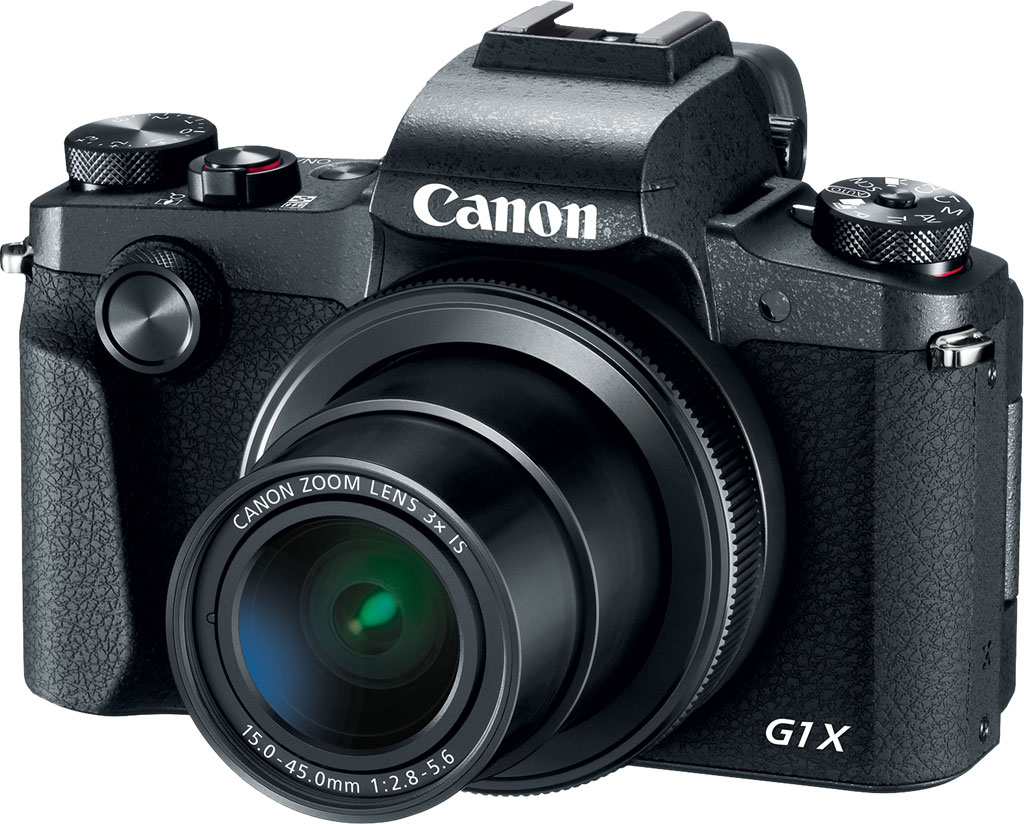
The G1X Mark III is not only quite different on the inside when compared to its predecessor, but it also looks considerably different, sharing some similarities to the PowerShot G5X. The G1X III has a built-in electronic viewfinder, for starters, which results in a new protrusion on the top of the camera. The G1X III is compact but offers a good amount of physical controls. There's a front command dial and a second rotating dial surrounding the directional pad on the rear of the camera, as well as a dedicated movie record button and an exposure compensation dial. Despite having a larger sensor and an EVF, the G1X III is lighter than its predecessor, weighing in at 14 ounces (399 grams) versus 1.2 pounds (553 grams).

While I like the addition of the mode dial on the camera body, it's a locking mode dial, that's always locked. You have to press and hold the center lock button in order to rotate the mode dial. This is good in that it prevents accidentally rotating the mode dial, but it makes it more difficult to change the shooting mode, I find.

On the plus side, the camera's build quality feels quite rugged. The grip on the front is great, and the camera feels strong and robust in my hands. It feels premium, which I suppose it should considering its $1,300 price tag. One unique quality is that the G1X III does have some degree of dust and water resistance, although it's unclear how much sealing there is.

Overall, the G1X III has a good design, with a rugged and premium feel. The controls are conveniently arranged, and the camera doesn't sacrifice usability for the sake of its compactness.
Image Sensor and Image Quality
In the image sensor department, there's a significant upgrade. The earlier G1X II used a 12.8-megapixel, 1.5-inch-type image sensor. The G1X III, on the other hand, features a larger APS-C sensor with 24.3 megapixels. This is a huge difference that has a big impact on image quality.

The G1X III captures images with good detail, which you should expect from a camera at this price point. In any case, the images look generally nice. However, if you zoom way in, the fine details can look a little bit soft. Part of this is due to the sensor having an anti-aliasing filter, and I believe part of it is due to the quality of the built-in lens. When compared to its predecessor, though, not only is the G1X III capable of producing much larger files, but the images certainly have more crispness and detail.

 |
| 17mm (28mm eq.), f/7.1, 1/6s, ISO 200 100% crop from the JPEG file of the above image. Click for full-size image. Click here for RAW image. The G1X III does a pretty good job of reproducing details although some fine details are soft. |
An area where Canon cameras almost universally excel is color reproduction. This is particularly evident when using a Picture Style like Fine Detail or Neutral. Colors are accurate and pleasing to the eye without being oversaturated. I particularly like how the G1X III handles colors in nature as it does a great job replicating blues, greens and oranges.
As you increase the ISO, the G1X III does quite well. Thanks to its larger sensor, it's pretty good at higher ISOs such as 1600 and 3200. Even at ISO 6400, I think the images can be usable at smaller viewing sizes. Despite doubling the megapixel count, the increase in sensor size and advancements in image processing allow the G1X III to outperform the Mark II at higher ISOs.

 |
| 21mm (34mm eq.), f/5.6, 1/80s, ISO 1000 100% crop of the above image. Click for full-size image. Click here for RAW image. The G1X III can capture pretty nice high ISO images. You can see that the camera has some fairly aggressive in-camera JPEG processing, however, which can create some artifacts, which are visible in the strands of fur. |
When working with RAW files from the G1X III, you can recover quite a bit of detail from shadow and highlight areas. Of course, pulling additional information out of the shadow areas results in fairly substantial visual noise depending on the ISO of the original shot and how far you push shadow recovery. The point is, however, that the camera's larger sensor offers impressive flexibility for a compact all-in-one camera.


Highlight recovery is a bit less impressive as the APS-C sensor in the G1X Mark III doesn't have the same kind of dynamic range you'd expect from an APS-C DSLR or mirrorless camera from Nikon or Sony, for example. With that said, you should expect considerable improvements in RAW file flexibility compared to the smaller-sensored G1X II.

Overall, the camera's image quality is quite impressive. While the fine details may not be perfect, color reproduction and high ISO image quality are both good. It's clear that the G1X III is a big improvement in terms of image quality when compared to its predecessor.
However, considering it has a built-in lens, that matters a lot for image quality too. Let's take a closer look at the lens.
Built-in lens
With it's larger APS-C sensor, the G1X III also comes with a redesigned built-in zoom lens. The G1X II had a 24-120mm-eq. f/2.0-3.9 lens, whereas its successor has a 24-72mm-eq. f/2.8-5.6 lens, which is not only slower with respect to its maximum aperture, but it's only a 3x zoom lens versus a 5x zoom.
There's a tradeoff here. The larger, higher-megapixel sensor leads to sharper, better images across a wider range of ISO settings, but it also means that the built-in lens must be different to maintain a compact form factor. Ultimately, the G1X III is something of a compromise. The sensor is great, yes, but the lens leaves something to be desired.
The lens is sharp in the center, but its performance struggles a bit in the corners, as you can see in the images below. Further, there is a lot of chromatic aberration and purple fringing.
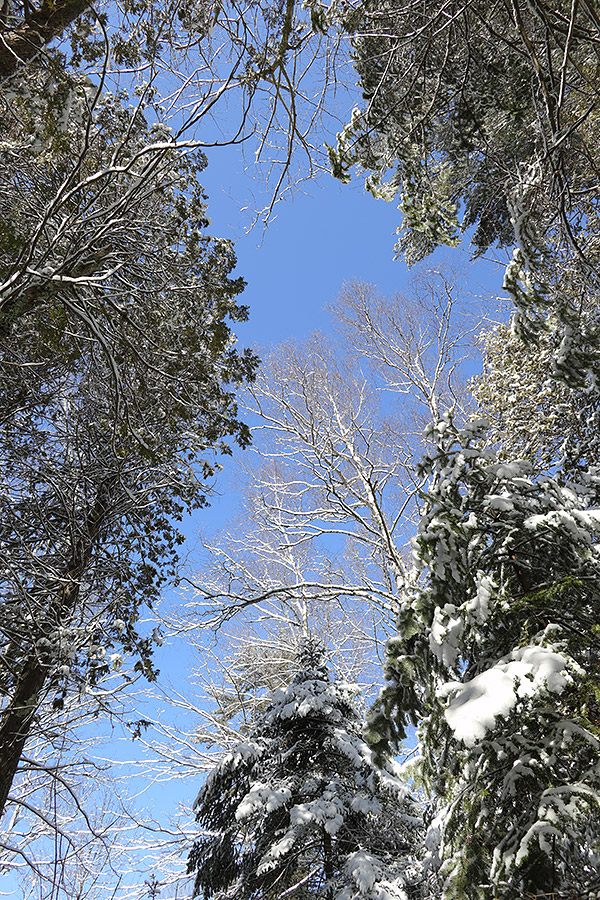


The G1X Mark III has a close focus distance range of 3.9 to 19.7 inches (10 to 50 centimeters), which is quite good and allows for decent macro photography opportunities. There is additional sharpness falloff in the corners at really close focus distances, however.

Ultimately, the G1X III's sensor and lens result in good image quality. However, it's not perfect. The need to keep the camera compact while increasing the sensor size to APS-C results in some issues with image quality and less versatility in the zoom department.

Field Test Part I Summary
Big improvements with a cost
What I liked:
- Good camera body design
- Compact
- Nice image quality
What I disliked:
- Built-in lens struggles in the corners
- Lens has less zoom and less light-gathering ability than predecessor
- Images can appear a little soft
The Canon G1X III is impressive so far with respect to its design, construction and image quality. The larger sensor, which certainly does improve image quality, is not an upgrade in every area however, as it results in less zoom given that the camera must remain compact. Further, the built-in lens is generally underwhelming.
In the next Field Test, we will look at video quality, autofocus, performance and additional shooting modes for the Canon G1X Mark III.