
Apple Introduces Touchscreen MacBook Pro With M5 Pro and M5 Max

Imaging Resource is reader-supported. When you buy through links on our site, we may earn an affiliate commission. How this works.
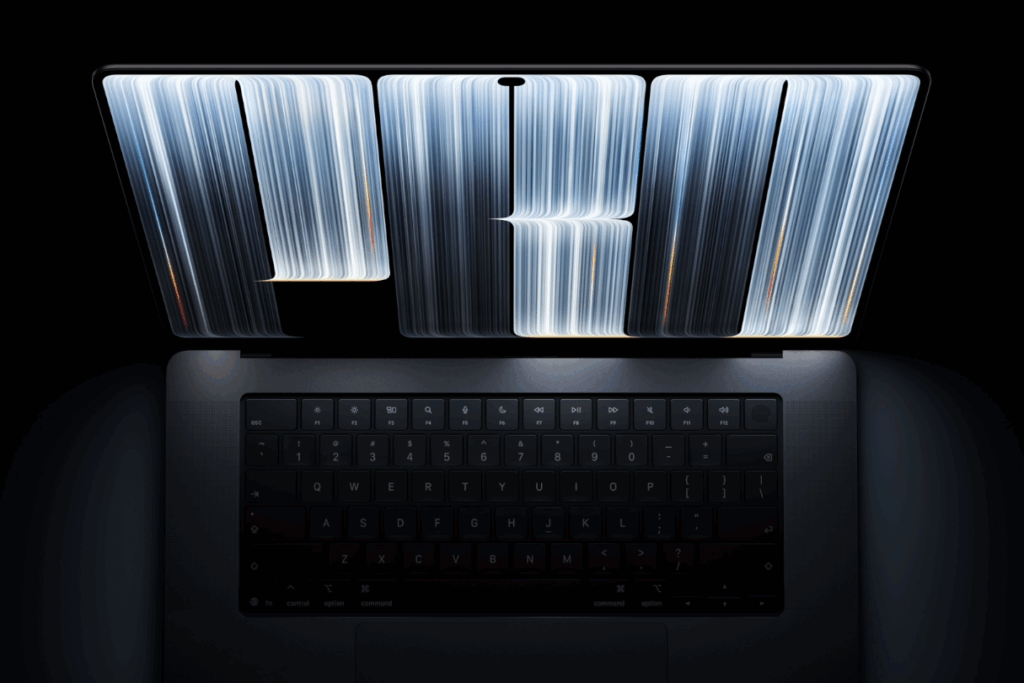
Apple has unveiled new 14-inch and 16-inch MacBook Pro models featuring its PROLED XDR display, bringing touchscreen functionality to the Mac for the first time. The new laptops combine tandem OLED technology with a 120Hz variable refresh rate, expanded color space support, and Apple’s M5 Pro and M5 Max processors.
The redesigned MacBook Pro also introduces Dynamic Island to macOS, a thinner and lighter chassis, and improved audio. Apple says the new models deliver up to 24 hours of battery life while offering the performance required for demanding creative and professional workflows.
“The new MacBook Pro with PROLED XDR Display is a monumental step forward for the Mac,” said Johny Srouji, Apple’s chief hardware officer. “PROLED XDR is the world’s best laptop display. It pairs state-of-the-art tandem OLED technology with advanced algorithms in our display engine to deliver the kind of visual fidelity pros have been dreaming of.”
PROLED XDR Brings Tandem OLED to MacBook Pro
The new PROLED XDR display uses tandem OLED technology, combining two self-illuminating pixel layers to deliver deep blacks, bright highlights, and improved brightness uniformity. Apple says the display can reach up to 2,000 nits of peak HDR and SDR brightness, with a 10,000,000:1 contrast ratio.
The panel also supports ProMotion, with adaptive refresh rates ranging from 10Hz to 120Hz. Lower refresh rates can reduce power consumption when displaying static content, while higher refresh rates provide smoother scrolling and more responsive interactions.
Apple’s display engine controls pixel brightness and color at the sub-millisecond level, accounting for factors such as content, pixel usage, temperature, and the surrounding environment. The company says this approach helps maintain grayscale accuracy and consistent brightness across the panel, while monitoring pixel usage over time to preserve image quality.
Expanded Color Support for Creative Professionals
The PROLED XDR display supports both P3 and Adobe RGB color spaces, making it suitable for workflows involving photography, print design, and video production. Apple says the panel covers more than 80% of the Rec. 2020 color space for HDR video editing and color grading.
Factory calibration aligns luminance, white point, and color gamut with standard targets. Both P3 and Adobe RGB are available through a single default preset, allowing users to switch between color spaces without needing to navigate separate configurations.
The display also supports industry-standard reference modes and Apple’s Pro Display Calibrator. A new DICOM reference mode allows the screen to be used for reviewing medical images in nondiagnostic settings, including research and education.
For use in bright environments, the display features an antireflective coating and an optional nano-texture finish etched into the cover glass. Apple says the nano-texture option further reduces reflections and glare while maintaining image clarity.
Touchscreen Controls Come to the Mac
The touchscreen is one of the biggest changes to the MacBook Pro. Users can interact directly with content using gestures such as swiping to scroll, pinching to zoom into photos, dragging slides between presentations, and double-tapping windows to expand them. Flicking a window can also arrange it within the workspace.
The touch sensor is integrated directly into the display panel rather than being layered on top, which Apple says reduces latency. Touch controls work alongside the keyboard shortcuts and trackpad gestures users already know.
Apple is also highlighting new possibilities for creative workflows. Graphic designers can use the display as a drawing canvas, musicians can play software instruments directly onscreen, and developers can test touch interactions in iOS and iPadOS apps.
Compatible third-party applications include Adobe Lightroom, DaVinci Resolve, Blender, Cinema 4D, ZBrush, and Shapr3D. Apple’s own creative software also gains touch-focused features: Final Cut Pro users can mark ranges, position clips, and zoom into edits, while Logic Pro supports an onscreen Multi-Touch keyboard and interactive chord and drum pads.
A redesigned hinge provides greater stability during touchscreen use. Apple also says its video stabilization system can smooth the camera feed in real time while users interact with the display during video calls.
Dynamic Island Arrives on the Mac
The new MacBook Pro brings Dynamic Island to the Mac, providing a central location for Spotlight, Live Activities, and Siri AI.
Users can search their Mac, access real-time updates, answer calls, control music, and interact with notifications without leaving their current application. Live Activities can also display timely information and provide controls for actions such as accepting an AirDrop request or pausing playback.
The feature brings an interface familiar to iPhone users to the MacBook Pro, while integrating it with macOS productivity and search tools.
M5 Pro and M5 Max Power the New Models
The new MacBook Pro is available with Apple’s M5 Pro and M5 Max processors. Apple positions M5 Pro for demanding workloads such as software development, scientific computing, and editing multiple streams of 8K ProRes video. M5 Max targets even more intensive tasks, including 3D visual effects, animation, film scoring, and local AI processing.
Both chips feature Neural Accelerators in each GPU core, enhanced shader cores, and a third-generation ray-tracing engine. Apple says these capabilities improve AI processing and graphics performance, including rendering workloads in applications such as Blender and Cinema 4D.
The laptops can be configured with up to 128GB of unified memory and up to 16TB of SSD storage. M5 Max is designed to support large on-device language models and demanding post-production workflows.
Thinner and Lighter Design
Apple has reduced the weight and thickness of both MacBook Pro sizes. The 14-inch model weighs 3 pounds, half a pound less than its predecessor, while the 16-inch version weighs 4 pounds, a reduction of 0.7 pounds.
The OLED display stack enables a slimmer design. Apple says the 16-inch model is nearly a millimeter thinner, while the 14-inch model is half a millimeter thinner than the previous generation.
Slimmer display borders also provide slightly more screen space. The smaller model has a 14.2-inch display, while the larger model’s screen measures 16.3 inches.
Apple has redesigned the thermal architecture to maintain sustained performance in the lighter chassis while directing warm air away from the display.
Improved Audio and Connectivity
The MacBook Pro retains its six-speaker sound system but introduces a new woofer design that Apple says delivers 50% deeper bass. Updated tweeters are designed to improve sound clarity, while Spatial Audio with Dolby Atmos provides a more immersive listening experience.
The laptops also feature studio-quality microphones and a 12-megapixel Center Stage camera. Dedicated audio tuning for closed-lid operation is designed to maintain sound quality when the MacBook Pro is connected to an external display.
Connectivity includes three Thunderbolt 5 ports, HDMI, an SDXC card slot, MagSafe charging, and a headphone jack. The laptops support Wi-Fi 7 and Bluetooth 6, with Touch ID available for secure login.
The M5 Pro model supports up to three external displays, while the M5 Max version supports up to four. Fast charging can bring the battery to 50% in approximately 30 minutes with a compatible power adapter.
Up to 24 Hours of Battery Life
Apple rates the new MacBook Pro for up to 24 hours of battery life, depending on the configuration and usage. The combination of Apple’s silicon, display technology, and redesigned chassis is intended to balance performance with portability.
The laptops run macOS 27, which includes Apple Intelligence features and Siri AI alongside system improvements. Apple also highlights support for genlock, which synchronizes display refresh rates with camera capture to help reduce visual artifacts in virtual production and on-set workflows.
Pricing and Availability
The new MacBook Pro is available in 14-inch and 16-inch configurations with M5 Pro or M5 Max processors.
- 14-inch MacBook Pro with M5 Pro: Starting at $2,899
- 16-inch MacBook Pro with M5 Pro: Starting at $3,399
- 14-inch MacBook Pro with M5 Max: Starting at $4,499
- 16-inch MacBook Pro with M5 Max: Starting at $4,799
Preorders opened on October 28, 2026, with availability beginning November 6. The new models bring together a tandem OLED display, touchscreen controls, and Apple’s latest professional processors in a thinner and lighter design.
More in News
 NewsSony Unveils LYTIA 720 With 4K60p HDR Video and All-Pixel Autofocus28 Oct 2026
 NewsGodox iM10 Is a Pocket-Sized Camera Flash Weighing Just 23g27 Oct 2026
 NewsThypoch Announces Sculptor AF 23mm F1.4, Its First Autofocus Prime27 Oct 2026
 NewsFujifilm Unveils Instax Mini Evo 2 With Wide-Angle Mode and Video Recording27 Oct 2026
 NewsSmallRig Sigma FP2 Cage Adds Wooden Grip and Multiple Accessory Mounts26 Oct 2026
 NewsApple’s New iPad Mini Adds OLED, A20 Pro, and IP67 Water Resistance26 Oct 2026