
GoPro Will Merge With Starman Optical in $285 Million Deal

Imaging Resource is reader-supported. When you buy through links on our site, we may earn an affiliate commission. How this works.
On this page
Table of Contents
 GoPro’s Long Decline
After months of financial turmoil, GoPro has finally found a buyer. The action camera pioneer has entered into a definitive merger agreement with privately held optical-photonics company Starman Optical in a deal valued at $285 million.
The merger comes after years of financial struggles for GoPro, which has faced declining market share amid growing competition from DJI and Insta360. The company began exploring strategic alternatives, including a potential sale, as it struggled with mounting losses and debt.
Under the agreement, GoPro shareholders will receive an aggregate cash payment of $285 million, or $1.14 per share, subject to a potential adjustment based on GoPro’s net working capital at closing. Existing shareholders will also retain approximately 10 percent ownership of the combined company.
The deal will also eliminate GoPro’s approximately $92 million in outstanding debt. Despite the change in ownership, GoPro will remain a publicly listed company on the Nasdaq and says it will continue supporting its existing consumer products, subscriptions, and cloud platform.
GoPro’s Long Decline
GoPro went public in 2014 at the height of the action camera boom and briefly reached a valuation of more than $10 billion. Since then, the company has struggled to maintain its position as competition intensified and consumer interest shifted toward smartphones, 360-degree cameras, and increasingly capable alternatives from companies such as DJI and Insta360.
The financial pressure became particularly severe in 2026. GoPro warned earlier this year that it could face difficulties continuing as a going concern without additional funding, while founder and CEO Nicholas Woodman provided additional capital as the company explored strategic alternatives.
The merger now gives GoPro access to additional capital while significantly changing the direction of the business.
Markiplier Became GoPro’s Largest Shareholder
The merger also comes shortly after YouTuber Mark Fischbach, better known as Markiplier, became GoPro’s largest individual shareholder after acquiring an 8.5 percent stake in the company.
Fischbach disclosed the investment after arguing that GoPro was undervalued, with the company’s stock trading around $0.60 per share shortly before his investment became public. His stake subsequently attracted significant attention from retail investors and contributed to a sharp rise in GoPro’s share price.
The investment was disclosed before the Starman merger was announced, meaning Fischbach’s purchase was not part of the merger agreement.
GoPro Is Moving Into AI and Defense
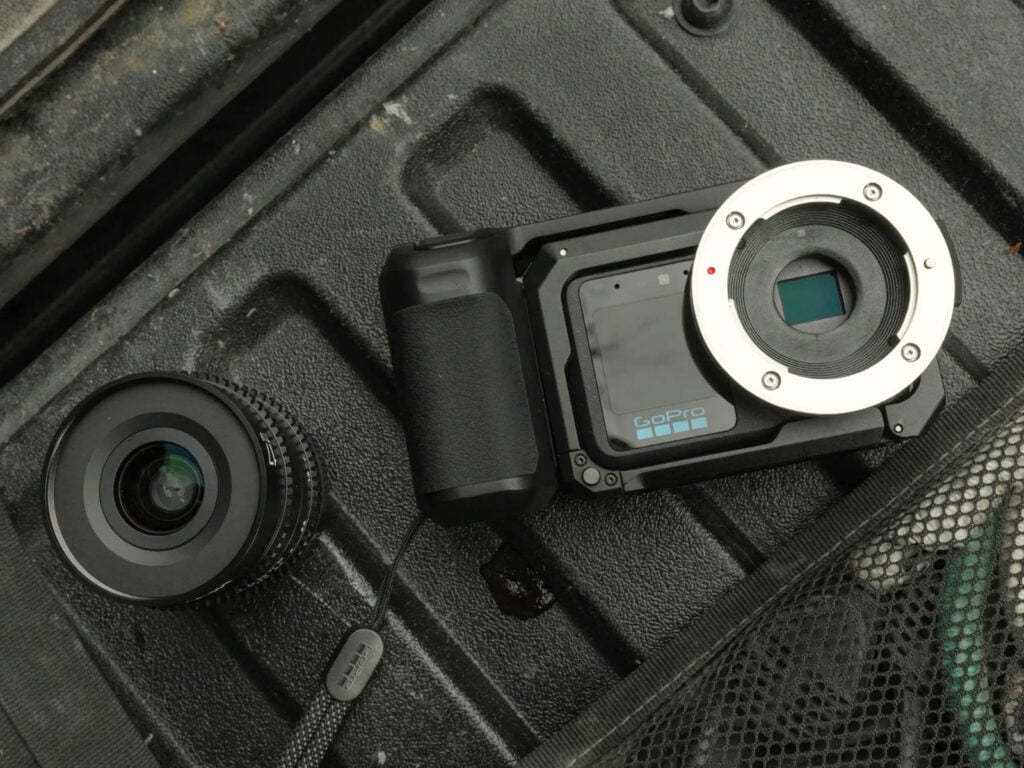
One of the most significant aspects of the deal is that Starman isn’t a traditional camera company. Starman Optical is a privately held U.S. optical-photonics company focused on optical transceivers and related photonics technologies through its Starman New Photonics business.
Optical transceivers are used to move data between servers, switches, and other components in data centers. Starman says its U.S.-made transceivers are expected to become part of GoPro’s product portfolio, giving the combined company an entry into the rapidly expanding AI infrastructure market.
GoPro also plans to leverage its existing optics and imaging technology in commercial, government, defense, robotics, and aerospace markets. The company says it has developed more than 2,500 U.S. patents covering imaging and optics during its 24-year history.
Starman CEO Charles Tebele said the combination is intended to bring more production of critical optical components to the United States.
“Advanced optics and imaging are essential to AI, national security, and the broader economy,” Tebele said.
He added that combining GoPro’s imaging intellectual property with Starman’s transceiver capabilities and U.S. manufacturing platform could create an opportunity to produce critical components domestically.
A Major Strategic Shift
The move into defense and government markets could prove particularly important for GoPro. The U.S. government has increasingly focused on reducing reliance on foreign-made technology in areas considered strategically important, creating opportunities for domestic manufacturers.
GoPro had already begun exploring defense and aerospace opportunities before the merger. The company’s new relationship with Starman could accelerate that effort by combining GoPro’s established imaging technology and intellectual property with Starman’s photonics business.
“We expect this merger to enable GoPro to grow across consumer, commercial and defense markets as a leading American imaging and optical solutions company,” said Nicholas Woodman, founder and CEO of GoPro. “We’re excited to combine with the Starman team to capitalize on this opportunity and play an important role in America’s future.”
What Happens to GoPro Cameras?
For existing GoPro customers, the most important part of the announcement is that the company does not appear to be abandoning its consumer camera business.
GoPro says it will continue to fully support its existing consumer products, subscription services, and cloud platform while investing in growth and a broader, more diversified product roadmap.
That should come as good news for owners of the company’s latest cameras. GoPro recently introduced its Mission 1 series, representing one of its most significant camera launches in years, and the company has continued positioning its cameras toward professional users, creators, athletes, and other demanding customers.
However, the merger fundamentally changes the company’s priorities. GoPro will now have to balance its established consumer camera business against opportunities in AI infrastructure, defense, robotics, aerospace, and other commercial markets.
Whether that ultimately results in fewer consumer cameras or gives GoPro the financial stability needed to invest more heavily in them remains to be seen.
What Happens Next?
The merger has already been approved by GoPro’s Board of Directors and Starman’s Board of Directors. The transaction is expected to close by the end of 2026, subject to regulatory approvals and other customary closing conditions.
GoPro says it will provide additional information about the transaction when the merger closes. For now, the company remains publicly traded and will continue operating its consumer camera, subscription, and cloud businesses while preparing for a much broader role in optics and photonics.
For a company that was once synonymous with action cameras, GoPro’s future may increasingly have as much to do with AI data centers, defense, and optical technology as it does with cameras.
More in News
 NewsWhy buying a used camera could be the smartest move this Black Friday2 Nov 2026
 NewsSirui Swift Series Brings Affordable 20mm and 40mm Autofocus Primes29 Oct 2026
 NewsThis isn’t the Moon: NASA shares an extraordinary photograph of Venus29 Oct 2026
 NewsViltrox AF 35mm F1.4 Pro Completes Full-Frame Pro Lens Lineup29 Oct 2026
 NewsApple’s new MacBook Pro features a PROLED XDR display and Adobe RGB support29 Oct 2026
 NewsNikon Unveils Flagship Sports Zoom With Built-In Teleconverter and VCM Autofocus29 Oct 2026