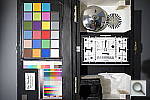
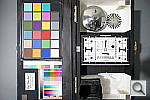
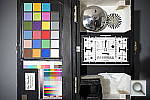
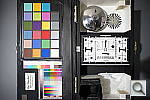
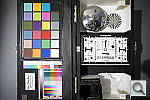
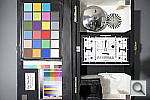
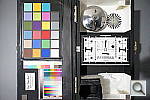
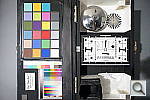
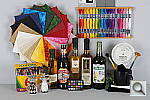
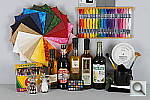
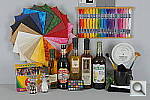
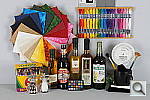
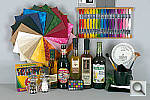
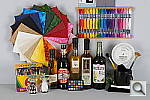
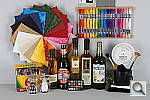
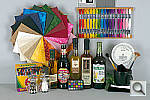
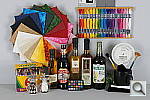
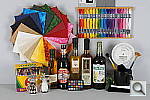
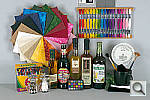
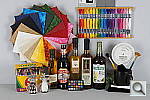
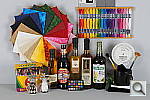
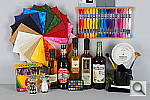
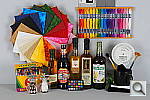
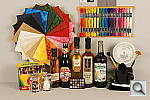
Cyber Monday camera deals are liveSee the best deals →

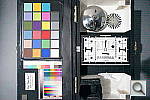
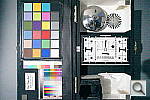
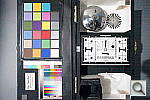
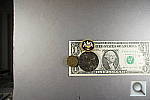
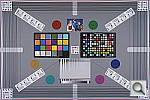
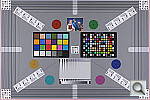
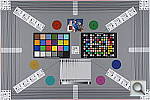
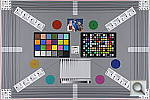
Sony NEX-3 Review – Test Shots

Add us on

Digital Cameras – Sony Alpha NEX-3 Test Images

Not sure which camera to buy? Let your eyes be the ultimate judge!
Visit our Comparometer(tm)
to compare images from the Sony Alpha NEX-3 with those from other
cameras you may be considering. The proof is in the pictures, so let
your own eyes decide which you like best!

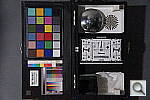
Still LifeSony Alpha NEX-3 Sample images image 1

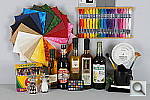
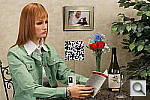
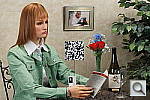
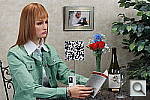
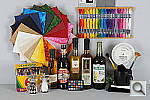
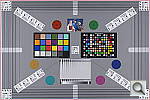
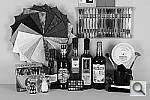
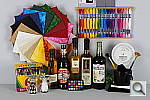
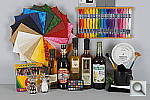
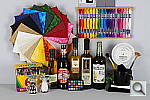
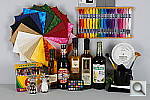
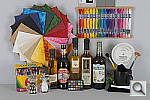
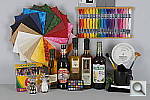
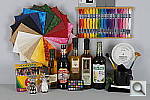
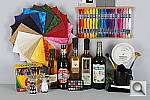
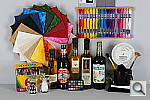
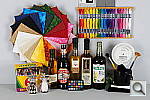
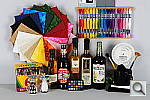
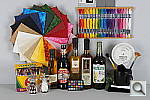
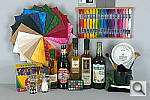
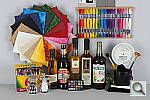
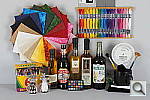
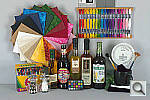
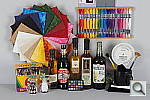
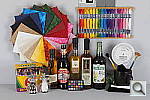
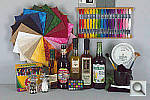
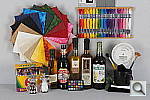
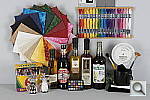
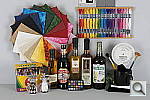
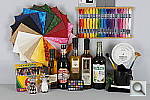
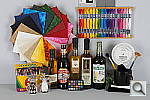
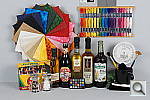
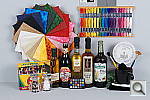
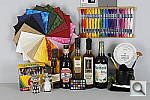
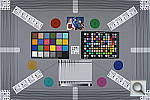
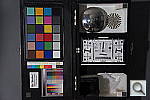
This is our new “Still Life” test target. We’re combining
some of the elements from previous shots (DaveBox and Res Chart) into
this and the “Multi Target” shot below, plus added a number
of elements that are very revealing of various camera characteristics
and foibles.

Here’s what to look for in this target:

  • Tone-on-tone detail & noise suppression:
    The cloth swatches in the pinwheel were chosen because they show a lot
    of tone-on-tone detail, across a broad range of colors. This is just
    the sort of detail that noise suppression processing tends to flatten
    out. If you look at the detail in these swatches as the ISO increases,
    you’ll see just where different cameras start to lose subtle detail.
    — The white and tan swatches and the dark swatches tend to be particularly
    revealing of this. The label of the vinegar bottle (second from the
    right) is another great place to look for lost detail from noise suppression,
    as the image of the person at the top of the label is actually a depiction
    of a mosaic. The dark colors in the background and in the figure’s clothes
    contain detail that’s very quickly lost when a camera’s noise suppression
    system kicks in. Cameras with really high-quality, low-noise sensors
    that require little noise suppression will be able to hold onto the
    detail in these areas, many others will show only a uniform swath of
    smudged color.

    Another place where you’ll quickly see the effects of over-aggressive
    noise suppression is in the white salt grains of the salt grinder in
    lower left. Cameras are often more conservative about suppressing noise
    in highlight areas (because our eyes tend to see less of it there),
    but many cameras seem to have a hard time holding onto the subtle shadings
    that distinguish the salt grains from each other, particularly at higher
    ISO levels.

  • Fine Detail: You’ll find a lot of fine detail
    in the label of the beer bottle on the right, in its fine cursive text,
    but the other bottle labels hold a lot of fine detail as well. Fine
    text is often a good visual indicator of resolution, because our brains
    have an excellent idea of what the text should look like, so
    are very quick to notice even minor loss of detail.

    For really fine detail, look to the circular scale/calculator on the
    right side of the scene. Some of the fine lines there are extremely
    fine indeed. Looking at results from many different cameras with this
    target, we found that camera noise-suppression systems often confuse
    the fine lines with image noise, and so flatten them out. There’s also
    a nice range of fine text sizes in this chart as well, once again great
    visual cues for resolution and detail.

  • Highlight Detail: Three elements in this scene
    show off (or show up) a camera’s ability to hold onto highlight detail.
    As mentioned above, the salt grains (and reflections of the studio lights)
    in the salt mill are examples of fairly subtle highlight detail that
    cameras’ anti-noise processing sometimes obliterate. The folded white
    cloth under the mug on the right side of the frame likewise shows a
    lot of white-on-white detail that is easy to lose, particularly if a
    camera’s tone curve is too contrasty. As it turns out though, the most
    sensitive test of a camera’s highlight abilities seems to be the hank
    of white embroidery thread in the upper right corner. These fibers are
    unusually bright and reflective, so its easy for a camera to blow out
    detail in them.

  • Shadow Detail: Several elements of this subject
    are useful for evaluating shadow detail, particularly the black mug
    and the pieces of folded black velvet, both under and inside the mug.
    The bottoms of the beer bottles also provide some gradations of deep
    shadow, and the clump of peppers in the bottom of the pepper oil bottle
    had a fair bit of detail that’s far down at the shadow end of the tone
    curve.

    We were actually surprised when we constructed this scene just how dark
    the velvet and sides of the beer bottles ended up being. Even with the
    bright studio lights shining directly on it, the velvet in particular
    stays way, way down at the shadow end of the tone curve. With most cameras
    and on most monitors, the velvet will simply appear as an unrelieved
    swatch of black. To see whether it contains deep detail or not, in most
    cases you’ll have to open the file in an image editor and boost the
    brightness dramatically, to bring the detail up into a visible range.

  • Preservation of “Shape” in Strong Colors:
    As you approach the extremes of a camera’s color gamut (its range of
    recordable colors), it becomes more and more difficult for the camera
    to show fine gradations of tone, because one or more of the RGB color
    channels are close to saturation. It’s not uncommon to see a brightly
    colored piece of clothing or a vibrant flower appear in digicam photos
    as just a blob of color, because the camera ran up against the limits
    of its color gamut. The brightly colored embroidery threads in the upper
    right portion of the Still Life target are good examples of situations
    where this might happen. Pay particular attention to the bright red
    and dark blue colors here, as these are both colors near the edge of
    the typical sRGB color gamut.

  • Color accuracy and white balance: It’s pretty
    small in there, but we’ve included a mini-MacBeth chart, which displays
    very carefully controlled color swatches. Our Multi Target (see below)
    sports a full-sized MacBeth chart, but the one here serves as a good
    check of color balance and rendition, and is also useful for checking
    white balance on this particular shot.

  • Image noise and detail vs ISO: As mentioned above,
    this target contains many elements useful for evaluating detail loss
    to anti-noise processing. We’ll therefore always shoot a full set of
    test images of this target across each camera’s ISO range, for every
    camera we test. (See below.)
ISO Series NR, = Normal (Default)
ISO
200
ISO
400
ISO
800
ISO
1,600
ISO
3,200
ISO
6,400
ISO 12.8K
ISO Series, NR = Weak
ISO
200
ISO
400
ISO
800
ISO
1,600
ISO
3,200
ISO
6,400
ISO 12.8K
Contrast
Series
-3
Sony Alpha NEX-3 Sample images image 2
-2
Sony Alpha NEX-3 Sample images image 3
-1
Sony Alpha NEX-3 Sample images image 4
Default
Sony Alpha NEX-3 Sample images image 5
+1
Sony Alpha NEX-3 Sample images image 6
+2
Sony Alpha NEX-3 Sample images image 7
+3
Sony Alpha NEX-3 Sample images image 8
Saturation
Series
-3
Sony Alpha NEX-3 Sample images image 9
-2
Sony Alpha NEX-3 Sample images image 10
-1
Sony Alpha NEX-3 Sample images image 11
Default
Sony Alpha NEX-3 Sample images image 12
+1
Sony Alpha NEX-3 Sample images image 13
+2
Sony Alpha NEX-3 Sample images image 14
+3
Sony Alpha NEX-3 Sample images image 15
DRO Series
Off
Sony Alpha NEX-3 Sample images image 16
Auto
Sony Alpha NEX-3 Sample images image 17
HDR Series
Off
Sony Alpha NEX-3 Sample images image 18
Auto
Sony Alpha NEX-3 Sample images image 19
Creative Style
Series
Standard
Sony Alpha NEX-3 Sample images image 20
B&W
Sony Alpha NEX-3 Sample images image 21
Landscape
Sony Alpha NEX-3 Sample images image 22
Portrait
Sony Alpha NEX-3 Sample images image 23
Sunset
Sony Alpha NEX-3 Sample images image 24
Vivid
Sony Alpha NEX-3 Sample images image 25

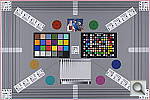
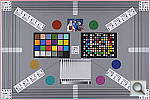
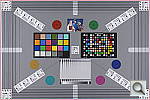
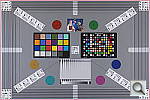
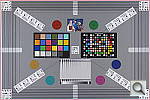
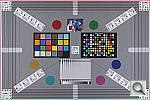
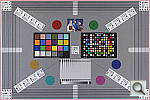
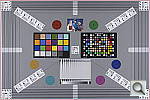
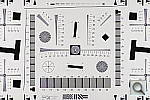
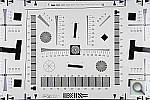
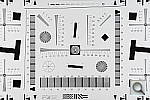
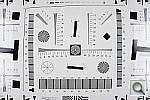
Multi TargetSony Alpha NEX-3 Sample images image 26

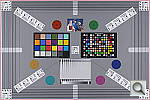
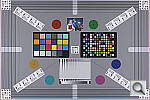
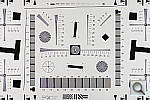
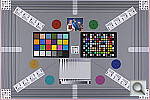
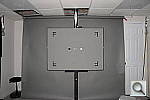
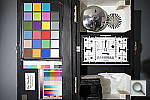
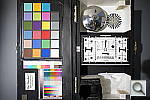
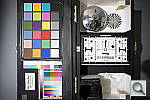
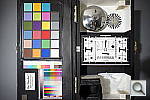
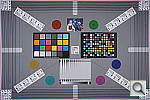
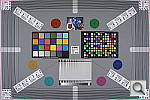
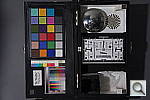
Our new “Multi Target” was first put into use in April, 2009, replacing the earlier “interim” design. This target incorporates a number of elements that combine aspects of the previous Multi target, as well as the previous Viewfinder Accuracy or “VFA” chart. Here’s some of what you’ll find in this target:

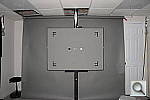
Framing marks: This chart evolved from the earlier Viewfinder Accuracy chart, so one of its major uses is to measure viewfinder accuracy. (See notes in the Viewfinder Accuracy section, at the bottom of this page, for more information on this.)

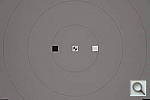
USAF resolution targets: An important use of this target is in evaluating lens quality, looking how well sharpness holds up as you move from the center to the corners of the frame. The little “USAF” resolution targets arranged at the center, in the corners, and along the diagonals are very useful for making fine judgements about blur, flare and aberrations in the image. We generally show crops of a USAF chip from a corner of the target and from the center, to show how lenses hold sharpness at wide and telephoto focal lengths.

Alignment “bullseyes:” We find these graphics from the graphic arts world (used to align sheets of film in the old film-based prepress days) very useful for seeing chromatic aberration in lenses. The bold black/white elements are good for seeing the colored fringes caused by CA in the corners of the frame.

MacBeth ColorChecker Chart: This is about as common a color standard as you can get these days, very widely available for only mildly exorbitant cost, and quite well controlled in its production. It thus serves as a good basis of comparison between cameras and between test setups. Imatest also understands the MacBeth colors very well, and uses them to produce its color accuracy map that we feature in all our reviews.

MacBeth ColorChecker SG Chart: The ColorChecker SG chart provides a wider range of colors, to give a more detailed map of a camera’s color handling. We haven’t begun using this chart in the color-accuracy graphs we routinely offer, but expect to do so at some point in the future. In the meantime, we sometimes refer to this chart internally, to get a more complete idea of what a camera’s color map looks like.

Log C/F Target: The progressive resolution pattern located just below the center of the target is a Log C/F (logarithmic contrast vs spatial frequency) chart. Digital camera noise reduction routines work by looking at levels of local contrast, flattening-out detail at progressively lower spatial frequencies as the local contrast decreases. (This is very commonly seen in human hair, grass, foliage, and other subjects with subtly-contrasting fine detail.) This chart lets Imatest analyze just how a camera makes the tradeoff between contrast, detail, and image noise.

Color Starbursts: The six circular starburst elements arranged around the target are intended to reveal de-mosaicing artifacts and color-dependent resolution issues. The six starbursts provide examples of each combination of RGB colors intersecting each other. (That is, red, green, and blue against black, plus red against green, green against blue, and blue against red.) Given that the most common sensor RGB color filter pattern (the so-called Bayer) pattern has twice as many green pixels as red or blue, you’ll generally see that the green/black starburst shows the best resolution, while the blue/red one shows the worst. The effects of different sensor geometries and color filter array patterns will be revealed here.

Musicians Image: Synthetic test patterns only tell you so much. While we have a lot of pictorial images in our other test targets, we thought it would be useful to include a small “natural” image here as well.

ISO Series
ISO
200
ISO
400
ISO
800
ISO
1,600
ISO
3,200
ISO
6,400
ISO
12.8K

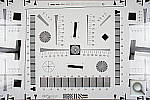
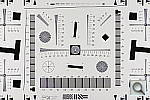
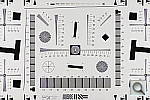
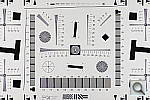
Resolution TargetSony Alpha NEX-3 Sample images image 27

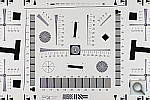
Part of the impetus in developing the new Multi Target in April 2009 was to switch to using a new 2x target for the resolution measurements, since the original ISO 12233 chart we’d used since the site first began in 1998(!) had become inadequate for testing the highest-resolution cameras. We’d for quite some time had a “homemade” 2x target, employing a shrunk version of the ISO 12233 chart, shot at 1/2 size. The resolution numbers on that chart all needed to be doubled to convert to the actual values, though, so we decided to go with a commercial 2x target to eliminate possible confusion on the part of our readers. Numbers on this new 2x resolution chart now read directly in hundreds of lines/picture height. (Because almost all of the area of this new resolution chart is now meaningful for resolution measurements, there was no longer space on it to overlay the MacBeth and other color targets on our prior Multi chart; hence the simultaneous change in our Multi target.)

Resolution Series
(Medium Focal Length) “Fine”
JPEG
“Normal”
JPEG
4,592 x 3,056 NEX3hRES4592F NEX3hRES4592N
3,344 x 2,224 NEX3hRES3344 –
2,288 x 1,520 NEX3hRES2288 –
(Max Res & Quality) Wide Angle Medium Telephoto
4,592 x 3,056 NEX3hRESW NEX3hRESM NEX3hREST

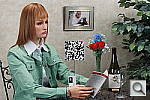
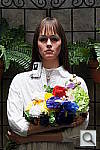
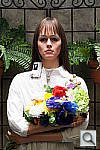
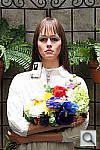
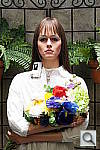
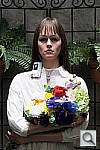
“Sunlit” Portrait:
(This is our “Outdoor” Portrait test – read more about it
here.)

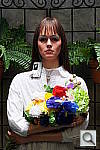
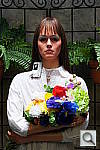
Sony Alpha NEX-3 Sample images image 28

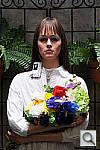
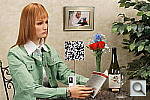
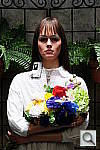
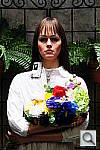
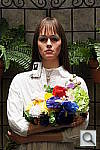
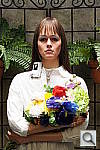
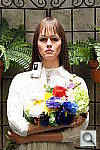
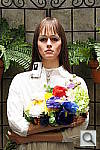
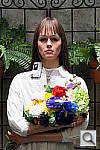
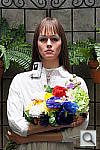
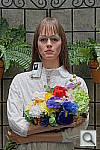
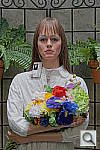
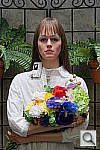
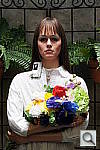
The lighting in this shot is deliberately awful, about what you’d expect from noontime sunshine here in the Atlanta, GA area. (In fact, the color balance has been chosen to pretty well match the hazy sunshine here in mid-August.)

The reason for the harsh lighting is to provide a real “torture
test” of how cameras handle conditions of extreme contrast; and in
particular, how well they do holding onto highlight detail.

Look for:

  • Overall color: Matching summer sunlight here in the South,
    the lighting in this scene is a bit more yellow-tinged than that in
    many parts of the country, or in the fall or winter. – So there may
    be an overall warm cast to the color. That said though, there’s a fair
    range of color represented in the bouquet, presenting a tough challenge
    for the cameras. For some reason, the blue flowers seem particularly
    hard to handle, with many cameras rendering them as purple. (In real
    life, they’re a light shade of navy blue, with just a bit of purple
    in them.)
  • Skin tones: The overall slight warm cast will tend to leave
    the model’s skin tones a bit on the warm side as well. Nonetheless,
    look to see if her skin seems overly pink or if they have a too-bright
    tinge of yellow: Some cameras oversaturate skin tones (make their color
    too intense), leading to an almost sunburned look. A little oversaturation
    can make for a more “healthy-looking” complexion, but it doesn’t
    take much variation for skin tones to look unnatural.
  • Highlight detail: When the model’s skin tones are at a more
    or less normal level of brightness, how much detail can you see in her
    shirt? Does it blow out entirely to white, or can you still see the
    creases and folds in the fabric?
  • Overall contrast: Most consumer digital cameras produce bright,
    contrasty images, because that’s what most consumers like. Unfortunately,
    under bright sunlit conditions, many such cameras produce images with
    little or no highlight detail, and dark, plugged-up looking shadows.
  • Shadow detail: The area under the flower bouquet is in quite deep shadow. Does the camera in question retain good detail here, with low image noise? To see, you may need to download the image and play with it in Photoshop(tm) or another imaging program. Brighten the image, and see how far detail extends into the shadows. Photo printers are generally much better at showing shadow detail than are CRTs or LCDs, so you’ll want a camera that preserves good detail here. The ability to boost brightness without encountering too much image noise is important if you ever have to “rescue” an underexposed image on the computer.
  • Detail in areas of subtle contrast: Most digital cameras employ
    some sort of noise-suppression to remove electronic noise from their
    images. Noise suppression is a good thing, but only if it’s not overdone.
    Too much noise suppression will “flatten out” subtle detail
    in areas of reduced contrast. You can often see this in hair, where
    the individual strands become blurred, and the image takes on an almost
    watercolor effect. Look at the detail in the model’s hair, and compare
    how it looks with different cameras in the Comparometer.

To view the entire exposure series from zero to +1.0 EV, see files NEX3OUTAP0.HTM through NEX3OUTBAP3.HTM on the thumbnail
index page
.

Contrast
Series
-3
Sony Alpha NEX-3 Sample images image 29
-1
Sony Alpha NEX-3 Sample images image 30
Default
Sony Alpha NEX-3 Sample images image 31
+1
Sony Alpha NEX-3 Sample images image 32
+3
Sony Alpha NEX-3 Sample images image 33
Saturation
Series
-3
Sony Alpha NEX-3 Sample images image 34
-1
Sony Alpha NEX-3 Sample images image 35
Default
Sony Alpha NEX-3 Sample images image 36
+1
Sony Alpha NEX-3 Sample images image 37
+3
Sony Alpha NEX-3 Sample images image 38
DRO Series
Auto
Sony Alpha NEX-3 Sample images image 39
Off
Sony Alpha NEX-3 Sample images image 40
1
Sony Alpha NEX-3 Sample images image 41
2
Sony Alpha NEX-3 Sample images image 42
3
Sony Alpha NEX-3 Sample images image 43
4
Sony Alpha NEX-3 Sample images image 44
5
Sony Alpha NEX-3 Sample images image 45
HDR Series
Auto
Sony Alpha NEX-3 Sample images image 46
Off
Sony Alpha NEX-3 Sample images image 47
1
Sony Alpha NEX-3 Sample images image 48
2
Sony Alpha NEX-3 Sample images image 49
3
Sony Alpha NEX-3 Sample images image 50
4
Sony Alpha NEX-3 Sample images image 51
5
Sony Alpha NEX-3 Sample images image 52

Indoor Portrait, Flash:

Normal
Flash
+0.3 EV
Sony Alpha NEX-3 Sample images image 53
Slow-Sync
Flash
Default
Sony Alpha NEX-3 Sample images image 54

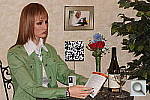
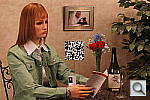
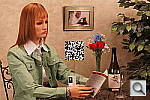
This shot duplicates indoor shooting conditions in most US homes, with
fairly bright incandescent room lighting. The challenge here is for the
camera’s flash to blend naturally with the room lighting, and produce
good, neutral color overall. – Some cameras will be overly affected by
the room lighting, even with their flash enabled, and the result will
be a strong orange cast. Another common failing is for the highlights
from the flash to take on an unnatural bluish cast.

Finally, exposure is important here, and frequently a tough challenge
for the cameras. The model’s white shirt is central in the scene, reflecting
a lot of the light from the flash right back at the camera. As a result,
most cameras underexpose this shot, and require some positive exposure
compensation to produce a good result. – And that’s an important consideration
in itself: Does the camera even permit adjustment of its flash
exposures? Many do not. These photos are a tough exposure challenge, if
they come out OK, the camera in question can probably be coaxed into delivering
a good flash exposure of any subject within its range.

Note too, that the normal flash shot (as opposed to the slow sync one,
if the camera offers that feature) will be sharply rendered, any subject
or camera movement frozen by the quick pop of the flash. That makes this
shot a good one to look for the effect of over-aggressive noise suppression
in the model’s hair.

To view the exposure series from zero to +1.0 EV in the normal flash mode, see files NEX3INBFP0.HTM through NEX3INBFP3.HTM on the thumbnail
index page
.

To view the same series in the Slow-Sync flash mode, see files /cameras/sony-nex-3-review/image/990024?section=samples through NEX3INBFSP3.HTM on the thumbnail index
page
.

Indoor Portrait, No Flash:

Auto
White Balance
Sony Alpha NEX-3 Sample images image 55
Incandescent
White Balance
Sony Alpha NEX-3 Sample images image 56
Manual
White Balance
Sony Alpha NEX-3 Sample images image 57
2,600K
White Balance
Sony Alpha NEX-3 Sample images image 58

The incandescent lighting used in most US homes actually has a very
strong yellow color to it. Our eyes have an amazing ability to ignore
color casts like this, something digital cameras struggle to emulate.

The incandescent lighting used for this shot is thus not only very common
here in the US, but also very difficult for most digital cameras to deal
with. While we probably want a little yellow color to remain in
the image (to convey some of the mood of the original scene), too much
will look unnatural and distort colors.

Most cameras’ auto white balance systems have a great deal of difficulty
with this shot, but many incandescent white balance settings struggle
as well. (It seems that many cameras’ incandescent settings are actually
calibrated to the tungsten lighting used in professional studio systems,
which isn’t nearly as warm-toned as typical household lighting.)

If you intend to do much shooting indoors after dark, pay careful attention
to this test, as cameras vary widely in this regard.

To view the entire exposure series from zero to +1.0 EV, see files NEX3INBMP0.HTM through NEX3INBMP3.HTM on the thumbnail
index page
.

ISO Series:
“ISO equivalent” refers to a camera’s light sensitivity. ISO
200 represents twice the sensitivity of ISO 100, meaning that you can
use a shutter speed that’s twice as fast. Higher ISO settings are often
required to get any picture at all when shooting after dark, but even
in full daylight, using a higher ISO can help you freeze fast action.
The problem is, increasing a digital camera’s ISO also increases image
noise. In practical terms, this means that higher-ISO images often can’t
be used to produce prints as large as lower-ISO ones. The tricky thing
here is that high-ISO images often look much different when printed at
various sizes than they do when viewed on-screen. In particular, for any
level of image noise, you’ll often find that while noise is quite evident
at larger print sizes, as you reduce the size of the prints, there will
come a point where it suddenly ceases to be an issue. We routinely print
high-ISO photos from the cameras we test on our studio printer (currently
a Canon i9900) at a range of sizes, and report our findings. If you’re
interested in investigating the effect of image noise for yourself, don’t
judge cameras’ performance by how their images look on your CRT, viewed
pixel-for-pixel. Rather, download the test shots linked in the table below
and output them on your own printer, so you can see how prints of various
sizes will actually look.

One additional note about this particular test series though: Because
these images are shot under household incandescent lighting, the camera
has to boost its blue-channel signal quite a bit to get back to a neutral
color balance. Since the blue channel is generally the one with the most
noise, this makes this shot a real acid test of noise performance. Noise
levels in high-ISO shots taken under daylight conditions usually won’t
show as much noise. (See the “Far Field” test for examples of
high ISO shots captured in daylight.)

ISO
Series
ISO
200
ISO
400
ISO
800
ISO
1,600
ISO
3,200
ISO
6,400
ISO
12.8K

House Shot:

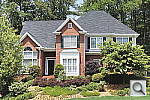
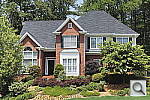
Sony Alpha NEX-3 Sample images image 59

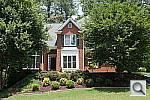
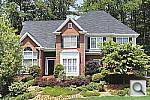
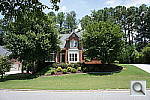
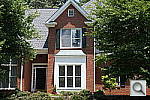
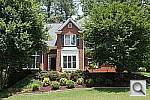
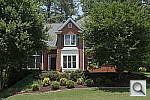
Like several of our tests, these images are actually photos of a high-resolution poster, shot under studio lighting. The shots for this camera were captured with our third-generation House poster, which was assembled from 45 separate 11-megapixel images, shot with a very high-quality lens, and then stitched together into a single image. The resulting image amounts to about 450 very high-quality megapixels. This should have sufficient detail to comfortably challenge cameras up to at least 80-100 megapixels. (And even with higher-resolution cameras, we believe that the camera lenses themselves would be more likely to limit resolution than would the detail in the poster.)

Why did we choose to shoot a picture of a picture? The idea was to show a typical subject (a house and surrounding foliage) in a way that would be absolutely consistent from camera to camera. Any outdoor subject is going to vary considerably from day to day, as the lighting changes with the weather, atmospheric conditions, and season. Shooting a poster lets us compare images from cameras shot weeks, months, or even years apart, with the sure knowledge that nothing has changed from one shot to another.

Things to look for here are fine detail, as seen in the foliage and tree limbs against the sky, sharpness in the corners, and the preservation of subtle detail in the shaded brick patterns. – Many cameras with overactive noise suppression severely blur the brick patterns that are in shadow.

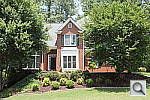
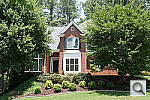
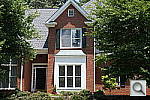
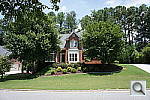
Far-Field TestSony Alpha NEX-3 Sample images image 60

While the House poster in the shot above provides absolute repeatability
from test to test, it doesn’t offer the range of brightness (dynamic range)
that the original scene had, nor does it contain the nearly infinite range
of fine detail found in nature. For these reasons, we still shoot the
original house, even though the vagaries of nature mean that no two shots
will ever be directly comparable. (In fact, over the eight or so years
since we first shot this subject, the trees in front of the house have
now grown so large that they obscure much of the subject. – We’re unfortunately
going to have to switch to a different subject in the near future.)

Things to look for here are how well the camera handles the range of
light levels from very bright to quite dark, and how well it renders the
very fine detail visible in various parts of the image.

Note though, that because this is shot outdoors, the character of the
light is unavoidably going to change quite a bit, depending on the atmospheric
humidity and the time of year. – You thus shouldn’t rely on it for absolute
comparisons between cameras, since it’s unlikely that conditions will
be identical from one test to the next.

ISO
Series
ISO
200
ISO
400
ISO
800
ISO
1,600
ISO
3,200
ISO
6,400
Contrast
Series
-3
Sony Alpha NEX-3 Sample images image 61
-2
Sony Alpha NEX-3 Sample images image 62
-1
Sony Alpha NEX-3 Sample images image 63
Default
Sony Alpha NEX-3 Sample images image 64
+1
Sony Alpha NEX-3 Sample images image 65
+2
Sony Alpha NEX-3 Sample images image 66
+3
Sony Alpha NEX-3 Sample images image 67
DRO Series
Off
Sony Alpha NEX-3 Sample images image 68
Auto
Sony Alpha NEX-3 Sample images image 69
1
Sony Alpha NEX-3 Sample images image 70
2
Sony Alpha NEX-3 Sample images image 71
3
Sony Alpha NEX-3 Sample images image 72
4
Sony Alpha NEX-3 Sample images image 73
4
Sony Alpha NEX-3 Sample images image 74
HDR Series
Off
Sony Alpha NEX-3 Sample images image 75
Auto
Sony Alpha NEX-3 Sample images image 76
1EV
Sony Alpha NEX-3 Sample images image 77
2EV
Sony Alpha NEX-3 Sample images image 78
3EV
Sony Alpha NEX-3 Sample images image 79
4EV
Sony Alpha NEX-3 Sample images image 80
5EV
Sony Alpha NEX-3 Sample images image 81
6EV
Sony Alpha NEX-3 Sample images image 82

Lens Zoom Range

Simply reading “3x zoom range” doesn’t do a lot to help you visualize what that means. It also says nothing regarding just how wide the wide-angle end of that range is. To give you an idea of exactly what each camera’s zoom lens does, we shoot this series of images, showing results at maximum wide angle, maximum telephoto, and telephoto with “digital zoom” enabled. (Note of course though, that so-called “digital zoom” just crops out and enlarges the central pixels of the image, achieving increased size at the cost of reduced resolution.)

Sony Alpha NEX-3 Sample images image 83

18mm
Sony Alpha NEX-3 Sample images image 84

55mm

“Davebox” Test Target

Because most of its various elements are now contained or represented in the combination of the Still Life and Multi Target shots, we no longer routinely shoot the Davebox by itself, as would normally appear in this space. (We do however, still use it for our low light test below.)

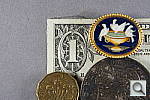
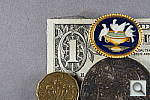
Macro Shot


Standard Macro Shot
Sony Alpha NEX-3 Sample images image 85

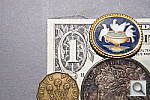
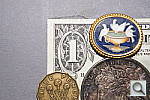
Macro with Flash
Sony Alpha NEX-3 Sample images image 86

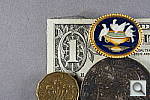
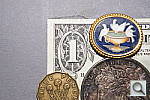
Many are interested in close-up or “macro” photography. This test shows the best results we could obtain using each camera’s macro mode. What to look for:

  • Minimum Macro Area: What’s the smallest area that the camera can photograph? – We calculate this and report on it in the Test Results section of each review.
  • Softness in corners?: The images from most digital cameras get fairly soft when shooting in macro mode. Some are better than others though, you can use the texture of the paper fibers or the details in the dollar bill to compare corner sharpness between models.
  • Flash performance in macro mode?: Macro mode flash performance varies widely between cameras. Some can’t throttle down the flash enough, others throttle down enough, but have very uneven lighting, while others have lenses that project into the path of the flash, casting strong shadows. The Macro with Flash shot here will show you what to expect.

Low-Light Tests

Low light photography is an area where there are really enormous differences
between digital camera models. This test starts at a light level about
equivalent to typical city street lighting at night (one foot-candle),
and then progresses down from there, each successive test being at half
the light level of the preceding one. You may also see the effect of poor
low-light autofocus in some of these shots, although we use a different
test setup to check autofocus performance more directly. (The results
of which are reported on in the main Test Results section.) Things to
look for here include:

  • Exposure limit: What’s the darkest level a camera can handle
    at each ISO setting? If the leftmost images are reasonably bright, the
    camera should do fine with typical city night scenes. If you’re shooting
    in the more dimly-lit suburbs, you’ll need a camera capable of producing
    good images one, two, or three steps to the right of that.
  • Autofocus Limit: How dark can you shoot and still get well-focused
    pictures?
  • White Balance: Does the camera’s white balance suffer at low
    light levels? (Many do.)
  • Noise Levels: Look at the photos, print them on your own photo
    printer. How large a print can you make at acceptable quality levels,
    at various ISO settings and light levels?
  • Detail loss to anti-noise processing?: Do details in the white
    gauze and even in the lettering on the test targets suffer at lower
    light levels?

(Note: If you’d like to use a light meter to check light levels
for subjects you might be interested in shooting, a light level of one
foot-candle corresponds to a normal exposure of two seconds at f/2.8 and
ISO 100.)


1 fc
11 lux
1/2 fc
5.5 lux
1/4 fc
2.7 lux
1/8 fc
1.3 lux
1/16 fc
0.67 lux
1/16fc
No NR
ISO
200
Sony Alpha NEX-3 Sample images image 87
2 sec
f2.8
Sony Alpha NEX-3 Sample images image 88
4 sec
f2.8
Sony Alpha NEX-3 Sample images image 89
8 sec
f2.8
Sony Alpha NEX-3 Sample images image 90
15 sec
f2.8
Sony Alpha NEX-3 Sample images image 91
30 sec
f2.8
Sony Alpha NEX-3 Sample images image 92
30 sec
f2.8
ISO
400
Sony Alpha NEX-3 Sample images image 93
1 sec
f2.8
Sony Alpha NEX-3 Sample images image 94
2 sec
f2.8
Sony Alpha NEX-3 Sample images image 95
4 sec
f2.8
Sony Alpha NEX-3 Sample images image 96
8 sec
f2.8
Sony Alpha NEX-3 Sample images image 97
15 sec
f2.8
Sony Alpha NEX-3 Sample images image 98
15 sec
f2.8
ISO
800
Sony Alpha NEX-3 Sample images image 99
0.5 sec
f2.8
Sony Alpha NEX-3 Sample images image 100
1 sec
f2.8
Sony Alpha NEX-3 Sample images image 101
2 sec
f2.8
Sony Alpha NEX-3 Sample images image 102
4 sec
f2.8
Sony Alpha NEX-3 Sample images image 103
8 sec
f2.8
Sony Alpha NEX-3 Sample images image 104
8 sec
f2.8
ISO
1600
Sony Alpha NEX-3 Sample images image 105
1/4 sec
f2.8
Sony Alpha NEX-3 Sample images image 106
0.5 sec
f2.8
Sony Alpha NEX-3 Sample images image 107
1 sec
f2.8
Sony Alpha NEX-3 Sample images image 108
2 sec
f2.8
Sony Alpha NEX-3 Sample images image 109
4 sec
f2.8
Sony Alpha NEX-3 Sample images image 110
4 sec
f2.8
ISO
3200
Sony Alpha NEX-3 Sample images image 111
1/8 sec
f2.8
Sony Alpha NEX-3 Sample images image 112
1/4 sec
f2.8
Sony Alpha NEX-3 Sample images image 113
0.5 sec
f2.8
Sony Alpha NEX-3 Sample images image 114
1 sec
f2.8
Sony Alpha NEX-3 Sample images image 115
2 sec
f2.8
Sony Alpha NEX-3 Sample images image 116
2 sec
f2.8
ISO
6400
Sony Alpha NEX-3 Sample images image 117
1/15 sec
f2.8
Sony Alpha NEX-3 Sample images image 118
1/8 sec
f2.8
Sony Alpha NEX-3 Sample images image 119
1/4 sec
f2.8
Sony Alpha NEX-3 Sample images image 120
0.5 sec
f2.8
Sony Alpha NEX-3 Sample images image 121
1 sec
f2.8
Sony Alpha NEX-3 Sample images image 122
1 sec
f2.8
ISO
12800
Sony Alpha NEX-3 Sample images image 123
1/30 sec
f2.8
Sony Alpha NEX-3 Sample images image 124
1/15 sec
f2.8
Sony Alpha NEX-3 Sample images image 125
1/8 sec
f2.8
Sony Alpha NEX-3 Sample images image 126
1/4 sec
f2.8
Sony Alpha NEX-3 Sample images image 127
0.5 sec
f2.8
Sony Alpha NEX-3 Sample images image 128
0.5 sec
f2.8

Flash Range Tests

Digital camera makers have gotten better with their flash-range ratings.
In the early days, many cameras had rather “optimistic” flash
range specs, to put it politely. These days, the manufacturers seem to
be toeing the line. (No doubt at least in part because of tests like this.)
Consistent with our philosophy of testing worst-case conditions, this
test also involves some use of each camera’s zoom lens. Flash range is
greater at wide angle focal lengths than at telephoto ones. If you’re
shooting at the wide angle end of the lens’ range, you might get better
flash range than what’s shown here. – But you’ll never get a nasty surprise
if you let the test shots below be your guide to flash capability.

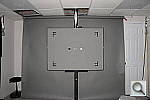
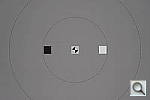
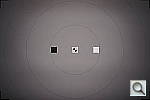
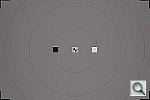
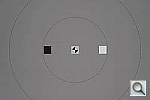
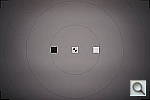
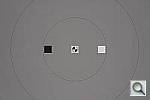
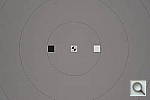
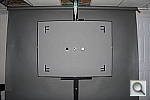
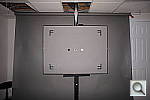
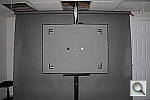
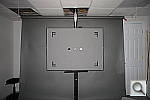
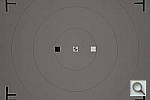
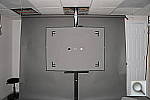
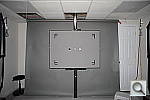
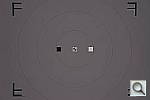
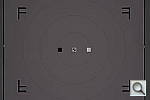
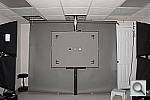
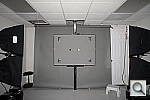
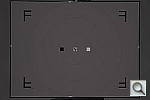
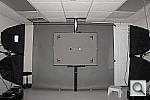
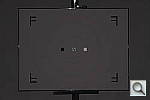
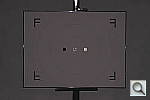
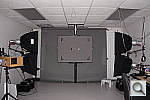
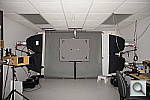
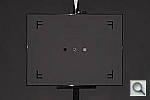
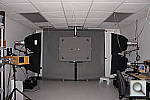
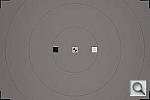
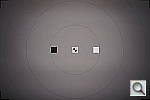
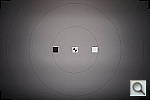
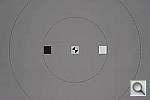
The test target here is our “new” flash range/uniformity target, first put into service in April, 2009. To avoid potential exposure problems caused by the target itself, we’ve gone to a mostly blank grey target, with a reflectance of 18% (matching the theoretical level that most exposure metering systems assume for average scene reflectance). The white and black chips let us check white and black points in addition to the mid-grey of the target itself. The concentric circles are a visual guide for flash falloff, marking points 25%, 50%, and 75% of the way from the center to the corners of the target. The bold black framing marks indicate the corners of either a 4:3 or 3:2 aspect ratio, for those shots in which we’re checking flash uniformity. (See below.) For consistency of exposure, the target is mounted in front of backdrop paper that also approximates a 18% grey.


Flash Range: Wide Angle
6 ft 7 ft 8 ft 9 ft 10 ft 11 ft
Sony Alpha NEX-3 Sample images image 129
1/60 sec
f3.5
ISO 200
Sony Alpha NEX-3 Sample images image 130
1/60 sec
f3.5
ISO 200
Sony Alpha NEX-3 Sample images image 131
1/60 sec
f3.5
ISO 200
Sony Alpha NEX-3 Sample images image 132
1/60 sec
f3.5
ISO 200
Sony Alpha NEX-3 Sample images image 133
1/60 sec
f3.5
ISO 200
Sony Alpha NEX-3 Sample images image 134
1/60 sec
f3.5
ISO 200
12 ft 13 ft 14 ft 15 ft 16 ft
Sony Alpha NEX-3 Sample images image 135
1/60 sec
f3.5
ISO 200
Sony Alpha NEX-3 Sample images image 136
1/60 sec
f3.5
ISO 200
Sony Alpha NEX-3 Sample images image 137
1/60 sec
f3.5
ISO 200
Sony Alpha NEX-3 Sample images image 138
1/60 sec
f3.5
ISO 200
Sony Alpha NEX-3 Sample images image 139
1/60 sec
f3.5
ISO 200

Flash Range: Telephoto
6 ft 7 ft 8 ft 9 ft 10 ft 11 ft
Sony Alpha NEX-3 Sample images image 140
1/100 sec
f5.6
ISO 200
Sony Alpha NEX-3 Sample images image 141
1/100 sec
f5.6
ISO 200
Sony Alpha NEX-3 Sample images image 142
1/100 sec
f5.6
ISO 200
Sony Alpha NEX-3 Sample images image 143
1/100 sec
f5.6
ISO 200
Sony Alpha NEX-3 Sample images image 144
1/100 sec
f5.6
ISO 200
Sony Alpha NEX-3 Sample images image 145
1/100 sec
f5.6
ISO 200
12 ft 13 ft 14 ft 15 ft 16 ft
Sony Alpha NEX-3 Sample images image 146
1/100 sec
f5.6
ISO 200
Sony Alpha NEX-3 Sample images image 147
1/100 sec
f5.6
ISO 200
Sony Alpha NEX-3 Sample images image 148
1/100 sec
f5.6
ISO 200
Sony Alpha NEX-3 Sample images image 149
1/100 sec
f5.6
ISO 200
Sony Alpha NEX-3 Sample images image 150
1/100 sec
f5.6
ISO 200

Manufacturer-Specified Flash Range

Lately, many manufacturers specify flash range with the camera set to Auto mode, in which the camera is free to boost its ISO setting to help increase the flash range. This does increase the range, but it’s easy to have too much of a good thing: Too high an ISO can leave you with too much image noise. The variable ISO setting also means that there isn’t an easy way to compare the range with the fixed-ISO shots in our standard flash range series. So now, we also test the flash under the manufacturer-specified conditions (whatever they may be, but frequently with the camera set to Auto mode), and the look at both how brightly the scene is lit, and how much image noise is present in the resulting images.

Flash range for SLRs will vary with the lens used (depending on the maximum aperture), so their flash range is commonly expressed as a Guide Number, or GN for short. The guide number is a distance, in either feet or meters, at a given ISO. To find the maximum flash range at a given aperture, just divide the guide number by the aperture. For instance, a guide number of 56 feet would translate to a range of 10 feet with a lens set to an aperture of f/5.6. The range would be twice that if you had an f/2.8 lens (56/2.8 = 20).

Manufacturer-Specified Flash Range
Wide Angle Telephoto
Sony Alpha NEX-3 Sample images image 151
9.3 feet
ISO 200
Sony Alpha NEX-3 Sample images image 152
5.8 feet
ISO 200

Flash Uniformity

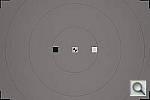
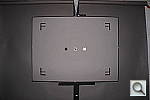
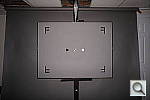
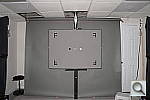
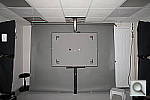
The flash units on many digital cameras don’t illuminate the scene very evenly, especially at wide angle focal lengths, so the photos here shows how uniform the flash coverage is. As noted earlier, this test uses the same target as our flash range test, but for the uniformity tests, we take care to frame the target the same from camera to camera. The concentric circles on the target mark distances 25%, 50%, and 75% of the way from the center to the corners. (Approximate, they roughly split the difference between the 4:3 and 3:2 aspect ratios.)

Flash Uniformity

Viewfinder Accuracy

Viewfinder accuracy is an important parameter, especially for shots
where framing is critical. The optical viewfinders on most digital cameras
match the (poor) accuracy of those on film cameras, typically showing
only about 85% of the actual final frame area. It’s likely that this is
a deliberate design choice by the camera engineers, to help avoid users
accidentally cutting off the heads of their subjects. We disagree with
this approach, or at least feel that it should be mitigated a bit, perhaps
by increasing the accuracy to 90 to 95%.

Unlike the optical viewfinders, the LCD viewfinders on most digital
cameras tend to be quite accurate. There are exceptions though, and it’s
unfortunately not uncommon to find an LCD monitor that only shows 90%
or less of the final frame.

Things to look for on this test chart are:

  • Optical/Electronic viewfinder accuracy: When we shoot this target in the studio, we line things up so the center of the bright red outline on the target is just visible at the edges of the viewfinder frame. The resulting photo then very directly shows how accurate the viewfinder is. The fine black lines mark progressive increments of 1% of increased or decreased frame area. The bold black lines mark 5% increments. The lines let you get an approximate idea of frame accuracy visually, but we measure the actual pixel dimensions to derive the accuracy numbers we report in our reviews.
  • LCD monitor accuracy: This is the same test, but framed with the LCD monitor instead of the optical viewfinder. As mentioned above, LCD monitors are usually more accurate than optical viewfinders, especially in point & shoot digicams.

Digital Cameras – Sony Alpha NEX-3 Test Images

Not sure which camera to buy? Let your eyes be the ultimate judge!
Visit our Comparometer(tm)
to compare images from the Sony Alpha NEX-3 with those from other
cameras you may be considering. The proof is in the pictures, so let
your own eyes decide which you like best!

Still LifeSony Alpha NEX-3 Test Shots image 1

This is our new “Still Life” test target. We’re combining
some of the elements from previous shots (DaveBox and Res Chart) into
this and the “Multi Target” shot below, plus added a number
of elements that are very revealing of various camera characteristics
and foibles.

Here’s what to look for in this target:

  • Tone-on-tone detail & noise suppression:
    The cloth swatches in the pinwheel were chosen because they show a lot
    of tone-on-tone detail, across a broad range of colors. This is just
    the sort of detail that noise suppression processing tends to flatten
    out. If you look at the detail in these swatches as the ISO increases,
    you’ll see just where different cameras start to lose subtle detail.
    — The white and tan swatches and the dark swatches tend to be particularly
    revealing of this. The label of the vinegar bottle (second from the
    right) is another great place to look for lost detail from noise suppression,
    as the image of the person at the top of the label is actually a depiction
    of a mosaic. The dark colors in the background and in the figure’s clothes
    contain detail that’s very quickly lost when a camera’s noise suppression
    system kicks in. Cameras with really high-quality, low-noise sensors
    that require little noise suppression will be able to hold onto the
    detail in these areas, many others will show only a uniform swath of
    smudged color.

    Another place where you’ll quickly see the effects of over-aggressive
    noise suppression is in the white salt grains of the salt grinder in
    lower left. Cameras are often more conservative about suppressing noise
    in highlight areas (because our eyes tend to see less of it there),
    but many cameras seem to have a hard time holding onto the subtle shadings
    that distinguish the salt grains from each other, particularly at higher
    ISO levels.

  • Fine Detail: You’ll find a lot of fine detail
    in the label of the beer bottle on the right, in its fine cursive text,
    but the other bottle labels hold a lot of fine detail as well. Fine
    text is often a good visual indicator of resolution, because our brains
    have an excellent idea of what the text should look like, so
    are very quick to notice even minor loss of detail.

    For really fine detail, look to the circular scale/calculator on the
    right side of the scene. Some of the fine lines there are extremely
    fine indeed. Looking at results from many different cameras with this
    target, we found that camera noise-suppression systems often confuse
    the fine lines with image noise, and so flatten them out. There’s also
    a nice range of fine text sizes in this chart as well, once again great
    visual cues for resolution and detail.

  • Highlight Detail: Three elements in this scene
    show off (or show up) a camera’s ability to hold onto highlight detail.
    As mentioned above, the salt grains (and reflections of the studio lights)
    in the salt mill are examples of fairly subtle highlight detail that
    cameras’ anti-noise processing sometimes obliterate. The folded white
    cloth under the mug on the right side of the frame likewise shows a
    lot of white-on-white detail that is easy to lose, particularly if a
    camera’s tone curve is too contrasty. As it turns out though, the most
    sensitive test of a camera’s highlight abilities seems to be the hank
    of white embroidery thread in the upper right corner. These fibers are
    unusually bright and reflective, so its easy for a camera to blow out
    detail in them.

  • Shadow Detail: Several elements of this subject
    are useful for evaluating shadow detail, particularly the black mug
    and the pieces of folded black velvet, both under and inside the mug.
    The bottoms of the beer bottles also provide some gradations of deep
    shadow, and the clump of peppers in the bottom of the pepper oil bottle
    had a fair bit of detail that’s far down at the shadow end of the tone
    curve.

    We were actually surprised when we constructed this scene just how dark
    the velvet and sides of the beer bottles ended up being. Even with the
    bright studio lights shining directly on it, the velvet in particular
    stays way, way down at the shadow end of the tone curve. With most cameras
    and on most monitors, the velvet will simply appear as an unrelieved
    swatch of black. To see whether it contains deep detail or not, in most
    cases you’ll have to open the file in an image editor and boost the
    brightness dramatically, to bring the detail up into a visible range.

  • Preservation of “Shape” in Strong Colors:
    As you approach the extremes of a camera’s color gamut (its range of
    recordable colors), it becomes more and more difficult for the camera
    to show fine gradations of tone, because one or more of the RGB color
    channels are close to saturation. It’s not uncommon to see a brightly
    colored piece of clothing or a vibrant flower appear in digicam photos
    as just a blob of color, because the camera ran up against the limits
    of its color gamut. The brightly colored embroidery threads in the upper
    right portion of the Still Life target are good examples of situations
    where this might happen. Pay particular attention to the bright red
    and dark blue colors here, as these are both colors near the edge of
    the typical sRGB color gamut.

  • Color accuracy and white balance: It’s pretty
    small in there, but we’ve included a mini-MacBeth chart, which displays
    very carefully controlled color swatches. Our Multi Target (see below)
    sports a full-sized MacBeth chart, but the one here serves as a good
    check of color balance and rendition, and is also useful for checking
    white balance on this particular shot.

  • Image noise and detail vs ISO: As mentioned above,
    this target contains many elements useful for evaluating detail loss
    to anti-noise processing. We’ll therefore always shoot a full set of
    test images of this target across each camera’s ISO range, for every
    camera we test. (See below.)
ISO Series NR, = Normal (Default)
ISO
200
ISO
400
ISO
800
ISO
1,600
ISO
3,200
ISO
6,400
ISO 12.8K
ISO Series, NR = Weak
ISO
200
ISO
400
ISO
800
ISO
1,600
ISO
3,200
ISO
6,400
ISO 12.8K
Contrast
Series
-3
Sony Alpha NEX-3 Test Shots image 2
-2
Sony Alpha NEX-3 Test Shots image 3
-1
Sony Alpha NEX-3 Test Shots image 4
Default
Sony Alpha NEX-3 Test Shots image 5
+1
Sony Alpha NEX-3 Test Shots image 6
+2
Sony Alpha NEX-3 Test Shots image 7
+3
Sony Alpha NEX-3 Test Shots image 8
Saturation
Series
-3
Sony Alpha NEX-3 Test Shots image 9
-2
Sony Alpha NEX-3 Test Shots image 10
-1
Sony Alpha NEX-3 Test Shots image 11
Default
Sony Alpha NEX-3 Test Shots image 12
+1
Sony Alpha NEX-3 Test Shots image 13
+2
Sony Alpha NEX-3 Test Shots image 14
+3
Sony Alpha NEX-3 Test Shots image 15
DRO Series
Off
Sony Alpha NEX-3 Test Shots image 16
Auto
Sony Alpha NEX-3 Test Shots image 17
HDR Series
Off
Sony Alpha NEX-3 Test Shots image 18
Auto
Sony Alpha NEX-3 Test Shots image 19
Creative Style
Series
Standard
Sony Alpha NEX-3 Test Shots image 20
B&W
Sony Alpha NEX-3 Test Shots image 21
Landscape
Sony Alpha NEX-3 Test Shots image 22
Portrait
Sony Alpha NEX-3 Test Shots image 23
Sunset
Sony Alpha NEX-3 Test Shots image 24
Vivid
Sony Alpha NEX-3 Test Shots image 25

Multi TargetSony Alpha NEX-3 Test Shots image 26

Our new “Multi Target” was first put into use in April, 2009, replacing the earlier “interim” design. This target incorporates a number of elements that combine aspects of the previous Multi target, as well as the previous Viewfinder Accuracy or “VFA” chart. Here’s some of what you’ll find in this target:

Framing marks: This chart evolved from the earlier Viewfinder Accuracy chart, so one of its major uses is to measure viewfinder accuracy. (See notes in the Viewfinder Accuracy section, at the bottom of this page, for more information on this.)

USAF resolution targets: An important use of this target is in evaluating lens quality, looking how well sharpness holds up as you move from the center to the corners of the frame. The little “USAF” resolution targets arranged at the center, in the corners, and along the diagonals are very useful for making fine judgements about blur, flare and aberrations in the image. We generally show crops of a USAF chip from a corner of the target and from the center, to show how lenses hold sharpness at wide and telephoto focal lengths.

Alignment “bullseyes:” We find these graphics from the graphic arts world (used to align sheets of film in the old film-based prepress days) very useful for seeing chromatic aberration in lenses. The bold black/white elements are good for seeing the colored fringes caused by CA in the corners of the frame.

MacBeth ColorChecker Chart: This is about as common a color standard as you can get these days, very widely available for only mildly exorbitant cost, and quite well controlled in its production. It thus serves as a good basis of comparison between cameras and between test setups. Imatest also understands the MacBeth colors very well, and uses them to produce its color accuracy map that we feature in all our reviews.

MacBeth ColorChecker SG Chart: The ColorChecker SG chart provides a wider range of colors, to give a more detailed map of a camera’s color handling. We haven’t begun using this chart in the color-accuracy graphs we routinely offer, but expect to do so at some point in the future. In the meantime, we sometimes refer to this chart internally, to get a more complete idea of what a camera’s color map looks like.

Log C/F Target: The progressive resolution pattern located just below the center of the target is a Log C/F (logarithmic contrast vs spatial frequency) chart. Digital camera noise reduction routines work by looking at levels of local contrast, flattening-out detail at progressively lower spatial frequencies as the local contrast decreases. (This is very commonly seen in human hair, grass, foliage, and other subjects with subtly-contrasting fine detail.) This chart lets Imatest analyze just how a camera makes the tradeoff between contrast, detail, and image noise.

Color Starbursts: The six circular starburst elements arranged around the target are intended to reveal de-mosaicing artifacts and color-dependent resolution issues. The six starbursts provide examples of each combination of RGB colors intersecting each other. (That is, red, green, and blue against black, plus red against green, green against blue, and blue against red.) Given that the most common sensor RGB color filter pattern (the so-called Bayer) pattern has twice as many green pixels as red or blue, you’ll generally see that the green/black starburst shows the best resolution, while the blue/red one shows the worst. The effects of different sensor geometries and color filter array patterns will be revealed here.

Musicians Image: Synthetic test patterns only tell you so much. While we have a lot of pictorial images in our other test targets, we thought it would be useful to include a small “natural” image here as well.

ISO Series
ISO
200
ISO
400
ISO
800
ISO
1,600
ISO
3,200
ISO
6,400
ISO
12.8K

Resolution TargetSony Alpha NEX-3 Test Shots image 27

Part of the impetus in developing the new Multi Target in April 2009 was to switch to using a new 2x target for the resolution measurements, since the original ISO 12233 chart we’d used since the site first began in 1998(!) had become inadequate for testing the highest-resolution cameras. We’d for quite some time had a “homemade” 2x target, employing a shrunk version of the ISO 12233 chart, shot at 1/2 size. The resolution numbers on that chart all needed to be doubled to convert to the actual values, though, so we decided to go with a commercial 2x target to eliminate possible confusion on the part of our readers. Numbers on this new 2x resolution chart now read directly in hundreds of lines/picture height. (Because almost all of the area of this new resolution chart is now meaningful for resolution measurements, there was no longer space on it to overlay the MacBeth and other color targets on our prior Multi chart; hence the simultaneous change in our Multi target.)

Resolution Series
(Medium Focal Length) “Fine”
JPEG
“Normal”
JPEG
4,592 x 3,056 NEX3hRES4592F NEX3hRES4592N
3,344 x 2,224 NEX3hRES3344 –
2,288 x 1,520 NEX3hRES2288 –
(Max Res & Quality) Wide Angle Medium Telephoto
4,592 x 3,056 NEX3hRESW NEX3hRESM NEX3hREST

“Sunlit” Portrait:
(This is our “Outdoor” Portrait test – read more about it
here.)

Sony Alpha NEX-3 Test Shots image 28

The lighting in this shot is deliberately awful, about what you’d expect from noontime sunshine here in the Atlanta, GA area. (In fact, the color balance has been chosen to pretty well match the hazy sunshine here in mid-August.)

The reason for the harsh lighting is to provide a real “torture
test” of how cameras handle conditions of extreme contrast; and in
particular, how well they do holding onto highlight detail.

Look for:

  • Overall color: Matching summer sunlight here in the South,
    the lighting in this scene is a bit more yellow-tinged than that in
    many parts of the country, or in the fall or winter. – So there may
    be an overall warm cast to the color. That said though, there’s a fair
    range of color represented in the bouquet, presenting a tough challenge
    for the cameras. For some reason, the blue flowers seem particularly
    hard to handle, with many cameras rendering them as purple. (In real
    life, they’re a light shade of navy blue, with just a bit of purple
    in them.)
  • Skin tones: The overall slight warm cast will tend to leave
    the model’s skin tones a bit on the warm side as well. Nonetheless,
    look to see if her skin seems overly pink or if they have a too-bright
    tinge of yellow: Some cameras oversaturate skin tones (make their color
    too intense), leading to an almost sunburned look. A little oversaturation
    can make for a more “healthy-looking” complexion, but it doesn’t
    take much variation for skin tones to look unnatural.
  • Highlight detail: When the model’s skin tones are at a more
    or less normal level of brightness, how much detail can you see in her
    shirt? Does it blow out entirely to white, or can you still see the
    creases and folds in the fabric?
  • Overall contrast: Most consumer digital cameras produce bright,
    contrasty images, because that’s what most consumers like. Unfortunately,
    under bright sunlit conditions, many such cameras produce images with
    little or no highlight detail, and dark, plugged-up looking shadows.
  • Shadow detail: The area under the flower bouquet is in quite deep shadow. Does the camera in question retain good detail here, with low image noise? To see, you may need to download the image and play with it in Photoshop(tm) or another imaging program. Brighten the image, and see how far detail extends into the shadows. Photo printers are generally much better at showing shadow detail than are CRTs or LCDs, so you’ll want a camera that preserves good detail here. The ability to boost brightness without encountering too much image noise is important if you ever have to “rescue” an underexposed image on the computer.
  • Detail in areas of subtle contrast: Most digital cameras employ
    some sort of noise-suppression to remove electronic noise from their
    images. Noise suppression is a good thing, but only if it’s not overdone.
    Too much noise suppression will “flatten out” subtle detail
    in areas of reduced contrast. You can often see this in hair, where
    the individual strands become blurred, and the image takes on an almost
    watercolor effect. Look at the detail in the model’s hair, and compare
    how it looks with different cameras in the Comparometer.

To view the entire exposure series from zero to +1.0 EV, see files NEX3OUTAP0.HTM through NEX3OUTBAP3.HTM on the thumbnail
index page
.

Contrast
Series
-3
Sony Alpha NEX-3 Test Shots image 29
-1
Sony Alpha NEX-3 Test Shots image 30
Default
Sony Alpha NEX-3 Test Shots image 31
+1
Sony Alpha NEX-3 Test Shots image 32
+3
Sony Alpha NEX-3 Test Shots image 33
Saturation
Series
-3
Sony Alpha NEX-3 Test Shots image 34
-1
Sony Alpha NEX-3 Test Shots image 35
Default
Sony Alpha NEX-3 Test Shots image 36
+1
Sony Alpha NEX-3 Test Shots image 37
+3
Sony Alpha NEX-3 Test Shots image 38
DRO Series
Auto
Sony Alpha NEX-3 Test Shots image 39
Off
Sony Alpha NEX-3 Test Shots image 40
1
Sony Alpha NEX-3 Test Shots image 41
2
Sony Alpha NEX-3 Test Shots image 42
3
Sony Alpha NEX-3 Test Shots image 43
4
Sony Alpha NEX-3 Test Shots image 44
5
Sony Alpha NEX-3 Test Shots image 45
HDR Series
Auto
Sony Alpha NEX-3 Test Shots image 46
Off
Sony Alpha NEX-3 Test Shots image 47
1
Sony Alpha NEX-3 Test Shots image 48
2
Sony Alpha NEX-3 Test Shots image 49
3
Sony Alpha NEX-3 Test Shots image 50
4
Sony Alpha NEX-3 Test Shots image 51
5
Sony Alpha NEX-3 Test Shots image 52

Indoor Portrait, Flash:

Normal
Flash
+0.3 EV
Sony Alpha NEX-3 Test Shots image 53
Slow-Sync
Flash
Default
Sony Alpha NEX-3 Test Shots image 54

This shot duplicates indoor shooting conditions in most US homes, with
fairly bright incandescent room lighting. The challenge here is for the
camera’s flash to blend naturally with the room lighting, and produce
good, neutral color overall. – Some cameras will be overly affected by
the room lighting, even with their flash enabled, and the result will
be a strong orange cast. Another common failing is for the highlights
from the flash to take on an unnatural bluish cast.

Finally, exposure is important here, and frequently a tough challenge
for the cameras. The model’s white shirt is central in the scene, reflecting
a lot of the light from the flash right back at the camera. As a result,
most cameras underexpose this shot, and require some positive exposure
compensation to produce a good result. – And that’s an important consideration
in itself: Does the camera even permit adjustment of its flash
exposures? Many do not. These photos are a tough exposure challenge, if
they come out OK, the camera in question can probably be coaxed into delivering
a good flash exposure of any subject within its range.

Note too, that the normal flash shot (as opposed to the slow sync one,
if the camera offers that feature) will be sharply rendered, any subject
or camera movement frozen by the quick pop of the flash. That makes this
shot a good one to look for the effect of over-aggressive noise suppression
in the model’s hair.

To view the exposure series from zero to +1.0 EV in the normal flash mode, see files NEX3INBFP0.HTM through NEX3INBFP3.HTM on the thumbnail
index page
.

To view the same series in the Slow-Sync flash mode, see files /cameras/sony-nex-3-review/image/988005?section=test through NEX3INBFSP3.HTM on the thumbnail index
page
.

Indoor Portrait, No Flash:

Auto
White Balance
Sony Alpha NEX-3 Test Shots image 55
Incandescent
White Balance
Sony Alpha NEX-3 Test Shots image 56
Manual
White Balance
Sony Alpha NEX-3 Test Shots image 57
2,600K
White Balance
Sony Alpha NEX-3 Test Shots image 58

The incandescent lighting used in most US homes actually has a very
strong yellow color to it. Our eyes have an amazing ability to ignore
color casts like this, something digital cameras struggle to emulate.

The incandescent lighting used for this shot is thus not only very common
here in the US, but also very difficult for most digital cameras to deal
with. While we probably want a little yellow color to remain in
the image (to convey some of the mood of the original scene), too much
will look unnatural and distort colors.

Most cameras’ auto white balance systems have a great deal of difficulty
with this shot, but many incandescent white balance settings struggle
as well. (It seems that many cameras’ incandescent settings are actually
calibrated to the tungsten lighting used in professional studio systems,
which isn’t nearly as warm-toned as typical household lighting.)

If you intend to do much shooting indoors after dark, pay careful attention
to this test, as cameras vary widely in this regard.

To view the entire exposure series from zero to +1.0 EV, see files NEX3INBMP0.HTM through NEX3INBMP3.HTM on the thumbnail
index page
.

ISO Series:
“ISO equivalent” refers to a camera’s light sensitivity. ISO
200 represents twice the sensitivity of ISO 100, meaning that you can
use a shutter speed that’s twice as fast. Higher ISO settings are often
required to get any picture at all when shooting after dark, but even
in full daylight, using a higher ISO can help you freeze fast action.
The problem is, increasing a digital camera’s ISO also increases image
noise. In practical terms, this means that higher-ISO images often can’t
be used to produce prints as large as lower-ISO ones. The tricky thing
here is that high-ISO images often look much different when printed at
various sizes than they do when viewed on-screen. In particular, for any
level of image noise, you’ll often find that while noise is quite evident
at larger print sizes, as you reduce the size of the prints, there will
come a point where it suddenly ceases to be an issue. We routinely print
high-ISO photos from the cameras we test on our studio printer (currently
a Canon i9900) at a range of sizes, and report our findings. If you’re
interested in investigating the effect of image noise for yourself, don’t
judge cameras’ performance by how their images look on your CRT, viewed
pixel-for-pixel. Rather, download the test shots linked in the table below
and output them on your own printer, so you can see how prints of various
sizes will actually look.

One additional note about this particular test series though: Because
these images are shot under household incandescent lighting, the camera
has to boost its blue-channel signal quite a bit to get back to a neutral
color balance. Since the blue channel is generally the one with the most
noise, this makes this shot a real acid test of noise performance. Noise
levels in high-ISO shots taken under daylight conditions usually won’t
show as much noise. (See the “Far Field” test for examples of
high ISO shots captured in daylight.)

ISO
Series
ISO
200
ISO
400
ISO
800
ISO
1,600
ISO
3,200
ISO
6,400
ISO
12.8K

House Shot:

Sony Alpha NEX-3 Test Shots image 59

Like several of our tests, these images are actually photos of a high-resolution poster, shot under studio lighting. The shots for this camera were captured with our third-generation House poster, which was assembled from 45 separate 11-megapixel images, shot with a very high-quality lens, and then stitched together into a single image. The resulting image amounts to about 450 very high-quality megapixels. This should have sufficient detail to comfortably challenge cameras up to at least 80-100 megapixels. (And even with higher-resolution cameras, we believe that the camera lenses themselves would be more likely to limit resolution than would the detail in the poster.)

Why did we choose to shoot a picture of a picture? The idea was to show a typical subject (a house and surrounding foliage) in a way that would be absolutely consistent from camera to camera. Any outdoor subject is going to vary considerably from day to day, as the lighting changes with the weather, atmospheric conditions, and season. Shooting a poster lets us compare images from cameras shot weeks, months, or even years apart, with the sure knowledge that nothing has changed from one shot to another.

Things to look for here are fine detail, as seen in the foliage and tree limbs against the sky, sharpness in the corners, and the preservation of subtle detail in the shaded brick patterns. – Many cameras with overactive noise suppression severely blur the brick patterns that are in shadow.

Far-Field TestSony Alpha NEX-3 Test Shots image 60

While the House poster in the shot above provides absolute repeatability
from test to test, it doesn’t offer the range of brightness (dynamic range)
that the original scene had, nor does it contain the nearly infinite range
of fine detail found in nature. For these reasons, we still shoot the
original house, even though the vagaries of nature mean that no two shots
will ever be directly comparable. (In fact, over the eight or so years
since we first shot this subject, the trees in front of the house have
now grown so large that they obscure much of the subject. – We’re unfortunately
going to have to switch to a different subject in the near future.)

Things to look for here are how well the camera handles the range of
light levels from very bright to quite dark, and how well it renders the
very fine detail visible in various parts of the image.

Note though, that because this is shot outdoors, the character of the
light is unavoidably going to change quite a bit, depending on the atmospheric
humidity and the time of year. – You thus shouldn’t rely on it for absolute
comparisons between cameras, since it’s unlikely that conditions will
be identical from one test to the next.

ISO
Series
ISO
200
ISO
400
ISO
800
ISO
1,600
ISO
3,200
ISO
6,400
Contrast
Series
-3
Sony Alpha NEX-3 Test Shots image 61
-2
Sony Alpha NEX-3 Test Shots image 62
-1
Sony Alpha NEX-3 Test Shots image 63
Default
Sony Alpha NEX-3 Test Shots image 64
+1
Sony Alpha NEX-3 Test Shots image 65
+2
Sony Alpha NEX-3 Test Shots image 66
+3
Sony Alpha NEX-3 Test Shots image 67
DRO Series
Off
Sony Alpha NEX-3 Test Shots image 68
Auto
Sony Alpha NEX-3 Test Shots image 69
1
Sony Alpha NEX-3 Test Shots image 70
2
Sony Alpha NEX-3 Test Shots image 71
3
Sony Alpha NEX-3 Test Shots image 72
4
Sony Alpha NEX-3 Test Shots image 73
4
Sony Alpha NEX-3 Test Shots image 74
HDR Series
Off
Sony Alpha NEX-3 Test Shots image 75
Auto
Sony Alpha NEX-3 Test Shots image 76
1EV
Sony Alpha NEX-3 Test Shots image 77
2EV
Sony Alpha NEX-3 Test Shots image 78
3EV
Sony Alpha NEX-3 Test Shots image 79
4EV
Sony Alpha NEX-3 Test Shots image 80
5EV
Sony Alpha NEX-3 Test Shots image 81
6EV
Sony Alpha NEX-3 Test Shots image 82

Lens Zoom Range

Simply reading “3x zoom range” doesn’t do a lot to help you visualize what that means. It also says nothing regarding just how wide the wide-angle end of that range is. To give you an idea of exactly what each camera’s zoom lens does, we shoot this series of images, showing results at maximum wide angle, maximum telephoto, and telephoto with “digital zoom” enabled. (Note of course though, that so-called “digital zoom” just crops out and enlarges the central pixels of the image, achieving increased size at the cost of reduced resolution.)

Sony Alpha NEX-3 Test Shots image 83

18mm
Sony Alpha NEX-3 Test Shots image 84

55mm

“Davebox” Test Target

Because most of its various elements are now contained or represented in the combination of the Still Life and Multi Target shots, we no longer routinely shoot the Davebox by itself, as would normally appear in this space. (We do however, still use it for our low light test below.)

Macro Shot


Standard Macro Shot
Sony Alpha NEX-3 Test Shots image 85

Macro with Flash
Sony Alpha NEX-3 Test Shots image 86

Many are interested in close-up or “macro” photography. This test shows the best results we could obtain using each camera’s macro mode. What to look for:

  • Minimum Macro Area: What’s the smallest area that the camera can photograph? – We calculate this and report on it in the Test Results section of each review.
  • Softness in corners?: The images from most digital cameras get fairly soft when shooting in macro mode. Some are better than others though, you can use the texture of the paper fibers or the details in the dollar bill to compare corner sharpness between models.
  • Flash performance in macro mode?: Macro mode flash performance varies widely between cameras. Some can’t throttle down the flash enough, others throttle down enough, but have very uneven lighting, while others have lenses that project into the path of the flash, casting strong shadows. The Macro with Flash shot here will show you what to expect.

Low-Light Tests

Low light photography is an area where there are really enormous differences
between digital camera models. This test starts at a light level about
equivalent to typical city street lighting at night (one foot-candle),
and then progresses down from there, each successive test being at half
the light level of the preceding one. You may also see the effect of poor
low-light autofocus in some of these shots, although we use a different
test setup to check autofocus performance more directly. (The results
of which are reported on in the main Test Results section.) Things to
look for here include:

  • Exposure limit: What’s the darkest level a camera can handle
    at each ISO setting? If the leftmost images are reasonably bright, the
    camera should do fine with typical city night scenes. If you’re shooting
    in the more dimly-lit suburbs, you’ll need a camera capable of producing
    good images one, two, or three steps to the right of that.
  • Autofocus Limit: How dark can you shoot and still get well-focused
    pictures?
  • White Balance: Does the camera’s white balance suffer at low
    light levels? (Many do.)
  • Noise Levels: Look at the photos, print them on your own photo
    printer. How large a print can you make at acceptable quality levels,
    at various ISO settings and light levels?
  • Detail loss to anti-noise processing?: Do details in the white
    gauze and even in the lettering on the test targets suffer at lower
    light levels?

(Note: If you’d like to use a light meter to check light levels
for subjects you might be interested in shooting, a light level of one
foot-candle corresponds to a normal exposure of two seconds at f/2.8 and
ISO 100.)


1 fc
11 lux
1/2 fc
5.5 lux
1/4 fc
2.7 lux
1/8 fc
1.3 lux
1/16 fc
0.67 lux
1/16fc
No NR
ISO
200
Sony Alpha NEX-3 Test Shots image 87
2 sec
f2.8
Sony Alpha NEX-3 Test Shots image 88
4 sec
f2.8
Sony Alpha NEX-3 Test Shots image 89
8 sec
f2.8
Sony Alpha NEX-3 Test Shots image 90
15 sec
f2.8
Sony Alpha NEX-3 Test Shots image 91
30 sec
f2.8
Sony Alpha NEX-3 Test Shots image 92
30 sec
f2.8
ISO
400
Sony Alpha NEX-3 Test Shots image 93
1 sec
f2.8
Sony Alpha NEX-3 Test Shots image 94
2 sec
f2.8
Sony Alpha NEX-3 Test Shots image 95
4 sec
f2.8
Sony Alpha NEX-3 Test Shots image 96
8 sec
f2.8
Sony Alpha NEX-3 Test Shots image 97
15 sec
f2.8
Sony Alpha NEX-3 Test Shots image 98
15 sec
f2.8
ISO
800
Sony Alpha NEX-3 Test Shots image 99
0.5 sec
f2.8
Sony Alpha NEX-3 Test Shots image 100
1 sec
f2.8
Sony Alpha NEX-3 Test Shots image 101
2 sec
f2.8
Sony Alpha NEX-3 Test Shots image 102
4 sec
f2.8
Sony Alpha NEX-3 Test Shots image 103
8 sec
f2.8
Sony Alpha NEX-3 Test Shots image 104
8 sec
f2.8
ISO
1600
Sony Alpha NEX-3 Test Shots image 105
1/4 sec
f2.8
Sony Alpha NEX-3 Test Shots image 106
0.5 sec
f2.8
Sony Alpha NEX-3 Test Shots image 107
1 sec
f2.8
Sony Alpha NEX-3 Test Shots image 108
2 sec
f2.8
Sony Alpha NEX-3 Test Shots image 109
4 sec
f2.8
Sony Alpha NEX-3 Test Shots image 110
4 sec
f2.8
ISO
3200
Sony Alpha NEX-3 Test Shots image 111
1/8 sec
f2.8
Sony Alpha NEX-3 Test Shots image 112
1/4 sec
f2.8
Sony Alpha NEX-3 Test Shots image 113
0.5 sec
f2.8
Sony Alpha NEX-3 Test Shots image 114
1 sec
f2.8
Sony Alpha NEX-3 Test Shots image 115
2 sec
f2.8
Sony Alpha NEX-3 Test Shots image 116
2 sec
f2.8
ISO
6400
Sony Alpha NEX-3 Test Shots image 117
1/15 sec
f2.8
Sony Alpha NEX-3 Test Shots image 118
1/8 sec
f2.8
Sony Alpha NEX-3 Test Shots image 119
1/4 sec
f2.8
Sony Alpha NEX-3 Test Shots image 120
0.5 sec
f2.8
Sony Alpha NEX-3 Test Shots image 121
1 sec
f2.8
Sony Alpha NEX-3 Test Shots image 122
1 sec
f2.8
ISO
12800
Sony Alpha NEX-3 Test Shots image 123
1/30 sec
f2.8
Sony Alpha NEX-3 Test Shots image 124
1/15 sec
f2.8
Sony Alpha NEX-3 Test Shots image 125
1/8 sec
f2.8
Sony Alpha NEX-3 Test Shots image 126
1/4 sec
f2.8
Sony Alpha NEX-3 Test Shots image 127
0.5 sec
f2.8
Sony Alpha NEX-3 Test Shots image 128
0.5 sec
f2.8

Flash Range Tests

Digital camera makers have gotten better with their flash-range ratings.
In the early days, many cameras had rather “optimistic” flash
range specs, to put it politely. These days, the manufacturers seem to
be toeing the line. (No doubt at least in part because of tests like this.)
Consistent with our philosophy of testing worst-case conditions, this
test also involves some use of each camera’s zoom lens. Flash range is
greater at wide angle focal lengths than at telephoto ones. If you’re
shooting at the wide angle end of the lens’ range, you might get better
flash range than what’s shown here. – But you’ll never get a nasty surprise
if you let the test shots below be your guide to flash capability.

The test target here is our “new” flash range/uniformity target, first put into service in April, 2009. To avoid potential exposure problems caused by the target itself, we’ve gone to a mostly blank grey target, with a reflectance of 18% (matching the theoretical level that most exposure metering systems assume for average scene reflectance). The white and black chips let us check white and black points in addition to the mid-grey of the target itself. The concentric circles are a visual guide for flash falloff, marking points 25%, 50%, and 75% of the way from the center to the corners of the target. The bold black framing marks indicate the corners of either a 4:3 or 3:2 aspect ratio, for those shots in which we’re checking flash uniformity. (See below.) For consistency of exposure, the target is mounted in front of backdrop paper that also approximates a 18% grey.


Flash Range: Wide Angle
6 ft 7 ft 8 ft 9 ft 10 ft 11 ft
Sony Alpha NEX-3 Test Shots image 129
1/60 sec
f3.5
ISO 200
Sony Alpha NEX-3 Test Shots image 130
1/60 sec
f3.5
ISO 200
Sony Alpha NEX-3 Test Shots image 131
1/60 sec
f3.5
ISO 200
Sony Alpha NEX-3 Test Shots image 132
1/60 sec
f3.5
ISO 200
Sony Alpha NEX-3 Test Shots image 133
1/60 sec
f3.5
ISO 200
Sony Alpha NEX-3 Test Shots image 134
1/60 sec
f3.5
ISO 200
12 ft 13 ft 14 ft 15 ft 16 ft
Sony Alpha NEX-3 Test Shots image 135
1/60 sec
f3.5
ISO 200
Sony Alpha NEX-3 Test Shots image 136
1/60 sec
f3.5
ISO 200
Sony Alpha NEX-3 Test Shots image 137
1/60 sec
f3.5
ISO 200
Sony Alpha NEX-3 Test Shots image 138
1/60 sec
f3.5
ISO 200
Sony Alpha NEX-3 Test Shots image 139
1/60 sec
f3.5
ISO 200

Flash Range: Telephoto
6 ft 7 ft 8 ft 9 ft 10 ft 11 ft
Sony Alpha NEX-3 Test Shots image 140
1/100 sec
f5.6
ISO 200
Sony Alpha NEX-3 Test Shots image 141
1/100 sec
f5.6
ISO 200
Sony Alpha NEX-3 Test Shots image 142
1/100 sec
f5.6
ISO 200
Sony Alpha NEX-3 Test Shots image 143
1/100 sec
f5.6
ISO 200
Sony Alpha NEX-3 Test Shots image 144
1/100 sec
f5.6
ISO 200
Sony Alpha NEX-3 Test Shots image 145
1/100 sec
f5.6
ISO 200
12 ft 13 ft 14 ft 15 ft 16 ft
Sony Alpha NEX-3 Test Shots image 146
1/100 sec
f5.6
ISO 200
Sony Alpha NEX-3 Test Shots image 147
1/100 sec
f5.6
ISO 200
Sony Alpha NEX-3 Test Shots image 148
1/100 sec
f5.6
ISO 200
Sony Alpha NEX-3 Test Shots image 149
1/100 sec
f5.6
ISO 200
Sony Alpha NEX-3 Test Shots image 150
1/100 sec
f5.6
ISO 200

Manufacturer-Specified Flash Range

Lately, many manufacturers specify flash range with the camera set to Auto mode, in which the camera is free to boost its ISO setting to help increase the flash range. This does increase the range, but it’s easy to have too much of a good thing: Too high an ISO can leave you with too much image noise. The variable ISO setting also means that there isn’t an easy way to compare the range with the fixed-ISO shots in our standard flash range series. So now, we also test the flash under the manufacturer-specified conditions (whatever they may be, but frequently with the camera set to Auto mode), and the look at both how brightly the scene is lit, and how much image noise is present in the resulting images.

Flash range for SLRs will vary with the lens used (depending on the maximum aperture), so their flash range is commonly expressed as a Guide Number, or GN for short. The guide number is a distance, in either feet or meters, at a given ISO. To find the maximum flash range at a given aperture, just divide the guide number by the aperture. For instance, a guide number of 56 feet would translate to a range of 10 feet with a lens set to an aperture of f/5.6. The range would be twice that if you had an f/2.8 lens (56/2.8 = 20).

Manufacturer-Specified Flash Range
Wide Angle Telephoto
Sony Alpha NEX-3 Test Shots image 151
9.3 feet
ISO 200
Sony Alpha NEX-3 Test Shots image 152
5.8 feet
ISO 200

Flash Uniformity

The flash units on many digital cameras don’t illuminate the scene very evenly, especially at wide angle focal lengths, so the photos here shows how uniform the flash coverage is. As noted earlier, this test uses the same target as our flash range test, but for the uniformity tests, we take care to frame the target the same from camera to camera. The concentric circles on the target mark distances 25%, 50%, and 75% of the way from the center to the corners. (Approximate, they roughly split the difference between the 4:3 and 3:2 aspect ratios.)

Flash Uniformity

Viewfinder Accuracy

Viewfinder accuracy is an important parameter, especially for shots
where framing is critical. The optical viewfinders on most digital cameras
match the (poor) accuracy of those on film cameras, typically showing
only about 85% of the actual final frame area. It’s likely that this is
a deliberate design choice by the camera engineers, to help avoid users
accidentally cutting off the heads of their subjects. We disagree with
this approach, or at least feel that it should be mitigated a bit, perhaps
by increasing the accuracy to 90 to 95%.

Unlike the optical viewfinders, the LCD viewfinders on most digital
cameras tend to be quite accurate. There are exceptions though, and it’s
unfortunately not uncommon to find an LCD monitor that only shows 90%
or less of the final frame.

Things to look for on this test chart are:

  • Optical/Electronic viewfinder accuracy: When we shoot this target in the studio, we line things up so the center of the bright red outline on the target is just visible at the edges of the viewfinder frame. The resulting photo then very directly shows how accurate the viewfinder is. The fine black lines mark progressive increments of 1% of increased or decreased frame area. The bold black lines mark 5% increments. The lines let you get an approximate idea of frame accuracy visually, but we measure the actual pixel dimensions to derive the accuracy numbers we report in our reviews.
  • LCD monitor accuracy: This is the same test, but framed with the LCD monitor instead of the optical viewfinder. As mentioned above, LCD monitors are usually more accurate than optical viewfinders, especially in point & shoot digicams.

All test shots

Sony Alpha NEX-3 Thumbnails

Not sure which camera to buy? Let your eyes be the ultimate judge!
Visit our Comparometer(tm)
to compare images from the Sony Alpha NEX-3 with those from other
cameras you may be considering. The proof is in the pictures, so let
your own eyes decide which you like best!

This page may take a long time to load, due to the many thumbnails!

All images copyright © 2010 by The Imaging Resource. All rights reserved.
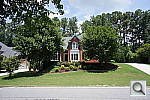
Sony Alpha NEX-3 All test shots image 1
NEX3FAR16MM.JPG
8,716,288 bytes
4592×3056
1/320 sec
f8.0
0.0 EV
16.0 mm focal length
ISO 200
Sony Alpha NEX-3 All test shots image 2
NEX3FARCON1.JPG
8,454,144 bytes
4592×3056
1/250 sec
f8.0
0.0 EV
30.0 mm focal length
ISO 200
Sony Alpha NEX-3 All test shots image 3
NEX3FARCON2.JPG
9,076,736 bytes
4592×3056
1/200 sec
f8.0
0.0 EV
30.0 mm focal length
ISO 200
Sony Alpha NEX-3 All test shots image 4
NEX3FARCON3.JPG
9,240,576 bytes
4592×3056
1/200 sec
f8.0
0.0 EV
30.0 mm focal length
ISO 200
Sony Alpha NEX-3 All test shots image 5
NEX3FARCON4D.JPG
9,142,272 bytes
4592×3056
1/200 sec
f8.0
0.0 EV
30.0 mm focal length
ISO 200
Sony Alpha NEX-3 All test shots image 6
NEX3FARCON5.JPG
9,764,864 bytes
4592×3056
1/200 sec
f8.0
0.0 EV
30.0 mm focal length
ISO 200
Sony Alpha NEX-3 All test shots image 7
NEX3FARCON6.JPG
9,732,096 bytes
4592×3056
1/200 sec
f8.0
0.0 EV
30.0 mm focal length
ISO 200
Sony Alpha NEX-3 All test shots image 8
NEX3FARCON7.JPG
9,666,560 bytes
4592×3056
1/200 sec
f8.0
0.0 EV
30.0 mm focal length
ISO 200
Sony Alpha NEX-3 All test shots image 9
NEX3FARDRO_A.JPG
9,404,416 bytes
4592×3056
1/250 sec
f8.0
0.0 EV
30.0 mm focal length
ISO 200
Sony Alpha NEX-3 All test shots image 10
NEX3FARDRO_L1.JPG
9,469,952 bytes
4592×3056
1/200 sec
f8.0
0.0 EV
30.0 mm focal length
ISO 200
Sony Alpha NEX-3 All test shots image 11
NEX3FARDRO_L2.JPG
9,469,952 bytes
4592×3056
1/200 sec
f8.0
0.0 EV
30.0 mm focal length
ISO 200
Sony Alpha NEX-3 All test shots image 12
NEX3FARDRO_L3.JPG
9,732,096 bytes
4592×3056
1/200 sec
f8.0
0.0 EV
30.0 mm focal length
ISO 200
Sony Alpha NEX-3 All test shots image 13
NEX3FARDRO_L4.JPG
9,666,560 bytes
4592×3056
1/200 sec
f8.0
0.0 EV
30.0 mm focal length
ISO 200
Sony Alpha NEX-3 All test shots image 14
NEX3FARDRO_L5.JPG
10,092,544 bytes
4592×3056
1/125 sec
f8.0
0.0 EV
30.0 mm focal length
ISO 200
Sony Alpha NEX-3 All test shots image 15
NEX3FARHDR_A.JPG
9,338,880 bytes
4592×3056
1/200 sec
f8.0
0.0 EV
30.0 mm focal length
ISO 200
Sony Alpha NEX-3 All test shots image 16
NEX3FARHDR_EV1.JPG
8,585,216 bytes
4592×3056
1/160 sec
f8.0
0.0 EV
30.0 mm focal length
ISO 200
Sony Alpha NEX-3 All test shots image 17
NEX3FARHDR_EV2.JPG
8,716,288 bytes
4592×3056
1/200 sec
f8.0
0.0 EV
30.0 mm focal length
ISO 200
Sony Alpha NEX-3 All test shots image 18
NEX3FARHDR_EV3.JPG
8,060,928 bytes
4592×3056
1/200 sec
f8.0
0.0 EV
30.0 mm focal length
ISO 200
Sony Alpha NEX-3 All test shots image 19
NEX3FARHDR_EV4.JPG
9,240,576 bytes
4592×3056
1/200 sec
f8.0
0.0 EV
30.0 mm focal length
ISO 200
Sony Alpha NEX-3 All test shots image 20
NEX3FARHDR_EV5.JPG
9,207,808 bytes
4592×3056
1/200 sec
f8.0
0.0 EV
30.0 mm focal length
ISO 200
Sony Alpha NEX-3 All test shots image 21
NEX3FARHDR_EV6.JPG
9,207,808 bytes
4592×3056
1/200 sec
f8.0
0.0 EV
30.0 mm focal length
ISO 200
Sony Alpha NEX-3 All test shots image 22
NEX3FARI00200.JPG
NEX3FARI00200.ARW
9,699,328 bytes
4592×3056
1/160 sec
f8.0
0.0 EV
30.0 mm focal length
ISO 200
Sony Alpha NEX-3 All test shots image 23
NEX3FARI00200_ACR_u300r03.JPG
16,913,905 bytes
4592×3056
1/160 sec
f8.0
0.0 EV
30.0 mm focal length
ISO 200
Sony Alpha NEX-3 All test shots image 24
NEX3FARI00200_IDC_defaults.JPG
17,211,386 bytes
4592×3056
1/160 sec
f8.0
0.0 EV
30.0 mm focal length
ISO 200
Sony Alpha NEX-3 All test shots image 25
NEX3FARI00200_IDC_s100.JPG
17,510,499 bytes
4592×3056
1/160 sec
f8.0
0.0 EV
30.0 mm focal length
ISO 200
Sony Alpha NEX-3 All test shots image 26
NEX3FARI00200_IDC_u300r03.JPG
19,270,969 bytes
4592×3056
1/160 sec
f8.0
0.0 EV
30.0 mm focal length
ISO 200
Sony Alpha NEX-3 All test shots image 27
NEX3FARI00400.JPG
NEX3FARI00400.ARW
9,863,168 bytes
4592×3056
1/400 sec
f8.0
0.0 EV
30.0 mm focal length
ISO 400
Sony Alpha NEX-3 All test shots image 28
NEX3FARI00800.JPG
NEX3FARI00800.ARW
8,519,680 bytes
4592×3056
1/800 sec
f8.0
0.0 EV
30.0 mm focal length
ISO 800
Sony Alpha NEX-3 All test shots image 29
NEX3FARI01600.JPG
NEX3FARI01600.ARW
7,766,016 bytes
4592×3056
1/1600 sec
f8.0
0.0 EV
30.0 mm focal length
ISO 1600
Sony Alpha NEX-3 All test shots image 30
NEX3FARI03200.JPG
NEX3FARI03200.ARW
7,405,568 bytes
4592×3056
1/2500 sec
f8.0
0.0 EV
30.0 mm focal length
ISO 3200
Sony Alpha NEX-3 All test shots image 31
NEX3FARI06400.JPG
NEX3FARI06400.ARW
7,929,856 bytes
4592×3056
1/4000 sec
f8.0
0.0 EV
30.0 mm focal length
ISO 6400
Sony Alpha NEX-3 All test shots image 32
NEX3FARWTM.JPG
NEX3FARWTM.ARW
10,321,920 bytes
4592×3056
1/160 sec
f8.0
0.0 EV
30.0 mm focal length
ISO 200
Sony Alpha NEX-3 All test shots image 33
NEX3FARWTT.JPG
NEX3FARWTT.ARW
7,700,480 bytes
4592×3056
1/250 sec
f8.0
0.0 EV
55.0 mm focal length
ISO 200
Sony Alpha NEX-3 All test shots image 34
NEX3FARWTW.JPG
NEX3FARWTW.ARW
9,109,504 bytes
4592×3056
1/250 sec
f8.0
0.0 EV
18.0 mm focal length
ISO 200
Sony Alpha NEX-3 All test shots image 35
NEX3FL06T.JPG
2,981,888 bytes
4592×3056
1/100 sec
f5.6
0.0 EV
55.0 mm focal length
ISO 200
Sony Alpha NEX-3 All test shots image 36
NEX3FL06W.JPG
3,178,496 bytes
4592×3056
1/60 sec
f3.5
0.0 EV
18.0 mm focal length
ISO 200
Sony Alpha NEX-3 All test shots image 37
NEX3FL06_16.JPG
3,473,408 bytes
4592×3056
1/60 sec
f2.8
0.0 EV
16.0 mm focal length
ISO 200
Sony Alpha NEX-3 All test shots image 38
NEX3FL07T.JPG
2,949,120 bytes
4592×3056
1/100 sec
f5.6
0.0 EV
55.0 mm focal length
ISO 200
Sony Alpha NEX-3 All test shots image 39
NEX3FL07W.JPG
3,637,248 bytes
4592×3056
1/60 sec
f3.5
0.0 EV
18.0 mm focal length
ISO 200
Sony Alpha NEX-3 All test shots image 40
NEX3FL07_16.JPG
3,801,088 bytes
4592×3056
1/60 sec
f2.8
0.0 EV
16.0 mm focal length
ISO 200
Sony Alpha NEX-3 All test shots image 41
NEX3FL08T.JPG
2,916,352 bytes
4592×3056
1/100 sec
f5.6
0.0 EV
55.0 mm focal length
ISO 200
Sony Alpha NEX-3 All test shots image 42
NEX3FL08W.JPG
3,604,480 bytes
4592×3056
1/60 sec
f3.5
0.0 EV
18.0 mm focal length
ISO 200
Sony Alpha NEX-3 All test shots image 43
NEX3FL08_16.JPG
3,964,928 bytes
4592×3056
1/60 sec
f2.8
0.0 EV
16.0 mm focal length
ISO 200
Sony Alpha NEX-3 All test shots image 44
NEX3FL09T.JPG
3,178,496 bytes
4592×3056
1/100 sec
f5.6
0.0 EV
55.0 mm focal length
ISO 200
Sony Alpha NEX-3 All test shots image 45
NEX3FL09W.JPG
3,866,624 bytes
4592×3056
1/60 sec
f3.5
0.0 EV
18.0 mm focal length
ISO 200
Sony Alpha NEX-3 All test shots image 46
NEX3FL09_16.JPG
4,096,000 bytes
4592×3056
1/60 sec
f2.8
0.0 EV
16.0 mm focal length
ISO 200
Sony Alpha NEX-3 All test shots image 47
NEX3FL10T.JPG
3,244,032 bytes
4592×3056
1/100 sec
f5.6
0.0 EV
55.0 mm focal length
ISO 200
Sony Alpha NEX-3 All test shots image 48
NEX3FL10W.JPG
3,964,928 bytes
4592×3056
1/60 sec
f3.5
0.0 EV
18.0 mm focal length
ISO 200
Sony Alpha NEX-3 All test shots image 49
NEX3FL10_16.JPG
3,997,696 bytes
4592×3056
1/60 sec
f2.8
0.0 EV
16.0 mm focal length
ISO 200
Sony Alpha NEX-3 All test shots image 50
NEX3FL11T.JPG
3,178,496 bytes
4592×3056
1/100 sec
f5.6
0.0 EV
55.0 mm focal length
ISO 200
Sony Alpha NEX-3 All test shots image 51
NEX3FL11W.JPG
3,932,160 bytes
4592×3056
1/60 sec
f3.5
0.0 EV
18.0 mm focal length
ISO 200
Sony Alpha NEX-3 All test shots image 52
NEX3FL11_16.JPG
3,997,696 bytes
4592×3056
1/60 sec
f2.8
0.0 EV
16.0 mm focal length
ISO 200
Sony Alpha NEX-3 All test shots image 53
NEX3FL12T.JPG
3,014,656 bytes
4592×3056
1/100 sec
f5.6
0.0 EV
55.0 mm focal length
ISO 200
Sony Alpha NEX-3 All test shots image 54
NEX3FL12W.JPG
3,932,160 bytes
4592×3056
1/60 sec
f3.5
0.0 EV
18.0 mm focal length
ISO 200
Sony Alpha NEX-3 All test shots image 55
NEX3FL12_16.JPG
4,096,000 bytes
4592×3056
1/60 sec
f2.8
0.0 EV
16.0 mm focal length
ISO 200
Sony Alpha NEX-3 All test shots image 56
NEX3FL13T.JPG
2,818,048 bytes
4592×3056
1/100 sec
f5.6
0.0 EV
55.0 mm focal length
ISO 200
Sony Alpha NEX-3 All test shots image 57
NEX3FL13W.JPG
4,030,464 bytes
4592×3056
1/60 sec
f3.5
0.0 EV
18.0 mm focal length
ISO 200
Sony Alpha NEX-3 All test shots image 58
NEX3FL13_16.JPG
4,227,072 bytes
4592×3056
1/60 sec
f2.8
0.0 EV
16.0 mm focal length
ISO 200
Sony Alpha NEX-3 All test shots image 59
NEX3FL14T.JPG
2,818,048 bytes
4592×3056
1/100 sec
f5.6
0.0 EV
55.0 mm focal length
ISO 200
Sony Alpha NEX-3 All test shots image 60
NEX3FL14W.JPG
4,227,072 bytes
4592×3056
1/60 sec
f3.5
0.0 EV
18.0 mm focal length
ISO 200
Sony Alpha NEX-3 All test shots image 61
NEX3FL14_16.JPG
4,259,840 bytes
4592×3056
1/60 sec
f2.8
0.0 EV
16.0 mm focal length
ISO 200
Sony Alpha NEX-3 All test shots image 62
NEX3FL15T.JPG
3,342,336 bytes
4592×3056
1/100 sec
f5.6
0.0 EV
55.0 mm focal length
ISO 200
Sony Alpha NEX-3 All test shots image 63
NEX3FL15W.JPG
4,292,608 bytes
4592×3056
1/60 sec
f3.5
0.0 EV
18.0 mm focal length
ISO 200
Sony Alpha NEX-3 All test shots image 64
NEX3FL15_16.JPG
4,390,912 bytes
4592×3056
1/60 sec
f2.8
0.0 EV
16.0 mm focal length
ISO 200
Sony Alpha NEX-3 All test shots image 65
NEX3FL16T.JPG
2,949,120 bytes
4592×3056
1/100 sec
f5.6
0.0 EV
55.0 mm focal length
ISO 200
Sony Alpha NEX-3 All test shots image 66
NEX3FL16W.JPG
4,259,840 bytes
4592×3056
1/60 sec
f3.5
0.0 EV
18.0 mm focal length
ISO 200
Sony Alpha NEX-3 All test shots image 67
NEX3FL16_16.JPG
4,423,680 bytes
4592×3056
1/60 sec
f2.8
0.0 EV
16.0 mm focal length
ISO 200
Sony Alpha NEX-3 All test shots image 68
NEX3FLFCT.JPG
2,949,120 bytes
4592×3056
1/100 sec
f5.6
0.0 EV
55.0 mm focal length
ISO 200
Sony Alpha NEX-3 All test shots image 69
NEX3FLFCW.JPG
3,178,496 bytes
4592×3056
1/60 sec
f3.5
0.0 EV
18.0 mm focal length
ISO 200
Sony Alpha NEX-3 All test shots image 70
NEX3FLFC_16.JPG
3,342,336 bytes
4592×3056
1/60 sec
f2.8
0.0 EV
16.0 mm focal length
ISO 200
Sony Alpha NEX-3 All test shots image 71
NEX3FL_MFR058TM0200.JPG
3,014,656 bytes
4592×3056
1/100 sec
f5.6
0.0 EV
55.0 mm focal length
ISO 200
Sony Alpha NEX-3 All test shots image 72
NEX3FL_MFR093WM0200.JPG
3,899,392 bytes
4592×3056
1/60 sec
f3.5
0.0 EV
18.0 mm focal length
ISO 200
Sony Alpha NEX-3 All test shots image 73
NEX3INBAP0.JPG
4,816,896 bytes
4592×3056
1/8 sec
f4.0
0.0 EV
70.0 mm focal length
ISO 200
Sony Alpha NEX-3 All test shots image 74
NEX3INBAP1.JPG
4,980,736 bytes
4592×3056
1/6 sec
f4.0
+0.3 EV
70.0 mm focal length
ISO 200
Sony Alpha NEX-3 All test shots image 75
NEX3INBAP2.JPG
5,079,040 bytes
4592×3056
1/5 sec
f4.0
+0.7 EV
70.0 mm focal length
ISO 200
Sony Alpha NEX-3 All test shots image 76
NEX3INBAP3.JPG
5,144,576 bytes
4592×3056
1/5 sec
f4.0
+1.0 EV
70.0 mm focal length
ISO 200
Sony Alpha NEX-3 All test shots image 77
NEX3INBFP0.JPG
5,111,808 bytes
4592×3056
1/125 sec
f4.0
0.0 EV
70.0 mm focal length
ISO 200
Sony Alpha NEX-3 All test shots image 78
NEX3INBFP1.JPG
5,144,576 bytes
4592×3056
1/125 sec
f4.0
0.0 EV
70.0 mm focal length
ISO 200
Sony Alpha NEX-3 All test shots image 79
NEX3INBFP2.JPG
5,210,112 bytes
4592×3056
1/125 sec
f4.0
0.0 EV
70.0 mm focal length
ISO 200
Sony Alpha NEX-3 All test shots image 80
NEX3INBFP3.JPG
5,275,648 bytes
4592×3056
1/125 sec
f4.0
0.0 EV
70.0 mm focal length
ISO 200
Sony Alpha NEX-3 All test shots image 81
NEX3INBFSP0.JPG
4,980,736 bytes
4592×3056
1/13 sec
f4.0
0.0 EV
70.0 mm focal length
ISO 200
Sony Alpha NEX-3 All test shots image 82
NEX3INBFSP1.JPG
5,046,272 bytes
4592×3056
1/13 sec
f4.0
0.0 EV
70.0 mm focal length
ISO 200
Sony Alpha NEX-3 All test shots image 83
NEX3INBFSP2.JPG
5,111,808 bytes
4592×3056
1/13 sec
f4.0
0.0 EV
70.0 mm focal length
ISO 200
Sony Alpha NEX-3 All test shots image 84
NEX3INBFSP3.JPG
5,177,344 bytes
4592×3056
1/13 sec
f4.0
0.0 EV
70.0 mm focal length
ISO 200
Sony Alpha NEX-3 All test shots image 85
NEX3INBI00200.JPG
5,111,808 bytes
4592×3056
1/5 sec
f4.0
+0.7 EV
70.0 mm focal length
ISO 200
Sony Alpha NEX-3 All test shots image 86
NEX3INBI00400.JPG
5,341,184 bytes
4592×3056
1/10 sec
f4.0
+0.7 EV
70.0 mm focal length
ISO 400
Sony Alpha NEX-3 All test shots image 87
NEX3INBI00800.JPG
4,849,664 bytes
4592×3056
1/20 sec
f4.0
+0.7 EV
70.0 mm focal length
ISO 800
Sony Alpha NEX-3 All test shots image 88
NEX3INBI01600.JPG
4,620,288 bytes
4592×3056
1/40 sec
f4.0
+0.7 EV
70.0 mm focal length
ISO 1600
Sony Alpha NEX-3 All test shots image 89
NEX3INBI03200.JPG
4,751,360 bytes
4592×3056
1/80 sec
f4.0
+0.7 EV
70.0 mm focal length
ISO 3200
Sony Alpha NEX-3 All test shots image 90
NEX3INBI06400.JPG
5,341,184 bytes
4592×3056
1/160 sec
f4.0
+0.7 EV
70.0 mm focal length
ISO 6400
Sony Alpha NEX-3 All test shots image 91
NEX3INBI12800.JPG
5,734,400 bytes
4592×3056
1/320 sec
f4.0
+0.7 EV
70.0 mm focal length
ISO 12800
Sony Alpha NEX-3 All test shots image 92
NEX3INBK26P0.JPG
4,816,896 bytes
4592×3056
1/8 sec
f4.0
0.0 EV
70.0 mm focal length
ISO 200
Sony Alpha NEX-3 All test shots image 93
NEX3INBK26P1.JPG
4,980,736 bytes
4592×3056
1/6 sec
f4.0
+0.3 EV
70.0 mm focal length
ISO 200
Sony Alpha NEX-3 All test shots image 94
NEX3INBK26P2.JPG
5,111,808 bytes
4592×3056
1/5 sec
f4.0
+0.7 EV
70.0 mm focal length
ISO 200
Sony Alpha NEX-3 All test shots image 95
NEX3INBK26P3.JPG
5,177,344 bytes
4592×3056
1/4 sec
f4.0
+1.0 EV
70.0 mm focal length
ISO 200
Sony Alpha NEX-3 All test shots image 96
NEX3INBMP0.JPG
4,718,592 bytes
4592×3056
1/8 sec
f4.0
0.0 EV
70.0 mm focal length
ISO 200
Sony Alpha NEX-3 All test shots image 97
NEX3INBMP1.JPG
4,980,736 bytes
4592×3056
1/6 sec
f4.0
+0.3 EV
70.0 mm focal length
ISO 200
Sony Alpha NEX-3 All test shots image 98
NEX3INBMP2.JPG
5,111,808 bytes
4592×3056
1/5 sec
f4.0
+0.7 EV
70.0 mm focal length
ISO 200
Sony Alpha NEX-3 All test shots image 99
NEX3INBMP3.JPG
5,144,576 bytes
4592×3056
1/5 sec
f4.0
+1.0 EV
70.0 mm focal length
ISO 200
Sony Alpha NEX-3 All test shots image 100
NEX3INBTP0.JPG
4,784,128 bytes
4592×3056
1/8 sec
f4.0
0.0 EV
70.0 mm focal length
ISO 200
Sony Alpha NEX-3 All test shots image 101
NEX3INBTP1.JPG
4,947,968 bytes
4592×3056
1/6 sec
f4.0
+0.3 EV
70.0 mm focal length
ISO 200
Sony Alpha NEX-3 All test shots image 102
NEX3INBTP2.JPG
5,111,808 bytes
4592×3056
1/5 sec
f4.0
+0.7 EV
70.0 mm focal length
ISO 200
Sony Alpha NEX-3 All test shots image 103
NEX3INBTP3.JPG
5,144,576 bytes
4592×3056
1/4 sec
f4.0
+1.0 EV
70.0 mm focal length
ISO 200
Sony Alpha NEX-3 All test shots image 104
NEX3LL002003.JPG
4,227,072 bytes
4592×3056
2 sec
f2.8
0.0 EV
16.0 mm focal length
ISO 200
Sony Alpha NEX-3 All test shots image 105
NEX3LL002004.JPG
4,227,072 bytes
4592×3056
4 sec
f2.8
0.0 EV
16.0 mm focal length
ISO 200
Sony Alpha NEX-3 All test shots image 106
NEX3LL002005.JPG
4,227,072 bytes
4592×3056
8 sec
f2.8
0.0 EV
16.0 mm focal length
ISO 200
Sony Alpha NEX-3 All test shots image 107
NEX3LL002006.JPG
4,227,072 bytes
4592×3056
15 sec
f2.8
0.0 EV
16.0 mm focal length
ISO 200
Sony Alpha NEX-3 All test shots image 108
NEX3LL002007.JPG
4,259,840 bytes
4592×3056
30 sec
f2.8
0.0 EV
16.0 mm focal length
ISO 200
Sony Alpha NEX-3 All test shots image 109
NEX3LL002007XNR.JPG
4,227,072 bytes
4592×3056
30 sec
f2.8
0.0 EV
16.0 mm focal length
ISO 200
Sony Alpha NEX-3 All test shots image 110
NEX3LL004003.JPG
4,521,984 bytes
4592×3056
1 sec
f2.8
0.0 EV
16.0 mm focal length
ISO 400
Sony Alpha NEX-3 All test shots image 111
NEX3LL004004.JPG
4,521,984 bytes
4592×3056
2 sec
f2.8
0.0 EV
16.0 mm focal length
ISO 400
Sony Alpha NEX-3 All test shots image 112
NEX3LL004005.JPG
4,554,752 bytes
4592×3056
4 sec
f2.8
0.0 EV
16.0 mm focal length
ISO 400
Sony Alpha NEX-3 All test shots image 113
NEX3LL004006.JPG
4,587,520 bytes
4592×3056
8 sec
f2.8
0.0 EV
16.0 mm focal length
ISO 400
Sony Alpha NEX-3 All test shots image 114
NEX3LL004007.JPG
4,587,520 bytes
4592×3056
15 sec
f2.8
0.0 EV
16.0 mm focal length
ISO 400
Sony Alpha NEX-3 All test shots image 115
NEX3LL004007XNR.JPG
4,521,984 bytes
4592×3056
15 sec
f2.8
0.0 EV
16.0 mm focal length
ISO 400
Sony Alpha NEX-3 All test shots image 116
NEX3LL008003.JPG
4,718,592 bytes
4592×3056
0.5 sec
f2.8
0.0 EV
16.0 mm focal length
ISO 800
Sony Alpha NEX-3 All test shots image 117
NEX3LL008004.JPG
4,325,376 bytes
4592×3056
1 sec
f2.8
0.0 EV
16.0 mm focal length
ISO 800
Sony Alpha NEX-3 All test shots image 118
NEX3LL008005.JPG
4,358,144 bytes
4592×3056
2 sec
f2.8
0.0 EV
16.0 mm focal length
ISO 800
Sony Alpha NEX-3 All test shots image 119
NEX3LL008006.JPG
4,358,144 bytes
4592×3056
4 sec
f2.8
0.0 EV
16.0 mm focal length
ISO 800
Sony Alpha NEX-3 All test shots image 120
NEX3LL008007.JPG
4,390,912 bytes
4592×3056
8 sec
f2.8
0.0 EV
16.0 mm focal length
ISO 800
Sony Alpha NEX-3 All test shots image 121
NEX3LL008007XNR.JPG
4,653,056 bytes
4592×3056
8 sec
f2.8
0.0 EV
16.0 mm focal length
ISO 800
Sony Alpha NEX-3 All test shots image 122
NEX3LL016003.JPG
4,685,824 bytes
4592×3056
1/4 sec
f2.8
0.0 EV
16.0 mm focal length
ISO 1600
Sony Alpha NEX-3 All test shots image 123
NEX3LL016004.JPG
4,653,056 bytes
4592×3056
0.5 sec
f2.8
0.0 EV
16.0 mm focal length
ISO 1600
Sony Alpha NEX-3 All test shots image 124
NEX3LL016005.JPG
4,358,144 bytes
4592×3056
1 sec
f2.8
0.0 EV
16.0 mm focal length
ISO 1600
Sony Alpha NEX-3 All test shots image 125
NEX3LL016006.JPG
4,390,912 bytes
4592×3056
2 sec
f2.8
0.0 EV
16.0 mm focal length
ISO 1600
Sony Alpha NEX-3 All test shots image 126
NEX3LL016007.JPG
4,423,680 bytes
4592×3056
4 sec
f2.8
0.0 EV
16.0 mm focal length
ISO 1600
Sony Alpha NEX-3 All test shots image 127
NEX3LL016007XNR.JPG
4,849,664 bytes
4592×3056
4 sec
f2.8
0.0 EV
16.0 mm focal length
ISO 1600
Sony Alpha NEX-3 All test shots image 128
NEX3LL032003.JPG
4,980,736 bytes
4592×3056
1/8 sec
f2.8
0.0 EV
16.0 mm focal length
ISO 3200
Sony Alpha NEX-3 All test shots image 129
NEX3LL032004.JPG
4,947,968 bytes
4592×3056
1/4 sec
f2.8
0.0 EV
16.0 mm focal length
ISO 3200
Sony Alpha NEX-3 All test shots image 130
NEX3LL032005.JPG
4,980,736 bytes
4592×3056
0.5 sec
f2.8
0.0 EV
16.0 mm focal length
ISO 3200
Sony Alpha NEX-3 All test shots image 131
NEX3LL032006.JPG
4,718,592 bytes
4592×3056
1 sec
f2.8
0.0 EV
16.0 mm focal length
ISO 3200
Sony Alpha NEX-3 All test shots image 132
NEX3LL032007.JPG
4,751,360 bytes
4592×3056
2 sec
f2.8
0.0 EV
16.0 mm focal length
ISO 3200
Sony Alpha NEX-3 All test shots image 133
NEX3LL032007XNR.JPG
5,079,040 bytes
4592×3056
2 sec
f2.8
0.0 EV
16.0 mm focal length
ISO 3200
Sony Alpha NEX-3 All test shots image 134
NEX3LL064003.JPG
5,570,560 bytes
4592×3056
1/15 sec
f2.8
0.0 EV
16.0 mm focal length
ISO 6400
Sony Alpha NEX-3 All test shots image 135
NEX3LL064004.JPG
5,636,096 bytes
4592×3056
1/8 sec
f2.8
0.0 EV
16.0 mm focal length
ISO 6400
Sony Alpha NEX-3 All test shots image 136
NEX3LL064005.JPG
5,636,096 bytes
4592×3056
1/4 sec
f2.8
0.0 EV
16.0 mm focal length
ISO 6400
Sony Alpha NEX-3 All test shots image 137
NEX3LL064006.JPG
5,701,632 bytes
4592×3056
0.5 sec
f2.8
0.0 EV
16.0 mm focal length
ISO 6400
Sony Alpha NEX-3 All test shots image 138
NEX3LL064007.JPG
5,439,488 bytes
4592×3056
1 sec
f2.8
0.0 EV
16.0 mm focal length
ISO 6400
Sony Alpha NEX-3 All test shots image 139
NEX3LL064007XNR.JPG
5,898,240 bytes
4592×3056
1 sec
f2.8
0.0 EV
16.0 mm focal length
ISO 6400
Sony Alpha NEX-3 All test shots image 140
NEX3LL128003.JPG
6,160,384 bytes
4592×3056
1/30 sec
f2.8
0.0 EV
16.0 mm focal length
ISO 12800
Sony Alpha NEX-3 All test shots image 141
NEX3LL128004.JPG
6,160,384 bytes
4592×3056
1/15 sec
f2.8
0.0 EV
16.0 mm focal length
ISO 12800
Sony Alpha NEX-3 All test shots image 142
NEX3LL128005.JPG
6,225,920 bytes
4592×3056
1/8 sec
f2.8
0.0 EV
16.0 mm focal length
ISO 12800
Sony Alpha NEX-3 All test shots image 143
NEX3LL128006.JPG
6,258,688 bytes
4592×3056
1/4 sec
f2.8
0.0 EV
16.0 mm focal length
ISO 12800
Sony Alpha NEX-3 All test shots image 144
NEX3LL128007.JPG
6,324,224 bytes
4592×3056
0.5 sec
f2.8
0.0 EV
16.0 mm focal length
ISO 12800
Sony Alpha NEX-3 All test shots image 145
NEX3LL128007XNR.JPG
7,176,192 bytes
4592×3056
0.5 sec
f2.8
0.0 EV
16.0 mm focal length
ISO 12800
Sony Alpha NEX-3 All test shots image 146
NEX3MAC16.JPG
4,980,736 bytes
4592×3056
1/125 sec
f5.6
0.0 EV
16.0 mm focal length
ISO 200
Sony Alpha NEX-3 All test shots image 147
NEX3MAC18-55.JPG
4,784,128 bytes
4592×3056
1/100 sec
f5.6
0.0 EV
55.0 mm focal length
ISO 200
Sony Alpha NEX-3 All test shots image 148
NEX3MACFL16.JPG
5,046,272 bytes
4592×3056
1/100 sec
f5.0
0.0 EV
16.0 mm focal length
ISO 200
Sony Alpha NEX-3 All test shots image 149
NEX3MACFL18-55.JPG
5,046,272 bytes
4592×3056
1/100 sec
f5.6
0.0 EV
55.0 mm focal length
ISO 200
Sony Alpha NEX-3 All test shots image 150
NEX3OUTBAP0.JPG
3,805,665 bytes
3056×4592
1/60 sec
f8.0
0.0 EV
70.0 mm focal length
ISO 200
Sony Alpha NEX-3 All test shots image 151
NEX3OUTBAP1.JPG
4,028,616 bytes
3056×4592
1/40 sec
f8.0
+0.3 EV
70.0 mm focal length
ISO 200
Sony Alpha NEX-3 All test shots image 152
NEX3OUTBAP2.JPG
4,070,036 bytes
3056×4592
1/40 sec
f8.0
+0.7 EV
70.0 mm focal length
ISO 200
Sony Alpha NEX-3 All test shots image 153
NEX3OUTBAP3.JPG
4,043,756 bytes
3056×4592
1/30 sec
f8.0
+1.0 EV
70.0 mm focal length
ISO 200
Sony Alpha NEX-3 All test shots image 154
NEX3OUTBCON1.JPG
3,717,052 bytes
3056×4592
1/60 sec
f8.0
0.0 EV
70.0 mm focal length
ISO 200
Sony Alpha NEX-3 All test shots image 155
NEX3OUTBCON2.JPG
3,781,215 bytes
3056×4592
1/60 sec
f8.0
0.0 EV
70.0 mm focal length
ISO 200
Sony Alpha NEX-3 All test shots image 156
NEX3OUTBCON3.JPG
3,907,232 bytes
3056×4592
1/50 sec
f8.0
0.0 EV
70.0 mm focal length
ISO 200
Sony Alpha NEX-3 All test shots image 157
NEX3OUTBCON4D.JPG
3,865,570 bytes
3056×4592
1/60 sec
f8.0
0.0 EV
70.0 mm focal length
ISO 200
Sony Alpha NEX-3 All test shots image 158
NEX3OUTBCON5.JPG
3,958,689 bytes
3056×4592
1/50 sec
f8.0
0.0 EV
70.0 mm focal length
ISO 200
Sony Alpha NEX-3 All test shots image 159
NEX3OUTBCON6.JPG
3,839,122 bytes
3056×4592
1/50 sec
f8.0
0.0 EV
70.0 mm focal length
ISO 200
Sony Alpha NEX-3 All test shots image 160
NEX3OUTBCON7.JPG
3,893,104 bytes
3056×4592
1/50 sec
f8.0
0.0 EV
70.0 mm focal length
ISO 200
Sony Alpha NEX-3 All test shots image 161
NEX3OUTBDP0.JPG
3,837,363 bytes
3056×4592
1/60 sec
f8.0
0.0 EV
70.0 mm focal length
ISO 200
Sony Alpha NEX-3 All test shots image 162
NEX3OUTBDP1.JPG
4,018,396 bytes
3056×4592
1/40 sec
f8.0
+0.3 EV
70.0 mm focal length
ISO 200
Sony Alpha NEX-3 All test shots image 163
NEX3OUTBDP2.JPG
4,056,687 bytes
3056×4592
1/40 sec
f8.0
+0.7 EV
70.0 mm focal length
ISO 200
Sony Alpha NEX-3 All test shots image 164
NEX3OUTBDP3.JPG
4,047,999 bytes
3056×4592
1/30 sec
f8.0
+1.0 EV
70.0 mm focal length
ISO 200
Sony Alpha NEX-3 All test shots image 165
NEX3OUTBDRO1.JPG
4,075,855 bytes
3056×4592
1/60 sec
f8.0
0.0 EV
70.0 mm focal length
ISO 200
Sony Alpha NEX-3 All test shots image 166
NEX3OUTBDRO2.JPG
4,137,860 bytes
3056×4592
1/60 sec
f8.0
0.0 EV
70.0 mm focal length
ISO 200
Sony Alpha NEX-3 All test shots image 167
NEX3OUTBDRO3.JPG
4,133,750 bytes
3056×4592
1/60 sec
f8.0
0.0 EV
70.0 mm focal length
ISO 200
Sony Alpha NEX-3 All test shots image 168
NEX3OUTBDRO4.JPG
4,073,702 bytes
3056×4592
1/60 sec
f8.0
0.0 EV
70.0 mm focal length
ISO 200
Sony Alpha NEX-3 All test shots image 169
NEX3OUTBDRO5.JPG
4,111,919 bytes
3056×4592
1/60 sec
f8.0
0.0 EV
70.0 mm focal length
ISO 200
Sony Alpha NEX-3 All test shots image 170
NEX3OUTBDROA.JPG
4,029,026 bytes
3056×4592
1/60 sec
f8.0
0.0 EV
70.0 mm focal length
ISO 200
Sony Alpha NEX-3 All test shots image 171
NEX3OUTBHDR1.JPG
3,423,952 bytes
3056×4592
1/60 sec
f8.0
0.0 EV
70.0 mm focal length
ISO 200
Sony Alpha NEX-3 All test shots image 172
NEX3OUTBHDR2.JPG
3,605,086 bytes
3056×4592
1/60 sec
f8.0
0.0 EV
70.0 mm focal length
ISO 200
Sony Alpha NEX-3 All test shots image 173
NEX3OUTBHDR3.JPG
3,593,026 bytes
3056×4592
1/60 sec
f8.0
0.0 EV
70.0 mm focal length
ISO 200
Sony Alpha NEX-3 All test shots image 174
NEX3OUTBHDR4.JPG
3,868,369 bytes
3056×4592
1/60 sec
f8.0
0.0 EV
70.0 mm focal length
ISO 200
Sony Alpha NEX-3 All test shots image 175
NEX3OUTBHDR5.JPG
3,969,828 bytes
3056×4592
1/60 sec
f8.0
0.0 EV
70.0 mm focal length
ISO 200
Sony Alpha NEX-3 All test shots image 176
NEX3OUTBHDR6.JPG
3,915,038 bytes
3056×4592
1/60 sec
f8.0
0.0 EV
70.0 mm focal length
ISO 200
Sony Alpha NEX-3 All test shots image 177
NEX3OUTBHDRA.JPG
3,890,647 bytes
3056×4592
1/60 sec
f8.0
0.0 EV
70.0 mm focal length
ISO 200
Sony Alpha NEX-3 All test shots image 178
NEX3OUTBK49P0.JPG
3,824,724 bytes
3056×4592
1/60 sec
f8.0
0.0 EV
70.0 mm focal length
ISO 200
Sony Alpha NEX-3 All test shots image 179
NEX3OUTBK49P1.JPG
4,028,942 bytes
3056×4592
1/40 sec
f8.0
+0.3 EV
70.0 mm focal length
ISO 200
Sony Alpha NEX-3 All test shots image 180
NEX3OUTBK49P2.JPG
4,053,798 bytes
3056×4592
1/40 sec
f8.0
+0.7 EV
70.0 mm focal length
ISO 200
Sony Alpha NEX-3 All test shots image 181
NEX3OUTBK49P3.JPG
4,043,908 bytes
3056×4592
1/30 sec
f8.0
+1.0 EV
70.0 mm focal length
ISO 200
Sony Alpha NEX-3 All test shots image 182
NEX3OUTBMP0.JPG
3,840,628 bytes
3056×4592
1/60 sec
f8.0
0.0 EV
70.0 mm focal length
ISO 200
Sony Alpha NEX-3 All test shots image 183
NEX3OUTBMP1.JPG
4,010,968 bytes
3056×4592
1/40 sec
f8.0
+0.3 EV
70.0 mm focal length
ISO 200
Sony Alpha NEX-3 All test shots image 184
NEX3OUTBMP2.JPG
4,049,540 bytes
3056×4592
1/40 sec
f8.0
+0.7 EV
70.0 mm focal length
ISO 200
Sony Alpha NEX-3 All test shots image 185
NEX3OUTBMP3.JPG
4,044,519 bytes
3056×4592
1/30 sec
f8.0
+1.0 EV
70.0 mm focal length
ISO 200
Sony Alpha NEX-3 All test shots image 186
NEX3OUTBSAT1.JPG
3,670,925 bytes
3056×4592
1/60 sec
f8.0
0.0 EV
70.0 mm focal length
ISO 200
Sony Alpha NEX-3 All test shots image 187
NEX3OUTBSAT2.JPG
3,711,856 bytes
3056×4592
1/60 sec
f8.0
0.0 EV
70.0 mm focal length
ISO 200
Sony Alpha NEX-3 All test shots image 188
NEX3OUTBSAT3.JPG
3,781,964 bytes
3056×4592
1/60 sec
f8.0
0.0 EV
70.0 mm focal length
ISO 200
Sony Alpha NEX-3 All test shots image 189
NEX3OUTBSAT4D.JPG
3,881,208 bytes
3056×4592
1/60 sec
f8.0
0.0 EV
70.0 mm focal length
ISO 200
Sony Alpha NEX-3 All test shots image 190
NEX3OUTBSAT5.JPG
3,942,657 bytes
3056×4592
1/60 sec
f8.0
0.0 EV
70.0 mm focal length
ISO 200
Sony Alpha NEX-3 All test shots image 191
NEX3OUTBSAT6.JPG
3,948,463 bytes
3056×4592
1/60 sec
f8.0
0.0 EV
70.0 mm focal length
ISO 200
Sony Alpha NEX-3 All test shots image 192
NEX3OUTBSAT7.JPG
4,012,786 bytes
3056×4592
1/60 sec
f8.0
0.0 EV
70.0 mm focal length
ISO 200
Sony Alpha NEX-3 All test shots image 193
NEX3hHOUSE.JPG
NEX3hHOUSE.ARW
9,502,720 bytes
4592×3056
1/50 sec
f5.6
0.0 EV
70.0 mm focal length
ISO 200
Sony Alpha NEX-3 All test shots image 194
NEX3hHOUSE_M1.JPG
NEX3hHOUSE_M1.ARW
9,273,344 bytes
4592×3056
1/60 sec
f5.6
0.0 EV
70.0 mm focal length
ISO 200
Sony Alpha NEX-3 All test shots image 195
NEX3hMULTI00200.JPG
NEX3hMULTI00200.ARW
5,308,416 bytes
4592×3056
1/80 sec
f5.6
0.0 EV
70.0 mm focal length
ISO 200
Sony Alpha NEX-3 All test shots image 196
NEX3hMULTI00400.JPG
NEX3hMULTI00400.ARW
5,636,096 bytes
4592×3056
1/160 sec
f5.6
0.0 EV
70.0 mm focal length
ISO 400
Sony Alpha NEX-3 All test shots image 197
NEX3hMULTI00800.JPG
NEX3hMULTI00800.ARW
5,341,184 bytes
4592×3056
1/320 sec
f5.6
0.0 EV
70.0 mm focal length
ISO 800
Sony Alpha NEX-3 All test shots image 198
NEX3hMULTI01600.JPG
NEX3hMULTI01600.ARW
5,373,952 bytes
4592×3056
1/640 sec
f5.6
0.0 EV
70.0 mm focal length
ISO 1600
Sony Alpha NEX-3 All test shots image 199
NEX3hMULTI03200.JPG
NEX3hMULTI03200.ARW
5,603,328 bytes
4592×3056
1/1250 sec
f5.6
0.0 EV
70.0 mm focal length
ISO 3200
Sony Alpha NEX-3 All test shots image 200
NEX3hMULTI06400.JPG
NEX3hMULTI06400.ARW
6,324,224 bytes
4592×3056
1/2500 sec
f5.6
0.0 EV
70.0 mm focal length
ISO 6400
Sony Alpha NEX-3 All test shots image 201
NEX3hMULTI12800.JPG
NEX3hMULTI12800.ARW
6,586,368 bytes
4592×3056
1/4000 sec
f6.3
0.0 EV
70.0 mm focal length
ISO 12800
Sony Alpha NEX-3 All test shots image 202
NEX3hMULTI_ADOBE.JPG
5,275,648 bytes
4592×3056
1/80 sec
f5.6
0.0 EV
70.0 mm focal length
ISO 200
Sony Alpha NEX-3 All test shots image 203
NEX3hRES16.JPG
NEX3hRES16.ARW
3,964,928 bytes
4592×3056
1/60 sec
f5.6
0.0 EV
16.0 mm focal length
ISO 200
Sony Alpha NEX-3 All test shots image 204
NEX3hRES2288.JPG
1,441,792 bytes
2288×1520
1/80 sec
f5.6
0.0 EV
70.0 mm focal length
ISO 200
Sony Alpha NEX-3 All test shots image 205
NEX3hRES3344.JPG
2,260,992 bytes
3344×2224
1/80 sec
f5.6
0.0 EV
70.0 mm focal length
ISO 200
Sony Alpha NEX-3 All test shots image 206
NEX3hRES4592F.JPG
3,702,784 bytes
4592×3056
1/80 sec
f5.6
0.0 EV
70.0 mm focal length
ISO 200
Sony Alpha NEX-3 All test shots image 207
NEX3hRES4592N.JPG
2,588,672 bytes
4592×3056
1/80 sec
f5.6
0.0 EV
70.0 mm focal length
ISO 200
Sony Alpha NEX-3 All test shots image 208
NEX3hRESM.JPG
NEX3hRESM.ARW
3,702,784 bytes
4592×3056
1/80 sec
f5.6
0.0 EV
32.0 mm focal length
ISO 200
Sony Alpha NEX-3 All test shots image 209
NEX3hREST.JPG
NEX3hREST.ARW
3,178,496 bytes
4592×3056
1/80 sec
f5.6
0.0 EV
55.0 mm focal length
ISO 200
Sony Alpha NEX-3 All test shots image 210
NEX3hRESW.JPG
NEX3hRESW.ARW
3,899,392 bytes
4592×3056
1/60 sec
f5.6
0.0 EV
18.0 mm focal length
ISO 200
Sony Alpha NEX-3 All test shots image 211
NEX3hSLCOL_BNW.JPG
4,096,000 bytes
4592×3056
1/30 sec
f8.0
0.0 EV
70.0 mm focal length
ISO 200
Sony Alpha NEX-3 All test shots image 212
NEX3hSLCOL_LANDSCAPE.JPG
5,799,936 bytes
4592×3056
1/30 sec
f8.0
0.0 EV
70.0 mm focal length
ISO 200
Sony Alpha NEX-3 All test shots image 213
NEX3hSLCOL_PORTRAIT.JPG
5,373,952 bytes
4592×3056
1/30 sec
f8.0
0.0 EV
70.0 mm focal length
ISO 200
Sony Alpha NEX-3 All test shots image 214
NEX3hSLCOL_SUNSET.JPG
5,832,704 bytes
4592×3056
1/30 sec
f8.0
0.0 EV
70.0 mm focal length
ISO 200
Sony Alpha NEX-3 All test shots image 215
NEX3hSLCOL_VIVID.JPG
5,636,096 bytes
4592×3056
1/30 sec
f8.0
0.0 EV
70.0 mm focal length
ISO 200
Sony Alpha NEX-3 All test shots image 216
NEX3hSLCON1.JPG
5,079,040 bytes
4592×3056
1/30 sec
f8.0
0.0 EV
70.0 mm focal length
ISO 200
Sony Alpha NEX-3 All test shots image 217
NEX3hSLCON2.JPG
5,177,344 bytes
4592×3056
1/30 sec
f8.0
0.0 EV
70.0 mm focal length
ISO 200
Sony Alpha NEX-3 All test shots image 218
NEX3hSLCON3.JPG
5,275,648 bytes
4592×3056
1/30 sec
f8.0
0.0 EV
70.0 mm focal length
ISO 200
Sony Alpha NEX-3 All test shots image 219
NEX3hSLCON4D.JPG
5,439,488 bytes
4592×3056
1/30 sec
f8.0
0.0 EV
70.0 mm focal length
ISO 200
Sony Alpha NEX-3 All test shots image 220
NEX3hSLCON5.JPG
5,505,024 bytes
4592×3056
1/30 sec
f8.0
0.0 EV
70.0 mm focal length
ISO 200
Sony Alpha NEX-3 All test shots image 221
NEX3hSLCON6.JPG
5,636,096 bytes
4592×3056
1/30 sec
f8.0
0.0 EV
70.0 mm focal length
ISO 200
Sony Alpha NEX-3 All test shots image 222
NEX3hSLCON7.JPG
5,701,632 bytes
4592×3056
1/30 sec
f8.0
0.0 EV
70.0 mm focal length
ISO 200
Sony Alpha NEX-3 All test shots image 223
NEX3hSLDROA.JPG
5,439,488 bytes
4592×3056
1/30 sec
f8.0
0.0 EV
70.0 mm focal length
ISO 200
Sony Alpha NEX-3 All test shots image 224
NEX3hSLHDR0D.JPG
5,439,488 bytes
4592×3056
1/30 sec
f8.0
0.0 EV
70.0 mm focal length
ISO 200
Sony Alpha NEX-3 All test shots image 225
NEX3hSLHDRA.JPG
4,751,360 bytes
4592×3056
1/30 sec
f8.0
0.0 EV
70.0 mm focal length
ISO 200
Sony Alpha NEX-3 All test shots image 226
NEX3hSLI00200.JPG
NEX3hSLI00200.ARW
5,472,256 bytes
4592×3056
1/30 sec
f8.0
0.0 EV
70.0 mm focal length
ISO 200
Sony Alpha NEX-3 All test shots image 227
NEX3hSLI00200_DCR.JPG
12,444,216 bytes
4608×3072
1/30 sec
f8.0
Unreported EV
70.0 mm focal length
ISO 200
Sony Alpha NEX-3 All test shots image 228
NEX3hSLI00200_NRW.JPG
NEX3hSLI00200_NRW.ARW
5,439,488 bytes
4592×3056
1/30 sec
f8.0
0.0 EV
70.0 mm focal length
ISO 200
Sony Alpha NEX-3 All test shots image 229
NEX3hSLI00400.JPG
NEX3hSLI00400.ARW
5,636,096 bytes
4592×3056
1/60 sec
f8.0
0.0 EV
70.0 mm focal length
ISO 400
Sony Alpha NEX-3 All test shots image 230
NEX3hSLI00400_DCR.JPG
14,109,138 bytes
4608×3072
1/60 sec
f8.0
Unreported EV
70.0 mm focal length
ISO 400
Sony Alpha NEX-3 All test shots image 231
NEX3hSLI00400_NRW.JPG
NEX3hSLI00400_NRW.ARW
5,636,096 bytes
4592×3056
1/60 sec
f8.0
0.0 EV
70.0 mm focal length
ISO 400
Sony Alpha NEX-3 All test shots image 232
NEX3hSLI00800.JPG
NEX3hSLI00800.ARW
5,144,576 bytes
4592×3056
1/125 sec
f8.0
0.0 EV
70.0 mm focal length
ISO 800
Sony Alpha NEX-3 All test shots image 233
NEX3hSLI00800_DCR.JPG
16,079,032 bytes
4608×3072
1/125 sec
f8.0
Unreported EV
70.0 mm focal length
ISO 800
Sony Alpha NEX-3 All test shots image 234
NEX3hSLI00800_NRW.JPG
NEX3hSLI00800_NRW.ARW
5,636,096 bytes
4592×3056
1/125 sec
f8.0
0.0 EV
70.0 mm focal length
ISO 800
Sony Alpha NEX-3 All test shots image 235
NEX3hSLI01600.JPG
NEX3hSLI01600.ARW
5,079,040 bytes
4592×3056
1/250 sec
f8.0
0.0 EV
70.0 mm focal length
ISO 1600
Sony Alpha NEX-3 All test shots image 236
NEX3hSLI01600_DCR.JPG
18,829,321 bytes
4608×3072
1/250 sec
f8.0
Unreported EV
70.0 mm focal length
ISO 1600
Sony Alpha NEX-3 All test shots image 237
NEX3hSLI01600_NRW.JPG
NEX3hSLI01600_NRW.ARW
5,603,328 bytes
4592×3056
1/250 sec
f8.0
0.0 EV
70.0 mm focal length
ISO 1600
Sony Alpha NEX-3 All test shots image 238
NEX3hSLI03200.JPG
NEX3hSLI03200.ARW
5,111,808 bytes
4592×3056
1/500 sec
f8.0
0.0 EV
70.0 mm focal length
ISO 3200
Sony Alpha NEX-3 All test shots image 239
NEX3hSLI03200_DCR.JPG
21,485,638 bytes
4608×3072
1/500 sec
f8.0
Unreported EV
70.0 mm focal length
ISO 3200
Sony Alpha NEX-3 All test shots image 240
NEX3hSLI03200_NRW.JPG
NEX3hSLI03200_NRW.ARW
5,668,864 bytes
4592×3056
1/500 sec
f8.0
0.0 EV
70.0 mm focal length
ISO 3200
Sony Alpha NEX-3 All test shots image 241
NEX3hSLI06400.JPG
NEX3hSLI06400.ARW
5,505,024 bytes
4592×3056
1/1000 sec
f8.0
0.0 EV
70.0 mm focal length
ISO 6400
Sony Alpha NEX-3 All test shots image 242
NEX3hSLI06400_DCR.JPG
24,269,830 bytes
4608×3072
1/1000 sec
f8.0
Unreported EV
70.0 mm focal length
ISO 6400
Sony Alpha NEX-3 All test shots image 243
NEX3hSLI06400_NRW.JPG
NEX3hSLI06400_NRW.ARW
6,324,224 bytes
4592×3056
1/1000 sec
f8.0
0.0 EV
70.0 mm focal length
ISO 6400
Sony Alpha NEX-3 All test shots image 244
NEX3hSLI12800.JPG
NEX3hSLI12800.ARW
5,832,704 bytes
4592×3056
1/2000 sec
f8.0
0.0 EV
70.0 mm focal length
ISO 12800
Sony Alpha NEX-3 All test shots image 245
NEX3hSLI12800_DCR.JPG
27,730,803 bytes
4608×3072
1/2000 sec
f8.0
Unreported EV
70.0 mm focal length
ISO 12800
Sony Alpha NEX-3 All test shots image 246
NEX3hSLI12800_NRW.JPG
NEX3hSLI12800_NRW.ARW
6,651,904 bytes
4592×3056
1/2000 sec
f8.0
0.0 EV
70.0 mm focal length
ISO 12800
Sony Alpha NEX-3 All test shots image 247
NEX3hSLSAT1.JPG
5,177,344 bytes
4592×3056
1/30 sec
f8.0
0.0 EV
70.0 mm focal length
ISO 200
Sony Alpha NEX-3 All test shots image 248
NEX3hSLSAT2.JPG
5,275,648 bytes
4592×3056
1/30 sec
f8.0
0.0 EV
70.0 mm focal length
ISO 200
Sony Alpha NEX-3 All test shots image 249
NEX3hSLSAT3.JPG
5,373,952 bytes
4592×3056
1/30 sec
f8.0
0.0 EV
70.0 mm focal length
ISO 200
Sony Alpha NEX-3 All test shots image 250
NEX3hSLSAT4D.JPG
5,406,720 bytes
4592×3056
1/30 sec
f8.0
0.0 EV
70.0 mm focal length
ISO 200
Sony Alpha NEX-3 All test shots image 251
NEX3hSLSAT5.JPG
5,472,256 bytes
4592×3056
1/30 sec
f8.0
0.0 EV
70.0 mm focal length
ISO 200
Sony Alpha NEX-3 All test shots image 252
NEX3hSLSAT6.JPG
5,603,328 bytes
4592×3056
1/30 sec
f8.0
0.0 EV
70.0 mm focal length
ISO 200
Sony Alpha NEX-3 All test shots image 253
NEX3hSLSAT7.JPG
5,701,632 bytes
4592×3056
1/30 sec
f8.0
0.0 EV
70.0 mm focal length
ISO 200
Sony Alpha NEX-3 All test shots image 254
NEX3hSLTAWB.JPG
5,439,488 bytes
4592×3056
1/6 sec
f8.0
0.0 EV
70.0 mm focal length
ISO 200
Sony Alpha NEX-3 All test shots image 255
NEX3hSLTMWB.JPG
5,570,560 bytes
4592×3056
1/6 sec
f8.0
0.0 EV
70.0 mm focal length
ISO 200
Sony Alpha NEX-3 All test shots image 256
NEX3hSLTTWB.JPG
5,603,328 bytes
4592×3056
1/6 sec
f8.0
0.0 EV
70.0 mm focal length
ISO 200
Sony Alpha NEX-3 All test shots image 257
NEX3hSL_ADOBE.JPG
5,144,576 bytes
4592×3056
1/30 sec
f8.0
0.0 EV
70.0 mm focal length
ISO 200
Sony Alpha NEX-3 All test shots image 258
NEX3hVFA16B.JPG
NEX3hVFA16B.ARW
5,406,720 bytes
4592×3056
1/250 sec
f2.8
0.0 EV
16.0 mm focal length
ISO 200
Sony Alpha NEX-3 All test shots image 259
NEX3hVFA16L.JPG
NEX3hVFA16L.ARW
5,636,096 bytes
4592×3056
1/80 sec
f5.6
0.0 EV
16.0 mm focal length
ISO 200
Sony Alpha NEX-3 All test shots image 260
NEX3hVFA70L.JPG
NEX3hVFA70L.ARW
5,341,184 bytes
4592×3056
1/80 sec
f5.6
0.0 EV
70.0 mm focal length
ISO 200
Sony Alpha NEX-3 All test shots image 261
NEX3hVFATB.JPG
NEX3hVFATB.ARW
4,620,288 bytes
4592×3056
1/80 sec
f5.6
0.0 EV
55.0 mm focal length
ISO 200
Sony Alpha NEX-3 All test shots image 262
NEX3hVFATL.JPG
NEX3hVFATL.ARW
4,653,056 bytes
4592×3056
1/80 sec
f5.6
0.0 EV
55.0 mm focal length
ISO 200
Sony Alpha NEX-3 All test shots image 263
NEX3hVFAWB.JPG
NEX3hVFAWB.ARW
4,947,968 bytes
4592×3056
1/160 sec
f3.5
0.0 EV
18.0 mm focal length
ISO 200
Sony Alpha NEX-3 All test shots image 264
NEX3hVFAWL.JPG
NEX3hVFAWL.ARW
5,373,952 bytes
4592×3056
1/60 sec
f5.6
0.0 EV
18.0 mm focal length
ISO 200
Sony Alpha NEX-3 All test shots image 265
NEX5LL_AMB_C.JPG
3,407,872 bytes
4592×3056
1/20 sec
f4.5
0.0 EV
31.0 mm focal length
ISO 6400
Sony Alpha NEX-3 All test shots image 266
NEX5LL_HHT_C.JPG
3,407,872 bytes
4592×3056
1/20 sec
f4.5
0.0 EV
31.0 mm focal length
ISO 6400
Sony Alpha NEX-3 All test shots image 267
NEX5LL_SP_C.JPG
6,520,832 bytes
4592×3056
1/30 sec
f4.5
0.0 EV
31.0 mm focal length
ISO 12800

All images copyright © 2010 by The Imaging Resource. All rights reserved.