
iPhone 18 Pro vs. Google Pixel 11 Pro: Which Is Better for Photographers?

Imaging Resource is reader-supported. When you buy through links on our site, we may earn an affiliate commission. How this works.
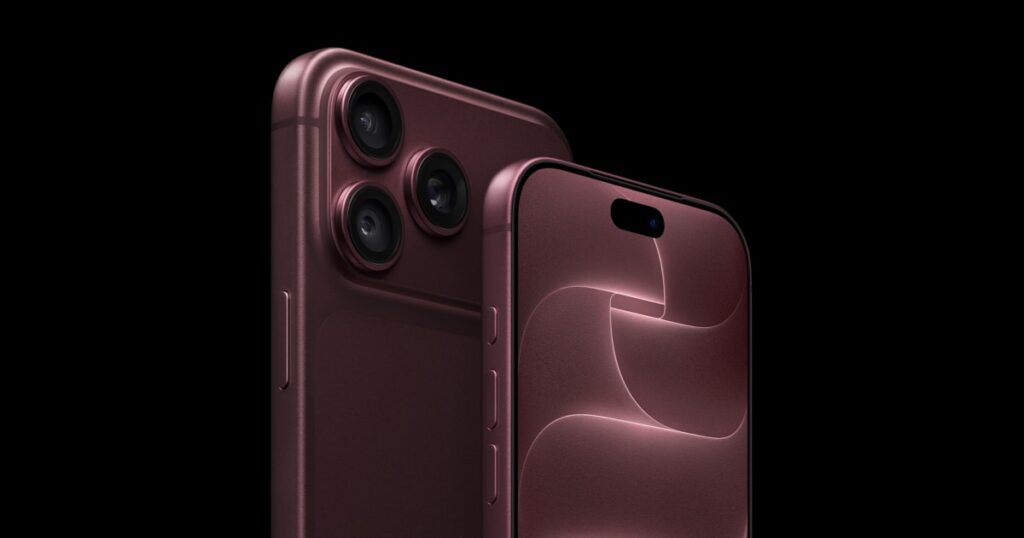
Apple has officially unveiled the iPhone 18 Pro and iPhone 18 Pro Max, putting its latest flagship smartphones directly against Google’s Pixel 11 Pro. Both phones offer high-end cameras, displays, processors, and AI features, but there are some important differences that could make one a better choice than the other.
If you are shopping for a new smartphone, choosing between Apple and Google ultimately comes down to more than specifications. For photographers and filmmakers in particular, the camera systems and amount of creative control could be the deciding factors.
Both companies offer smaller and larger versions of their flagship phones, so this comparison focuses on the 6.3-inch iPhone 18 Pro and Pixel 11 Pro.
Similar Hardware, Different Approaches
On paper, the two smartphones are remarkably close in several areas. Both feature 6.3-inch displays with adaptive refresh rates of up to 120Hz, high-end connectivity, IP68 protection, and multiple cameras covering wide, ultrawide, and telephoto focal lengths.
The Pixel 11 Pro is slightly lighter and thinner, while the iPhone 18 Pro offers a larger range of storage options, extending all the way to 2TB.
The two companies also take different approaches to security and software. Apple uses Face ID and iOS 27, while Google combines fingerprint and face unlock with Android 17.
iPhone 18 Pro Has the More Flexible Main Camera
The biggest camera advantage for the iPhone 18 Pro is its new variable-aperture 48-megapixel Fusion main camera. The aperture can switch between F/1.48, F/1.8, F/2.8, and F/4.0, giving photographers more control over how the camera responds to different shooting situations.
The Pixel 11 Pro instead uses a 50-megapixel main camera with an F/1.68 aperture and a 1/1.3-inch sensor.
Apple’s variable aperture is particularly interesting because it works alongside the new Pro Controls. Photographers can adjust settings such as aperture and shutter speed rather than relying entirely on the phone’s automatic processing.
For photographers and filmmakers who want more direct control over the capture process, this could give the iPhone 18 Pro an important advantage.
Both Phones Have Powerful Telephoto Cameras
The two smartphones also offer dedicated telephoto cameras, although their approaches differ.
The iPhone 18 Pro uses a 48-megapixel Fusion telephoto camera with a 100mm equivalent focal length and F/2.8 aperture. The Pixel 11 Pro has a 48-megapixel telephoto camera with a 5x optical zoom and a 120x Pro Zoom mode.
Google therefore has an advantage in terms of its stated maximum zoom capability, while Apple’s telephoto camera is integrated into its broader Fusion camera system.
The ultrawide cameras are also relatively close, with both phones using 48-megapixel sensors. The Pixel 11 Pro has the wider 123-degree field of view, compared with 120 degrees on the iPhone 18 Pro.
Apple and Google Take Different AI Approaches
AI is a major part of both smartphones. Apple includes Apple Intelligence and Siri AI, while Google offers Gemini Intelligence, Gemini Nano, Gemini Live, and a range of Gemini-powered applications.
Google also includes Magic Cue, which is designed to provide contextual information based on what is happening on the device.
Apple’s new Intelligent Personal Hub takes a similar personalization approach, using information and context to provide users with timely information.
The two platforms therefore offer broadly similar ambitions, although their implementations are tied closely to their respective operating systems and ecosystems.
A20 Pro vs. Tensor G6
The iPhone 18 Pro is powered by Apple’s new A20 Pro processor, while the Pixel 11 Pro uses Google’s Tensor G6 alongside the Titan M3 security chip.
Apple says the A20 Pro is its fastest smartphone chip yet, with a six-core CPU and seven-core GPU. The company also claims a 40 percent improvement in graphics performance and substantially faster neural processing.
On paper, the A20 Pro appears to have the performance advantage, although real-world performance comparisons will ultimately require testing both phones.
Battery and Charging
Battery capacity is presented differently by the two manufacturers, making direct comparison difficult. Apple rates the iPhone 18 Pro for up to 24 hours of battery life, while the Pixel 11 Pro has a 4,850mAh battery and is rated for more than 30 hours.
The iPhone 18 Pro supports up to 60W wired charging and 25W Qi2 wireless charging. The Pixel 11 Pro supports 30W wired charging and 25W Qi2.2 wireless charging.
iPhone 18 Pro vs. Pixel 11 Pro Specs
| iPhone 18 Pro | Google Pixel 11 Pro | |
| Display | 6.3-inch Super Retina XDA, 2622 × 1206, 460ppi, 1–120Hz, 3,000 nits | 6.3-inch Super Actua, 2856 × 1280, 495ppi, 1–120Hz, 3,600 nits |
| Dimensions | 150.0 × 72.9 × 8.75mm, 211g | 152.4 × 71.12 × 7.6mm, 204g |
| Chipset | A20 Pro | Google Tensor G6, Titan M3 |
| RAM | — | 12GB / 16GB |
| Storage | 256GB / 512GB / 1TB / 2TB | 256GB / 512GB / 1TB |
| Main Camera | 48MP Fusion, variable aperture, 24mm, F/1.48–F/4.0 | 50MP Octa PD, 1/1.3-inch, F/1.68 |
| Ultrawide | 48MP Fusion, 13mm, 120° | 48MP Quad PD, 123° |
| Telephoto | 48MP Fusion, 100mm, F/2.8 | 48MP Quad PD, 5x optical, up to 120x Pro Zoom |
| Front Camera | 18MP Center Stage, F/1.9 | 42MP, F/2.2, 103° |
| Battery | Up to 24 hours | 4,850mAh, 30+ hours |
| Charging | 60W wired, Qi2 25W | 30W wired, Qi2.2 25W |
| Operating System | iOS 27 | Android 17 |
| AI | Apple Intelligence, Siri AI | Gemini Intelligence, Gemini Nano, Gemini Live, Magic Cue |
| Unlock | Face ID | Fingerprint and face unlock |
| Connectivity | 5G, Wi-Fi 7, Bluetooth 6, satellite SOS, NFC, UWB, Thread | 5G, Wi-Fi 7, Bluetooth 6, satellite SOS, NFC, UWB, Thread |
| Durability | IP68, Ceramic Shield 2 | IP68, Gorilla Glass Victus 2 |
| Price | $1,199 / $1,399 / $1,799 / $2,399 | $1,099 / $1,219 / $1,449 |
Which One Should You Buy?
On paper, the iPhone 18 Pro has the more compelling camera system for photographers who want direct control. The variable-aperture main camera is a significant addition, and the combination of variable aperture and Pro Controls gives users more control over the image before it is captured.
The Pixel 11 Pro, meanwhile, remains compelling for users who prioritize Google’s computational photography and AI ecosystem. Its brighter display, lighter body, larger front-camera resolution, and 5x optical telephoto also give it some advantages of its own.
The iPhone 18 Pro does come at a premium. The 256GB iPhone 18 Pro costs $1,199, compared with $1,099 for the 256GB Pixel 11 Pro, putting the Apple phone $100 higher at the entry level.
For someone primarily interested in photography and filmmaking, however, that extra $100 could be worthwhile. The iPhone 18 Pro’s variable aperture and Pro Controls give it capabilities that could make it the more interesting tool for creators who want greater control over how their smartphone camera captures an image.
More in News
 NewsAdobe Partners With UMG and WMG to Bring Licensed Song Clips to Premiere Mobile3 Nov 2026
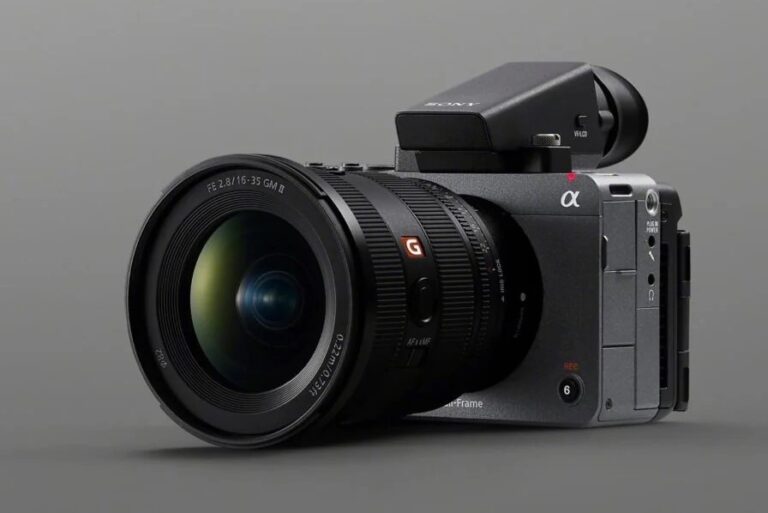 NewsSony FX5 Starts Shipping in Europe, North American Deliveries Expected November 8–93 Nov 2026
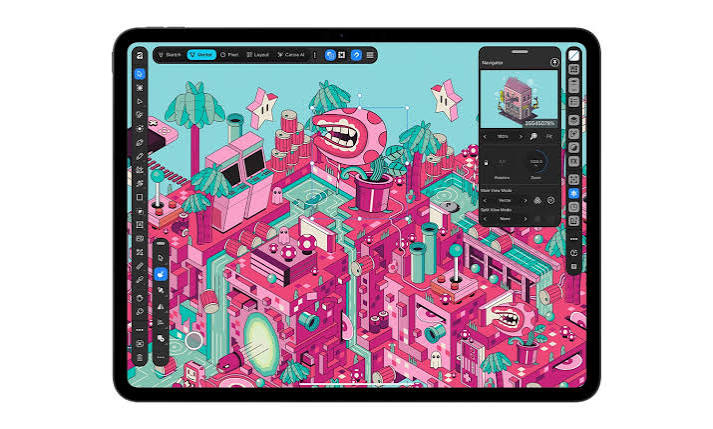 NewsAffinity for iPad Launches With Free Photo Editing, Vector Design, and Layout Tools3 Nov 2026
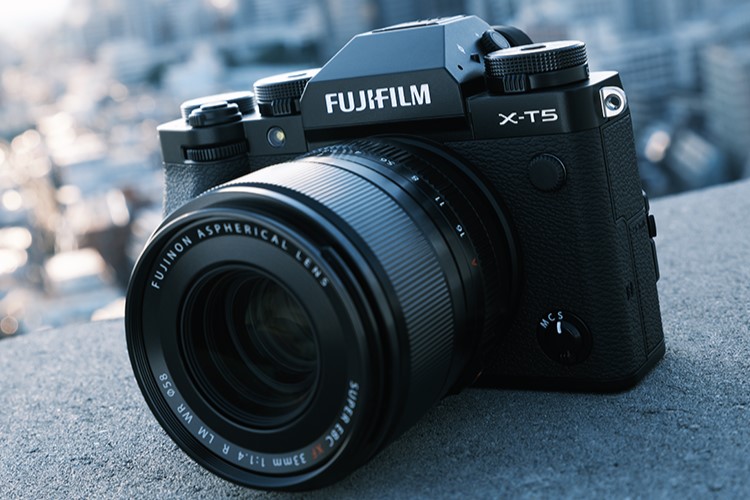 NewsFujifilm X-T6 Rumored to Be Delayed Again3 Nov 2026
 NewsThe Insta360 Ace Pro 3 is rumored to be coming, but there’s one upgrade we really hope to see3 Nov 2026
 NewsNikon Raises Full-Year Operating Profit Forecast by 50%, but Cuts Camera Outlook2 Nov 2026