


Overview
by Dave Etchells, William Brawley, Jaron Schneider and Zig Weidelich
Review finalized: 01/26/2018
Last updated: 06/27/2018
Does weather-sealing matter? Watch our test and decide for yourself.
Read more of our "Water Torture Test" by clicking here. |
The Sony A7R III flagship combines high megapixel count with incredible speed and accuracy
When the A9 was announced, many of us were counting the days until Sony announced an updated high-megapixel camera that integrated the outstanding autofocus features of that camera. Well we didn’t have to wait long, and Sony really is trying to impress with their latest flagship, the A7R Mark III.

The A7R Mark III is a 42.4 effective megapixel full-frame camera powered by an Exmor R sensor. Astute readers may notice that the sensor seems to be the same one found in the A7R II.
They would be correct. It is the same sensor. But it’s much, much improved by the technology surrounding it.
Back in 2015 when the A7R II was announced, camera technology was not where it is today. Much has improved, and the A7R III may have a familiar form factor and sensor, but the similarities end there.
For the impatient: A quick summary of A7R III improvements over the A7R II
The A7R Mark III is the new 42.4 megapixel flagship model in Sony's A7 line. For readers wanting just a quick rundown of what's changed since the A7R II, here's a brief bullet-point list of the major changes:
- Revised imaging pipeline designed to improve image quality
- An additional stop of dynamic range (from 14 stops to 15 stops)
- Wider native ISO range
- Faster AF, with 425 CDAF points compared to 25
- Improved IBIS (5.5 stops versus 4.5)
- Multi-shot pixel-shift function
- Full width 4K video up to 30 fps
- Hybrid Log Gamma (HLG) support for HDR video
- Full HD video now up to 120 fps
- 10 frames per second continuous shooting, up from 5 fps
- 1.44M-dot WhiteMagic LCD
- Touchscreen with focus point control and new autofocus point joystick
- AF On button
- Higher-res 3.69M-dot Quad VGA OLED EVF
- Improved battery life with bigger battery
- Dual card slots with one UHS-II slot
- USB-C (USB 3.1 Gen 1) port (in addition to multi/micro USB)
- Bluetooth added
- Flash sync terminal

What’s old is new again
The Exmor R sensor is capable of an ISO range of 100 to 32,000 (expandable to 50 and 102,400) and 14-bit RAW image recording. It is also capable of 15-stops of dynamic range, a full stop above its predecessor. It is curious that the same sensor would get more dynamic range in this camera, but it has to do with the surrounding technology. The physical circuit has been redesigned to lower the noise floor and increase the signal to noise ratio. The result is a sensor that is being truly maximized to its potential.
The A7R III has no optical low pass filter, includes five-axis in-body image stabilization, shoots 4K video with full use of the 35mm sensor (while also offering a super 35 crop that is user-selectable), can shoot 76 JPEGs or compressed RAW images in its buffer (28 uncompressed), and the intelligent autofocus operates at fully twice the speed of its predecessor, even during maximum-speed continuous shooting.
Sony A7R III Product Features |
And speaking of maximum-speed continuous shooting, that's an area that's seen a dramatic increase, with the A7R Mark III able to shoot at twice the speed of its predecessor, 10 frames/second in any combination of RAW or JPEG modes. It also borrows the A9's impressive trick of a truly live viewfinder display, at least up to 8 frames/second. Beyond 8fps, it switches to last-frame-shot viewing, but at that speed, it's not as big a factor as it would be at slower frame rates.

Sony also added a new feature called Pixel Shift Multi Shooting, which captures four pixel-shifted images containing a total of 169.6 million pixels of data (later composited on the computer rather than in-camera) to create an image with overwhelming resolution, color fidelity and texture reproduction. We've seen sensor-shift super-resolution modes like this, with the Pentax K-1 using essentially the same system, making four shifts to stack up the red, green and blue pixels on top of each other. That way, there's no interpolation needed to render the final full-color images, avoiding a significant cause of resolution loss. (Note, though, that this mode only works with the camera firmly locked down to a tripod and with completely stationary subjects.)

Bigger battery, second card slot, same body size
Sony did what they once said would not be possible if they intended to keep the same body size: changing the battery to the same battery found in the A9, and also adding a second memory card slot. And again, the camera is exactly the same size as the A7R II. The new battery is quoted to have approximately 2.2 times the capacity of its predecessor.
The A7R III takes a note from the A9, offering the same memory card layout: two SD card ports, one UHS-II and the other UHS-I. They also added relay recording (one card takes over after the first fills) out of the box. And you can now access the menus while images are being written to the card.

The viewfinder is a 3.69 million dot Quad VGA OLED TrueFinder, and the rear screen is now a 1.44 million dot WhiteMagic touchscreen LCD, offering touch to focus, selection and even rack focusing in video. Additionally, Sony added a multi-selector (joystick) to the rear of the camera.

The A7R III comes with both micro USB 2.0 and USB 3.1 Gen 1 Type-C ports. The USB-C and micro USB ports can power the camera while it is operating, from whichever connection is made first. The multi/micro USB connector can be used with a remote control unit or other accessory while the Type-C can be used for the aforementioned power supply as well as PC tethering. Or the camera can be powered via micro USB while shooting tethered via USB-C. Note that the power connection only runs the camera; it won't simultaneously charge the battery. The battery functions as sort of a buffer between the power source and camera, as it won't draw USB power without a battery installed. So the battery isn't charging in this mode, and may eventually run down over the course of a day's use.
Speaking of remote control, the A7R III will not feature the app support found on the A7R II, so you will have to acquire and use a remote intervalometer for time-lapse functionality.
Sony says the camera is dust and moisture resistant, but like all their cameras don't expect this to be 100% weather proofing.
The A7R III will have an optional battery grip that is the same grip as the A9, and the batteries that it takes are also the same.
Downsampled 5K for pristine 4K video footage
Sony did quite a bit to improve the visual quality of their 4K video in the A7R III. To create 4K video, it downsamples 5K footage into a crisp, 4K final video. It uses full pixel readout without binning in Super 35mm mode and has Hybrid Log Gamma (HLG) support for an "instant" HDR workflow.
Sony also included their S-LOG3 format for a very wide 14-stops of dynamic range in video. Though not RAW video, this will provide flexible footage for post processing/color grading.
Sony A7R III 4K Video |
The A7R III also records at 120 frames per second in 1080p full HD. Unfortunately, it has no slow motion 4K capability, as it only records in 24p and 30p. Though disappointing, it's not totally surprising given that the sensor is the same and the form factor of the body is unchanged (heat sinking again could be an issue).
The camera can capture in both full frame and Super 35, and that preference is user-selectable. Finally, as you can imagine, video autofocus should be dramatically improved thanks to the new autofocusing.

A7R III Image Sensor
As we mentioned above, the A7R III's 42.4-megapixel, full-frame BSI CMOS sensor is in fact same chip as in the Mark II, but now image processing advancements and new circuitry designs have allowed Sony to extract both higher image quality and significantly improved performance from the same 2015 sensor design.

Borrowing the image-processing chain from the A9, a redesigned BIONZ X image processor with improved circuitry has allowed Sony to lower the noise floor and increase the signal-to-noise ratio of the 42MP sensor. Not only does the A7R III, therefore, get a slight bump in native ISO range -- ISO 100 to 32,000 instead of 25,600 -- but also the dynamic range has been improved by a full stop, to 15 stops, compared to the 14 stops the A7R II offered. We're surprised by the increase in performance from the same sensor, but it seems the improved dynamic range performance has been there from the start, waiting for Sony to figure out how to unlock it, so to speak.
The A7R III offers 14-bit compressed and uncompressed RAW capture, in both mechanical shutter and electronic shutter/silent shooting modes. The camera does drop to 12-bit RAWs when shooting in continuous burst mode using the compressed RAW format or when Long Exposure NR is enabled. (Uncompressed RAW file format maintains the full 14-bit data depth.)
We're sure a lot of the online-forum crowd will immediately dismiss the A7R III because it uses an earlier sensor design, but the dramatically enhanced processing ability it inherited from the A9 really makes it an entirely different camera, with capabilities far beyond those of its older sibling. According to Sony, the A7R III delivers the highest picture quality of any Sony camera to date, and has the A9's improved skin tone reproduction as well. Whereas the Sony A9 was all about operational speed and sensor readout performance, the A7R III is focusing squarely on image quality.

A7R Mark III image stabilization and low-vibration shutter
Interestingly, the technical presentation we received on the A7R III devoted a lot of attention to the importance of reducing camera shake and vibration in order to realize the ultimate resolution a camera is capable of. They made the obvious point about mirrorless cameras like the A7R III not having mirror slap to contend with, as in SLR models, but they also noted that the shutter mechanism in the A7R III is an all-new design, with greatly reduced "shutter shock" vibration, thanks to a newly-designed brake mechanism that slows the shutter curtain right at the end of its travel, preventing it from slamming into the bottom of its housing. Shutter shock has long been an issue with many mirrorless cameras, perhaps related to the fact that their shutters have to close and then re-open again during normal mechanical-shutter exposure. Sony claims that the new design of the A7R III shutter will greatly reduce this. (And of course, the A7R III's entirely electronic shutter in its "silent shooting" mode will produce no vibration whatsoever.)

Finally, the A7R III has a standard sensor-shift image stabilization system built in, which is remarkable given the relatively small size of its body. The A7R II had a similar system, but technical advances in the intervening years have produced a stop more stabilization in the A7R III, to a CIPA-standard level of 5.5 stops of shake reduction. (This means, if you'd normally need to shoot at 1/125 second to avoid camera shake, you can get the same results shooting handheld at about 1/3 second, pretty amazing when you consider it.)
Pixel-Shift Multi Shooting mode
Going beyond the 42.4-megapixel resolution, and in a sense even going beyond the resolving power of the latest medium format cameras, the A7R III also introduces, for the first time in a Sony camera, pixel-shift image shooting. Dubbed "Pixel-Shift Multi Shooting," this ultra-high-res shooting mode captures four separate 42MP images, shifted from each other in 1-pixel-shifted increments. Then, on the computer (this can't be done in-camera just yet), the images can be combined for a total pixel-shifted image offering a massive 169.6-megapixels of data! By aligning and stacking up the red, green and blue pixel data from successive exposures, every pixel location has full RGB data, eliminating the need for color interpolation and de-mosaicing.
The technological achievement for the A7R III's pixel-shift mode is pretty astounding. With 42 megapixels on the sensor, the built-in sensor-shift image stabilization system needed an extreme level of accuracy in order to precisely move the sensor (one with a 3-micron pixel-pitch) in 1-pixel increments. Sony says that the positioning accuracy required was on the order of 1 micron (0.001 mm).
Like other manufacturers' implementations of pixel-shift imagery, the A7R III's mode isn't designed for moving subjects, and can't tolerate any camera movement at all; it's designed for stationary shooting of still life, landscapes, architectural and other fixed subjects. Due to the extreme precision required of the sensor positioning system, shooting in pixel-shift mode is rather slow. You can select intervals between the four shots of 1, 2, 3, 4, 5, 10, 15 and 30 seconds. So a complete set of 4 exposures will take anywhere from 4 to 120 seconds, depending on the interval you choose.
Sony A7R III Pixel Shift Multi Shooting |
When you factor-in the mirrorless design aspects of the A7R III -- silent shooting mode, no mirror shock and in-body image stabilization -- the "Pixel-Shift Multi Shooting" mode captures some stunning images with excellent fine detail as you can see here.
A7R Mark III Autofocus
Autofocus is an area where the dramatically increased processing power inherited from the A9 made arguably the biggest difference. While A7R III has the same 399 on-sensor phase-detect AF points as the A7R II, the new camera offers vastly more contrast-detect points, going from just 25 to a whopping 425 points. Autofocus speed is said to be two times faster than the A7R II in low-light conditions, and subject tracking is also claimed to have double the performance, including offering the A9's improved Eye AF tracking mode. (Likewise twice as fast as the similar function on the A7R II.)
The A7R III's phase-detect points cover approximately 47% of the sensor area, and when combined with the contrast-detect sensor areas, the total AF coverage is nearly 68% of the frame. AF sensitivity is rated as extending down to -3EV, and like the A9, the A7R III includes a touchscreen, which provides touch AF, focus point dragging and focus racking features.

For the most part, the A7R III offers many of the AF improvements we saw with the flagship A9. The sensor is, of course, different but the processing pipeline is the same. The A9 still has the edge in sheer AF performance thanks to its stacked CMOS sensor with much faster data read-out and additional PDAF points, but the A7R III looks to offer dramatic AF performance improvements compared to its predecessor model. It certainly feels like the A7R III will occupy a unique position in the marketplace, in that it offers both super-high-res image quality, and at the same time has the requisite burst-shooting and autofocus performance to handle sports and wildlife photography as well.

Continuous-shooting details
As mentioned earlier, the A7R III offers continuous shooting at up to 10fps with continuous AF in both mechanical and electronic shutter shooting modes. At all but the highest speeds (up to 8fps), it provides the same real-time viewfinder display as the A9 when shooting in electronic shutter mode. Interestingly, even though the viewfinder display is real time, Sony introduced very brief "blinks" of the viewfinder display so you'd be aware that you actually are shooting continuously. These don't interfere with your view of the subject, but the slight flickering is a very useful addition since without it, there's no way to tell if you're actually shooting when you hold down the shutter button in electronic-shutter mode.
At the highest speeds, the camera reverts from a real-time display to one that shows the image just captured, vs what's in front of the lens at the exact moment of exposure. At 10fps, this is a 100ms (0.1 sec) delay. It may not be all that bad, but the extent to which it'll affect your shooting will depend a good bit on your skill in shooting moving subjects. Pros seem more able to handle some amount of delay in the viewfinder display than do amateurs, although they may nonethless find it more irritating.

A7R Mark III Summary
Sony's camera technology has been advancing at an incredible rate in recent years, and the A7R Mark III is an impressive example of them leveraging advances made in one model to extend the life of other bits of their technology. In this case, they took what was already one of the best sensors on the market, combined it with advanced processor from the fastest full-frame camera (the Sony A9) to produce a new hybrid simultaneously having very high resolution and very high performance, particularly in its autofocus system. This fusion of state-of-the-art technologies along with improvements in ergonomics and battery life no doubt results in one of the best full-frame cameras on the market today.
Sony A7R III Price and Availability
Priced at about US$3,200 or CA$4,000 body-only, the A7R III began shipping in the North American market at the end of November 2017.
In the Box
The retail package contains the following items:
- Sony ILCE-7RM3 camera body
- NP-FZ100 Lithium-ion battery
- BC-QZ1 battery charger
- Body cap
- Eyepiece cup
- Accessory shoe cap
- Cable protector
- Shoulder strap
- Warranty card
Optics
The Sony A7R III is usually sold body-only, so we have no "kit" lens optical test results to share here. Below are our A7R III viewfinder accuracy test results.
Viewfinder Test Results
Coverage
Very good accuracy from the EVF and LCD monitor.


The Sony A7R III's OLED electronic viewfinder and LCD monitor both show around 99% coverage in record mode with our FE 55mm f/1.8 prime lens. Very good performance.
The images above were taken from our standardized test shots. For a collection of more pictorial photos, see our Sony Alpha ILCE-A7R III Photo Gallery .
Exposure
Color
Saturation & Hue Accuracy
Fairly typical saturation levels with improved hue accuracy.
 |
|||
|
ISO Sensitivity
|
|||
| In the diagram above, the squares show the original color, and the circles show the color that the camera captured. More saturated colors are located toward the periphery of the graph. Hue changes as you travel around the center. Thus, hue-accurate, highly saturated colors appear as lines radiating from the center. Mouse over the links to compare ISOs and click on a link for a larger version. | |||
Saturation. The Sony A7R III's mean default color saturation is 112.2% at base ISO or in other words, oversaturated by 12.2%. That's fairly typical these days, just a touch higher than average. Mean saturation remains quite stable up to ISO 1600, after which is begins to gradually drop as sensitivity rises to a minimum of 107.6% at maximum ISO which is still vibrant for such a high sensitivity. Reds, orange, dark blues and dark green are boosted the most but not overly so. Most other colors are pushed just a bit, though cyan, light yellow and light green are slightly undersaturated however not as muted as from the predecessor. Overall, saturation levels are quite vibrant and pleasing to our eyes, and you can of course tweak saturation to your liking. Most consumer digital cameras produce color that's more highly saturated (more intense) than found in the original subjects. This is simply because most people like their color a bit brighter than life.
Skin tones. The Sony A7R III does very well with Caucasian skin tones with improved rendering compared to the A7R II. Flesh tones have a healthy-looking pinkish tint with less of a nudge toward orange or yellow resulting in a more pleasing, natural look. Nice. Where oversaturation is most problematic is on Caucasian skin tones, as it's very easy for these "memory colors" to be seen as too bright, too pink, too yellow, etc.
Hue. Like many cameras, the Sony A7R III shifts cyan toward blue, red toward orange, orange toward yellow and yellow toward green, but hue shifts are quite minor. (The cyan to blue shift is actually fairly minor and very common among the digital cameras we test; we think it's a deliberate choice by camera engineers to produce better-looking sky colors. The minor yellow to green shift combined with its slight desaturation is much improved over the A7R II which produced somewhat dingy-looking yellows.) With an average "delta-C" color error of 4.54 after correction for saturation at base ISO, overall hue accuracy is now above average, with accuracy only varying slightly at higher ISOs. A nice improvement over the Mark II. Hue is "what color" the color is.


Sensor
Exposure and White Balance
Indoors, incandescent lighting
Warm cast with default Auto white balance; Incandescent is pretty good, and Manual is quite good. Less than average exposure compensation required.


Indoors, under typical incandescent lighting, color balance is too warm and orange with the default Auto white balance setting, though results here are slightly better than average. In addition to the default "AWB Standard" mode, the A7R III gives you the option to prioritize the ambient light color ("AWB Ambience" mode), or the reproduction of accurate whites ("AWB White" mode). However, we did not test those options in the lab. Results with the Incandescent setting are quite good and only slightly warm. Results with the Manual setting are quite accurate and improved over its predecessor with much more pleasing skin tones and more neutral colors. The Sony A7R III required no exposure compensation here, while +0.3 EV is about average for this shot. (Our test lighting for this shot is a mixture of 60 and 100 watt household incandescent bulbs, a pretty yellow light source, but a very common one in typical home settings here in the U.S.)
Outdoors, daylight
Excellent color, contrast and exposure.
Outdoors, the Sony A7R III performed extremely well. No exposure compensation was required to keep the mannequin's face bright in our "Sunlit" Portrait shot, which is much better than the +0.7 EV average among the cameras we've tested and a slight improvement over the A7R II which required +0.3 EV. Contrast is a little high as you might expect under such harsh lighting, but despite the bright appearance, the camera blew few highlights and did a great job of holding onto detail in both the shadows and bright highlights, even without the help of DRO. We preferred Manual color balance for our "Portrait" shot, though Auto white balance produced very similar results. Default exposure is very good in our Far-field shot with almost no highlights blown and excellent shadow detail, however there are some dark shadows that can be a little noisy and discolored at the lowest levels. The Far-field shot with Auto white balance has very good color. Overall, great performance in harsh lighting, especially considering DRO was off for these shots.
See full set of test images with explanations
See thumbnails of all test and gallery images
Resolution
~3,700 lines of strong detail from JPEGs, about the same from RAW files.
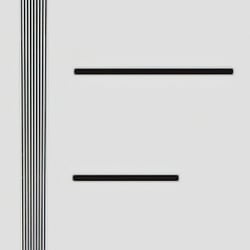


An in-camera JPEG of our laboratory resolution chart reveal sharp, distinct line patterns up to just over 3,700 lines per picture height in the horizontal direction and to about 3,700 lines per picture height in the vertical direction, though some minor aliasing can be seen starting as low as 3,000 to 3,100 lines. Complete extinction of the pattern didn't occur before the 4,000 line limit of our chart in both directions, and the Mark III did a very good job at suppressing false colors; noticeably better than the Mark II. Adobe Camera Raw wasn't really able to extract more resolution here from matching RAW files, but it produced a lot more color moiré and false colors at and above the limits of resolution. Use these numbers to compare with other cameras of similar resolution, or use them to see just what higher resolution can mean in terms of potential detail.
See full set of test images with explanations
See thumbnails of all test and gallery images
Sharpness & Detail
Remarkable detail and sharpness, with very few sharpening artifacts. Mild noise suppression visible in the shadows and areas of low contrast.


Sharpness. The Sony A7R III captures incredibly sharp, crisp and detailed images overall, and it doesn't generate heavy sharpening halos around edges with high contrast that we often see around the lines and letters of our bottle label crop (above left) from other brands. The A7R III's RAW images don't need a lot of sharpening because of the lack of an optical low pass filter, but Sony really has done an excellent job with the A7R III's JPEG processing with minor improvements compared to it predecessor. Edge enhancement creates the illusion of sharpness by enhancing colors and tones right at the edge of a rapid transition in color or tone.
Detail. The crop above right shows fairly mild noise suppression in the darker areas of the mannequin's hair. A number of low-contrast strands are smudged together, though higher contrast strands are distinct, though as you can see some suffer from the "jaggies" and other aliasing artifacts as a result of the sensor having no anti-aliasing filter. Still, outstanding results here. Noise-suppression systems in digital cameras tend to flatten-out detail in areas of subtle contrast. The effects can often be seen in shots of human hair, where the individual strands are lost and an almost "watercolor" look appears.
RAW vs In-Camera JPEGs
As noted above, the Sony A7R III produces in-camera JPEGs with incredible amounts of crisp detail. Additional detail can often be obtained from carefully processing RAW files with a good converter, so let's have a look at base ISO:
| Base ISO (100) | |
 |
 |
 |
 |
 |
 |
|
Camera JPEG, defaults
|
RAW via Adobe Camera Raw
|
In the table above, we compare an in-camera JPEG taken at base ISO using default noise reduction and sharpening (on the left) to the matching RAW file converted with Adobe Camera Raw 9.1 using default noise reduction with some moderate but tight unsharp masking applied in Photoshop (200%, radius of 0.3 pixels, and a threshold of 0).
As you can see, the Adobe Camera Raw conversion renders a touch more fine detail than the camera, while higher contrast and saturation makes the in-camera image pop a bit more, but the ACR conversion also reveals a bit more luminance noise in flat areas. You can always turn up the luminance noise reduction (default of zero was used here), though noise levels are already quite low. Also note the moiré patterns in the red-leaf pattern in both images which seem to be a bit more obvious in the camera JPEG.
Bottom line: Although Adobe Camera Raw is able to extract a little more fine detail and produce perhaps a slightly more natural-looking image, there's really very little to complain about the Sony A7R III's JPEG engine here. It provides a great balance of fine, crisp detail, low noise, and low sharpening artifacts straight out of the camera.
ISO & Noise Performance
Excellent high ISO performance for the resolution.
|
Default High ISO Noise Reduction
|
 |
 |
 |
| ISO 50 | ISO 100 | ISO 200 |  |
 |
 |
| ISO 400 | ISO 800 | ISO 1600 |
 |
 |
 |
| ISO 3200 | ISO 6400 | ISO 12,800 |
 |
 |
 |
| ISO 25,600 | ISO 32,000 | ISO 51,200 |
 |
||
| ISO 102,400 | ||
The Sony A7R III's JPEG images are quite clean and extremely detailed at ISOs 50 though 400, with very little image degradation, and image quality drops in a nice, very gradual manner up to about ISO 3200. ISO 6400 produces a more noticeable drop in image quality with higher luma noise and stronger blurring from noise reduction, however fine detail is still quite good, and chroma noise remains very low. ISO 12,800 shows more luminance noise though it's fine-grained, detail is still pretty good, however chroma noise in the form of subtle yellow and magenta blotching starts to become visible. ISO 25,600 is significantly noisier with noticeable noise reduction artifacts and chroma blotching, however fine detail is fair. The maximum native ISO of 32,000 is of course a bit noisier, but still offers a fair amount of detail. Image quality drops rapidly above ISO 32,000, with images that are very grainy with strong chroma blotching.
Overall, though, the A7R III offers excellent high ISO performance especially considering its resolution and pixel size, with improved colors and skin tones, as well as improved detail retention at higher ISOs compared to its predecessor. As always, see the Print Quality section below for maximum recommended print sizes at each ISO.
A note about focus for this shot: We used to shoot this image at f/4, however depth of field became so shallow with larger, high-resolution sensors that it was difficult to keep important areas of this shot in focus, so we have since switched to shooting at f/8, the best compromise between depth of field and sharpness.
Extremes: Sunlit, dynamic range and low light tests
Excellent highlight and shadow detail. Excellent low-light performance, capable of focusing and capturing bright images in near darkness.


Sunlight. The Sony A7R III handled the deliberately harsh lighting in the test above brilliantly. We preferred the default 0 EV exposure here, as the +0.3 EV exposure is a touch too bright while the +0.7 EV exposure is way too bright. Contrast is a little high, but shadow and highlight detail are both very good, with pleasing skin tones. Despite the very bright appearance, few highlights are blown in the model's shirt and face at 0 EV, though the red channel is clipped in some of the flowers as is often the case, and in specular highlights where you'd expect clipping. There are some dark shadows however they're quite clean with lots of detail, though very deep shadows are posterized and discolored as expected. Overall, excellent performance here.
For best results, be sure to use fill flash in situations like the one shown above; it's better to shoot in the shade when possible. See below for results with Dynamic Range Optimization and High Dynamic Range features enabled.
Because digital cameras are more like slide film than negative film (in that they tend to have a more limited tonal range), we test them in the harshest situations to see how they handle scenes with bright highlights and dark shadows, as well as what kind of sensitivity they have in low light. The shot above is designed to mimic the very harsh, contrasty effect of direct noonday sunlight, a very tough challenge for most digital cameras. (You can read details of this test here. In actual shooting conditions, be sure to use fill flash in situations like the one shown here; it's better to shoot in open shade whenever possible.)

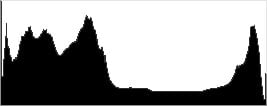
Dynamic Range Optimization is Sony's name for their dynamic range enhancement technology. DRO divides the image into small areas, analyzes the range of brightness of each area, and adjusts the camera's image processing parameters accordingly to make the best use of the available dynamic range. Auto DRO is enabled by default on the Sony A7R III. You can also set the level manually, from 1 ("weak") to 5 ("strong"), or turn it off. As one would expect, DRO is only available for JPEG files.
The above thumbnails and histograms show the effects of the various levels of DRO on our "Sunlit" Portrait shot with no exposure compensation. Mouse over the links on the right to load the associated thumbnail and histogram, and click on the link to visit the full resolution image. As you can see from the thumbnails and associated histograms, increasing DRO progressively boosts shadows and midtones while leaving highlights essentially intact, though boosting shadows does make noise slightly more visible. The Auto setting did a pretty good job overall, and the five manual levels give quite a bit of control over the effect.

Above, you can see the effect of DRO settings on our Far-field shot. The default Auto setting produced a nicely balanced exposure, despite the harsh lighting. A useful feature that works well.


High Dynamic Range. The Sony A7R III's HDR mode takes three images in rapid succession, one nominally exposed , one underexposed, and one overexposed, then combines them into one high dynamic range JPEG automatically. Lighter areas from the underexposed image are combined in-camera with darker areas from the overexposed image to produce an image with compressed tonal range. The camera then saves a single composite image, as well as the nominally exposed image. The overlaid images are micro-aligned by the camera, but it can only correct for so much movement. If it can't micro-align successfully, an icon indicating HDR capture failed will appear. For best results, the subject should not move or even blink, so it's not really intended for portraits. There is also a manual mode where you can select 1 EV ("weak") to 6 EV ("strong") difference in exposures.
Mouse over the links to load the associated thumbnail and histogram, and click on the link to visit the full resolution image. As you can see, the Auto setting did a decent job, similar to the 3 EV manual setting. The higher the manual setting, the more highlights were toned-down and shadows opened up, but as you can see higher settings can produce flat and unnatural results with this subject.


Above, you can see the effect of HDR settings on our Far-field shot. Watch out for ghost images from subject movement during the capture sequence, though, as can be seen in some of the shots above. It appears that the A7R III attempts to eliminate them during the merging process, but isn't always 100% successful. Also be aware that the camera has to be perfectly still as even a small amount of movement can result in blurred images as seen in some of the images above. (These were all shot on a sturdy tripod but there was a breeze, and while there was no HDR failed warning given, it appears the A7R III didn't do a good job aligning a few of the images.)
Dynamic Range Analysis (RAW mode). While we once performed our own dynamic range measurements based on in-camera JPEGs as well as converted RAW images (when the camera was supported by Adobe Camera Raw), we've switched to using DxO Labs' results from their DxOMark website. As technology advanced, the dynamic range of modern high-end cameras in some cases exceeded the range of the Stouffer T4110 density scale that we used for our own measurements. DxO's approach based on RAW data before demosaicing is also more revealing, because it measures the fundamental dynamic range of the sensor, irrespective of whatever processing is applied to JPEGs, or to RAW data by off-the-shelf conversion software.
In the following, we use DxO's "Print" dynamic range results, which are scaled based on camera resolution. As the name suggests, this scaling corresponds to the situation in which you print at a given size, regardless of how many megapixels the camera might have. (In other words, if you've decided to make a 13x19 inch print, that's the size you're printing, whether the camera's resolution is 16 or 300 megapixels.) For the technically-minded, you can find a discussion of the reasoning behind this here on the DxOMark website. Also note that DxO Labs uses a signal-to-noise (SNR) threshold of 1 when defining the lower boundary of acceptable luminance noise in their dynamic range measurements, which corresponds to the "Low Quality" threshold of the Imatest software we used to use for this measurement.

Here, we compare the Sony A7R III's dynamic range to that of its predecessor, as well as to the Nikon D850, arguably its closest rival.
As you can see from the above graph (click for a larger image), the A7R Mark III's dynamic range (orange) is higher than the Mark II's at low to medium ISOs. The A7R III's dynamic range at its base ISO setting of 100 is 14.7 EV versus 13.9 EV for the A7R II, a significant improvement if about 0.8 EV. The Mark III's lead closes at ISOs above 1600, producing essentially the same results up to 51,200, though the Mark III regains a slight lead at the highest ISO of 102,400.
The Nikon D850 offers just a slightly higher peak dynamic range of 14.8 EV at its lower base ISO of 64 though you'd be hard-pressed to a difference that small in real-world shots. At ISO settings of 100 through 800, the two rivals are neck-and-neck, however the Sony pulls ahead at higher ISOs, offering about a 0.4 to 0.8 EV advantage over the Nikon.
Bottom line: Excellent DR scores from the Sony A7R III, with improved dynamic range at lower ISOs compared to its predecessor. Click here to visit the DxOMark page for the Sony A7R III for more of their test results and additional comparisons.
| 1 fc 11 lux |
1/16 fc 0.67 lux |
1/16 fc No NR |
|
|---|---|---|---|
| ISO 100 |
 2s, f2.8 |
 30s, f2.8 |
 30s, f2.8 |
| ISO 3200 |
 1/15s, f2.8 |
 1s, f2.8 |
 1s, f2.8 |
| ISO 32000 |
 1/160s, f2.8 |
 1/10s, f2.8 |
 1/10s, f2.8 |
Low Light. The Sony A7R III performed very well in our low light tests, producing usable exposures with very low noise down to the lowest light level we test at (1/16 foot-candle) at base ISO of 100. Noise is very low at base ISO and still fairly low at ISO 3200, however as expected, at the highest native ISO of 32,000 luma noise is a little high though quite fine-grained while chroma noise is well-controlled except with noise reduction turned down to a minimum (right-most column).
We found a few hot or bright pixels, particularly in deep shadows or when long exposure noise reduction is turned off (where you'd expect to find them), but nothing out of the ordinary. Banding in deep shadows (fixed pattern noise) is almost nonexistent and we didn't detect any issues with heat blooming.
Auto white balance did a very good job here, producing a fairly neutral, just slightly cool color balance.
Low-light AF: In the lab, the Sony A7R III's autofocus system was able to focus unassisted on our legacy low-contrast target as low as -5.0 EV with an f/2.8 lens, however it was quite slow at that point and could only achieve focus about 50% of the time. At about -4.5 EV, though, it was quite reliable at achieving focus, which is excellent. With our newer high-contrast AF target, the camera could focus in even lower light, down to about -6.4 EV which is amazing. The A7R III also has an AF assist lamp, which enables it to autofocus in complete darkness as long as the subject is within range and has sufficient contrast.
How bright is this? The one foot-candle light level that this test begins at roughly corresponds to the brightness of typical city street-lighting at night. Cameras performing well at that level should be able to snap good-looking photos of street-lit scenes. (A useful trick is to just prop the camera on a convenient surface, and use its self-timer to release the shutter. This avoids any jiggling from your finger pressing the shutter button, and can work quite well when you don't have a tripod handy.)
NOTE: This low light test is conducted with a stationary subject, and the camera mounted on a sturdy tripod. Most digital cameras will fail miserably when faced with a moving subject in dim lighting. (For example, a child's ballet recital or a holiday pageant in a gymnasium.) Thanks to its larger sensor and Hybrid AF, compact system cameras like the Sony A7R III tend to do better than point & shoots, but you still shouldn't expect a quick autofocus lock with moving subjects.
Output Quality
Print Quality
Excellent, detail-rich print up to 30 x 40 inches all the way to ISO 1600; Pleasing 11 x 14 inch prints up to ISO 12,800; Usable 4 x 6 inch prints up to ISO 51,200.
 ISOs 50 through 1600, amazingly, all look fantastic, with an incredible level of sharp, fine detail and vibrant, pleasing colors. Despite the range from extended low ISO 50 up to a mid-range ISO 1600, the level of noise remains extremely low, to the point of not impacting print quality. ISOs 400 to 1600, at each ISO step, show a very subtle increase in shadow noise, but it's such a minimal level of noise that it doesn't impact recommended print size. Within this ISO range, prints look excellent up to 30 x 40 inches, the maximum print size we test.
ISO 3200 images display more noticeable noise in shadow areas. Overall, detail is still very nice up to this large print size, but noise is having an effect, limiting print size up to a still-respectable 20 x 30 inches. For less critical applications or with careful post-processing, a 24 x 36 inch could work at this ISO.
ISO 6400 prints top-out at 13 x 19 inches. Despite the high ISO, noise is amazingly well controlled. Noise is, of course, softening some detail to a degree, but at this print size, there is still a lot of sharp, crisp detail. In fact, a 16 x 20 inch print could work for less critical applications or with careful post-processing.
ISO 12,800 images definitely show the A7R III has improved JPEG processing compared to the A7R II; lots of detail and pleasing colors. Prints at this ISO top-out at 11 x 14 inches, and there's more fine detail and less noise compared to prints of the same size from the A7R II.
ISO 25,600 prints just pass muster at 8 x 10 inches. There's still a lot of fine detail, but noise is quite visible in the shadows and its definitely reducing detail in the image overall. A 5 x 7 inch print looks very nice, however.
ISO 32,000 images, at the A7R III's new maximum native ISO, look very similar to the previous ISO in terms of detail, but with just a hint more shadow and other background noise; a bit more noise than we're comfortable with in an 8 x 10. Print size therefore maxes-out at 5 x 7 inches. An 8 x 10 might work for less critical applications, though.
ISO 51,200 prints might work for a 5 x 7 for some less critical applications, and the overall image quality is much improved compared to the A7R II, especially when it comes to more pleasing colors, but we're more comfortable calling it at 4 x 6 inches for this ISO. Images are quite noisy and pretty soft overall to consider anything larger acceptable.
ISO 102,400 images, similar to the predecessor, are simply too noisy and soft to consider usable for print-making. A 4 x 6 inch print may work for casual prints or less critical purposes, but this ISO is best avoided if you can help it.
The Sony A7R-series have displayed excellent print quality performance in the past, and the new A7R III is no exception, even making PQ improvements here over the Mark II. Despite keeping the same 42-megapixel full-frame sensor as the A7R II, the new Mark III design features updated circuitry and also uses the A9's newer BIONZ X image processor. Not only is dynamic range improved, but JPEG noise performance is also improved, the latter of which we definitely see come into play with the camera's print quality. For starters, the A7R III gives photographers the ability to create massive prints, up to 30 x 40 inches -- the largest we print for our tests -- all the way up to ISO 1600! As ISO sensitivity rises within this range, we do see very subtle increases in shadow noise, but it's so minor that it doesn't impact print sizes. Even as the ISO increases further, the A7R III displays an impressive balance of fine detail resolving power while offering very well-controlled noise. We observed larger print sizes at nearly every higher ISO level from the Mark III compared to its predecessor. The A7R III allows for a usable 8 x 10 inch print all the way up to ISO 25,600, which is thoroughly impressive. ISO 51,200 is certainly a bit on the noisy side but still provides decent image quality for an acceptable 4 x 6-inch print, while the maximum ISO 102,400 is still too noisy and soft for good prints.
The images above were taken from our standardized test shots. For a collection of more pictorial photos, see our Sony Alpha ILCE-A7R III Photo Gallery .
Not sure which camera to buy? Let your eyes be the ultimate judge! Visit our Comparometer(tm) to compare images from the Sony Alpha ILCE-A7R III with those from other cameras you may be considering. The proof is in the pictures, so let your own eyes decide which you like best!
Performance
Timing and Performance
Generally excellent performance, however startup and mode switching is sluggish, and buffer clearing can be quite slow.
| Startup/Play to Record | ||
|---|---|---|
|
Power on |
~1.7 seconds
|
Time it takes to turn on and capture a shot. |
|
Play to Record, |
~1.4 seconds
|
Time until first shot is captured. |
Powerup to first shot was sluggish compared to DSLRs, and slightly slower than the 1.5 seconds we measured for the A7R II. Switching from Play to Record mode and taking a shot was also slower than the A7R II's 0.9 second.
| Shutter Response (Lag Time) | ||
|---|---|---|
| Mechanical Shutter (Electronic Front Curtain Enabled) | ||
|
Full Autofocus, |
0.251 second
|
Time from fully pressing shutter button to image capture, with the lens already at the proper focal distance setting. (AF timing performed with the Sony FE 35mm f/2.8 lens.) |
|
Manual Focus |
0.105 second
|
For most cameras, shutter lag is less in manual focus than autofocus, but usually not as fast as when the camera is "prefocused". |
|
Prefocused |
0.023 second
|
Time to capture, after half-pressing and holding shutter button. |
| Electronic Shutter (Silent Shooting) | ||
|
Full Autofocus, |
0.368 second
|
Time from fully pressing shutter button to image capture, with the lens already at the proper focal distance setting. |
|
Manual Focus |
0.258 second
|
For most cameras, shutter lag is less in manual focus than autofocus, but usually not as fast as when the camera is "prefocused". |
|
Prefocused |
0.123 second
|
Time to capture, after half-pressing and holding shutter button. |
Looking at the Sony A7R III's ability to determine that it's properly focused when shooting the same, static target multiple times without defocusing between shots (our standard test), its autofocus speeds were decent for a mirrorless ILC, though oddly a bit slower than the A7R II. The Sony A7R III's full-autofocus shutter lag (with the subject at a fixed distance) was 0.251 second in Single-area (center) AF-S mode versus 0.212 second for the Mark II with the same lens. Sony's "up to two times faster AF speed" claim for the Mark III versus the Mark II is however qualified by "in low light conditions," while this test is performed in bright light to achieve shutter speeds fast enough to freeze the timer values. In the field the Mark III's autofocus speed with real-world subjects was definitely faster and more capable than its predecessor's.
When manually focused, the Sony A7R III's lag time dropped to 0.105 second, just a bit faster than the 0.107 second we measured for the A7R II.
The Sony A7R III's prefocused shutter lag was a fast 0.023 second, just slightly slower than the A7R II's 0.020 second.
The above tests were all done with the mechanical shutter and with first-curtain electronic shutter enabled (the default mode). Switching to Silent Shooting mode which uses an all-electronic shutter increased lag times significantly as you can see in the bottom half of the table above, so that's something to keep in mind.
To minimize the effect of different lens' focusing speed, we test AF-active shutter lag with the lens already set to the correct focal distance.
| Cycle Time (shot to shot) | ||
|---|---|---|
|
Single Shot mode |
< 0.3 second
|
Time per shot, averaged over a few frames (we no longer test for buffer depths in single-shot mode). |
|
Single Shot mode |
< 0.3 second
|
Time per shot, averaged over a few frames (we no longer test for buffer depths in single-shot mode). |
|
Early shutter |
No
|
Some cameras refuse to snap another shot if you release and press the shutter too quickly in Single Shot mode, making "No" the preferred answer. |
|
Continuous Hi+ |
0.10 second
(9.90 fps); 82 frames total; 57 seconds to clear* |
Time per shot, averaged over buffer length of 82 frames, then slows to an average of 0.48s or 2.1 fps with a lot of variation when buffer is full. |
|
Continuous Hi+ |
0.11 second
(9.18 fps); 30 frames total; 14 seconds to clear* |
Time per shot, averaged over buffer length of 30 frames, then slows to an average of 0.53s or 1.9 fps with a lot of variation when buffer is full. |
|
Continuous Hi+ |
0.11 second
(9.13 fps); 30 frames total; 24 seconds to clear* |
Time per shot, averaged over buffer length of 30 frames, then slows to an average of 0.53s or 1.9 fps with a lot of variation when buffer is full. |
|
*Note: Buffer clearing times measured with a 64GB Lexar Pro 2000x UHS-II SDXC card. Slower cards will produce correspondingly slower clearing times. Slow cards may also limit length of bursts in continuous mode. ISO sensitivity and noise reduction settings can also affect cycle times and burst mode performance.
|
||
Single-shot cycle times were very fast, at less than 0.3 second for both Large/Extra Fine JPEGs and RAW + Large/ Extra Fine JPEG frames. (Note that we no longer test single-shot mode with just RAW files, as the results are usually somewhere in between JPEG and RAW+JPEG modes. Also note that the A7R III can capture highest quality "Extra Fine" JPEGs together with RAW files, which we believe is a first for Sony. Previous models limited JPEG quality to "Fine" when shooting RAW+JPEG.)
The Sony A7R III's fastest Continuous Hi+ burst mode is rated at max 10 frames per second regardless of shutter type used, so we just tested with the default mechanical shutter. When shooting Large/Extra Fine JPEGs, the A7R III essentially met Sony's spec at 9.9 frame per second, however it slowed down a bit to 9.1-9.2 fps when shooting uncompressed RAW and uncompressed RAW+ Large/Extra Fine JPEG frames. Still, that's impressive for the resolution and a massive improvement over the A7R II which topped out at 5 fps. The A7R III also offers 8 (Hi), 6 (Mid) and 3 (Lo) frames-per-second modes with both the mechanical and electronic shutter.
Buffer depths in Continuous Hi+ mode slightly exceeded Sony's spec of 76 Large/Extra Fine JPEG, 28 uncompressed RAW, and 28 for uncompressed RAW + Large/Extra Fine JPEG frames, testing at 82, 30 and 30 frames respectively in the lab. That's over twice as many frames as the A7R II could manage despite the almost double burst speeds. We didn't test Compressed RAW files, however Sony claims Compressed RAW and all three JPEG qualities (Extra Fine, Fine and Standard) have a 76 frame buffer.
Buffer clearing times were quite slow even with our very fast Lexar Pro 2000x UHS-II card in the UHS-II compatible slot, though, ranging from a whopping 57 seconds after 82 Large/Extra Fine JPEGs to a more tolerable 14 seconds after 30 uncompressed RAW files. However unlike the A7R II, the Mark III lets you access the menu and change settings while the buffer is clearing, a welcome improvement.
Bottom line, the Sony A7R III's overall performance is excellent for its class, and much improved over the A7R II in terms of cycle times, burst speed and buffer depths. However startup time, mode switching and AF speeds actually tested a bit slower than the A7R II in the lab, and buffer clearing can still be quite slow despite the addition of UHS-II card support.
Battery Life
Very good battery life for a mirrorless camera.
| Operating Mode | Battery Life |
|---|---|
|
Still Capture,
(CIPA standard, EVF) |
530 shots
|
|
Still Capture,
(CIPA standard, LCD Monitor) |
650 shots
|
The Sony A7R III uses a custom NP-FZ100 rechargeable lithium-ion battery pack for power, and comes with battery and a dedicated charger even though in-camera charging is also supported. The battery is CIPA-rated for 530 shots per charge when using the electronic viewfinder and 650 shots when using the LCD monitor. That's well above average for a mirrorless camera and almost double what the A7R II offered with its smaller battery, but it's still well below most prosumer and pro DSLRs when using their optical viewfinders. An optional VG-C3EM vertical grip is however available which doubles battery life with two batteries.
The table above shows the number of shots the camera is capable of (on a fully-charged rechargeable battery), based on CIPA battery-life and/or manufacturer standard test conditions.
(Interested readers can find an English translation of the CIPA DC-002 standards document here. (180K PDF document))
Image Quality
Below are crops from our laboratory Still Life target comparing the Sony A7R Mark III's JPEG image quality to its predecessor, the A7R Mark II, as well as to its A-mount sibling, the Sony A99 Mark II. We've also compared the A7R III to a couple of high-resolution DSLRs from Canon and Nikon, namely the Canon 5DS R and Nikon D850, as well as to Fuji's GFX 50S for a comparison to a current-generation medium-format camera. We've also included a single-shot to Pixel-Shift mode comparison at base ISO.
NOTE: These images are from best quality JPEGs straight out of the camera, at default settings including noise reduction and using the camera's actual base ISO (not extended ISO settings). All cameras in this comparison were shot with our very sharp reference lenses. Clicking any crop will take you to a carrier page where you can click once again to access the full resolution image as delivered straight from the camera. For those interested in working with the RAW files involved: click these links to visit each camera's respective sample image thumbnail page: Sony A7R III, Sony A7R II, Sony A99 II, Canon 5DS R, Fuji GFX and Nikon D850 -- links to the RAW files appear beneath those for the JPEG images, wherever we have them. And remember, you can always go to our world-renowned Comparometer to compare the Sony A7R III to any camera we've ever tested!
Sony A7R III vs Sony A7R II at Base ISO
 |  |
 |  |
 |  |
Sony A7R III at ISO 100 | Sony A7R II at ISO 100 |
|
Here we compare the A7R III to its predecessor, the A7R II, which uses the same back-illuminated 42.4-megapixel full-frame sensor but with improved circuitry and processing. As you can see, the A7R III images appear a little crisper and more contrasty overall, and fine detail is rendered better in the mosaic crop and in our troublesome red-leaf swatch. Both show minimal sharpening artifacts but unsurprisingly, both also show some aliasing in the form of moiré patterns. Color is also improved from the Mark III, with slightly higher saturation in reds and yellows and less of a yellow to green shift. | |
Sony A7R III vs Sony A99 II at Base ISO
|  |
|  |
|  |
Sony A7R III at ISO 100 | Sony A99 II at ISO 100 |
Here we compare the mirrorless E-mount A7R Mark III to its A-mount sibling with the same resolution, the A99 Mark II SLT camera. At base ISO, detail, sharpness and aliasing appear nearly identical, however the A7R III does exhibit improved color over the older A99 II. | |
Sony A7R III vs Canon 5DS R at Base ISO
|  |
|  |
|  |
Sony A7R III at ISO 100 | Canon 5DS R at ISO 100 |
With 50 megapixels and no optical low-pass filter like all these cameras, the Canon 5DS R does best the Sony A7R III in terms of resolution on paper. And as you'd expect, at base sensitivity the Canon DSLR does indeed resolve a bit more detail than its mirrorless Sony rival. The A7R III image does however appear crisper with higher contrast, and detail in our tricky red-leaf swatch appears much better defined. Colors are more vibrant from the Sony as well, though Canon's are still slightly more accurate overall. (Note that the 5DS R was shot with Fine Detail Picture Style, and thus shows improved rendering of fine detail along with less obvious sharpening halos than the default Standard Picture Style, but with lower contrast and higher apparent noise.) | |
Sony A7R III vs Fujifilm GFX at Base ISO
|  |
|  |
|  |
Sony A7R III at ISO 100 | Fujifilm GFX at ISO 100 |
The 51-megapixel medium format Fuji GFX 50S readily out-resolves Sony's 42-megapixel full-frame A7R III mirrorless, though when framed vertically like this, the 4:3 aspect ratio Fuji has a larger advantage over the 3:2 Sony in terms of resolving power than their relative pixel counts would imply. The Fuji exhibits lower chroma noise in the shadows, but the Sony does a better job at reproducing the offset printing coloration in the mosaic crop. Sharpening halos are practically nonexistent from the Sony, but they aren't very obtrusive from the GFX. Both cameras produce aliasing artifacts but the difference in resolution happens to make moiré patterns more visible from the Sony in our red-leaf swatch. The A7R III renders much higher contrast in our red-leaf swatch than the GFX 50S , however overall color is warmer and more accurate from the Fuji. | |
Sony A7R III vs Nikon D850 at Base ISO
|  |
|  |
|  |
Sony A7R III at ISO 100 | Nikon D850 at ISO 64 |
Here we compare the 45.7-megapixel Nikon D850 to the 42.4-megapixel Sony A7R III. Although the D850 has slightly higher resolution, both resolve very similar amounts of detail and produce very crisp images, however the Sony image contains fewer sharpening halos due to its more sophisticated sharpening algorithm. Contrast is noticeably higher from the Sony in our tricky red-leaf swatch as well. Both produce good color, however the Nikon's is a bit warmer overall. | |
Sony A7R III vs Sony A7R II at ISO 1600
 |  |
 |  |
 |  |
Sony A7R III at ISO 1600 | Sony A7R II at ISO 1600 |
Here at ISO 1600, both siblings produce similar noise levels, however the Mark III holds onto more detail in some areas such as our tricky red-leaf swatch, indicating a change in Sony's area-specific noise reduction algorithm. Where the Mark II blurs away most of the fine thread pattern as if noise, the Mark III holds onto much more of the thread pattern. However the Mark III produces some unwanted artifacts in the form of very dark or black individual or small groups of pixels, which results in a somewhat "peppered" effect. Chroma noise in the shadows is higher from the Mark III as are noise reduction artifacts in flatter areas, producing a slightly more "crystalline" noise pattern in our textured background. Color continues to be better from the newer model. | |
Sony A7R III vs Sony A99 II at ISO 1600
|  |
|  |
|  |
Sony A7R III at ISO 1600 | Sony A99 II at ISO 1600 |
The A7R III produces a slightly crisper image than the A99 II here at ISO 1600, though the A-mount sibling holds onto more fine detail in the red-leaf pattern, while producing fewer noise reduction artifacts. Color remains better from the A7R III. | |
Sony A7R III vs Canon 5DS R at ISO 1600
|  |
|  |
|  |
Sony A7R III at ISO 1600 | Canon 5DS R at ISO 1600 |
The Canon 5DS R still captures marginally better detail at ISO 1600, but it produces a noisier image. The Sony image is cleaner, crisper and with more "pop", however its noise reduction processing generates slightly unnatural artifacts in flatter areas while the Canon's noise "grain" is more consistent and film-like. The Sony's rendering of the red-leaf pattern appears sharper and more detailed while the Canon's is soft and blurred, however the Canon didn't produce those objectionable dark pixels. Colors continue to be more saturated from the Sony. | |
Sony A7R III vs Fujifilm GFX at ISO 1600
|  |
|  |
|  |
Sony A7R III at ISO 1600 | Fujifilm GFX at ISO 1600 |
Here at ISO 1600, the Fuji GFX continues to easily out-resolve the Sony A7R III as expected. Both show similar levels of luminance noise however the Fuji's grain pattern is a bit more regular and film-like, and it leaves behind much lower chroma noise. The Sony still shows much higher contrast in our tricky red-leaf swatch along with more obvious moiré patterns, however the Fuji's low-contrast rendering doesn't suffer from the Sony's peppered look. | |
Sony A7R III vs Nikon D850 at ISO 1600
|  |
|  |
|  |
Sony A7R III at ISO 1600 | Nikon D850 at ISO 1600 |
A tough call here. The Nikon D850 image is softer with fine detail that appears slightly smeared, yet it contains more obvious sharpening halos around high-contrast edges. But the Nikon's low-contrast edges are better defined (ie., the bottle edge), luma noise looks more natural and film-like, chroma noise is lower, there's no peppered effect in the red-leaf fabric, and colors are warmer than the Sony A7R III. | |
Sony A7R III vs Sony A7R II at ISO 3200
 |  |
 |  |
 |  |
Sony A7R III at ISO 3200 | Sony A7R II at ISO 3200 |
Again, the Mark III image is a bit sharper and more detailed though noise reduction and sharpening artifacts are a little more evident. Detail in the leaves of our troublesome red-leaf swatch is a bit better from the Mark II as remnants of the fine thread pattern interfere with the leaf pattern from the Mark III, however the unwanted black pixels seen at ISO 1600 are all but gone. Color is still more pleasing from the Mark III. | |
Sony A7R III vs Sony A99 II at ISO 3200
|  |
|  |
|  |
Sony A7R III at ISO 3200 | Sony A99 II at ISO 3200 |
Here at ISO 3200, luma noise is a little higher from A99 II but it also appears a bit more consistent and natural-looking in flatter areas. Chroma noise reduction is lower from the A7R III allowing it to hold onto more coloration in our mosaic crop, yet it's the A99 II that holds onto a bit more detail in our red-leaf swatch. Color continues to be better from the A7R III. | |
Sony A7R III vs Canon 5DS R at ISO 3200
|  |
|  |
|  |
Sony A7R III at ISO 3200 | Canon 5DS R at ISO 3200 |
At ISO 3200, the Sony A7R III produces a much cleaner, more contrasty image than the Canon, though the 5DS R's noise "grain" remains more consistent and natural-looking in flatter areas. However the Sony does a better job at rendering fine detail than the Canon in most areas, including in the red-leaf fabric, while the Canon's anti-noise processing blurs and smudges fine detail while struggling to keep higher noise levels in check. | |
Sony A7R III vs Fujifilm GFX at ISO 3200
|  |
|  |
|  |
Sony A7R III at ISO 3200 | Fujifilm GFX at ISO 3200 |
Again, the Fuji GFX bests the Sony A7R III in this comparison at ISO 3200, producing a cleaner, crisper, more detailed image with lower chroma noise and fewer noise reduction artifacts. The Sony continues to produce better contrast in our troublesome red-leaf swatch, however subtle detail is more distorted than the Fuji's. | |
Sony A7R III vs Nikon D850 at ISO 3200
|  |
|  |
|  |
Sony A7R III at ISO 3200 | Nikon D850 at ISO 3200 |
The Nikon D850 image is softer and less detailed here at ISO 3200, but like we saw at ISO 1600, luma noise looks more natural and film-like, chroma noise is lower, low-contrast edges are better defined, and colors are warmer than from the Sony A7R III. Overall, we'd say the Sony comes out ahead here, though it's really up to personal preference. | |
Sony A7R III vs. Sony A7R II, Sony A99 II, Canon 5DS R, Fujifilm GFX, Nikon D850
 |  |  |  |  |  |
 |  |  |  |  |  |
 |  |  |  |  |  |
| Sony A7R III ISO 100 ISO 3200 ISO 6400 | Sony A7R II ISO 100 ISO 3200 ISO 6400 | Sony A99 II ISO 100 ISO 3200 ISO 6400 | Canon 5DS R ISO 100 ISO 3200 ISO 6400 | Fujifilm GFX ISO 100 ISO 3200 ISO 6400 | Nikon D850 ISO 64 ISO 3200 ISO 6400 |
| Detail comparison. High-contrast detail is also important, pushing the camera in different ways, so we like to look at it too. Here, we can see the A7R III shows minor improvements over the A7R II, in both color and contrast. Performance is very similar to the Sony A99 II, but with improved color. The Canon 5DS R does resolve more detail at base ISO, but higher noise and a drop in contrast make it lag behind the rest of the pack at higher ISOs. Unsurprisingly, the Fuji GFX comes out ahead here in terms of detail. Contrast isn't quite as good, though, and sharpening halos are a little more evident than from the Sonys or Canon. The Nikon D850 produces slightly better detail and higher contrast than the Sony A7R III, however sharpening halos are the most visible in this comparison. | |||||
Sony A7R III Pixel-Shift Multi Shooting
The Sony A7R Mark III offers a new "Pixel-Shift Multi Shooting" mode in which the camera takes a series of four images while moving the sensor by one pixel location between exposures to capture full color information for each pixel. This eliminates the need to use Bayer color interpolation and demosaicing, producing an image with the same native pixel count but with greater detail and fewer artifacts. (Unlike the Olympus and Panasonic systems which make sub-pixel sensor shifts, taking eight shots and producing an image with a higher pixel count than the sensor.)
Like most implementations, the A7R III's pixel-shift mode isn't designed for moving subjects, and can't tolerate any camera movement either; it's designed for stationary shooting of still life, landscapes, architectural and other static subjects. The Sony A7R III can't combine the images in-camera like other cameras can, though. Instead, the A7R III just saves four RAW files and you can use Sony's free Image Edge software to process them into a composite JPEG (or TIFF) on a Windows or Mac PC, which we have done below in a base ISO comparison using default software and camera settings.
(You can download the four RAW images here: A7R3hSLI000100_PSM0.ARW, A7R3hSLI000100_PSM1.ARW, A7R3hSLI000100_PSM2.ARW, and A7R3hSLI000100_PSM3.ARW. Sony's software can also generate a single ARQ RAW file ("Q" for "Quad" we assume), which you can download here: A7R3hSLI000100_PSM.ARQ. It's about the same size as the four ARW files, but it's more convenient than dealing with separate files.)
Sony A7R III Single shot vs Pixel-shift mode at Base ISO
|  |
|  |
|  |
 |  |
Single-Shot Image at ISO 100 |
Pixel-Shift Image at ISO 100 |
As you can see, the pixel-shift image crops on the right contain much finer and better defined detail than the single-shot images straight from the camera on the left. Also notice the moiré patterns in the red-leaf fabric and green bottle label are no longer present with pixel-shift mode. However, the default software settings used don't replicate the camera's superior sharpening as halos are quite evident in the pixel-shift shot, and noise also appears higher, exacerbated by the less sophisticated and more aggressive sharpening. You can however adjust sharpening, noise reduction and a host of other settings in Sony's software. Bottom line: The Sony A7R III's new pixel-shift mode takes the cameras's already outstanding image quality and ratchets it up a big notch, at least for static subjects taken on a sturdy tripod. | |
Note: Our friends at LibRaw LLC, the makers of RawDigger, FastRawViewer and LibRaw API Library now offer SonyPixelShift2DNG, a utility that quickly and easily converts Sony's pixel-shift RAW files to DNG files so that you can use popular raw converters such as Adobe Camera Raw/Lightroom, Capture One and others to process the A7R III's high-res files. Download it here!
Sony A7R III Print Quality Analysis
Excellent, detail-rich print up to 30 x 40 inches all the way to ISO 1600; Pleasing 11 x 14 inch prints up to ISO 12,800; Usable 4 x 6 inch prints up to ISO 51,200.
ISOs 50 through 1600, amazingly, all look fantastic, with an incredible level of sharp, fine detail and vibrant, pleasing colors. Despite the range from extended low ISO 50 up to a mid-range ISO 1600, the level of noise remains extremely low, to the point of not impacting print quality. ISOs 400 to 1600, at each ISO step, show a very subtle increase in shadow noise, but it's such a minimal level of noise that it doesn't impact recommended print size. Within this ISO range, prints look excellent up to 30 x 40 inches, the maximum print size we test.
ISO 3200 images display more noticeable noise in shadow areas. Overall, detail is still very nice up to this large print size, but noise is having an effect, limiting print size up to a still-respectable 20 x 30 inches. For less critical applications or with careful post-processing, a 24 x 36 inch could work at this ISO.
ISO 6400 prints top-out at 13 x 19 inches. Despite the high ISO, noise is amazingly well controlled. Noise is, of course, softening some detail to a degree, but at this print size, there is still a lot of sharp, crisp detail. In fact, a 16 x 20 inch print could work for less critical applications or with careful post-processing.
ISO 12,800 images definitely show the A7R III has improved JPEG processing compared to the A7R II; lots of detail and pleasing colors. Prints at this ISO top-out at 11 x 14 inches, and there's more fine detail and less noise compared to prints of the same size from the A7R II.
ISO 25,600 prints just pass muster at 8 x 10 inches. There's still a lot of fine detail, but noise is quite visible in the shadows and its definitely reducing detail in the image overall. A 5 x 7 inch print looks very nice, however.
ISO 32,000 images, at the A7R III's new maximum native ISO, look very similar to the previous ISO in terms of detail, but with just a hint more shadow and other background noise; a bit more noise than we're comfortable with in an 8 x 10. Print size therefore maxes-out at 5 x 7 inches. An 8 x 10 might work for less critical applications, though.
ISO 51,200 prints might work for a 5 x 7 for some less critical applications, and the overall image quality is much improved compared to the A7R II, especially when it comes to more pleasing colors, but we're more comfortable calling it at 4 x 6 inches for this ISO. Images are quite noisy and pretty soft overall to consider anything larger acceptable.
ISO 102,400 images, similar to the predecessor, are simply too noisy and soft to consider usable for print-making. A 4 x 6 inch print may work for casual prints or less critical purposes, but this ISO is best avoided if you can help it.
The Sony A7R-series have displayed excellent print quality performance in the past, and the new A7R III is no exception, even making PQ improvements here over the Mark II. Despite keeping the same 42-megapixel full-frame sensor as the A7R II, the new Mark III design features updated circuitry and also uses the A9's newer BIONZ X image processor. Not only is dynamic range improved, but JPEG noise performance is also improved, the latter of which we definitely see come into play with the camera's print quality. For starters, the A7R III gives photographers the ability to create massive prints, up to 30 x 40 inches -- the largest we print for our tests -- all the way up to ISO 1600! As ISO sensitivity rises within this range, we do see very subtle increases in shadow noise, but it's so minor that it doesn't impact print sizes. Even as the ISO increases further, the A7R III displays an impressive balance of fine detail resolving power while offering very well-controlled noise. We observed larger print sizes at nearly every higher ISO level from the Mark III compared to its predecessor. The A7R III allows for a usable 8 x 10 inch print all the way up to ISO 25,600, which is thoroughly impressive. ISO 51,200 is certainly a bit on the noisy side but still provides decent image quality for an acceptable 4 x 6-inch print, while the maximum ISO 102,400 is still too noisy and soft for good prints.
Field Test
A near-perfect masterpiece of a flagship

Sony did quite a lot with the A7R III despite keeping the same sensor from the previous camera and maintaining the form factor of the A7R II. In fact, many of the features of the Mark III are the same as with the second generation camera, but the things that Sony did change make a huge difference in the overall experience of the camera. It's faster, more responsive and offers more features than its predecessor while fixing the biggest complaints users griped about with the Mark II.
Overall, it's a masterpiece of a camera with so few flaws that it is obvious Sony listened to its user base and actively engineered a camera that would silence even its loudest critics. Though not perfect, it's the closest Sony has ever come.
In addition to Sony A7R-series mainstays like 5-axis in-body image stabilization, lightweight body, no optical low-pass filter and a wide ISO range, Sony packed even more features into the Mark III without sacrificing the form factor of the camera (something they seem to care about a great deal).
The new A7R Mark III has the familiar 42.4 effective megapixel EXMOR R sensor, but with a Sony-claimed 15 stops of dynamic range (one more than the Mark II). Sony completely reengineered the physical circuits of the A7R III to lower the noise floor and increase the signal to noise ratio. The camera technology of 2015 has been totally eclipsed by what they can do today, and as such, Sony claims that they were able to make much more of the exact same sensor than they could just a couple years ago.

Additionally, Sony instituted a brand new, low-vibration and high-reliability shutter to go along with the totally new circuitry. What results is a camera that they say should, and I agree does, perform far better than the A7R II.
The two biggest new features that likely grabbed your attention were the promise of a vastly-improved autofocus system and the Pixel Shift Multi-Shooting feature. The former likely grabbed your attention because Sony heralded it as a "quantum leap" in autofocus performance. It borrows from the Sony A9, and I am happy to report that yes, it is quite outstanding. It's not the exact same AF system as the A9, though, which has 693 phase-detect points and 25 contrast-detect points versus the A7R III's 399 and 425 points respectively. However Sony says they have doubled the speed, tracking performance and eye-tracking performance over the previous camera. They also instituted touch autofocus using the newly-added touch functionality of the LCD.
I have to say, their stated "double" actually feels like a bit of an understatement. The autofocus capability of the A7R III is so spectacularly good that anyone who tries it will have a very hard time going back to the A7R II. As an avid fan of the A9, the camera's autofocus handling feels just about the same. Everything I tried that I knew the A9 would have been able to handle, the A7R III did so with just as much gusto and reliability.

Sony says that we shouldn't expect the camera to perform as well as the A9, and perhaps it does not, but as an end user I had a hard time telling the difference. Perhaps I wasn't challenging the camera enough in the testing I was able to do, but given that I was shooting an action sport in the field and felt like the camera did extremely well means that unless you have a ridiculously high ceiling for being impressed, you also will find the A7R III to be outstanding in this regard.
The autofocus tracking won't cover the entire sensor, and this you might notice especially if you're shooting in portrait orientation. 47% of the sensor is covered by phase detection autofocus, and when combined with contrast autofocus it goes up to 68%. The autofocus doesn't reach edge-to-edge, so you as a shooter will have to adapt in kind. The AF coverage is still way better than that of most DSLRs, but there were a few instances where I noticed the tracking was not able to cover the area of the frame I wanted. These were few and far between, though, and I didn't find that it interrupted my ability to capture a scene too terribly.

The A7R III offers 10 frames per second continuous shooting combined with continuous AF/AE tracking using either the all new mechanical focal plane shutter or the silent electronic shutter.
The aforementioned Pixel Shift Multi Shooting feature isn't new to the camera world, but it is new to Sony. The camera is able to capture four, pixel-shifted images containing a total of 169.6 million pixels that you'll later need to composite into one finished image using a free piece of Sony software -- it can't composite the massive image in-camera. When your subject or anything in the frame remains still, there is currently no better way to produce a more high-fidelity image.
Will the average, or even above average, viewer of the image notice? Probably not. Especially not when an image is rarely viewed at full resolution. The samples we were shown were enlarged, and we were told to focus on the differences between the Pixel Shift image and a regular, single shot. Of course in this situation we would see a difference. Would we have in a real world, unbiased situation? It's hard to say.
Is it still a cool feature to add? Totally.
I was not able to fully test this feature due to a couple factors: 1) No scene I shot would remain totally still (either cloud motion, water motion, or tree motion) for the time it would take to capture the four images used as a composite. 2) The software from Sony required to composite the images together was either not available or only available in a beta form at the time.
Those things said, we will add a section later regarding this feature and its performance.

Sony addressed the biggest, most widely-complained about shortcoming of the A7R II in a way we were not expecting. Heck, even some Sony representatives were surprised this happened. Sony managed to compress the rest of the camera's internals down so as to not change the form factor of the body, while improving its features dramatically in multiple areas (which is a highly impressive feat) so that they could change the battery entirely. The Sony A7R III uses the new NP-FZ100 Z-series battery found in the A9, and it more than doubles the lifespan of the A7R III over the A7R II.
When you add on the battery grip (which is the exact same battery grip used on the A9, mind you), you will actually find it challenging to burn the camera's battery out. I shot full days in both high-resolution video, time-lapse and 10 frames per second stills and never once went through one battery, let alone the two that fit in the grip. Sony managed to go from arguably the worst battery performance in a professional camera to what might be one of the best in just one generation.
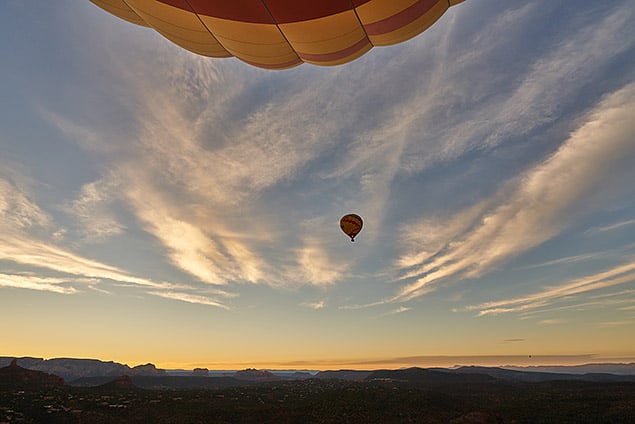
Sony also added a second card slot, with the same arrangement as the A9: one UHS-II and one UHS-I. They also added relay-recording to those memory cards.
The A7R III also has both USB-C (3.1 Gen 1) and Micro-B USB 2.0 connections, which allows you to power a camera while it's operating. You can use both at the same time as well. For example, you can power the camera with a USB-C cable, and use the Micro-B cable for an accessory, like an intervalometer.
While I am on that note, the PlayMemories app marketplace for the A7R II was not carried over to the A7R III, which means you have to use an external intervalometer in order to do timelapse. I'm not certain why the relatively simple built-in timelapse feature found in other cameras like the Nikon D850 and Canon 5D Mark IV didn't find its way into the Sony A7R III. That said, the fact they left the apps marketplace behind I actually applaud -- they were bad.
Sony also added a multi-selector joystick to the rear of the camera and doubled down by adding touch support to the rear screen (it really only works with touch focus, so it's not a full-on active touchscreen).

Though I will absolutely be going into much greater detail on video in a dedicated video field test, I do want to point out what the camera features and briefly talk about how it performed in a real-world situation. Below is a video I shot and edited in 48 hours using only the A7R III:
The A7R III does not add any new frame rates over the Mark II, but it does do a few things to increase the quality of the footage produced. When shot in full frame 4K, video quality is spectacular. However, when you switch the camera to Super-35 mode, it gets even better. Though you lose the full frame focal lengths you might want, you gain image quality by way of mixing the already great full pixel readout without binning or line skipping that comes with the normally shot 4K footage with an oversampled 5K readout compressed into a 4K file. It looks really good, but honestly… both Super 35 and Full Frame do. It's a nice combination of options. Super high-end users are going to love the bump in quality they get when shooting in Super 35, but there is hardly a downside for most when shooting in full frame.
Like the A7R II, the Mark III also offers Full HD video at 120 frames per second. The Mark II suffered from a "soft" or lower-quality look with its 1080/120p footage. This has been improved on the Mark III, and in limited testing, it indeed appears to have jumped in quality. The image is crisp and the footage looks quality. Sony also added S-LOG3 to the camera for wide, 14-stops of dynamic range video shooting.
Unfortunately, Sony didn't add 4K at 60 frames per second, leaving only the Panasonic GH5 and the Canon 1DX Mark II as the only cameras in this form factor to offer it. That's a real shame because if they had, 4K/60p combined with the in-body stabilization, image quality and S-LOG all would have resulted in a video camera that would easily outperform its competitors. As it is now, for video shooters there are still reasons to buy other cameras.

My Takeaway: A7R III User Experience, New Features & Weaknesses
The Sony A7R III is both the most fluid and excellent professional full frame camera I have ever used, and also the most frustrating. It's fast and light, but also slow and cumbersome. What I'm trying to say is that because the camera is so excellent in most areas, the few small problems that it exhibits are even more noticeable and highlighted to me than when they could hide among larger, more game-breaking issues. But now there is so little to complain about that items that used to be minor quibbles are standout issues. It's perhaps a good problem for Sony to have, but I can't help but think that their engineers often sacrifice a much-needed and highly useful feature in exchange for something minor, basically intangible, or perhaps even meaningless in the long run.
Let me explain.
Sony did what they themselves said was impossible: make just about every major problem users had with the A7R II disappear. They said it wouldn't be possible to integrate a bigger battery, yet here we are, with the newer and better battery found in the A9 packed into largely the same space the old, terrible A7R II battery once lived. Now, a camera that would rarely last me an hour or two of heavy use can withstand an entire day, or more. Add on the battery grip, and the A7R III is an absolute beast. After shooting with the camera all day long for a few days, I'm confident saying that it outperforms the 5D Mark IV and the 1DX Mark II, especially when shooting video (the two Canon bodies absolutely feel the strain of video production while the A7R III doesn't seem to have any battery life change from stills to video).

Menu access while writing to a card has also been expanded, making it possible to adjust most settings while the A7R III is recording data. Sony also made the rear LCD a touch screen, allowing for tap-to-focus as well as the ability to drag your thumb across the panel while using the EVF to pinpoint specific locations for focus (think of an even more intuitive way to select focus points than the typical thumb joystick).
Except… it's still not quite perfect. Much of the menu options can't be accessed while the camera is writing files. Yes, you can change settings like ISO and shutter speed, but you can't adjust the mode of the camera (from photo to video) or access other areas of the main menu without being greeted with a warning that states "Cannot perform this function while writing to memory card." With the Canon 1DX Mark II, for example, I am able to rattle off a huge swath of images and immediately then switch to video mode and hit record, without being told by the camera at any point that I couldn't. I can also quickly browse the menu and see images I shot immediately without any lag, which the Sony also cannot do. When it's writing to a card, the A7R III dramatically slows down the entire camera until the writing is finished.
What's also frustrating is that although the Sony does show you how long you have to wait until the buffer is cleared via a visual loading bar, it doesn't always seem entirely accurate. I'll watch the numbers fall from 10 to 1 image remaining before I can access the camera again, but the time it spends on the 1 is vastly longer than the time it spends on the 10, or the 4. Sometimes I wait three or four seconds before the 1 disappears and the camera "unlocks." Those seconds can feel like hours when you're watching something you wanted to capture disappear while the A7R III sits there, inert.

My performance expectations, I imagine, are thanks largely to the far faster CFast card that the 1DX II uses over any UHS-II SD card that the Sony takes. Or perhaps the DIGIC processor in the Canon is just better than Sony's processor. I don't really know what specifically is to blame, but in the end it doesn't matter. Even though the A7R III fires quickly and is fast to use, other times I feel crippled by a slowdown I can do nothing about. And that really sucks, especially when I'm trying to capture both stills and video, and the camera is just a bit too slow to get both in a limited timeframe of capturing a moment.
The menu system is also an absolute mess, but that's not really a new thing. Actually, it's fair to say that just about every camera on the market these days has just the worst menu system. No one has changed anything about the paginated, hierarchical slog of a folder system since it was first brought to a camera years ago, but has put in astronomically more features. For instance, it can be an absolute nightmare to try and find HLG video on this camera, and the same can be said for the pixel-shift multi-shot. There are so many menus with a torrent of options that it is just the worst trying to find any one thing. But like I said, this isn't new. It's only becoming more intolerable as Sony adds more features and does nothing to address the growing elephant in the room. This menu sucks, all menus suck, and someone needs to do something about it.

Now, I think this is probably going to be the most controversial opinion of this review, but I have to say it: dust is a major, major problem. Mirrorless is absolutely the future, that much is now inarguable, but something has to be done about the dust that can get into this camera and absolutely wreck shots.
Even when I take extra care to shield the camera, facing it downwards and swapping optics as quickly as possible while the camera is off (because if you leave it on, it becomes a literal dust magnet), I can end up with atrocious dust spots on the sensor. Within the first hour of shooting in Arizona, I had spots on the sensor that were just awful. In photos, this is less of a problem as it is in video, where I had to do some digital magic to make the spots disappear.
It has gotten to the point where if you don't bring a rocket blower or sensor cleaning stick with you everywhere and add that step to your lens swapping routine, you will get dust in your shots.
I am not sure what the solution here is. Maybe it's a shield that drops down when you take the lens off, maybe its a closed shutter that automatically shuts when swapping. I don't know, but I do know that the higher resolution images get, and the more of the sensor I use when shooting video, the bigger this problem becomes.

Moving to something positive, there is an area of the camera where I can find no fault: the new focusing system. The A7R II had a pretty pitiful autofocus engine (though it was at least better than the Mark I) and it's slow-firing five frames per second was acceptable, though not standout. The new autofocus system that Sony imported from the A9 is a rousing success. This new engine is remarkable, allowing for wicked-fast focusing and rapid-fire shooting that is unique among high-resolution cameras. I was able to capture more action with greater accuracy than I am used to for a high megapixel camera, and Sony's mirrorless system allows for the best user-feedback of what is in focus and what the camera is going to focus on next of any high-end camera other than the A9. The sheer number of ways to customize the autofocus and the new eye-locking setting all work outstandingly. Once the A7R III locks onto a target, it doesn't lose it. The only time it may struggle is nabbing that subject initially when using AF-A focusing mode.

Another change is that Sony bailed on the Play Memories Apps that were available in the Mark II version, and my feeling is that's because the whole store/apps system they built was confusing and clunky to use and likely under-utilized by both customers and Sony themselves. It also rubbed people the wrong way that they had to buy something more for a camera that they just spent thousands of dollars on. I'm a big fan of them dropping the support for their app store, but they didn't replace those features with anything. For example, the A7R III can't timelapse on its own -- this $3200 camera has no built-in intervalometer.
Sony clearly has the software to allow it, and since they shut off the ability for the camera to connect to that software via their store, you would think they would just add it to the camera's firmware. They did not. Now it's the only camera in its category that doesn't have a built-in intervalometer.
Now is where I'll make a comment regarding Sony's decision-making that I mentioned in the lead-in to this section: I just don't get it sometimes. For some reason, Sony makes it so critically important to do one thing that they will sacrifice whatever they can to maintain that one thing. In this case, it was form factor. I think many people actually liked the slightly larger Sony A9 when compared to the A7 series. Honestly, the A7 bodies don't fit well into many people's hands. My hands are somewhat small, so it's never bothered me specifically. However, I see how the camera fits into others' hands and it does seem quite uncomfortable. The engineers were so dead set on keeping the A7R III exactly the same size that they couldn't institute 4Kp60 or XQD. Well, the XQD is also because it's not a common card, and they didn't want to force their user base to switch over to it quite yet (and the A7R III still actually supports MemoryStick, if you can believe that, for the same reason), but yes, size was also part of it.
For the longest time, we were told that we weren't going to get a better battery in the A7R III because the Z battery just wouldn't fit in the small body. It's why we, and some Sony folks, were actually surprised they managed to cram it in once they finally unveiled the camera.
But that kind of highlights the philosophical issues here. Even though they did manage to put that battery in the same small housing, the Sony engineers grasp so tightly to one concept that they don't allow anything that forces them away from that concept into the equation. Sometimes that's a really good perspective, as it forces them to innovate and not make compromises. But sometimes I'm left scratching my head wondering why a slightly larger camera is so taboo when compared to better performance.

Field Test Summary: The A7R III is the best camera on the market
As much as some parts of the A7R III bother me, don't let my criticisms distract you from my final opinion: this is the best overall camera on the market today. It gets so much oh so right. Images that come out of this camera melt my heart, and video looks so darn good. I'm willing to put up with a few frustrations if that means getting a camera that has amazing battery life, an insane autofocus system, more options than you could possibly ask for, access to some of the best lenses on the market (seriously, Sony's new lenses are totally amazing, and there are a plethora of them now), and a company that seems to want to succeed at making both stellar photos and videos. They don't hold back features for "fear" of cannibalizing their pro camcorders or other camera models, and they pack as much as they can into one body every single time they release a camera. It's so refreshing. When another manufacturer gives me a camera with limited functionality, and I then look over at Sony, who is giving me just about everything I want and more, I'm stuck asking: "Why are you trying to take my money and spread it across multiple cameras just to get what Sony gives me in one? Why can’t I trust you to support me as a consumer?"
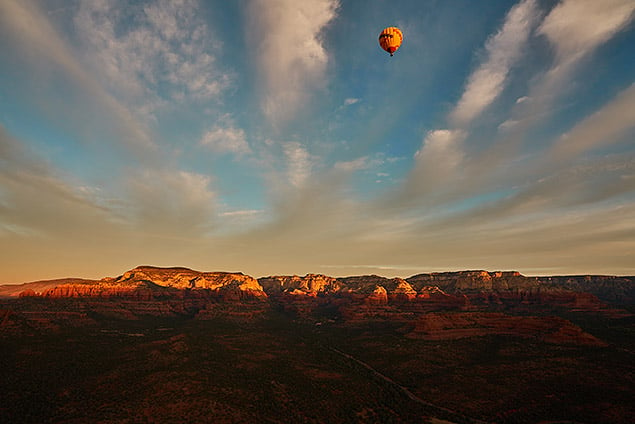
The Sony A7R III is so darn good across the board that I'm forced to nitpick, really nitpick, when it comes to finding complaints. Like I said in the beginning, it's the closest Sony has come to perfection. It might be the closest anyone has.
High ISO Noise Reduction
Sony A7R III High ISO Noise Reduction
The Sony A7R III offers only three High ISO Noise Reduction settings: "Normal" (default), "Low" and "Off". The user manual doesn't say at what sensitivity High ISO Noise Reduction begins to be applied, so we've included crops from ISO 50 on up to find out.
See for yourself how the the default and lowest noise reduction settings compare to RAW files converted in Adobe Camera Raw with no noise reduction or sharpening applied. Click on any of the crops below to see the corresponding full-sized image. (Note that the framing and scale appear slightly different between the camera JPEG and RAW conversion crops because the camera applies lens distortion correction by default but none was applied in Adobe Camera Raw.)
| High ISO Noise Reduction Comparison In-Camera JPEGs vs RAW Simulated Daylight |
|||
|
Normal
|
Off
|
RAW (No NR)
|
|
| I S O 5 0 |
 |
 |
 |
 |
 |
 |
|
 |
 |
 |
|
|
Normal
|
Off
|
RAW (No NR)
|
|
| I S O 1 0 0 |
 |
 |
 |
 |
 |
 |
|
 |
 |
 |
|
|
Normal
|
Off
|
RAW (No NR)
|
|
| I S O 2 0 0 |
 |
 |
 |
 |
 |
 |
|
 |
 |
 |
|
|
Normal
|
Off
|
RAW (No NR)
|
|
| I S O 4 0 0 |
 |
 |
 |
 |
 |
 |
|
 |
 |
 |
|
|
Normal
|
Off
|
RAW (No NR)
|
|
| I S O 8 0 0 |
 |
 |
 |
 |
 |
 |
|
 |
 |
 |
|
|
Normal
|
Off
|
RAW (No NR)
|
|
| I S O 1 6 0 0 |
 |
 |
 |
 |
 |
 |
|
 |
 |
 |
|
|
Normal
|
Off
|
RAW (No NR)
|
|
| I S O 3 2 0 0 |
 |
 |
 |
 |
 |
 |
|
 |
 |
 |
|
|
Normal
|
Off
|
RAW (No NR)
|
|
| I S O 6 4 0 0 |
 |
 |
 |
 |
 |
 |
|
 |
 |
 |
|
|
Normal
|
Off
|
RAW (No NR)
|
|
| I S O 1 2 8 0 0 |
 |
 |
 |
 |
 |
 |
|
 |
 |
 |
|
|
Normal
|
Off
|
RAW (No NR)
|
|
| I S O 2 5 6 0 0 |
 |
 |
 |
 |
 |
 |
|
 |
 |
 |
|
|
Normal
|
Off
|
RAW (No NR)
|
|
| I S O 3 2 0 0 0 |
 |
 |
 |
 |
 |
 |
|
 |
 |
 |
|
|
Normal
|
Off
|
RAW (No NR)
|
|
| I S O 5 1 2 0 0 |
 |
 |
 |
 |
 |
 |
|
 |
 |
 |
|
|
Normal
|
Off
|
RAW (No NR)
|
|
| I S O 1 0 2 4 0 0 |
 |
 |
 |
 |
 |
 |
|
 |
 |
 |
|
As you can see, the Sony A7R III's default High ISO Noise Reduction is applied at all ISO sensitivities, and the "Off" setting really isn't off (which is almost always the case), as the A7R III still applies fairly strong noise reduction with that setting at high ISOs. The Normal setting does a very good job at removing much of the chroma noise, but it doesn't impact fine detail in our difficult red-lead swatch at low to moderate ISOs like the A7R II's default noise reduction did. The "Off" setting preserves more detail but leaves a lot more chroma noise behind, and it also produces more objectionable luma noise in flatter areas with a stronger peppering effect at low to moderate ISOs.
Technical Info
Compare the A7R III vs the Nikon D850, Canon 5D Mark IV & Fuji GFX
by Jaron Schneider
Looking at specifications alone, the A7R III does some truly impressive stuff. Thanks to a faster processing system and improved circuitry, Sony was able to fix a major complaint with the A7R II in this latest iteration: autofocus speed and accuracy. And in moving things around in the body, they fixed a couple more issues as well: bigger battery and a second memory card slot.
Finally, Sony updated the software to allow access to menus even while the camera is writing to a memory card (outside of accessing Drive settings). This was a major annoyance that has also been amended.
With these adjustments, there is very little one can point to that is holding the A7R III back. With 42 megapixels firing at 10 frames per second with intelligent continuous autofocus, on paper, it looks like it is capable of far more than most cameras currently available.

During a Sony shooting event that we were invited to shortly after the camera’s announcement, we had a couple of hours hands-on with the A7R III in a studio environment. There, we decided to see how it stacked up against a few of its major competitors: the Canon 5D Mark IV, the Nikon D850, and the Fuji GFX.
Each of those cameras offers either most or some comparable specs to the A7R III (the Fuji being the furthest away since it isn’t exactly a fast shooter or quick to autofocus). However, we thought it worth looking at how they handled an identical lighting situation with identical camera settings and comparing pure sensor performance.
[Due to the RAW profile for the Sony A7R III not yet being available, we are comparing JPEG images. The Nikon D850 image was converted from RAW with ACR default settings.]
For the following images, we photographed a model at 50mm at f/5, 1/40 second, ISO 250 and auto white balance (the lighting for this set was constant light, and because we wanted to keep the ISO as low as possible while also using a relatively closed aperture, we were shooting at a lower-than-desired shutter speed). For the Canon, we were using the Canon 24-70mm f/2.8L II. For the Nikon, we were using the Nikkor 24-70mm f/2.8 E VR. For the Sony A7R III, we used the new FE 24-105mm f/4 G OSS lens. Finally, for the Fuji GFX, we used the GF 63mm f/2.8 R WR. All four cameras were set to their default picture modes, and all four were placed on a tripod that was equal distance from the subject.
You can view each of the images at full resolution here: Canon 5D Mark IV; Nikon D850; Sony A7R III; Fuji GFX.
Below we took a 100% crop of just the model’s right eye and set them side by side to compare the sensors.
 |
|||
| 5D Mark IV | Nikon D850 | Sony A7R III | Fuji GFX |
(Click image above for 1:1 size) |
|||
Firstly, we noticed that the skin tone reproduction on each of these at auto white balance all gave us a unique result. We will leave it up to you which one you think looks best, but if nothing else it’s worth noting how each of these cameras sees skin tone.
The main outlier here is the 5D Mark IV, which due to its lower resolution and optical low pass filter shows considerably less fine detail than the other three cameras in this test. From a pure sharpness point of view, all three of the other cameras outperform the 5D Mark IV.
From there, it’s almost a matter of preference which of the remaining three does the best job with sharpness, and a lot of that has to do with color. The A7R III has a crispness to the blues in the eye that the other two seem to lack, resulting in a sort of grey overtone from both the Nikon and the Fuji. What may be the most impressive is how well the new Sony FE 24-105 f/4 hangs with Nikon’s new 24-70mm and Fuji’s 63mm.
Because the Sony A7R III has such a far more advanced autofocus system than its predecessor, Sony was eager to show how it handled following focus with a quickly moving subject. One of their shooting stations gave us a powerful Profoto Air strobe that could fire at the A7R III’s 10 frames per second, and challenged us to photograph dance sequences.
Part of what makes the A7R III, and its brother the A9, pleasant to use is the visual feedback you get when in continuous autofocus. Because it’s a mirrorless camera, the viewfinder can actively show where it is focused as the focus is moving. It’s a type of feedback that you don’t get out of the Nikon or Canon, even though those both do have active autofocus that follows subjects. Sony’s just feels more hands-on. Additionally, the autofocus points that Sony has access to in continuous autofocus are basically across the entire field of view. Outside of using the dual pixel sensor and live view on the Canon, you don’t see this kind of tracking across a sensor (and using live view slows your shooting down with the Canon).

I encourage you to take a look at the sequence of images captured on the A7R III, and compare them to what we captured in the same setup with the Canon 5D Mark IV.
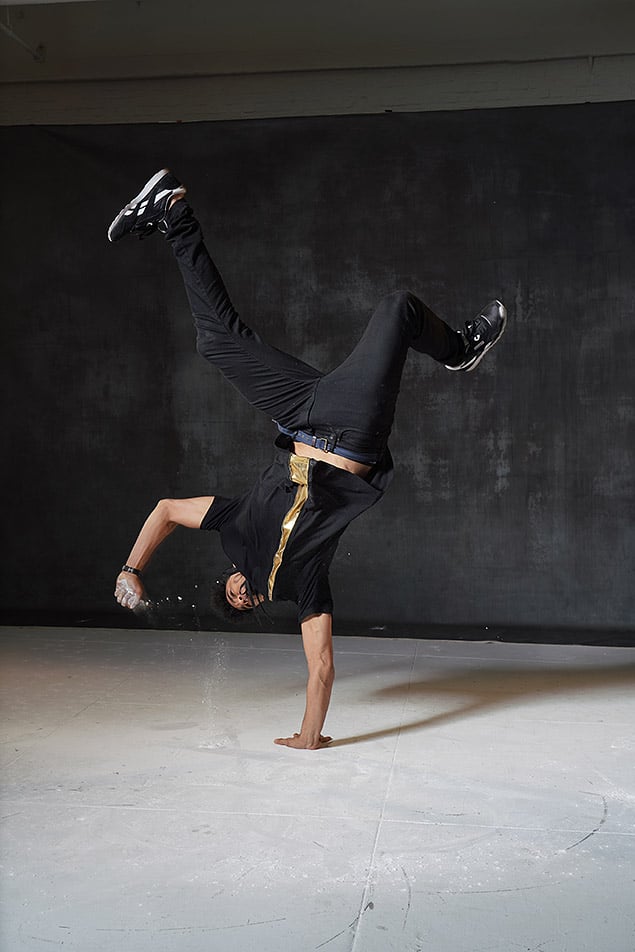
Both cameras do keep focus rather well (the Canon may have missed a frame or two, but so does the A7R III on occasion) and follow the subject well, but you get more images out of the sequence on the A7R III thanks to its faster frames per second speed.
Taking a step back, it’s seriously impressive what Sony has done here to where we feel comfortable comparing it to both the 5D Mark IV and the Nikon D850 as well as the Fuji GFX. These are different cameras for different purposes that excel at different things, especially the GFX. The fact that the A7R III can hang with all three of them with a brand new lens (that is not even listed as top-tier G-Master optic) is strikingly impressive. We will, of course, be doing more testing with the A7R III in the weeks to come, but right now it looks like it is capable of quite a bit, and possibly earning the place of the most versatile full frame camera on the market.
Conclusion
A triumph of full-frame mirrorless technology
by William Brawley | Posted: 01/26/2018
Wow, what a camera! Sony's already wowed us with the earlier iterations of the A7R, but for the third go-around, they've managed to out-do themselves. Sony keeps what we love about the A7R series -- high-resolution image quality with excellent dynamic range and high ISO performance -- and yet introduces numerous improvements, many of which have been brought over from their flagship A9. Together, the A7R Mark III is an all-around stunning camera, one whole-heartedly deserving as our pick for 2017's Best Professional Mirrorless Camera and darn-near a tie for our Best Overall Award for Camera of the Year.
Amazing image quality & improvements despite same 42MP sensor
Looking at the specs, you'll notice the same 42.4-megapixel full-frame sensor from the A7R II sits inside the A7R III. Despite this, Sony's managed to eke out some more performance from the same silicon thanks to improved circuitry and a faster, more advanced BIONZ X image processor. In particular, Sony claims the dynamic range is improved, and this proved to be the case, especially at lower ISOs. Further, we saw improved high ISO performance as well as better hue accuracy and skin tone reproduction.
Going further on the resolution scale, the A7R III introduces a "Pixel Shift Multi Shooting" high-resolution mode thanks to its improved sensor-shift image stabilization system. It captures four pixel-shifted frames for a whopping 169-megapixels-worth of information, resulting in images with improved detail, more accurate colors and fewer artifacts. Like other cameras with similar high-res capture modes, Pixel Shift Multi Shooting is tricky to use and limited in scope -- subjects need to be perfectly still, and you have to use a tripod to get usable artifact-free results.
Overall, the image quality of the A7R III is outstanding. The camera is capable of capturing stunning images with tons of detail and resolution, making it an ideal camera for landscapes, astrophotography, architecture, portraits, weddings and more. Low ISOs are phenomenal, and high ISO performance is excellent, despite the high megapixel count and the relatively small pixel size.
Big improvements to speed & performance make A7R III highly versatile
When it comes to speed, the A7R III breaks the mold of what is typically seen from high-resolution-centric cameras. Bringing over many of the performance improvements and faster AF features from the flagship A9, the A7R III is not only a high-res camera, but it's a pretty darn capable high-speed one as well. The A7R III captures images, even with RAW, at up to 10fps with C-AF, a big step up from the A7R II which topped-out at 5fps. Buffer depths are generous and more than double the buffer depth of the A7R II.
It's not all great, though, as we still found buffer clearing times to be frustratingly sluggish, despite the faster UHS-II SD card support (which, disappointingly, is only offered on one of the two card slots). Another disappointment is the camera's power-up time, which is still slow and much more sluggish compared to DSLRs.
AF performance also received massive improvements with the Mark III. The A9's autofocus is excellent, and the A7R III is nearly at that level. In real-world shooting, both single-shot and continuous AF performance worked extremely well. The A7R III also brings over the A9's faster Eye-AF tracking mode, which worked very well.
No new video framerates, but 4K quality is better & 120fps now at 1080p
Though the A7R III seems targeted more towards photography, the video capabilities are still very impressive and shouldn't be ignored. The A7R III doesn't offer 4K at 60fps like the Panasonic GH5 and the Canon 1DX Mark II, so you're still capped at 30fps. Nevertheless, the A7R III's 4K video quality looks fantastic and is improved over the Mark II thanks to the way it captures 5K-resolution footage and downsamples it for sharp 4K video. The camera uses the full pixel readout (no binning or line skipping) in its Super 35mm crop mode, and now also supports Hybrid Log Gamma and the S-Log3 profile for excellent dynamic range performance. HD recording is improved as well, now offering 120fps recording at 1080p instead of just 720p as with the A7R II.
Same size & shape but better controls, dual SD cards & battery life
At first glance, the A7R III doesn't look much different from its predecessor. Indeed, it's the same size as the Mark II, but there are some nice improvements to the control layout, including a very helpful joystick control as well as a touchscreen. And despite keeping the same footprint, Sony's managed to squeeze in not only dual SD card slots but also the A9's larger, much longer-lasting battery into the A7R III. Battery life, once a big Achilles heel for the A7R II, is now vastly improved, with a single battery lasting throughout the day despite heavy shooting.
If you enjoyed the handling and size of the A7R II, the Mark III will feel much the same in the hand. Though it'll come down to personal preferences, the relatively compact size of the A7R III can still feel a bit cramped for those with larger hands, especially if you have a big, heavy telephoto lens attached. Similarly, the smaller body can feel a bit unbalanced with these big lenses. In general, though, the grip is contoured and comfortable, and while the button layout has changed slightly, you still have tons of customization options to fit your shooting style.
Like the Mark II, the A7R III is said to have a dust- and moisture-resistant design. However, we still found it to be less sealed than some rivals. Our field tester found dust to be problematic, and in a testing scenario, we did manage to have water enter the camera body (however after a thorough drying, the camera still works). Nevertheless, the build quality still feels excellent and very solid, and the camera would likely withstand some light inclement weather, just don't push it.
On the inside of the camera, Sony has made some improvements to the software. You can now access more menu items while the camera is writing images to the memory card(s), but you're still locked out of some. The menus themselves are still very confusing with pages upon pages of options with many sub-categories. One interesting change is the lack of PlayMemories support, so the add-on apps that worked with the A7R II, for example, are no longer available. A result of that, for example, is that there is, as of now, no longer the ability to have a built-in intervalometer for doing timelapses.
A7R III Review Summary: One of the best cameras of 2017
The A7R III sees improvements in pretty much every area: physical design features, image quality, speed and performance, as well as video recording capabilities. The camera address many of the shortcomings of the Mark II, especially when it comes to speed, performance and battery life. You now not only have a compact, full-frame camera capable of capturing incredible detail, it's also nimble and speedy enough for sports and action -- a rare feat. Since its debut, the A7R-series has consistently earned high praise from us, and the Mark III is no exception. This camera offers a wonderful combination of versatility and quality. There are some drawbacks to the camera, still, but with each generation of A7R, issues feel much more minor. All in all, the Sony A7R III easily earns some top marks in our 2017 Camera of the Year Awards and, of course, gets a definite nod as a Dave's Pick.
Pros
- Improved dynamic range over its predecessor
- Somewhat better high ISO performance
- Improved hue accuracy and skin tones in JPEGs
- Very low shutter lag
- Much improved real-world AF performance with very good subject tracking
- Can autofocus in very low light
- Class-leading burst speed up to 10 fps (8 fps with live view)
- Generous buffer depths (more than double A7R II's)
- Improved 5-axis in-body image stabilization (5.5 stops, up from 4.5)
- 4K video at 30p with full pixel readout
- Hybrid Log-Gamma and S-Log3 included
- Full HD video up to 120p
- Much improved battery life
- New AF joystick and AF On button
- Dual SD card slots
- Added USB-C (USB 3.1 Gen 1) port
- New Pixel-Shift resolution mode
- Large higher-res EVF
- LCD is now a touchscreen
- In-camera charging and power via USB
- Can now shoot best quality JPEGs with RAW
- 14-bit uncompressed RAW now supported in continuous mode and with e-shutter
- 500K-cyle low vibration shutter mechanism
- Menus can be accessed while buffer is clearing
- Excellent external controls with lots of customization
- Movie record button moved to a better location
- Multi Interface Shoe allows for various smart accessories and adapters
- Flash sync terminal
Cons
- Only one card slot is UHS-II compatible
- Buffer clearing can still be slow even with fast UHS-II cards
- Sluggish power-up compared to DSLRs
- Still no lossless compressed RAW option
- No built-in intervalometer & no PlayMemories support to add this and other features
- Native E-Mount lens selection not as good as DSLR rivals (yet)
- In-camera HDR mode sometimes didn't detect blurred images due to slight camera movement
- Pixel Shift Multi-Shooting requires processing on the computer for final image
- Pixel Shift mode requires absolutely static subjects, otherwise composite images display motion artifacts
- No 4K/60p framerate
- Top shutter speed still 1/8000s with electronic shutter
- Menu system still feels confusing
- Dust- and moisture-sealing not as robust as some competing cameras
- Small body size can feel unbalanced with larger, telephoto lenses, but battery grip or grip extension is available
- Tilt-only LCD isn't as versatile as a tilt/swivel type
- No built-in flash
Follow Imaging-Resource.com on Twitter!