
Apple’s new M6 iMac promises a major photo-editing boost, but there’s a catch

Imaging Resource is reader-supported. When you buy through links on our site, we may earn an affiliate commission. How this works.
On this page
Table of Contents
 What does the M6 iMac offer?
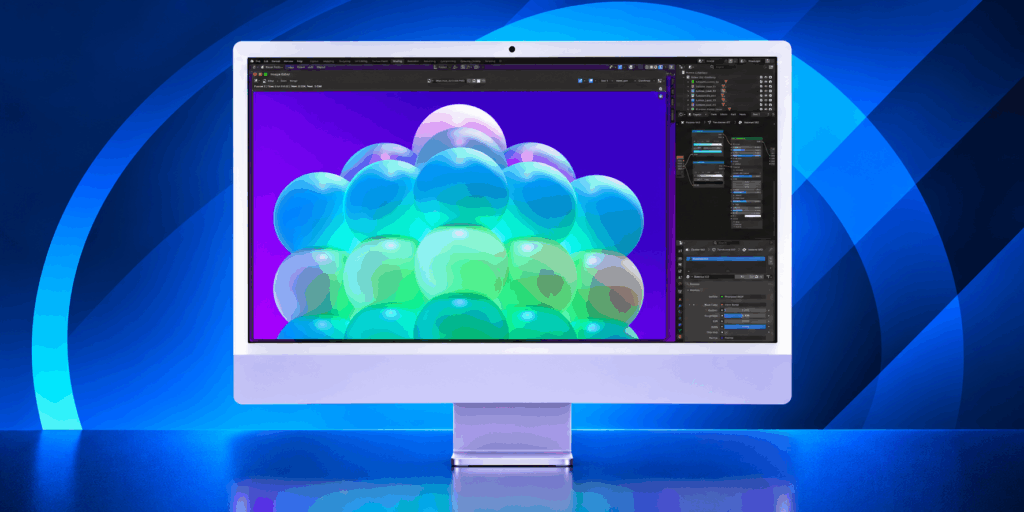
Apple has unveiled its new M6-powered iMac, promising substantial performance improvements for photographers and creative professionals. Among the headline figures is a claim of up to 3.3 times faster graphics performance in Affinity compared with the M1 iMac. That’s a potentially significant improvement for photographers working with large image files, complex edits, and demanding creative projects. However, there’s an important distinction between Apple’s benchmark figures and the performance we can expect in everyday use.
What does the M6 iMac offer?
The new iMac features Apple’s M6 chip, with up to a 12-core CPU and 12-core GPU, adding two cores to each compared with the previous generation. According to Apple, graphics performance in workloads including photo editing is up to twice as fast as the M4 iMac. Compared with the older M1 model, Apple claims up to 3.3 times faster graphics performance in Affinity, the creative software suite that offers an alternative to Adobe Photoshop.
The M6 also introduces Neural Accelerators in each GPU core, alongside a new Dual 16-core Neural Engine. Apple claims up to five times faster on-device AI performance compared with M4, potentially making the machine more capable of handling increasingly demanding AI-assisted creative workflows.
Storage gets an upgrade, too, with Apple promising up to twice the SSD read and write performance of the previous generation. That could be useful for photographers regularly working with large RAW files and extensive photo libraries.
Is photo editing really three times faster?
Apple’s 3.3x figure specifically refers to graphics performance in Affinity compared with the M1 iMac. It doesn’t mean every photo-editing task will finish three times faster. Actual improvements will depend on the software, the operation being performed, and how effectively an application uses the new hardware. Photographers working primarily in Lightroom or Photoshop shouldn’t assume they’ll see identical gains.
Apple also claims the new machine can deliver up to 18 times faster performance than a popular Intel-based iMac, although its announcement doesn’t establish that figure as a photo-editing benchmark.
More in News
 NewsApple Announces New 14-Inch MacBook Pro With M6 Chip27 Oct 2026
 NewsGodox iM10 Is a Pocket-Sized Camera Flash Weighing Just 23g27 Oct 2026
 NewsThypoch Announces Sculptor AF 23mm F1.4, Its First Autofocus Prime27 Oct 2026
 NewsFujifilm Unveils Instax Mini Evo 2 With Wide-Angle Mode and Video Recording27 Oct 2026
 NewsApple’s new iPad mini is up to 2.7x faster for graphics, and that’s not even its biggest upgrade27 Oct 2026
 NewsSmallRig Sigma FP2 Cage Adds Wooden Grip and Multiple Accessory Mounts26 Oct 2026