


Overview
Fuji X-T3 Review
Fuji X-T3 Overview
by Mike Tomkins
Posted: 09/06/2018

About five years ago, Fujifilm took its mirrorless X-mount in a new direction with the debut of the X-T1, a mirrorless camera with styling more akin to that of a traditional DSLR. The combination of top-notch build quality, great ergonomics and comprehensive weather sealing saw us quickly swept off our feet by the X-T1 and its successor, 2016's now rather long-in-the-tooth (but still quite capable) X-T2.
An old friend returns with improvements aplenty in a familiar figure
Now, the followup Fuji X-T3 brings the series right back up to date with a subtly redesigned body offering even better ergonomics and a significantly uprated viewfinder, plus a brand-new imaging pipeline based around a new processor and sensor. The latter is a 26.1-megapixel, X-Trans CMOS IV chip that now features a backside-illuminated design, a first for the X-mount lineup. It also has a lower base sensitivity of ISO 160, versus the native ISO 200 of the X-T2.
There's a vastly more powerful AF system, too, as well as a touch-screen overlay on the articulated LCD panel, and improvements to connectivity including Bluetooth LE support (alongside the existing Wi-Fi), plus a new USB-C connector instead of Micro USB. And Fuji is clearly courting video shooters, with a new built-in headphone jack for levels monitoring, added support for DCI or consumer 4K capture at up to 60 frames per second / 400Mbps, and up to 5x slow-motion capture at Full HD resolution.
There's also a significant improvement in battery life, and if you're the kind who likes to shoot light, you'll also be pleased to hear that while there's still an available battery / portrait grip accessory, it's no longer required to gain use of the camera's fastest burst capture rates.

A tour of the X-T3's subtly-honed body
But we're getting ahead of ourselves. Let's rewind a little, and take a closer look at the Fuji X-T3 and its new features. We'll start off on the outside with a tour of the X-T3's body. At first glance, it looks nearly identical to that of its predecessor, but it's actually home to more than a few tweaks in the name of better ergonomics and durability.
If you're considering an upgrade from an X-T1 or X-T2, we have some great news for you. Although the exact size and shape of their controls vary a little, the X-T3 shares its control layout almost exactly with that of the 'T2. Really, the only differences are that the switches stacked wedding cake-style beneath Shutter and ISO dials are now taller and easier to adjust, there's a new "160" position on the ISO dial, and the dials themselves are now beveled inwards towards the top. And since the X-T2 was itself very similar in its layout to the original 'T1, the Fuji X-T3 will also become familiar quickly for those upgrading from the first model in the series.
The electronic viewfinder has been improved inside and out
The handgrips themselves are near-identical to those of the X-T1 and 'T2, but the sharp-eyed amongst you will notice that per the official spec sheet, the 'T3's depth has increased by around two-fifths of an inch (10mm). That change is in large part down to a tweak that sees the electronic viewfinder set backwards a little further, giving you an extra few millimeters of clearance for your nose.
The viewfinder itself has also been replaced with an uprated unit at the same time. The new viewfinder has an extremely high resolution of 3.69 million dots, a significant step up from the already-generous 2.36 million dot count of the X-T1 and 'T2. It still has a manufacturer-claimed display lag of just 0.005 seconds. It also boasts a swift 100 frames per second refresh rate and is said to allow blackout-free burst capture. Sadly, magnification has fallen just ever so slightly to 0.75x, versus the 0.77x magnification of earlier models.

A more durable body and mount brings a slight weight increase
While its magnesium-alloy construction and comprehensive weather-sealing are unchanged from those of the earlier cameras, the X-T3 should nevertheless prove even more durable than before. That's because Fuji has strengthened both the lens mount and the base of the camera. The added strength should make this camera a better pairing with larger lenses which lack a tripod foot of their own.
Along with the larger viewfinder assembly, it does also contribute to a 1.1 ounce (32g) increase in body-only weight, however. Loaded and ready to go -- but without a lens -- you can expect the X-T3 to tip the scales at around 1.2 pounds (19.0 ounces; 539g).
A high-res, high-speed sensor that's naturally moire-resistant
At the heart of the Fuji X-T3 is a brand-new imaging pipeline based around the pairing of a next-gen sensor and processor. The 26.1 megapixel sensor is branded as X-Trans CMOS IV, and retains the unusual color filter array layout which helps make X-Trans sensors more resistant to moiré and false color artifacts compared to traditional Bayer sensors.
As you'd expect these days, the sensor isn't encumbered by a resolution-sapping optical low-pass filter, but even without one, the X-Trans CFA should keep you out of trouble where other cameras might be troubled by image artifacts. (The downside is the added complexity of demosaicing the sensor data, but that's clearly not holding Fuji back in the performance department, as we'll see in a moment.)

A slight increase in resolution and a lower native sensitivity
The increase in resolution versus the 24.3-megapixel X-Trans CMOS III chip in the X-T2 is only very slight, with a little back-of-the-napkin math suggesting an increase of just 4% in linear resolution, with all else being equal. Of course, improvements in Fuji's processing algorithms could have made that change more noticeable, but we didn't expect a huge step forward on the resolution front.
At the top end of the range, the Fuji X-T3 matches its direct predecessor for sensitivity, but at the bottom end it gains just a little added ground. By default, everything from ISO 160 to 12,800-equivalents is available, and should you need even more you can opt to enable an expanded range of 80 to 51,200-equivalents. By way of comparison, the X-T2 provided 200 to 12,800-equivalents by default, expandable to encompass 100 to 51,200-equivalents.
The new BSI sensor and next-gen processor make a super-swift pairing
Perhaps most significantly, the new sensor now sports a backside-illuminated design, a first for a Fuji X-mount camera. Compared to their standard cousins, backside-illuminated sensors move most of their circuitry to the rear of the sensor, keeping the critical light-gathering area as high as physically possible for maximum sensitivity. That, in turn, can theoretically bring better signal to noise levels, and with them cleaner images at like-for-like sensitivity, however we didn't find that to be the case, with the X-T3 producing slightly higher noise levels in the lab. Perhaps that's because of the X-T3's higher performance on multiple fronts.
The new image sensor and processor bring with them boatloads of performance. The next-generation X-Processor 4 chip has a quad-core design and is said to provide triple the performance of the previous-gen X-Processor Pro chip. And while the X-T3's claimed startup time of 0.3 seconds and its shutter lag of 0.045 seconds are unchanged from the previous generation, it's worth noting that it is doing a whole heck of a lot more in that time than must its elder sibling.

More dependable AE and AF in burst shooting
For one thing, Fuji tells us that during continuous burst shooting, the X-T3 is performing autofocus and autoexposure adjustments some 50% more frequently than in past models, leading to better focus and exposure accuracy across the duration of each burst. And that's despite a big increase in the number of on-chip phase detection AF pixels at play here, as we'll find out in a moment.
And as we'll also learn shortly, that added performance pays dividends for videos too, with Fuji claiming rolling shutter levels similar to those of dedicated, CMOS-based cinema cameras.
No need for pricey accessories to get the X-T3's full performance
So how fast can the Fuji X-T3 shoot in its continuous burst mode? The maximum burst capture rate of 11 frames per second with a mechanical shutter is unchanged from the X-T2, but that doesn't come close to telling the whole story. Buffer depth varies with speed, resolution, and compression type, but is always at least 33 raw frames, 60 JPEGs in each burst, and potentially far more. See our Performance page for details.
With the X-T2, you could only access its maximum burst performance if you were shooting with the optional portrait / battery accessory grip attached to the camera. Shoot with the body alone, and the X-T3 will still allow 11 frames per second, where the X-T2 would've fallen to eight fps.

And if you enable the cameras' electronic shutter functions instead of using their mechanical shutters, the difference can become even more significant. Where the X-T2 could manage 14 fps with an e-shutter, the X-T3 will allow as many as 20 full-res frames per second with e-shutter, and as many as 30 fps with an e-shutter plus an additional 1.25x focal length crop. If you don't need the full sensor resolution -- and for distant sports subjects, that'll often prove to be the case -- you'll be able to blow the X-T2 out of the water, especially if rolling shutter is indeed as modest as Fuji's claiming it to be.
Take your reflexes out of the equation with pre-shooting
Of course, no amount of burst-shooting performance will save the day if your reflexes aren't up to snuff and you miss the start of the action. That's where the X-T3's newly-added pre-shoot function comes in handy. It starts recording full-res images as soon as the shutter button is half-pressed, and continues to do so until the buffer is full, but without writing any of these images to the camera's storage.
As shooting continues beyond this point, the oldest frames fall out of the buffer to be replaced by newer ones. When you press the shutter button in the rest of the way, the contents of the buffer are written to the flash card, providing you with a burst of images leading up to the decisive moment. All you need do is keep the action well-framed and hit the shutter button as soon as the moment reaches its end. You'll then be able to reach back in time as far as a few seconds to find the very best frames from the sequence.
More phase-detect AF pixels than you can shake a stick at!
We alluded to a significant improvement in the Fuji X-T3's autofocus system previously. The X-T2 offered at most a 325-point autofocus system, and on paper, the 425-point system of the X-T3 -- while certainly a fair bit more point-dense -- isn't really that far detached from its predecessor. But that 425-point figure, set using the smallest AF point size available, only includes the user-addressable AF points. Fuji tells us that the system itself includes a total of 2.16 million phase-detection autofocus pixels.

As noted, the 425-point figure relates specifically to the smallest AF point size provided, by the way. By default, you'll instead have a choice of 117 AF points in a 13 x 9 array. Also, the X-T3's autofocus system now has a low-light limit of -3 EV, a good step forwards from the -1 EV limit of the X-T2. Oh, and one last improvement that's rather nice: You can now use eye-detection with continuous autofocus, or, even during video capture!
The main display gains touch-sensitivity and a revamped on-screen UI
Like the X-T2 before it, the Fuji X-T3 offers up a 3.0-inch, 3:2 aspect LCD monitor on its rear panel, complete with a fairly typical (or perhaps even a bit below average) resolution of 1.04 million dots. And like that camera, this screen is also mounted on an articulation mechanism, allowing it to be seen from a good range of angles (albeit, not from in front of the camera itself.) But there are a couple of important differences between the X-T3's screen and that of the X-T2. For one thing, the X-T3 provides higher contrast than does its elder sibling. And its screen also now provides a touch-sensitive overlay not unlike that on your smartphone, allowing it to serve double-duty as an input device.
Fuji has also extended the customization of the information displays, allowing you to designate certain icons to appear bigger on-screen than they do by default. Let's say, for example, that you want the focus mode, white balance and metering mode icons to appear bigger on your display -- well, now they can. And you can also change the color and contrast of the icons, menus and backgrounds. (There's a cool red-on-dark gray mode which will be particularly well-suited to night photography, as well.)

All the creative options you'd expect, and a couple of new ones too
The Fuji X-T3 meters exposures using its main imaging sensor, and offers a choice of 256-zone multiple, spot, average or center-weighted metering modes. +/-5 EV of exposure compensation is available in 1/3 EV steps. Program modes on offer include the typical selection of Programmed Auto, Shutter-priority, Aperture-priority or fully Manual modes, plus a fully Automatic mode that's accessed by the shutter speed, ISO sensitivity and aperture controls to their red 'A' positions.
Shutter speeds range from as little as 1/8,000 second to a maximum of 15 minutes, depending upon the exposure mode, while bulb and time exposure options are also available. X-sync is 1/250 second. Oh, and there's an electronic shutter function which, as discussed previously, should be uncommonly resistant to rolling shutter effect. With electronic shutter enabled, the fastest exposure available is 1/32,000 second. There's also an electronic front curtain shutter option.
All of the usual film simulation functions that you'd expect to find on a modern Fujifilm camera are present and accounted for here, plus a couple of newer ones. First of all, there's a new Eterna film simulation, which aims to mimic the look and feel of Fuji's motion picture-oriented film stock.
There's also the same Color Chrome effect which we saw previously in the GFX 50S medium-format camera, which isn't actually a film simulation, per se, but which does something rather similar. It recalls the look of Fuji's Fortia film, providing higher contrast without also boosting saturation through the roof in the process, and is described very nicely in our third Fuji GFX 50S field test.

An already-capable movie shooter gets even better
The Fuji X-T2 was no slouch in the movie department by 2016 standards, offering in-camera 4K video capture, support for external microphones and headphones (via its accessory grip), full-time autofocus or manual focus options and plenty else besides. But the X-T3 courts movie shooters even more directly, and one-ups its predecessor in quite a few ways.
First of all, you now have a choice not just of recording in the consumer-friendly 3,840 x 2,160-pixel 4K ultra-high definition format, but also the cinema-friendly DCI 4K format which has a slightly wider-aspect 4,096 x 2,160-pixel resolution. And you can do so not just at rates of up to 30 frames per second / 100Mbps, as in the previous camera. Instead, you'll be able to record ultra-high def footage at up to a swift 60 fps with a much more generous 400Mbps bitrate.
Oh, and you can also opt not just for H.264/MPEG-4 AVC 8-bit encoding, but also for H.265/HEVC if you want significantly better video quality. If you do so, the X-T3 will use 10-bit 4:2:0 subsampling internally.
That is, says Fujifilm, a first for an APS-C mirrorless camera. And if you prefer to record externally, you can further output 10-bit 4:2:2 HDMI at the same 4K resolution and 60 fps capture rate. You'll also be able to opt for a 5x slow-motion effect at Full HD (1,920 x 1,080-pixel) resolution, with a 200Mbps bitrate limit for this mode.

Rolling shutter that competes with dedicated cinema cameras
And importantly, given that you're reliant on an electronic shutter for video capture, Fujifilm says that it has worked to reduce rolling shutter (aka jello effect) to an absolute minimum in designing the X-T3. The new high-performance sensor and processor pairing together allow a level of rolling shutter that Fuji is confident will best not just previous Fuji cameras, but rivals as well. In fact, we're told that the company has managed to get rolling shutter down to about the same level as dedicated cinema cameras which are also CMOS sensor-based.
Fujifilm has also moved the headphone jack -- which on the X-T2 was a function of its optional accessory grip -- into the camera body itself, saving you money and bulk if you prefer to shoot without an added grip. And if you want to shoot with the camera tethered to an external recorder, you'll be pleased to hear that you can now remove the connector compartment cover.
Video noise levels should be improved, too, courtesy of new noise reduction algorithms including 4K inter-frame noise reduction. And hybrid log gamma came to the X-T3 in late 2018, via a firmware update v2.00.

All the latest connectivity mod-cons have been added
The Fuji X-T2 was no slouch in the connectivity department, with not just in-camera Wi-Fi but also a super-swift USB 3.0 wired connection. The X-T3 goes it one better, though, adding support for Bluetooth 4.2 Low Energy transmission as well as Wi-Fi, and switching the USB connector to the more modern, reversible USB Type-C connector. It's also technically labeled as USB 3.1 Gen 1 compliant, although that's simply a newer name for the previous USB 3.0 standard. Oh, and there's also a Type-D Micro HDMI connector to allow for high-definition video output as well as a 2.5mm remote release jack and a sync terminal.
As for the new Bluetooth connectivity, that's used to allow for an always-on connection with low speed (but crucially, also low power consumption). That connection can be used to transfer smaller amounts of data, and also used to automatically raise a much higher-speed (and higher power-consumption) Wi-Fi connection as needed.

Twin card slots, and they're plenty swift, too
As you'd expect, the Fuji X-T3 still has twin SD card slots (SDHC/SDXC compatible), just as did its predecessor. And they're still extremely fast, supporting not just UHS-I but also UHS-II compatible cards for maximum performance. They're also newly compliant with Video Speed Class V90.
Significantly improved battery life and an available battery grip
Fuji has made a pretty significant step forward in terms of power savings with the X-T3, because despite using the exact same NP-W126S lithium ion rechargeable battery pack as in previous models, battery life has climbed from 340 to 390 frames on a charge with the LCD, and from 330 to 370 shots with the EVF, as compared to the X-T2.

That's an extra 40-50 frames or 12-15%, and this can be almost tripled to 1,050-1,100 frames if you opt for the available VG-XT3 vertical power booster grip accessory with a pair of NP-W126S batteries installed. You'll even get a second set of duplicate controls for portrait orientation shooting! A dedicated BC-W126S battery charger is included, and in-camera charging via USB is also supported.
And there are a fair few other accessories to choose from besides. You can get a chunkier grip without the bulk of added controls or batteries if you opt for the MHG-XT3 metal hand grip, and it doesn't block your SD card or battery compartment doors, either. Fuji also offers a leather half-case (BLC-XT3), a cover kit with spare sync terminal, hot shoe, connector and grip connector covers, a DC coupler, plus the RR-100 remote release cord.
Fuji X-T3 Price and availability
The Fujifilm X-T3 began shipping in the US market from September, 2018. It is available either in black or silver colored variants, and each is provided in a choice of body-only or 18-55mm kit lens variants. Pricing for the body-only X-T3 is set at around US$1,500, and for the X-T3 18-55mm kit at about US$1,900.

In the Box
The Fuji X-T3 body-only retail kit (as reviewed) contains the following items:
- Fujifilm X-T3 Mirrorless Digital Camera (Body Only)
- NP-W126S Lithium-ion Battery Pack
- BC-W126S Battery Charger
- Plug Adapter
- EF-X8 Flash
- Body Cap
- Shoulder Strap
- Strap Clips
- Protective Covers
- Clip Attaching Tool
- Battery Grip Connector Cover
- Sync Terminal Cover
- Hot Shoe Cover
- Limited 1-Year Warranty
- Camera instruction manual
Optics
Viewfinder Test Results
Accuracy
Very good accuracy from the electronic viewfinder and LCD monitor.

The Fuji X-T3's electronic viewfinder and LCD monitor proved quite accurate, both showing just over 99% coverage in preview mode, though that's a bit short of Fuji's 100% spec.
The images above were taken from our standardized test shots. For a collection of more pictorial photos, see our Fujifilm X-T3 Photo Gallery .
Exposure
Color
Saturation & Hue Accuracy
Good saturation levels with excellent hue accuracy.
 |
|||
|
ISO Sensitivity
|
|||
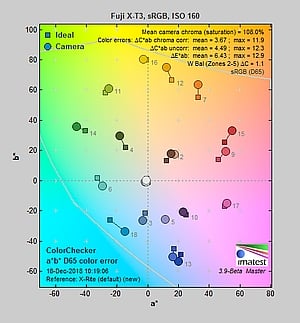
| In the diagram above, the squares show the original color, and the circles show the color that the camera captured. More saturated colors are located toward the periphery of the graph. Hue changes as you travel around the center. Thus, hue-accurate, highly saturated colors appear as lines radiating from the center. Mouse over the links to compare ISOs, and click for larger versions. | |||
Saturation. The Fuji X-T3 produces images with accurate, pleasing colors using the standard film simulation (Provia) at default settings. The camera pushes most colors by small amounts, dark red, orange and dark green by moderate amounts, but undersaturates aqua by just a bit. Default mean saturation at the base ISO of 160 was 108% (8% oversaturated), which is a little lower than average these days, but quite pleasing and a little more realistic than most cameras. You can of course tweak saturation and/or select a different film simulation mode if the default is not to your taste. Mean saturation remained quite consistent as ISO increases, with a minimum of 106.3% at ISO 6400, while toping out at 109.4% the maximum extended ISO. Most consumer digital cameras produce color that's more highly saturated (more intense) than found in the original subjects. This is simply because most people like their color a bit brighter than life.
Skin tones. The Fuji X-T3 rendered pleasant Caucasian skin tones that were just a touch on the pinkish side when white balance was adjusted to match the light source at base ISO, because of the moderate push in reds. Results were quite pleasing, though, with a healthy look. (Here, too, the X-T3's saturation and/or film mode options may come into play for some users, letting them tweak the color of skin tones if they find the default rendering a bit too saturated for their personal tastes. Note that Fujifilm claims their Astia film simulation produces "true-to-life" skin tones.) Where oversaturation is most problematic is on Caucasian skin tones, as it's very easy for these "memory colors" to be seen as too bright, too pink, too yellow, etc.
Hue. The Fuji X-T3 produced only a few color shifts relative to the ideal reproduction of hues, and has excellent hue accuracy overall. The largest shift is in cyan toward blue, however we think it's a deliberate choice by camera engineers to produce better-looking sky colors. Average "delta-C" color error after correction for saturation at base ISO was only 3.67 (lower numbers are better), which is excellent, and hue accuracy remained better than average across the ISO range. Hue is "what color" the
color is.


Sensor
Exposure and White Balance
Indoors, incandescent lighting
Auto and Incandescent white balance were too warm, but much better results with the Manual setting. Slightly above average exposure compensation required.


Indoors, under typical incandescent lighting, color balance was quite warm using the Auto setting, with a fairly strong red/pink cast. Results with the Incandescent white balance setting were also very warm, with a strong yellow/orange cast. The Manual white balance setting was much more accurate, though it had a slight green bias. The X-T3 required +0.7 EV exposure compensation here while most cameras need about +0.3 EV for this scene, though the images are a little bright. Our test lighting for this shot is a mixture of 60 and 100 watt household incandescent bulbs, a pretty yellow light source, but a very common one in typical home settings here in the U.S.
Outdoors, daylight
Very good color and exposure outdoors.
Outdoors, the Fuji X-T3 produced very nice color at default settings. The X-T3's default exposure was pretty good for our "Sunlit" Portrait shot when using Manual white balance, just a bit hot (interestingly Auto and Daylight white balance weren't quite as bright even though WB was all that was changed). This is much better than average exposure accuracy, as most cameras need +0.7 EV to keep the face bright for this shot, but it did lead to a lot of blown highlights in the mannequin's shirt and flowers. Skin tones were pleasing, with a healthy-looking pinkish tint that's not too overdone with Manual white balance, and Auto WB wasn't much different (just a touch cooler though as mentioned not quite as bright for some reason). See the "Extremes: Sunlit..." section below to see how the X-T3's Highlight/Shadow Tone and D-Range settings help deal with harsh lighting like this.
Resolution
Just over 3,000 lines of strong detail from JPEGs, about the same from ACR converted RAW.


Our in-camera JPEG resolution chart shot revealed sharp, distinct line patterns up to just over 3,050 lines per picture height in the horizontal direction, and to just over 3,050 lines per picture height in the vertical direction as well. Some may argue for higher numbers, but lines begin to merge at higher resolutions. Complete extinction of the pattern didn't occur before the 4,000 line limit of our chart in both directions. Adobe Camera Raw wasn't able to extract any additional resolution, however it did produce lower amounts of luma moiré near the limits of resolution. Interestingly, ACR produced more false colors than the camera's processing, though. And in both versions, we see more than the usual dark or bright pixels between within the lines, which are likely caused by less than perfect interpolation of PDAF photosites. Use these numbers to compare with other cameras of similar resolution, or use them to see just what higher resolution can mean in terms of potential detail.
Sharpness & Detail
Sharp images at default settings, with only minor edge-enhancement artifacts appearing around high-contrast subjects. Mild noise suppression is visible in the shadows at base ISO.


Sharpness. The Fuji X-T3 captures fairly sharp images by default, though there are some minor edge enhancement artifacts visible along high-contrast edges such as the relatively thin but bright sharpening "haloes" around the lines and letters of the bottle label above left. Default sharpening seems to be a good compromise between sharpness and artifacts. Edge enhancement creates the illusion of sharpness by enhancing colors and tones right at the edge of a rapid transition in color or tone.
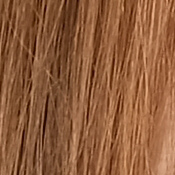
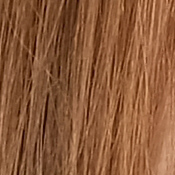
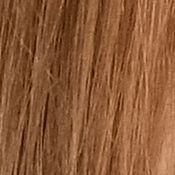
Detail. The crop above right shows low to moderate levels of luminance noise suppression, as the darker areas of the model's hair still show a very good amount of detail. Some individual strands do merge together when local contrast is low and as shadows deepen, but performance here is excellent for an APS-C sensor. The Fuji X-T3 also does a great job at keeping chrominance noise low, better than most Bayer-filtered cameras, but it can struggle to resolve fine detail or accurate color in certain fine subject matter because of its unique color filter arrangement. Noise-suppression systems in digital cameras tend to flatten-out detail in areas of subtle contrast. The effects can often be seen in shots of human hair, where the individual strands are lost and an almost "watercolor" look appears.
RAW vs In-Camera JPEGs
As noted above, the Fuji X-T3 produces fairly sharp JPEG images but very good detail at default settings. Let's see how an Adobe Camera Raw conversion with relatively strong unsharp mask sharpening compares.
|
Base ISO (160)
|
|
 |
 |
 |
 |
 |
 |
|
Camera JPEG, defaults
|
RAW via Adobe Camera Raw
|
In the table above, we compare an in-camera JPEG taken at base ISO (160) using default noise reduction and sharpening (on the left) to the matching RAW file converted with Adobe Camera Raw 9.1 via DNG Converter 11.1 using default noise reduction with quite strong but tight unsharp masking applied in Photoshop. (In this case, we used USM of 300%, radius of 0.3 pixels, and a threshold of 0.)
Adobe Camera Raw does a pretty good job here, but doesn't extract significantly more detail than the camera does, though contrast and subtle detail in the our red-leaf fabric is noticeably better. There is a touch more detail in the mosaic crop and perhaps slightly more accurate colors, but nothing really to write home about, and the in-camera JPEGs look smoother, have better contrast and brighter colors. The strong sharpening required to keep images reasonably sharp does tend to exacerbate noise, though, as can be seen in the background of the first set of crops, however that can be mitigated by experimenting with the sharpening settings, or using some luminance noise reduction. Bottom line: Fuji's in-camera processing is excellent, and there isn't much advantage to shooting RAW in terms of detail reproduction, at least with Adobe Camera Raw and at low ISOs.
ISO & Noise Performance
Excellent high ISO performance for an APS-C sensor.
|
Default High ISO Noise Reduction
|
 |
 |
 |
| ISO 80 | ISO 100 | ISO 160 |
 |
 |
 |
| ISO 200 | ISO 400 | ISO 800 |
 |
 |
 |
| ISO 1,600 | ISO 3,200 | ISO 6,400 |
 |
 |
 |
| ISO 12,800 | ISO 25,600 | ISO 51,200 |
The Fuji X-T3's images are quite clean with good detail up to ISO 800, with low, fine-grained luma noise and very little chroma noise. At ISO 1600, luminance noise is a little stronger as you'd expect, but fine detail is still very good with almost no chroma noise. ISO 3200 shows a larger increase in noise and blurring, but fine detail remains pretty good, again with almost no chroma noise. At ISO 6400 luminance noise becomes more noticeable along with noise reduction artifacts, though noise still fairly fine-grained, and chroma noise is still well-controlled. Image quality appears to drop off more rapidly at ISO 12,800 and above, with progressively more visible noise "grain", stronger blurring and more noticeable noise reduction artifacts. Fine detail at ISOs 25,600 and 51,200 is quite soft with heavy luminance noise accentuated by sharpening artifacts, as well as chrominance noise in the form of large but fairly subtle yellow and purple blotches. Still, high ISO noise performance is excellent for an APS-C camera, though noise appears to be slightly higher than its 24-megapixel predecessor, the X-T2.
We're pixel-peeping to the extreme here though, which isn't always representative of what you see in prints. As always, see the Print Quality section below for maximum recommended print sizes at each ISO.
Extremes: Sunlit, dynamic range and low light tests
Decent dynamic range in JPEGs at default settings. Very good low-light AF performance.


Sunlight. The Fuji X-T3 struggled a bit with the harsh lighting of this test at default settings at the base ISO of 160 (which should be best case). We preferred the default exposure (0 EV) overall here, because the exposure at +0.3 EV exposure compensation was too bright with far too many clipped highlights. At default exposure, a few highlights were blown in the mannequin's shirt and flowers, but not as many as the X-T2 blew. There are also some very deep shadows, though they don't appear to be clipped to black as abruptly as the X-T2's did. (Fuji's default Provia film simulation is known for high contrast and crushed shadows but it appears it's been tweaked since the X-T2.) Overall, the Fuji X-T3's JPEGs performed about average here in terms of dynamic range, without the help of any highlight and shadow adjustments, nor any dynamic range enhancement (see below).
Because digital cameras are more like slide film than negative film (in that they tend to have a more limited tonal range), we test them in the harshest situations to see how they handle scenes with bright highlights and dark shadows, as well as what kind of sensitivity they have in low light. The shot above is designed to mimic the very harsh, contrasty effect of direct noonday sunlight, a very tough challenge for most digital cameras. (You can read details of this test here.)
Contrast Adjustment
The Fuji X-T3 does not offer a traditional contrast adjustment. Instead, it offers Shadow and Highlight Tone settings, which let you adjust contrast in highlights and shadows independently. There are seven settings each on the X-T3, ranging from -2 to +5.

Shadow and Highlight Tone. Above you can see the effects the seven settings for Highlight and Shadow Tone control on our high-contrast "Sunlit" Portrait shot. Mouse over the links to load the associated thumbnail and click on the links to visit the full resolution image.
Note how the Highlight settings mainly affect the brighter portions of the image, while the Shadow settings impact the darker areas. Both settings can be used simultaneously, giving more flexibility to tune the tone curve at both ends compared to a single contrast setting. Nice.

D-Range is Fuji's name for their dynamic range enhancement technology. D-Range designed to preserve hot highlights, by exposing for highlights and then boosting mid-tones and shadows. There are three levels: DR100 100% (default), DR200 200%, DR400 400%, as well as an Auto mode which can select DR100 or DR200. DR200 is available at ISO 320 and above, while DR400 is available at ISO 640 and above. Mouse over the links above to load the corresponding thumbnail image. Click on the links to get to the full resolution images.
As you can see the images above, the Fuji X-T3's higher D-Range settings were effective at toning down highlights. As they say, though, there's no free lunch, because improved highlight retention comes at a cost of increased noise. This is because the camera's sensitivity needs to be raised to take advantage of the D-Range feature, though that's not much of penalty because the X-T3's noise performance is so good. (Note that the Fuji X-T3 does not offer a multi-shot in-camera HDR mode.)


D-Range Priority The Fuji X-T3 offers a mode called Dynamic Range Priority, which appears to be an automatic combination of Highlight Tone, Shadow Tone and D-Range. It offers three settings: Auto, Strong, Weak and Off. Weak is available at sensitivities from ISO 400 to 12,800 and Strong is available at ISO 800 to 12,800. Mouse over the links above to compare settings, and click on the links to access full resolution versions.
Dynamic Range Analysis (RAW mode)
While we once performed our own dynamic range measurements based on in-camera JPEGs as well as converted RAW images (when the camera was supported by Adobe Camera Raw), we've switched to using DxO Labs' results from their DxOMark website. As technology advanced, the dynamic range of modern high-end cameras in some cases exceeded the range of the Stouffer T4110 density scale that we used for our own measurements. DxO's approach based on RAW data before demosaicing is also more revealing, because it measures the fundamental dynamic range of the sensor, irrespective of whatever processing is applied to JPEGs, or to RAW data by off-the-shelf conversion software.
In the following, we use DxO's "Print" dynamic range results, which are scaled based on camera resolution. As the name suggests, this scaling corresponds to the situation in which you print at a given size, regardless of how many megapixels the camera might have. (In other words, if you've decided to make a 13x19 inch print, that's the size you're printing, whether the camera's resolution is 16 or 300 megapixels.) Also note that DxO Labs uses a signal-to-noise (SNR) threshold of 1 when defining the lower boundary of acceptable luminance noise in their dynamic range measurements, which corresponds to the "Low Quality" threshold of the Imatest software we used to use for this measurement.
Unfortunately, DxOMark has not tested the X-T3 as of this writing (and we doubt they ever will. The website photonstophotos.com has however tested the X-T3 and found its dynamic range to be nearly identical to the X-T2's, though the X-T3 has a slight advantage at the low and high ISO extremes. Compared to the Sony A6500, a leading APS-C mirrorless camera, the X-T3 does at least as good or better across the ISO range, though it doesn't do quite as well as the Nikon D7200, a leading DSLR. To compare the X-T3's dynamic range with the X-T2's and to the A6500 and D7200, click here.
Bottom line: Very good dynamic range for an APS-C camera from RAW files.
Low Light AF. The Fuji X-T3's hybrid autofocus system was able to focus in extremely low light. With our legacy low-contrast AF target, the camera was able to focus down to about -4.1 EV unassisted with an f/2.8 lens in our tests, which is very good. With our newer high-contrast AF target, the X-T3 was able to autofocus down to about -5.6 EV unassisted, which is excellent. The Fuji X-T3 also has a built AF assist lamp, which lets it autofocus in complete darkness as long as the subject is in range and has sufficient contrast.
NOTE: This low-light AF test is conducted with a stationary subject, and the camera mounted on a sturdy tripod. Most digital cameras will fail miserably when faced with a moving subject in dim lighting. (For example, a child's ballet recital or a holiday pageant in a gymnasium.) Thanks to its larger sensor and Hybrid AF, mirrorless cameras like the Fuji X-T3 tend to do better than point & shoots, but you still shouldn't expect a quick autofocus lock with moving subjects.
Bundled Flash
A small, but decent bundled flash.

Our Indoor Portrait test scene was well exposed with +0.3 EV flash exposure compensation using ISO 200 and f/4, our standard test. And the camera used a typical 1/60s shutter speed.
Output Quality
Print Quality
Very nice 30 x 40 inch prints up to ISO 200; a pleasing 8 x 10 inch print at ISO 12800; and usable 4 x 6 prints up to ISO 51200.
 ISO 80/100/160/200 images all easily make beautiful prints up to our maximum testable print size of 30 x 40 inches. Print size here really depends on how much you want to push the resolving power of the X-T3's 26-megapixel sensor. At 30 x 40 inches, you do see very slight pixelation upon close inspection. However, at typical viewing distances for such a large print this isn't a major issue. Overall, the X-T3's image quality here at these low ISOs is excellent and thus produces very pleasing prints with lots of details and vibrant, rich colors.
ISO 400 prints look strikingly similar to lower ISOs, but we do see a subtle increase in shadow noise and a bit of detail softness. Overall, it's quite minimal, and you're easily capable of making a great 24 x 36 print here, which is still very large. That said, a 30 x 40-inch print would certainly be doable for wall display or with careful post-processing.
ISO 800 images are surprisingly clean of offensive noise and still full of crisp detail, and you might also be able to get away with a 30 x 40 inch print for wall display with judicious post-processing. However, background/shadow noise is a bit too strong for us to really call it at that print size, and so for us, ISO 800 images do well at up to 24 x 36 inches.
ISO 1600 prints begin to show too much noise for prints as large as 24 x 36, but at smaller print sizes, noise remains pleasingly minimal and fine detail is still plentiful. We're calling it at 20 x 30 inches for this ISO setting, which is rather impressive for an APS-C camera.
ISO 3200 image display more noticeable signs of detail loss and some softness due to increased noise and stronger noise reduction processing. Our pick here for this ISO tops-out at a still-respectable 13 x 19-inch print. A 16 x 20 might work for less critical applications or with careful processing.
ISO 6400 prints work quite well up to 11 x 14 inches, which is a rather impressively large print size at this ISO for an APS-C camera. Interestingly, shadow noise appears ever-so-slightly stronger than this same print from the X-T2, however, the X-T3 displays a bit more fine detail.
ISO 12,800 images display quite a bit of noise, but like the X-T2 predecessor, the X-T3 is still capable of a usable 8 x 10 print here at its maximum native ISO setting.
ISO 25,600 prints are quite noisy and pretty soft if you print them any larger than 5 x 7 inches.
ISO 51,200 images are very noisy, and noise reduction processing takes a heavy toll on detail across the frame. As such a 4 x 6-inch print is the largest print we're willing to accept that this ISO; it just passes the mark. Still, the fact that an APS-C camera makes a usable print at its maximum, expanded ISO setting it very commendable.
Much like its predecessor, the Fuji X-T3 has an impressive showing in our print quality tests. Despite the APS-C sensor size, the X-T3 is capable of some impressively large prints even as the ISO rises, going up against some full-frame cameras, in fact. Up to ISO 200, you're free to make prints as large as you want; it just depends on how much you're willing to push the resolving power of the X-T3's 26MP sensor. Our tests max at 30 x 40 inches, which is quite large. Even up to ISO 800, the X-T3 makes a really nice 24 x 36 print. As you climb the ISO scale, the camera even manages to offer pleasing 8 x 10-inch prints all the way up to its maximum native ISO setting of 12,800. Going further into the expanded ISO settings, the Fuji X-T3 can make a usable print at every ISO setting, with a 4 x 6 just passing the mark at ISO 51,200.
The images above were taken from our standardized test shots. For a collection of more pictorial photos, see our Fujifilm X-T3 Photo Gallery .
Not sure which camera to buy? Let your eyes be the ultimate judge! Visit our Comparometer(tm) to compare images from the Fujifilm X-T3 with those from other cameras you may be considering. The proof is in the pictures, so let your own eyes decide which you like best!
Performance
Timing and Performance
Generally excellent performance.
| Startup/Play to Record | ||
|---|---|---|
| Power on |
~1.1 seconds
|
Time it takes to turn on and capture a shot. |
|
Play to Record, |
~1.0 second
|
Time until first shot is captured. |
Power on to first shot was slightly faster-than-average for a mirrorless camera, though not as fast as most DSLRs. It's also difficult to accurately time, as there is a shutter pre-press penalty. Play to Record wasn't bad, but also had a pre-press penalty.
| Shutter Response (Lag Time) Mechanical / EFCS / Electronic Shutter |
||
|---|---|---|
|
Full Autofocus, |
0.064/0.088/0.096
second |
Time from fully pressing shutter button to image capture, with the lens already at the proper focal distance setting. (All timing performed with the Fujinon 56mm f/1.2 lens.) |
|
Full Autofocus, |
0.161/0.178/N.A.
second |
Time from fully pressing shutter button to image capture. (Bundled flash in Auto mode.) |
| Manual Focus |
0.060/0.081/0.084
second |
For most cameras, shutter lag is less in manual focus than autofocus, but usually not as fast as when the camera is "prefocused". |
|
Prefocused |
0.051/0.068/0.071
second |
Time to capture, after half-pressing and holding shutter button. |
The Fuji X-T3's full autofocus shutter lag was very fast for a mirrorless camera. The X-T3's full-autofocus shutter lag (with the subject at a fixed distance) was 0.064 second using single point (center) AF-S mode using the mechanical shutter. Note that Boost mode was enabled and Release/Focus Priority was set to Focus Priority (unlike most cameras, Fujis oddly default to Release Priority even in AF-S mode).
With the bundled flash installed and enabled, the X-T3's full AF shutter lag increased to 0.161 second to account for preflash metering.
Manual focus shutter lag was also fast at 0.60 second, and Prefocused shutter lag was quite quick, at 0.051 second.
We retested the X-T3's lag times using electronic first-curtain shutter and electronic shutter modes to see how using them impacts performance. As you can see they both increased lag times, but not dramatically. Interestingly, EFCS mode was slower than the purely mechanical shutter, while on most cameras it's faster.
With Boost mode disabled, Full AF lag was a bit slower at 0.081/0.096/0.102 second, but that's still quite fast. Boost mode had little effect on manual focus and prefocused lag.
To minimize the effect of different lens' focusing speed, we test AF-active shutter lag with the lens already set to the correct focal distance.
| Cycle Time (shot to shot) | ||
|---|---|---|
| Single Shot mode |
0.39 second
|
Time per shot, averaged over a few frames (we no longer test for buffer depths in single-shot mode). |
|
Single Shot mode |
0.40 second
|
Time per shot, averaged over a few frames (we no longer test for buffer depths in single-shot mode). |
| Early shutter |
Yes
|
Some cameras don't snap another shot if you release and press the shutter too quickly in Single Shot mode, making "No" the preferred answer. |
|
Continuous High |
0.09 second
(11.1 fps); 187 frames total; 15.3 seconds to clear* |
Time per shot, averaged over buffer length of 187 frames. Then slows to an average of 0.16s or 6.1 fps when buffer is full with a lot of variation. |
| Continuous High |
0.09 second
(11.0 fps); 36 frames total; 12.3 seconds to clear* |
Time per shot, averaged over buffer length of 36 frames. Then slows to an average of 0.37s or 2.7 fps when buffer is full with a lot of variation. |
|
Continuous High |
0.09 second
(11.1 fps); 34 frames total; 16.0 seconds to clear* |
Time per shot, averaged over buffer length of 34 frames. Then slows to an average of 0.52s or 1.9 fps when buffer is full with a lot of variation. |
|
Continuous High |
0.05 second
(20.0 fps); 64 frames total; 14.3 seconds to clear* |
Time per shot, averaged over buffer length of 64 frames. Then slows to an average of 0.14s or 7.2 fps when buffer is full with a lot of variation. |
|
Continuous High |
0.05 second
(20.0 fps); 36 frames total; 8.9 seconds to clear* |
Time per shot, averaged over buffer length of 36 frames. Then slows to an average of 0.28s or 3.6 fps when buffer is full with a lot of variation. |
|
Continuous High |
0.05 second
(20.0 fps); 34 frames total; 11.4 seconds to clear* |
Time per shot, averaged over buffer length of 34 frames. Then slows to an average of 0.62s or 1.6 fps when buffer is full with a lot of variation. |
|
Continuous High |
0.03 second
(30.0 fps); 72 frames total; 11.1 seconds to clear* |
Time per shot, averaged over buffer length of 72 frames. Then slows to an average of 0.10s or 9.8 fps when buffer is full with a lot of variation. |
|
Continuous High |
0.03 second
(30.0 fps); 33 frames total; 6.2 seconds to clear* |
Time per shot, averaged over buffer length of 33 frames. Then slows to an average of 0.34s or 2.9 fps when buffer is full with a lot of variation. |
|
Continuous High |
0.03 second
(30.0 fps); 33 frames total; 11.6 seconds to clear* |
Time per shot, averaged over buffer length of 33 frames. Then slows to an average of 0.38s or 2.6 fps when buffer is full with a lot of variation. |
| Flash Recycling |
4.8 seconds
|
Bundled flash at maximum output. |
|
*Note: Buffer clearing times measured with a 64GB Lexar Pro 2000x UHS-II SDXC card. Slower cards will produce correspondingly slower clearing times. Slow cards may also limit length of bursts in continuous mode. ISO sensitivity and noise reduction settings can also affect cycle times and burst mode performance.
|
||
Single-shot cycle times were fast -- below 0.5 second for both JPEG and RAW+JPEG frames. (Note that we no longer test single-shot mode with just RAW files, as the results are usually somewhere in between JPEG and RAW+JPEG.)
The X-T3 offers no fewer than seven full-resolution continuous modes consisting of Continuous Low at 3.0, 4.0, 5.0 and 5.7 fps, and Continuous High at 8.0, 11 and 20 frames per second. In addition, there are three 1.25x crop modes rated at 10, 20 and 30 fps. Note that speeds above 11 fps use the electronic shutter.
The Fuji X-T3's top Continuous High burst mode speed with the mechanical shutter was excellent, testing at just over 11 frames per second no matter the file type, and without needing the optional battery grip like the X-T2 did.
As mentioned, the X-T3's top full-resolution burst rate is 20 frames per second using the electronic shutter, and our lab results exactly matched that spec no matter the file type. The X-T3's 30 fps 1.25x crop mode (which produces 16.6-megapixel files) also exactly met spec in the lab. We did not test the lower-speed modes.
Full-resolution buffer depth was excellent for JPEGs at 11 fps, with a tested buffer depth of 187 best quality JPEGs. When shooting losslessly compressed RAW and RAW+JPEG, the buffer depths dropped to 36 and 34 respectively which is still pretty good. Interestingly, RAW and RAW+JPEG buffer depths didn't change when shooting at 20 fps, remaining at 36 and 34 respectively, though when shooting just JPEGs it fell from 187 to 64 frames, though that's still pretty good. In the 30 fps 1.25x crop mode, buffer depths were still quite good at 72 best quality JPEGs, 33 lossless RAW and 33 lossless RAW+JPEG frames.
Buffer clearing was reasonably quick given the generous buffer depths with our fast 64GB Lexar Pro 2000x UHS-II SDXC card, taking between a best-case of 6.2 seconds and a worst-case of 16 seconds to clear after max-length bursts depending on the mode and file type, and the camera lets you adjust settings as well as view just-shot images while the buffer is clearing.
Recycling the bundled flash after full-power discharges took an average of 4.8 seconds, which is a little slow.
Bottom line, the Fuji X-T3's performance is excellent with a decent startup time, super fast autofocus, low shutter lag, fast cycle times, and incredibly fast bursts modes with generous buffer depths and reasonably quick buffer clearing when using a fast UHS-II card.
Battery
Battery Life
Decent battery life for a mirrorless camera.
| Still Capture with XF 35mm f/1.4 lens |
Battery Life, Shots (Normal / Boost) |
|---|---|
|
Electronic Viewfinder
|
370 / 260
|
|
LCD Monitor
|
390 / 310
|
The Fuji X-T3 uses a custom NP-W126S rechargeable lithium-ion battery pack for power, and comes with a single battery and a dedicated battery charger, though in-camera charging via USB is also supported. The CIPA-rated battery life is about average for a mirrorless camera in Normal mode, but it's lower than average in Boost mode, and much lower than most DSLRs. We recommend getting a second battery for your X-T3 if you plan any extended outings, and using the optional VG-XT3 vertical battery grip can almost triple battery life with three batteries (one in the body and two in the grip).
The table above shows the number of shots the camera is capable of (on a fully-charged rechargeable battery), based on CIPA battery-life and/or manufacturer standard test conditions.
(Interested readers can find an English translation of the CIPA DC-002 standards document here. (180K PDF document))
Image Quality
Below are crops from our laboratory Still Life target comparing the Fuji X-T3's JPEG image quality to its predecessor's, the X-T2, as well as against several premium high performance interchangeable lens cameras in its price range: the Nikon D500, the Olympus E-M1 Mark II, the Panasonic G9 and the Sony A6500.
NOTE: These images are from best quality JPEGs straight out of the camera, at default settings including noise reduction and using the camera's actual base ISO (not extended ISO settings). All cameras in this comparison were shot with our very sharp reference lenses. Clicking any crop will take you to a carrier page where you can click once again to access the full resolution image as delivered straight from the camera. For those interested in working with the RAW files involved, click these links to visit each camera's respective sample image thumbnail page: Fuji X-T3, Fuji X-T2, Nikon D500, Olympus E-M1 II, Panasonic G9 and Sony A6500 -- links to the RAW files appear beneath those for the JPEG images, wherever we have them. And remember, you can always go to our world-renowned Comparometer to compare the Fuji X-T3 to any camera we've ever tested!
Fujifilm X-T3 vs Fujifilm X-T2 at Base ISO
 |  |
 |  |
 |  |
Fujifilm X-T3 at ISO 160 | Fujifilm X-T2 at ISO 200 |
|
Above we compare the 26-megapixel X-T3 to its predecessor, the 24-megapixel X-T2. The X-T3 has a slightly lower base ISO of 160 which combined with its newer backside-illuminated sensor should perhaps yield lower noise despite marginally smaller photosites, however when examining the flatter or darker areas of the scene, we see the X-T3 image does contain slightly higher noise levels. This could be due to faster circuitry required for the X-T3's higher performance, or perhaps as a result from the vast increase in PDAF pixels and related circuitry over the X-T2. Whatever the reason, the X-T3 does look just a bit noisier. Deep shadows are however more detailed and not as crushed as from the X-T2, which is a nice improvement. The X-T2 appears to do slightly better with our red-leaf swatch, but the X-T3's slight increase in resolution is likely resolving a bit more of the individual thread pattern which tends to interfere with and break-up the leaf pattern somewhat. Micro contrast and sharpness are slightly better from the X-T3, but we upgraded lenses since the X-T2 was shot, from the Fujinon 60mm f/2.4 macro to the 56mm f/1.2, which is the main reason for the minor improvements in sharpness and contrast. Overall, though, very similar image quality here at base ISO with just slightly higher noise and resolution from the X-T3, along with an improved default tone curve that retains more visible detail in deep shadows. | |
Fujifilm X-T3 vs Nikon D500 at Base ISO
|  |
|  |
|  |
Fujifilm X-T3 at ISO 160 | Nikon D500 at ISO 100 |
Here we compare the Fuji X-T3 to the 20.7-megapixel APS-C Nikon D500 at base ISO. The 26-megapixel X-T3 does resolve more detail than the Nikon in most areas, while the D500 produces a slightly crisper image with higher contrast, which is especially noticeable in the red-leaf swatch. However, sharpening haloes are more evident from the Nikon. Noise levels are similar here at base ISO, with perhaps just slightly higher luma noise but lower chroma noise from the X-T3, however keep in mind the higher base ISO of the Fuji. Both cameras offer great color, though the Fuji's is more accurate overall. | |
Fujifilm X-T3 vs Olympus E-M1 II at Base ISO
|  |
|  |
|  |
Fujifilm X-T3 at ISO 160 | Olympus E-M1 II at ISO 200 |
Above we compare the Micro Four Thirds Olympus E-M1 Mark II to the APS-C X-T3. You would think the 26-megapixel X-T3 would have a noticeable resolution advantage over the 20-megapixel E-M1 II here, but both cameras have fairly similar resolutions on the vertical axis (4160 vs 3888 pixels) which is how this scene is framed, so the resolution difference is pretty minor and mostly boils down to different demosaicing algorithms and processing. Luminance noise appears higher from the Fuji, but chrominance noise is higher from the Olympus. The Olympus produces a crisper image with higher contrast, though default sharpening also appears to be higher. The X-T3 resolves more fine detail in our red-leaf swatch even though contrast is lower, while the E-M1 II renders it smoother but with less detail, however the Olympus does better with thread pattern in the pink fabric. Both cameras produce good color, though the Fuji's are a bit warmer and not quite as saturated. | |
Fujifilm X-T3 vs Panasonic G9 at Base ISO
|  |
|  |
|  |
Fujifilm X-T3 at ISO 160 | Panasonic G9 at ISO 200 |
Above we compare the X-T3 to another 20-megapixel Micro Four Thirds camera, the Panasonic G9. Again, you might expect the 26-megapixel X-T3 to have a noticeable resolution advantage over the 20-megapixel G9 here, but the resolution difference is minor. Luminance noise appears a little higher from the X-T3 in flatter areas, but the G9 produces a crisper image and does a better job rendering fine detail overall. The G9 does noticeably better in most of the fabrics, but it also shows more aliasing artifacts which the X-T3's X-Trans filter helps avoid. Both cameras produce pleasing colors though the Fuji's are warmer and a bit more accurate. | |
Fujifilm X-T3 vs Sony A6500 at Base ISO
|  |
|  |
|  |
Fujifilm X-T3 at ISO 160 | Sony A6500 at ISO 100 |
Here we compare the X-T3 to the 24-megapixel APS-C Sony A6500. The A6500 produces a much crisper and more detailed image, yet its sharpening algorithm produces less noticeable haloes around high-contrast edges. Contrast is also higher from the Sony, especially in the red-leaf swatch, however it does contain obvious moiré patterns while the Fuji image does not. Luma noise is a bit higher from the Fuji, but again, chroma noise is much lower. Color is generally more pleasing and accurate from the Fuji, with less orange to yellow and yellow to green shift, but the Sony preserves much of the subtle coloration caused by offset printing in the mosaic label while the Fuji preserves very little of the coloration. | |
Fujifilm X-T3 vs Fujifilm X-T2 at ISO 1600
 |  |
 |  |
 |  |
Fujifilm X-T3 at ISO 1600 | Fujifilm X-T2 at ISO 1600 |
Here at ISO 1600, we again see slightly higher contrast and sharpness from the X-T3 versus its older sibling, likely because of the better lens, but also slightly higher noise levels. Still, it's pretty close and both do extremely well for APS-C cameras. | |
Fujifilm X-T3 vs Nikon D500 at ISO 1600
|  |
|  |
|  |
Fujifilm X-T3 at ISO 1600 | Nikon D500 at ISO 1600 |
Above at ISO 1600, the Nikon's rendering is much softer than it was at base ISO, while the X-T3's is only slightly softer, and the Fuji continues to resolve more detail in most areas. While contrast is still higher in the red-leaf swatch, the D500's default noise reduction has blurred away more fine detail than the X-T3. Luminance noise is however a bit higher from the X-T3, which is no surprise thanks to its smaller pixels. | |
Fujifilm X-T3 vs Olympus E-M1 II at ISO 1600
|  |
|  |
|  |
Fujifilm X-T3 at ISO 1600 | Olympus E-M1 II at ISO 1600 |
The Fuji X-T3 starts to pull away from the Olympus E-M1 II here at ISO 1600, with much lower chroma noise and fewer noise reduction artifacts, though luma noise is higher and coarser. While contrast and sharpness are a bit better from the Olympus, the E-M1 II's default noise reduction starts to distort and smear subtle detail in the mosaic crop and especially in the red-leaf fabric. | |
Fujifilm X-T3 vs Panasonic G9 at ISO 1600
|  |
|  |
|  |
Fujifilm X-T3 at ISO 1600 | Panasonic G9 at ISO 1600 |
The G9 continues to do a better job rendering fine detail than the X-T3 here at ISO 1600, while at the same time producing much lower luma noise. The Fuji however produces fewer aliasing artifacts and lower chroma noise. Again, colors are noticeably warmer from the Fuji but more pleasing. | |
Fujifilm X-T3 vs Sony A6500 at ISO 1600
|  |
|  |
|  |
Fujifilm X-T3 at ISO 1600 | Sony A6500 at ISO 1600 |
The A6500 continues to produce a sharper, more detailed image at ISO 1600, but the offset printing coloration in the mosaic crop is no longer present, suppressed by the Sony's high ISO noise reduction. The Sony also appears to do better in the red-leaf swatch, however much of the fine detail is distorted and false. The A6500 definitely does better with detail in the pink fabric, though, however the X-T3 continues to deliver better overall color. | |
Fujifilm X-T3 vs Fujifilm X-T2 at ISO 3200
 |  |
 |  |
 |  |
Fujifilm X-T3 at ISO 3200 | Fujifilm X-T2 at ISO 3200 |
Once again, very similar image quality from the two siblings here at ISO 3200, with just slightly higher noise levels from the X-T3. | |
Fujifilm X-T3 vs Nikon D500 at ISO 3200
|  |
|  |
|  |
Fujifilm X-T3 at ISO 3200 | Nikon D500 at ISO 3200 |
Once again, we see the Fuji X-T3 hold onto more detail than the Nikon D500 here at ISO 3200, though the D500 continues to produce higher contrast with more obvious sharpening haloes. Luma noise levels are again a bit higher from the X-T3 but chroma noise is lower, and overall the X-T3 produces the better image here. | |
Fujifilm X-T3 vs Olympus E-M1 II at ISO 3200
|  |
|  |
|  |
Fujifilm X-T3 at ISO 3200 | Olympus E-M1 II at ISO 3200 |
The Fuji X-T3 is the overall winner here at ISO 3200, with better detail and fewer noise reduction artifacts than the Olympus E-M1 II. Luminance noise from the X-T3 does appear a little higher, but chrominance noise is lower, and the Fuji hangs on to more fine detail in most areas. | |
Fujifilm X-T3 vs Panasonic G9 at ISO 3200
|  |
|  |
|  |
Fujifilm X-T3 at ISO 3200 | Panasonic G9 at ISO 3200 |
At ISO 3200, the G9 image appears sharper, a little contrastier and cleaner, but with more noticeable sharpening haloes. Fine detail is a little better from the X-T3 in our troublesome red-leaf fabric, though both cameras blur it significantly at this ISO. Colors are still warmer and more pleasing from the Fuji. | |
Fujifilm X-T3 vs Sony A6500 at ISO 3200
|  |
|  |
|  |
Fujifilm X-T3 at ISO 3200 | Sony A6500 at ISO 3200 |
The Sony A6500 still produces a crisper, contrastier image with more punch here at ISO 3200, however noise levels in flatter areas are higher. Again, the red-leaf pattern may look more detailed from the Sony, but much of that detail is false, and the Fuji still produces more pleasing colors. | |
Fujifilm X-T3 vs. Fujifilm X-T2, Nikon D500, Olympus E-M1 II, Panasonic G9, Sony A6500
 |  |  |  |  |  |
 |  |  |  |  |  |
 |  |  |  |  |  |
| Fujifilm X-T3 ISO 160 ISO 3200 ISO 6400 | Fujifilm X-T2 ISO 200 ISO 3200 ISO 6400 | Nikon D500 ISO 100 ISO 3200 ISO 6400 | Olympus E-M1 II ISO 200 ISO 3200 ISO 6400 | Panasonic G9 ISO 200 ISO 3200 ISO 6400 | Sony A6500 ISO 100 ISO 3200 ISO 6400 |
| Detail comparison. High-contrast detail is also important, pushing the camera in different ways, so we like to look at it, too. The X-T3 does well here against its predecessor, offering slightly better contrast and more detail, but keep in mind the slightly better lens used. The X-T3 compares well to the Olympus E-M1 II and Panasonic G9, with the MFT cameras' image quality dropping off more quickly as ISO rises, particularly the E-M1 II's. The APS-C Nikon D500 and Sony A6500 both produce higher contrast across ISOs, but the Nikon isn't able to resolve quite as much detail as the X-T3. Overall, the A6500 comes out ahead here. | |||||
Very nice 30 x 40 inch prints up to ISO 200; a pleasing 8 x 10 inch print at ISO 12800; and usable 4 x 6 prints up to ISO 51200.
ISO 80/100/160/200 images all easily make beautiful prints up to our maximum testable print size of 30 x 40 inches. Print size here really depends on how much you want to push the resolving power of the X-T3's 26-megapixel sensor. At 30 x 40 inches, you do see very slight pixelation upon close inspection. However, at typical viewing distances for such a large print this isn't a major issue. Overall, the X-T3's image quality here at these low ISOs is excellent and thus produces very pleasing prints with lots of details and vibrant, rich colors.
ISO 400 prints look strikingly similar to lower ISOs, but we do see a subtle increase in shadow noise and a bit of detail softness. Overall, it's quite minimal, and you're easily capable of making a great 24 x 36 print here, which is still very large. That said, a 30 x 40-inch print would certainly be doable for wall display or with careful post-processing.
ISO 800 images are surprisingly clean of offensive noise and still full of crisp detail, and you might also be able to get away with a 30 x 40 inch print for wall display with judicious post-processing. However, background/shadow noise is a bit too strong for us to really call it at that print size, and so for us, ISO 800 images do well at up to 24 x 36 inches.
ISO 1600 prints begin to show too much noise for prints as large as 24 x 36, but at smaller print sizes, noise remains pleasingly minimal and fine detail is still plentiful. We're calling it at 20 x 30 inches for this ISO setting, which is rather impressive for an APS-C camera.
ISO 3200 image display more noticeable signs of detail loss and some softness due to increased noise and stronger noise reduction processing. Our pick here for this ISO tops-out at a still-respectable 13 x 19-inch print. A 16 x 20 might work for less critical applications or with careful processing.
ISO 6400 prints work quite well up to 11 x 14 inches, which is a rather impressively large print size at this ISO for an APS-C camera. Interestingly, shadow noise appears ever-so-slightly stronger than this same print from the X-T2, however, the X-T3 displays a bit more fine detail.
ISO 12,800 images display quite a bit of noise, but like the X-T2 predecessor, the X-T3 is still capable of a usable 8 x 10 print here at its maximum native ISO setting.
ISO 25,600 prints are quite noisy and pretty soft if you print them any larger than 5 x 7 inches.
ISO 51,200 images are very noisy, and noise reduction processing takes a heavy toll on detail across the frame. As such a 4 x 6-inch print is the largest print we're willing to accept that this ISO; it just passes the mark. Still, the fact that an APS-C camera makes a usable print at its maximum, expanded ISO setting it very commendable.
Much like its predecessor, the Fuji X-T3 has an impressive showing in our print quality tests. Despite the APS-C sensor size, the X-T3 is capable of some impressively large prints even as the ISO rises, going up against some full-frame cameras, in fact. Up to ISO 200, you're free to make prints as large as you want; it just depends on how much you're willing to push the resolving power of the X-T3's 26MP sensor. Our tests max at 30 x 40 inches, which is quite large. Even up to ISO 800, the X-T3 makes a really nice 24 x 36 print. As you climb the ISO scale, the camera even manages to offer pleasing 8 x 10-inch prints all the way up to its maximum native ISO setting of 12,800. Going further into the expanded ISO settings, the Fuji X-T3 can make a usable print at every ISO setting, with a 4 x 6 just passing the mark at ISO 51,200.
Field Test Part I
Field Test Part II
A few days with the Fujifilm X-T3
First impressions
In coordination with the announcement of the Fuji X-T3 last week, Fujifilm provided us with a body to use for a few days. I've had a chance to shoot with it several times now, and I've got some quick impressions along with a batch of sample images to share for an initial Field Test.

Roller Derby: Challenging the AF system in dark, murky lighting
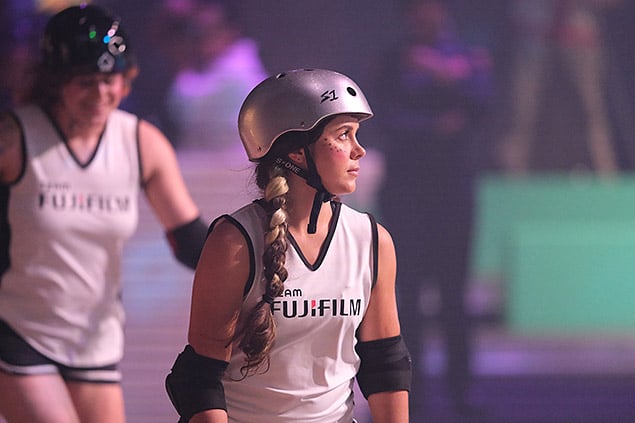
My first real chance to use the X-T3 came at Fujifilm's announcement event in Brooklyn, where they produced a modified roller derby match for the assembled guests to photograph. I won't waste time talking about most of the small tweaks to the body and user interface—there's very little difference between this new model and the X-T2 in terms of how the camera feels and operates. One seemingly tiny enhancement, however, turns out to be quite nice right from the start: the EVF. It's been moved backwards 3mm, which is noticeably more comfortable to use; now my nose doesn't smash up against the LCD as badly.
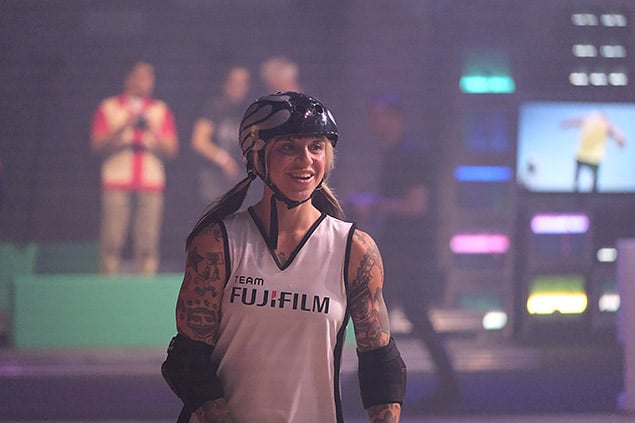
The lighting for the roller derby was atmospheric and murky—not the best for photography—but it certainly stressed the camera's low-light autofocus performance. Of course, we'll reserve final judgment for a full review of the X-T3, but I was impressed with the camera's ability to accurately track erratically moving subjects, in quite dark circumstances, at very high frame rates. I frequently shot at 20 frames-per-second and got a high percentage of sharply focused pictures. It's also true that the no-blackout performance of the EVF at that frame rate significantly improved my ability to frame the skaters accurately as I tracked them. This works, of course, only when you're using the electronic shutter. With the mechanical shutter, there is still a characteristic "slide-show effect" that EVFs exhibit, and which is harder to compensate for than regular SLR mirror blackout.

A brief hands-on with the XF 200mm f/2
Fujifilm also had a handful of samples of their new XF 200mm F2 R LM OIS WR lens on hand, so I took one for a spin. It's not a small lens, but it's certainly manageable for handheld shooting. For a lens like this, it goes without saying that the build quality is excellent, and the control ergonomics are very good—or at least, I didn't find anything to complain about in a half hour of use.

In terms of autofocus, it was very fast and highly accurate, even with a 1.4X teleconverter attached. Because of the limitations of the shooting environment—a single subject and very murky light with junk in the air—I can't make any other informed comments on it, but it sure makes a favorable first impression.
Shooting more subjects in Central Park
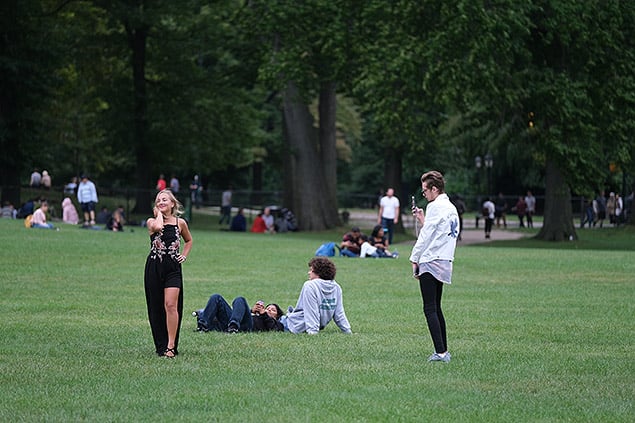
A few days after the roller derby, I did some more shooting with the X-T3 in Central Park. Again, I gave the AF system a workout on bicyclists and rollerbladers, and it performed extremely well, even at 20 frames-per-second. The clear majority of my shots are well-focused. We'll see how the full review pans out, but I have very little doubt that the X-T3 will turn out to be the best autofocusing Fujifilm body yet, especially for moving subjects.

Fujifilm has stressed that the X-T3's new sensor, with its faster readout speeds, significantly reduces rolling shutter distortion. I didn't see any rolling shutter effects in my roller derby pictures, but there's a hint of it in many of the bicycle shots, which show slightly misshapen front wheels. The effect is small—most people wouldn't notice it, but it's there if you look closely. The effect disappeared when I switched to the mechanical shutter, of course, but then I didn't get the blackout-free viewfinder experience, and my framing accuracy suffered. None of my other shots taken with the electronic shutter show anything that I could positively identify as rolling shutter distortion, even some pictures with fast-moving musicians' hands. One quick note: on two of my outings, it was raining lightly most of the time, and it was great to be totally unworried about the X-T3 itself or the two weather-resistant lenses that I was using (an XF 35mm F2 R WR and an XF 50-140mm F2.8 R LM OIS WR).


A quick 4K video sample
Along with its autofocus upgrades, the X-T3's video features are the biggest story around this camera. Obviously, there's a lot to test, and I didn't have the time or equipment to do that (not to mention I'm a bit of a video klutz). But in Central Park, I happened across a group of drummers and got a chance to shoot a quick 4K clip using the Eterna film simulation. Now, the light was lovely, and the scene is interesting, with rich skin tones and a relatively pleasant color palette, so that definitely gives the clip a boost. Still, to my eye, the Eterna profile really looks good here. It made me want to take the X-T3 out and shoot more video. (Just a note: the clip was shot handheld, with only the optical stabilization in the XF 18-55mm F2.8-4 R lens to keep the image steady. Not ideal, but I hadn't intended to shoot any video on that outing.)
Fujifilm X-T3 4K 30p Sample Video 3840 x 2160, 30 fps, Filmed with XF 18-55mm F2.8-4 R lens Download Original (1.69GB MOV) |
Summary
At the launch event, I had a chance to chat with several folks from Fujifilm, and they confirmed our impression that the X-T3, as of now, offers the best overall performance in the Fujifilm lineup, especially for video and autofocus. When I asked what advantages the X-H1 still has, the answer basically boiled down to IBIS (in-body image stabilization), and the larger, more DSLR-like body for folks who prefer that shape. As I mentioned, we won't make any conclusions before we do full tests, but I'm definitely impressed with what I've seen of the X-T3's autofocus performance, overall speed, and video capabilities.

Field Test Part III
Out in the wild with Fuji's enthusiast-grade flagship camera
Introduction
While much of the hype and attention these last few weeks has been focused on Fujifilm's medium format GFX system (and with good reason!) let's not forget about their much-loved APS-C X-Trans cameras, namely their latest SLR-styled enthusiast-grade camera, the Fuji X-T3. Sporting a nearly identical exterior design to that of the X-T2, the X-T3 instead offers major under-the-hood improvements, including a new, higher-resolution APS-C X-Trans sensor, an updated image processor, an improved autofocus system and better video shooting capabilities. On paper, the specs of the X-T3 not only make this camera superior to its predecessor but it also currently gives the flagship X-H1 a run for its money. And money, as well, with the X-T3 coming in at just $1500 body-only compared to the X-H1's $1900 price tag.
Writer and photographer Eamon Hickey got to spend some quality time with the X-T3 already, attending Fuji's X-T3 launch event in New York as well as spending some time with the camera afterwards. In his initial Field Test, he came away initially impressed with the camera's AF performance, speed and video features.
We've now secured our own review unit, and I've now had an opportunity to shoot with the new X-T3 in a variety of environments and with a variety of lenses. In my Field Test "Part II" I'll discuss my take on the camera's design and its handling characteristics. I'll also dive into the X-T3's image quality at both low and higher ISOs as well as exploring its autofocus performance.
Let's get started...

Design & Handling
Okay, so if you're already familiar with the Fuji X-T series, especially the X-T2, you'll feel right at home with the X-T3. Hardly anything has changed with the body design -- hey, if it ain't broke, don't fix it, right? However, as someone who hasn't spent much time shooting the predecessors, the handling and usability of the X-T3 is fairly new to me. That said, I'm not completely in the dark when it comes to Fuji cameras, having reviewed and now own a Fuji X100F.
Let's start with one of the main features you'll notice right away when you pick up the camera for the first time: the grip. Unlike most DSLRs and also SLR-style mirrorless cameras, the body of the Fuji X-T3 (and its predecessors) doesn't offer a sizable handgrip. Not only does this design choice keep the X-T3's size fairly slim and manageable, but it also goes along with the characteristic retro aesthetic Fuji uses in their X Series cameras. Many classic film SLRs didn't feature much of a handgrip either.

As a long-time DSLR user and now-owner of cameras like the Olympus E-M1 II, I usually prefer cameras a with nice, sizable handgrip, even though I wouldn't consider my hands to be particularly large. A larger grip not only helps maintain a solid, secure hold on the camera with just one hand, but it also helps with comfort and balance when using larger, heavier and longer lenses. However, I am actually pleasantly surprised by how nice and comfortable the X-T3 feels in my hand. The front grip only protrudes about a quarter of an inch (not a lot to wrap your fingers around), but when combined with the small but critical thumb notch on the rear of the camera, the X-T3 feels surprisingly secure in my hand.
Paired with a small, lightweight prime lens, the X-T3 feels lightweight and well-balanced as well. Using a medium-sized zoom, such as the 16-55mm f/2.8 or new 8-16mm f/2.8, the pairing certainly seems a bit more front-heavy; I usually shoot two-handed in this situation.
However, I spent a lot of time using the X-T3 with Fuji's long 100-400mm telephoto zoom lens. In this setup, having a deeper grip would greatly help with overall ergonomics, as this lens is quite long and fairly hefty. Fuji sells a battery grip for the X-T3 that not only adds a vertical grip but also includes a small front piece that increases the size of the main handgrip. Unfortunately, I didn't have the grip available to test, but if I were shooting with long, heavy telephoto lenses with the X-T3 on a consistent basis, I'd recommend getting the battery grip (plus, you gain the excellent feature of having three total batteries in-use for super-extended battery life performance).
In terms of the controls and button layout, again, it's nearly identical to that of the X-T2, with the exception of enlarging the drive mode sub-dial and metering mode sub-dial that are sandwiched under the ISO and Shutter Speed dials, respectively. The slightly taller size of these two sub-dials certainly makes them easier to adjust.

Much like the X-T2 and other Fuji cameras, including my X100F, the buttons and dials on the X-T3 feel rather small (well, with the exception of the big three top exposure control dials, of course). The front and rear command dials are rather thin, at only around an eighth of an inch thick, and don't protrude very much out from the body. Most of the buttons, too, are equally tiny, with very little travel when you press them. All that said, however, I never really felt frustrated while operating the camera. Compared to the X-T1, the X-T2/X-T3 has improved 4-way control buttons with a better "click" to them. The front and rear command dials are easy to reach and operate with a nice tactile click that aren't too stiff. Given that the X-T3 uses individual control dials for shutter speed, ISO and aperture (on the lenses), I don't find myself using the front and rear control dials for on-the-fly adjustments all that often, as I would with more a "traditional" camera.
Speaking of the separate control dials, while I own an X100F, for my first time out with the X-T3 I instinctively dove into the menus, the Quick Menu, or the Fn button for the setting to change ISO. It took me a moment to realize, "oh yeah, there's a dedicated ISO dial." Fuji cameras are distinctive in their design and control scheme compared to modern cameras, and if this is your first Fuji camera, it might take a little time getting used to the old-school "Fuji way" of exposure settings adjustments.

With that said though, the X-T3 is extremely customizable. Don't want to use that ISO dial? No problem. In fact, by default, if you rotate the ISO dial to the "A" position, you can then use the front command dial to quickly scroll through the ISO levels as well as three available ISO Auto presets (which are also customizable with sensitivity range and minimum shutter speed). Almost all of the buttons on the camera, labeled or not, can be reassigned to all sorts of different functions to fit your shooting style and needs - a very flexible design. The X-T3 even incorporates customizable swipe gestures into its touchscreen controls, as you see in the screenshot on the right. Swipe in any of the four cardinal directions on the rear screen to toggle settings on and off, or modify screen overlay text, among other options. (More on the touchscreen itself later.)
Other physical features include an updated OLED electronic viewfinder with an increased resolution, going from 2.36-million to 3.69-million. However, according to the specs, the X-T3's EVF has a slightly reduced magnification factor, going from 0.77x on the X-T2 to 0.75x. That's likely an insignificant difference in the grand scheme of things, and while I don't have an X-T2 to compare side-by-side, I must say that the EVF on the X-T3 is excellent. It's bright, crisp and very large with little to no noticeable lag. Compared to the LCD-based EVF on my X100F -- which I quite enjoy -- the X-T3's OLED display offers a much larger view (0.75x vs. 0.48x magnification), as well as better color, brightness and contrast.
The X-T3 maintains the same multi-directional tilting rear LCD as on the X-T2, which I enjoy. As more a stills guy and not a video shooter, I appreciate the tilting screen designs rather than the flip-out "articulated"-style screens. I find it easier to shoot from lower and higher angles with a tilting screen rather than having to maneuver a screen out to the side; it's a personal preference thing, I admit. The X-T3's nifty screen tilts both in the horizontal direction as well as in portrait orientation, which is very helpful, particularly when shooting low-to-the-ground vertical landscape shots with an ultra-wide lens.

The screen's quality is very nice, and I honestly have no complaints about that from using the camera in the field. In terms of glare and usability in bright sun, I didn't experience any problems, though to be fair, if I was outdoors in the sun, I was more often than not using the EVF. The tilting mechanism will help angle the screen some away from from the sun if need be.
A new feature for the LCD is the inclusion of touch functionality. I love having a touchscreen as it provides a really fast way to move the AF point/box right where I need it...usually. In the case of the X-T3, I found the touchscreen to be somewhat laggy and not as responsive to touch as other cameras I've used. It still works, mind you, but I feel like I have to be a little more deliberate in my tapping to move the AF box where want it. As with other cameras, the X-T3 offers a variety of touchscreen functions, including a touch shooting feature, tap-to-focus (where you tap to place the AF box, and the camera automatically focuses on that spot) as well as a tap-to-move the AF box (where you tap to move the AF box but are still required to half-press the shutter button to autofocus).
Both AF touch features work decently well (minus the lag, of course), though you can't touch and drag the AF box around the screen. Oddly, the automatic "tap-to-focus" option won't allow you to use the joystick control after tapping on the screen. Instead, you actually have to tap the "[AF] Off" icon on the screen to deselect the AF box, thus letting you use the joystick control once more to move the AF box -- a process that seems rather unnecessary. The touch-to-shoot function also behaves differently than I've experienced on other cameras. Notice I say "touch"-to-shoot and not "tap"-to-shoot. No, on the X-T3 you actually have to tap and hold your finger on the screen in order for the camera to fire a shot, which I found odd at first and made me think tap-to-shoot didn't work at all for some reason or another. [Editor's Note, 04/30/2019 - Correction: Tap-to-shoot functionality actually works as expected, but behaves differently depending on the autofocus mode. In AF-S mode, tap-to-shoot will immediately fire off a shot, however in AF-C mode, you will need to hold down you finger on the screen for a brief period in order to capture a shot.]
Lastly, I feel it's important to mention weather sealing. I love a camera that I can take out in bad weather, get it dirty, and generally use it without feeling like I need to be overly protective. Now, this is all within reason; I'm not deliberately bashing the camera around or tossing it in the dirt, but the confidence of knowing it can withstand some rain or other water splashes, in particular, is important to me. And, so, I'm happy to report that the Fuji X-T3, along with the weather-sealed XF 8-16mm f/2.8 lens is indeed sealed up nicely against some unexpected rain, as I experienced recently up in the Blue Ridge Parkway in North Carolina. A quick shake and some wiping down with a cloth and the X-T3 and lens fired perfectly fine.

Image Quality
The previous X-T2 earned high praise for its image quality, both at low and higher ISOs, despite an increase from 16MP to a 24MP APS-C X-Trans chip. The X-T3 once again offers a bump in resolution, but not as striking of a change as before, going up to 26MP -- making it one of the highest-resolution APS-C cameras to date. (The Samsung NX1 and NX500 used 28MP APS-C-sized sensors.) Resolving power is nice to have if you need it, but as you increase in megapixels, the dynamic range and particularly high ISO performance can start to suffer as you cram in more and more pixels. For the X-T3, going from 24MP to 26MP is not a major increase in resolution, and as an APS-C camera, I think it still falls into a good range: lots of resolving power yet still excellent high ISO performance.
Speaking of resolving power, the Fuji X-T3 does indeed bring a lot to the table in that regard. Especially at low ISOs and with a sharp lens, the X-T3 is capable of capturing images with fantastic fine detail, excellent colors and a wide dynamic range. I mention "sharp lens" in particular because at first, I spent a lot of time using the 100-400mm lens capturing shots mostly of birds, often far-off birds and birds in flight. I was initially a bit underwhelmed with the level of detail I saw in my photos. The camera and lens seemed to have no trouble with autofocus (except for cases of bad luck and user-error every now and again where I missed focus completely). However, images were sharp and in-focus, but the detail was not as tack-sharp as I had hoped. I decided to check our lens review for the 100-400mm, and as is often the case with long zooms, the lens does indeed show decreased sharpness as you zoom past 300mm. In the end, I needed to rein in my expectations, not only for the level of detail I should expect from an APS-C camera but also from the 100-400mm, which isn't supremely tack-sharp at 400mm.


That said, though, I was able to get very sharp, nicely detailed photos with the X-T3 and the 100-400mm lens, especially if the subject was fairly close.


On another note, when it comes to capturing sharp photos with the X-T3, it's good to remember that this camera doesn't have in-body image stabilization, unlike with the X-H1. I think I've become spoiled by the many, many Olympus, Panasonic and Sony mirrorless cameras that come with robust body-based image stabilization systems that make it easier to capture crisp, blur-free photos in more challenging lighting conditions, especially when combined with optically-stabilized lenses. With the X-T3, I found myself not only with a camera body that lacked IBIS but also frequently with lenses that did not have optical image stabilization (they exist, of course, but most of the Fuji lenses we have lying around IRHQ don't have O.I.S.).
I found myself shooting a lot of indoor events and such with very dim lighting, and in order to get crisp images, especially candid photos of people moving around, I really had to dial-up the shutter speed and subsequently increase the ISO sensitivity quite a bit to compensate. Of course, image stabilization won't help if I'm panning the camera or if my subject is moving. However, trying to capture static portraits and other still subjects in low light is more difficult without some form of stabilization, and I found myself missing this technology. (Dear Fujifilm, please add O.I.S to your XF 16-55mm f/2.8 lens!)

When it comes to dynamic range, even with straight-from-camera JPEGs, I was rather impressed with the tonal range captured. With bright, daylight scenes with heavy contrast, there was still a very good balance of highlight detail with properly-exposed skies and visible, clean detail in the shadows. Of course, using RAW will give you more flexibility to pull out details in both highlights and shadows (should you need to) and the X-T3 is no exception here.

Regarding higher ISO image quality, Fujifilm cameras consistently do very well, with the X-T2 being one of the best APS-C cameras we've seen for high ISO performance. Looking at high ISO images from the X-T3, this camera should earn similar praise once we get to that analysis. Despite increasing the pixel count, the camera is capable of excellent high ISO photos. The new 26MP X-Trans sensor and updated image processor do a great job of producing JPEG images with a high level of detail while removing a lot of unsightly noise. If you look closely at high ISO images, of course, you can see noise, especially once you get up to around ISO 3200, but noise is really finely-grained and not very distracting nor detrimental to the overall image quality. The detail that the X-T3 can capture even at really high ISOs is very impressive. For example, just look at the amount of detail in the squirrel fur in the ISO 12,800 image!



At higher ISOs, I can certainly see the X-T3's noise reduction processing at work, and at really high ISOs, the NR processing can start to look a bit "digital" and artificial-looking. Even though the camera's default level of noise reduction is at "0" on a +/-5 scale, I still see the NR processing a bit too strong for my taste, but overall not too bad since you don't typically "enjoy" photos by looking at them at 100% magnification.

Autofocus
Lastly, I want to talk about my experience thus far with autofocus. I've used the X-T3 in a variety of environments, both indoors and out, and shot subjects using both AF-S and AF-C modes. Overall, the AF performance of the X-T3 is fantastic. The majority of the time, the AF speed is fast... almost too fast, in some ways. I half-press the shutter, and the shot is immediately in focus. It's excellent. I say "too fast" because, in a way, it's kind of unbelievable; you half-press the shutter and the shot is in focus. Boom.

The X-T3's undergone a big upgrade when it comes to autofocus compared its predecessor. For starters, the X-T3 now offers phase-detection AF across the entire sensor by way of 425 total user-selectable AF points -- 100 more selectable points than the X-T2. Also, the sensor itself is comprised of 2.16 million phase-detection pixels on the sensor (up from 0.5 mil) which helps increase the camera's low-light AF sensitivity from -1EV to -3EV. According to Fuji, there have been improvements to how data is read off the sensor to improve focusing in low light and on low contrast subjects, and faster AF/AE processing helps improve subject tracking performance for fast-moving subjects.
In my experience so far, both outdoors in good lighting and indoors with poor or dim lighting, the X-T3 did very well when it came to autofocus performance. As I expected, better lighting conditions yield faster AF performance, especially for larger focusing distance changes. In dim lighting, I did experience a slow-down in AF speeds, but the X-T3 still manages to achieve focus.
Video
(Note: We plan to complete an in-depth Video Review for the Fuji X-T3 in the future. In the meantime, we have a provided a variety of sample videos below from the X-T3.)
Fujifilm X-T3 Sample Video: 4K 24p Standard (Provia) Profile 4K UHD (3840 × 2160), 24p, H.264 Download Original |
Fujifilm X-T3 Sample Video: 4K 24p Eterna/Cinema Film Simulation 4K UHD (3840 × 2160), 24p, H.264 Download Original |
Fujifilm X-T3 Sample Video: F-Log (10-bit) - #2 4K UHD (3840 × 2160), 24p, H.265/HEVC Download Original |
Fujifilm X-T3 F-Log Sample: 10-bit vs. 8-bit Fuji X-T3 F-Log 10bit vs 8bit - Graded 10-bit on Left, Graded 8-bit on Right Download Original |
Fujifilm X-T3 Sample Video: 4K Sample #1 4K UHD (3840 × 2160), 24p, H.265/HEVC (10-bit) Download Original |
Fujifilm X-T3 Sample Video: 4K Sample #2 4K UHD (3840 × 2160), 59.94p, H.265/HEVC (10-bit) Download Original |
Weather Testing
A very well-sealed, sub-frame mirrorless camera
by Dave Etchells | Posted: 07/08/2019
Imaging Resource's weather-testing approach
This is one of an ongoing series of weather-resistance tests of camera systems. Manufacturer claims about weather resistance are all over the map, in part because there's no established standard that's relevant to how photographers actually use cameras. Our aim is to establish a consistent basis for comparing weather resistance between cameras in a way that makes sense for photographers. If you're interested in the details behind the tests, you can read the loooong article I wrote about the rationale behind our camera weather-testing approach.
Camera tested: The Fujifilm X-T3

The Fuji X-T3 was announced in early September 2018, as Fujifilm's flagship APS-C model. (Or rather as one of two "flagships"; they consider the X-H1 to be a flagship model too, just with somewhat different capabilities than the X-T3 -- most notably, that the X-H1 has in-body image stabilization.) The X-T3 incorporates their most advanced autofocus architecture to date, with significant improvements over earlier models in terms of low-light AF ability, better focusing across a wider range of spatial frequencies in the subject, and the ability to detect faces that are much smaller in the frame than was previously possible.
We performed our tests with the Fujifilm XF50mmF2 R WR lens attached. As one of their WR or "Weather Resistant" lenses, it has a rubbery gasket around its base, which seals against the camera's mounting flange, to prevent water from getting in.
Visible weather seals on the X-T3
We don't currently disassemble the cameras we test, so can only comment on the weather seals that are visible when you open the various compartments and peel back the port covers. Based on what we can see from the outside, the Fuji X-T3 appears to be a very well-sealed camera body.
Lens flange
As always, this is a function of the lens in use, rather than of the camera itself. As noted above, we used one of Fujifilm's "WR"-badged lenses, an initialism which stands for "weather-resistant". In this case it was the XF50mmF2, but all WR lenses have a similar structure when it comes to their flanges.

As you can see in the photo, the XR 50/2.0 WR has a rubber lip surrounding the lens flange, which seals against the outer edge of the body flange when the lens is mounted.
This is a little different from the approach used by many manufacturers, in which the seal presses against the surface of the body flange. Such seals are often made of firmer material, and can press more tightly against their mating surfaces. Here, the seal could be thought of as a flexible tube that extends around the edge of the body flange, exerting soft pressure all around the perimeter.
 |
There was quite a bit of water on the X-T3's flange when I removed the lens after the test, but I tend to think it got there when I pulled the lens off. I've since learned better technique for getting water out of lens/body crevices. |
When I removed the lens after test, I found more water on the body flange than I'm accustomed to seeing, but it's hard to say how much of that might have entered during the test and how much just wicked in from the lens/body gap. I tend to suspect the latter as being the primary source. My technique for removing superficial water from camera bodies has recently improved a fair bit, since the time when I put the X-T3 through its paces.

This is a very common issue with many lens/camera sealing systems. If the lens and camera have recently gotten wet, removing the lens will almost always draw at least some water up and onto the body flange, if not into the interior of the camera itself. This can make it a little dicey swapping lenses if you're out in the weather, even if you can shield the camera while you're making the change.
With some designs, you can minimize the amount of water drawn inside by carefully drying the crevice between the lens and the body with something like a microfiber cloth, and then removing the lens very sloooowly. The reason for doing it slowly is that pulling the lens off unavoidably creates a bit of suction, which can draw any wicked moisture inside. If you remove the lens too quickly, this suction could be enough to pull the water into the camera's shutter box. The amount of water is slight, and I've never really experimented with yanking the lenses off quickly, to see where the water might get to (can it make it all the way down onto the shutter?), but my advice is to be very careful opening a wet camera.
Battery compartment
The X-T3's battery compartment seems to be quite well sealed. The silicone-rubber gasket actually extends all the way around the perimeter of the compartment, continuing even behind the latch mechanism. (As always, though, we don't know anything about sealing within the sliding latch itself, because we don't currently disassemble the cameras we weather test.)

We often see gaps in compartment-door seals on cameras around the hinge area, but the Fujifilm X-T3's battery compartment door has a continuous seal around the entire periphery. Well done!
 |
The X-T3's battery compartment presents a smooth surface to the silicone gasket on the door. The small amounts of water seen around the edges here almost certainly just wicked into the small gap between the edges of the gasket and the compartment recess on the body. We found no water inside the battery compartment itself. |
Memory card compartment
The X-T3's memory card compartment seems better sealed than many, with a large slap of silicone-like sealing material covering a lot of the area of the compartment cover, mating against the opposing surface of the body shell. While the huge gasket area is reassuring to see, it's only the ridge that runs along the perimeter that does the actual sealing. Still, the continuous, unbroken seal all around the edge is a more robust design than what we see on most camera bodies. (As we always note, though, we have no idea what sort of sealing protects the sliding latch mechanism, since we don't disassemble the cameras to inspect them.)
 |
The X-T3's memory card compartment door also has much better sealing than we see on most cameras. The door itself has a large slab of silicone rubber covering most of its surface. (While it's only the lip that runs around the edges of the rubber element that actually seals against the opposing body shell parts, it's still reassuring to see such a mass of sealing material! :-) |

Port covers
All of the X-T3's external ports are housed beneath one cover flap, save only for the remote trigger connector, which has a flap of its own.
 |
On the body side, a small raised area holds the port connectors. The projection on the protective flap seals around the edges of this projection. The water seen here is just left over from the crevice between the flap and the camera body; it doesn't represent leakage. |
Fujifilm's engineers seem to adhere to the philosophy of providing continuous perimeter seals all around any doors or flaps on the camera. Here, an unbroken rubber ridge on the compartment door fits down around a boss on the camera body that holds the various connectors. It looks like the ridge actually fits down around the raised area housing the connectors; it's not clear whether it's meant to seal against the vertical edges of that raised area, the lower area around it or both. I'm thinking that it must have at least some sealing action against the vertical walls of the bump, because it wouldn't make sense to me to have interruptions like the embossed symbols and lettering along the front part of the connector cavity on a surface you were counting on to seal against. (On the other hand, though, the features may be shallow enough and the mating seal compliant enough that there aren't any gaps to speak of.)
Whatever the case, while you can see a few tiny drops of water around the edges of the connector area, they're almost certainly just little bits of moisture that had wicked into the gaps between seal and external elements, outside of the protected area around the connectors themselves.
 |
The flap covering the remote jack doesn't have a ridge like we saw on the port cover, but rather just presses in place and seals against the sides of the body recess and against the flat part of the camera body which forms the floor of the recess. |
The flap protecting the remote connector is a little different in design, lacking the kind of raised ridge seen on the main connector flap, but rather seems to rely on the edges of the flap sealing against the sides and face of the recess. It did seem to work as well, in that we found no water beneath it, even after the second, 70-minute exposure to our "heavy rain" precipitation level

Hot shoe/other
The X-T3's flash hot shoe is a pretty standard design, with only the six relatively large electrical contacts that connect to the bottom of the flash's shoe, and it doesn't seem to have any problem with the slight conductivity of rainwater. As usual, we found a fair bit of water on the shoe when we removed the protective cover after the test, but we saw no sign that this was any sort of a problem to normal, non-flash operation of the camera.

Water exposure tests performed on the Fujifilm X-T3
Our baseline weather testing protocol currently involves exposing cameras to simulated rainfall at a rate of 1 cm/hour for 35 minutes, while actuating the camera controls according to a set script. (Our thought being that seals around moving components are more likely to leak when the parts they're sealing are moving relative to each other.) For cameras that successfully pass this test, we give them a double-dose of 70 minutes the following day, to see if they can withstand what most people would consider very heavy exposure.
(For reference, meteorologists refer to rainfall rates greater than 0.75 cm/hour (0.3 in/hour) as "heavy rain". So our current test at 1 cm/hour represents a significant level of rainfall, although it's far from what you'd see in the tropics or a thunderstorm. I suspect that few amateur photographers would be likely to stand out in a rainstorm like this for more than 30 minutes at a time, so it seems like a good test for cameras that claim weather-resistance, and in fact does seem a good level for separating levels of resistance in higher-end camera models. We plan to extend our tests to cover lower-end cameras at lower precipitation rates in a system using custom-designed dripper nozzles, but that's some ways off in the future yet.)
In the case of the Fujifilm X-T3, we exposed it to the 35-minute protocol, and found that it did very well, with no operational problems at all. We put it in our drybox overnight, and then gave it an additional 68-minute exposure the next day.
Functional observations
The X-T3 did pretty well in the tests, with no problems at the 35-minute level, but began having problems about 40 minutes into the 70-minute round the next day. (This isn't at all uncommon; the foam gaskets used in essentially all digital cameras don't actually seal against water, they just slow it down. So if your camera gets wet one day, it's that much more likely to leak the day after. It's quite possible that a dry X-T3 could survive 70 minutes in a single run, if it were completely dry at the outset.) We stopped the test a bit past 68 minutes on the second day, because the camera was freezing regularly at that point.
At least up until the forty-minute mark on the second day's testing, the X-T3 was very usable when wet, and the eye sensor on the EVF was never fooled by water falling on the eyepiece when the camera was in the face-down orientation. The touchscreen is largely unusable when wet, however.
-
Touchscreen is mostly unresponsive when wet(!)
The touchscreens on almost all cameras we've tested to date become either unresponsive or very unreliable when wet, and the X-T3 is no different in this respect. This is likely because the water greatly changes the capacitance of your fingertip, so the electronics have a hard time telling where you're pressing, if they're able to detect a touch at all.
-
Viewfinder eye-detect sensor never false-triggered due to water
This result was more unusual. Many cameras use a small infrared sensor next to the viewfinder eyepiece to automatically switch between the rear LCD and electronic viewfinder when you hold the camera to your eye. A drop of water on the surface can reflect light back into the sensor, fooling it into thinking that you're looking through the eyepiece. Different cameras are more or less sensitive to this, but the Fujifilm X-T3 seemed immune to it. Failure mode once it gets too wet is to freeze, requiring a power toggle
As usual when a camera finally give up the fight in the second day's exposure, I want to underscore that the X-T3 actually did very well in our weather-sealing tests. It passed the standard 35 minute heavy rain test with absolutely no problems, and in fact was more usable than many cameras that we've weather-tested thanks to the eye sensor on the EVF being largely unaffected by the precipitation.
It took 37.5 minutes of additional drenching the following day before it showed any problems at all, but had increasing difficulty beginning at the 40-minute mark. The main symptom was that the camera would randomly freeze, requiring us to toggle the power (turn the camera off and back on again) to restore functioning. After several freezes, we decided to stop the torture, and called a halt at 68 minutes. As noted, though, this was actually quite a good performance, since it withstood 72.5 minutes of simulated heavy rain across two days before it showed any sign of problems at all.Problems go away quickly when the camera dries out again
Also to its credit, the problems cleared up pretty quickly, once it had a chance to dry out. We toweled it off, put it in our 80-liter Ruggard dry box overnight, and when we checked in the middle of the following day, it was fully functional again. (Do note that it can take quite a long time for cameras' foam gaskets to fully dry, so it's a good idea to leave your gear in a low-humidity environment for a good week or so after it's gotten wet.)
That's pretty much it, from a functional standpoint; the X-T3 held up very well in our "heavy rain" test scenario, passing the 35-minute baseline test with flying colors, and withstanding an additional, extended soaking of 37.5 minutes the following day. Let's take a look at what we found on opening the various body compartments. (The short version: We found no overt evidence of water in any interior areas accessible for inspection without disassembling the camera, both after the initial 35 minute exposure and the 68-minute exposure the second day.)
Post-Test Analysis
I've separated the results here into two sections, one for our standard 35-minute test, the other for the results of the second extended soaking the second day. My reason for doing so is that our standard test is actually a pretty rigorous one. It's more rain than most casual users would likely be willing to endure themselves, and it's more than enough to cause poorly-sealed cameras to fail. The longer soaking a day after the first one is intended as a very rigorous test, and deliberately one that very few cameras can survive.
Standard 35-minute "heavy rain" exposure: 100% success
As noted above, the Fujifilm X-T3 performed flawlessly throughout the standard 35-minute test, and we found no trace of water anywhere inside the body that we could access without disassembly. It's wasn't a perfect score, because while the camera didn't show any adverse effects, its touch screen interface was largely unusable when wet. However, it still did better on the usability front than many cameras, as the eye sensor on the EVF was never fooled by drops of water on its surface.
Given that we found absolutely no water anywhere, I won't bother running through all the individual sections normally included here.
Extended soaking the second day: Full functionality for 37.5 minutes of "heavy rain"
As noted above, the X-T3 survived for 37.5 minutes on its second soaking, a very good performance, given that its gaskets were likely still pretty wet from the first day's torture test. Despite having gotten wet to the point of freezing periodically, though, we found no signs of water in any compartments we could readily access.
 |
As I mentioned in the previous image of the lens mount towards the top of this page, although there was quite a bit of water on the X-T3's flange when I removed the lens after the test, I think it got there when I pulled the lens off. |
Lens flange and shutter/sensor box
As noted earlier, we've learned to remove lenses verrry slooowly after a weather test, to minimize water trapped in the crevice between the lens and body getting pulled further onto the flange due to the slight suction that happens as the lens is pulled off. We also try to remove as much of the wicked water as possible before opening, by pressing a paper towel or microfiber cloth tightly into the lens barrel/body gap.
As we've done more tests, we've gotten better at getting water out of the lens/body gap, using the edges of paper towels and microfiber lens-cleaning cloths. While we're only just now finally getting the test results for the X-T3 written up, we did the actual tests on it back in April of this year, so the amount of water you see on the body flange in the photo here reflects our earlier inexperience.

As noted above, the lens/body seal on Fujifilm's WR-badged lenses consists of a rubbery ring that extends from the lens flange down over the outer perimeter of the body flange. We can't really tell how tightly the rubber lip on the lens presses against the perimeter of the body flange, but it must have pretty tight tolerances to be able to slide smoothly over the body flange, yet still provide some resistance against water creeping under it.
That said, we're pretty confident that the water you see on the body and lens flanges in the shots above was simply pulled in from the crevice between the lens mount and the body when we removed the lens after the test, rather than having leaked there during the test itself. (We very often saw this, before we got better at drying off that joint, post-test.)
Memory card slot
We saw no trace of water in the memory card compartment or on the card itself after either standard 35-minute test run or the extended run the second day. It's not uncommon for us to find a few small droplets inside the protected area, that we assume propagated there when we pop the compartment door after a test, but in the case of the X-T3, we found no traces of water at all, even after the second, longer soaking.
(The X-T3 seems to use a silicone-like rubber compound for many of its compartment seals, vs the more typical foam gasket material. We suspect that the foam gaskets are less expensive than silicone rubber, and/or are easier to assemble during production, but silicone rubber is impermeable to water, regardless of the time frame, while foam gasket material only serves to slow down the ingress of water. Given long enough, water will seep through foam gaskets, but it will never seep through silicone rubber ones.)
Port flaps and covers
As noted earlier, the seal between the connection-port area and the door that covers it consists of a rubbery ridge on the door that fits down over a raised area on the body that holds the connectors. It seems that the sealing action must be between the walls of the ridge and the sides of the raised "connector plateau".
As far as we can tell, this seems to be a pretty effective seal, because we found no signs of water up on the raised area surrounding the connectors themselves. There were droplets of water outside the protected area, including immediately around the raised plateau around the connectors, but no sign of any water near the ports themselves.
As we described earlier, the cover protecting the X-T3's remote jack had a somewhat different gasket design, that looked like it sealed against the sides of the connector recess and also against the surface of the camera body in the recess itself. It didn't strike us as quite so positive a seal as the main port cover provided, but it nonetheless seemed to do a fine job, since we found no signs of water in this area after our test.
Battery compartment
The battery compartment is where we usually find signs of water, if a camera leaked during a test. The top-right control cluster on most cameras is where the most-used controls are located, including the shutter button, various quick-access buttons for things like exposure compensation, sensitivity or other frequently-used functions, and typically front/top and rear control dials for setting things like aperture or shutter speed, or scrolling through menu entries. There are a lot of interfaces between things that have to move and the camera body, so a lot of seals are needed, and ones that can handle motion between the surfaces they're sealing against. When water gets in through one of those routes, it often ends up in the battery compartment.
With the Fujifilm X-T3, we found no signs of water whatsoever in the battery compartment, even after the extended soaking the second day. Water obviously made its way into the interior of the camera body starting about 40 minutes into the second day's exposure (a total of ~75 minutes of "heavy rain"), given the random freezing we encountered beginning at that point, but we found no signs of any inside the battery compartment.
Also, as mentioned above, Fuji seems to have used silicone-rubber gasket material for all their compartment covers, rather than the more common foam gasket material that only slows water down, rather than stopping it.
Viewfinder
The X-T3's viewfinder showed no signs of water incursion throughout our testing, and as noted the eye sensor was never fooled by water droplets on its surface.
We've sometimes found water inside viewfinder optics or condensation on inner elements after our weather-resistance tests, but saw no signs of any such problems with the Fuji X-T3.
Summary: How weather-resistant is the Fujifilm X-T3?
Overall, the Fujifilm X-T3 seems to be very well-sealed against the weather. It passed our standard 35-minute "heavy rain" test with flying colors, and whilst its touch screen didn't work when wet, its eye-detect EVF sensor worked throughout. Beyond that, it stood up to just under 40 minutes of the same soaking the day after, impressive given that its gaskets would already have been pretty wet from the first day's test. And even after this extreme soaking, it returned to full functioning after just overnight drying.
Bottom line, the Fujifilm X-T3 has very good weather-sealing, and we'd have no qualms about using it for short intervals in heavy rain, and for longer periods of time in light rain or drizzle.
According to our rating scale (which you can read about here), we give it a rating of EPRS Level 4 (35 minutes).
Conclusion
The X-T3 is an amazing camera, the best camera of 2018, in fact.
The End.
OK, sure, let's go into a little more detail about our final verdict on the X-T3, Fujifilm's enthusiast-class, high-performance, higher-resolution, SLR-styled APS-C mirrorless camera...
This latest version of Fujifilm's higher-end X-T model sports a lot of new features and upgrades, mainly under the hood, as the exterior design is strikingly similar to the X-T2. The imaging pipeline gets a big overhaul, with a new 26MP BSI X-Trans APS-C sensor and an all-new quad-core image processor, and at the same time, the AF system has undergone a significant upgrade with faster tracking performance, more AF points and better coverage across the sensor, and improved low-light AF sensitivity. It adds up to quite a bit improved!
The exterior gets minor refinements, and the chassis construction is a bit beefier than the predecessor. But overall, Fujifilm appears to have taken an "if it ain't broke, don't fix it" approach to the X-T3's design, and we're okay with that because it's a really nice one. It has lots of external controls, and a compact yet robustly weather-sealed design that's still comfortable to hold.
Overall, the Fuji X-T3 is an extremely versatile camera, featuring fantastic image quality and performance, making it well-suited for lots of different types of photography. What's more is the fact that Fujifilm priced this camera very aggressively; despite the fact that this is one of their flagship APS-C models, the X-T3's $1500 price point not only makes it more affordable for a wider range of photographers but it's also less expensive than a number of competing mirrorless cameras, such as the smaller-sensored Olympus E-M1 Mark II.
Design & Ergonomics
As mentioned, not a lot has changed when it comes to the X-T3's construction or overall design compared to the previous model, save for some slight durability improvements to the lens mount and base of the camera. As before, there are numerous buttons and dials, a majority of which are exhaustively customizable. What's more, with the X-T3's new touchscreen display, even swipe gestures are used as customizable functions. There's also a new, higher-res OLED EVF that looks outstanding.
The X-T3 maintains that distinctive blend of retro SLR styling with modern tech and features. Like most Fujifilm X series cameras, the X-T3 uses separate exposure dials in place of a traditional PASM mode dial. The lack of a PASM mode dial might be somewhat confusing for first-time Fuji owners, but you'll quickly get used the "Fuji way" of changing exposure modes (which many of us at IR simply love).
Given the similarities in design, the X-T3 feels very familiar to the X-T2 in the hand; the size and control layout is basically the same. The buttons and dials, while plentiful, still feel a bit small for this decently-sized camera body. The handgrip, too, remains fairly shallow, which helps maintain a sleeker more compact shape. The camera is still very comfortable to hold most of the time, even for those with larger hands, but it can be a bit awkward when using longer, heavier lenses. If you shoot a lot of sports and wildlife with bigger lenses, we definitely recommended getting the optional VG-XT3 vertical battery grip (the extra battery life benefit is also a big plus). Or you could just add the MGH-XT3 metal hand grip if you want to improve handling without all the bulk of a battery grip.
The new touchscreen display is a nice addition, giving you another way to quickly move the AF point around in addition to the joystick control. There's also tap-to-shoot functions, as well as the ability to utilize swipe gestures as additional Function buttons. The touchscreen works well, and with the latest firmware update to v3.0, Fujifilm has made some noticeable improvements to the touchscreen's responsiveness compared to our previous experience with earlier firmware.
Image Quality & Video
There's not much to complain about when it comes to the X-T3's image quality. Fujifilm's APS-C cameras have a long history of excellent image quality performance, at both low and high ISOs, and the X-T3 is no exception. The X-T3's all-new 26MP X-Trans CMOS IV sensor offers a modest upgrade in resolving power compared to the 24MP X-T2 and offers a native ISO range with a slightly lower base ISO of 160. At low ISOs, the X-T3's images are sharp, clean and filled with lots of fine detail as well as nice, vibrant colors. As usual, Fujifilm's unique Film Simulations are enjoyable and, in fact, are a great way to make pleasing images straight from the camera without having to use any editing (plus, with in-camera raw processing, you can also try multiple film simulations from a single shot).
When it comes to high ISO quality, given the history of Fujifilm's APS-C X-Trans cameras and the fact that the X-T3 now uses a backside-illuminated sensor, it's no surprise that this camera does a fantastic job at low-light and high ISO image quality. In our testing, the X-T3 produced very clean, detailed images up to ISO 800, and we only really observed objectionable noise levels at ISO 12,800 and higher. Much like the X-T2, the new X-T3 does a fantastic job at print quality as well, even offering a nice 8 x 10 inch print, for instance, up until ISO 12,800. Interestingly, though, we did see slightly higher noise levels in the X-T3's images (both in JPEGs and raw files) compared to the X-T2's, which is perhaps due to the greatly enhanced PDAF system and/or faster readout performance. Nevertheless, the X-T3 continues Fujifilm's tradition of excellent high ISO performance for an APS-C camera.
Though traditionally a more stills-oriented camera, the X-T3 is impressively well-stocked with video features and performance as well, making it much more of a capable hybrid camera than its predecessors, and in fact many of its competitors. With features such as 4K UHD and Cinema 4K shooting resolutions, 4K up to 60p, bitrates up to 400Mbps, F-Log and internal 10-bit recording as well as 4:2:2 10-bit HDMI out, the X-T3 offers a host of professional and advanced video recording options not often found in a camera of this class, and it even has a few firsts for an APS-C camera.
Early Fujifilm X-Trans cameras struggled with video quality, often displaying odd artifacts, but the X-T3's video quality is excellent. Things have definitely changed. 4K video is crisp and detailed with vibrant, rich colors. As with stills, video mode lets you enjoy Fujifilm's nifty Film Simulations, but there's F-Log as well for those who want more control over their footage for post-processing. We still noticed some rolling shutter artifacts in X-T3 4K footage, but compared to that from the X-T2, there's significantly less from the X-T3, at least in 4K 24p footage.
Further upping the video quality is the ability to record in 4:2:0 10-bit internally, however the quality difference between 8-bit and 10-bit is extremely slight if at all noticeable if you're recording video without F-Log. The main benefit to 10-bit is better color reproduction with smoother transitions between similar tones (gradients), which really only becomes apparent once you color grade Log footage. With the straight-out-of-camera non-Log footage we shot, we were unable to spot any significant difference between 8-bit and 10-bit video.
Autofocus & Performance
In addition to its imaging pipeline, the X-T3 sports a vastly upgraded autofocus system with faster overall speed and tracking capabilities, improved low-light performance and many more on-chip phase-detect pixels as well as 100 more selectable AF points than the X-T2. Both in the lab and out in the field, the X-T3's autofocus performance was top-notch. Single-shot AF was swift, and C-AF was equally impressive. Like the X-T2 before it, there are several C-AF presets that let you dial-in focus tracking performance depending on the subject type and your shooting scenario. While the presets will help AF tracking performance in specific situations, we found that even the standard/default general-use AF tracking preset performed really well. The X-T3 did an excellent job with subject tracking even with straight-on moving targets.
There's little use in having a camera that's great at subject tracking if there are no continuous shooting capabilities to go alongside it, and thankfully the X-T3 is no slouch in this regard either. With both high-speed and low-speed continuous burst rates, each with their own adjustable frames-per-second settings as well as a cropped burst mode that climbs up to 30fps, the X-T3 offers a dizzying array of shooting modes for capturing action subjects of all speeds. Thanks to its new, super-fast quad-core image processor and dual UHS-II SD card support, the X-T3 combines fast burst shooting with good buffer depths and reasonably fast clearing times. Plus, the X-T3 now lets you access all continuous shooting rates and enable its "Boost" performance mode without the need for the add-on battery grip as you did with the X-T2 (with the X-T2 you weren't able to access its fastest burst rates without the Grip and Boost Mode).
Summary
Overall, the Fujifilm X-T3 is a very impressive, very well-rounded camera, for both photos and video. Despite its stylish exterior, the X-T3 is a serious camera with serious image quality and performance capabilities -- and all for one seriously excellent price point. The image quality is fantastic at low and higher ISOs and is one of the best APS-C cameras we've ever come across in this regard. The X-T2 already offered a major overhaul to the X-T1's AF system, and the X-T3 goes even further with even more AF points, better speed and better tracking performance, making the X-T3 an excellent camera for sports, wildlife and all manner of subjects. Video AF is quite smooth and pleasing, as well.
There's not a lot of to complain about with the X-T3. The lack of in-body image stabilization is, perhaps, the most prominent missing feature here. Several Fuji lenses have optical stabilization, but the addition of IBIS would have been convenient, allowing for even more powerful stabilization with OIS lenses or simply having IS with any lens you use. The X-H1 is currently the only Fujifilm ILC available to offer IBIS, and we would have loved to see that tech in the X-T3. Other drawbacks are even more minor, such as some of the buttons and dials feeling small and somewhat flimsy, and the touchscreen not being as responsive as we'd like. But again, the price is incredible, so you can't have everything!
In the end, for those who want a mirrorless camera that expertly blends form and function, look no further than the Fuji X-T3. The fact that it's priced at just $1500 body-only (cheaper than the X-T2's launch price) makes it a fantastic bang for your buck. Given all these positives, it's no wonder the X-T3 earned the top spot as the Best Camera of 2018, and of course, it's therefore a shoo-in for a Dave's Pick, as well!
Pros
- Great image quality from both JPEGs and raw files
- Excellent high ISO performance for an APS-C camera
- Very good dynamic range
- Excellent hue accuracy
- Useful film simulation modes
- Separate highlight and shadow contrast control
- D-Range features work well to preserve highlights in JPEGs
- Improved hybrid autofocus system
- Able to autofocus in extremely low light
- Very fast AF-S speeds
- Very good AF-C performance
- Low shutter lag
- Quick shot to shot times
- Swift 11fps full-res burst mode with mechanical shutter, 20fps with e-shutter (no booster grip required)
- 30fps bursts in 1.25x crop mode
- Good buffer depths with decent clearing times
- Lots of physical controls & dials
- Handy joystick control
- Compact design with slim handgrip (but see Con)
- Weather-sealed construction
- High-res 3.69M-dot OLED EVF
- 3-way tilting touchscreen LCD
- Very good coverage accuracy from EVF and LCD monitor
- Dual UHS-II SD slots
- Mechanical shutter speeds up to 1/8000s, electronic up to 1/32,000s
- 1/250s x-sync speed
- PC-Sync socket
- DCI 4K video, 4K UHD up to 60p
- Full HD video up to 120p
- HEVC/H.265 10-bit 4:2:0 recording supported
- 10-bit 4:2:2 HDMI output
- External mic and headphone jacks
- USB-C (USB 3.1 Gen 1) port
- Built-in Wi-Fi and Bluetooth
- Decent battery life for a mirrorless camera
- Optional VG-XT3 vertical battery grip can almost triple battery life
- Internal USB charging is supported even though dedicated battery charger is included
Cons
- Slightly higher noise levels than predecessor
- Auto and incandescent white balance struggle in tungsten lighting
- Precise manual focus is tricky with fly-by-wire focusing, plus focus can change unexpectedly when adjusting other unrelated settings
- Shutter pre-press penalty
- No IBIS
- Slight crop for 4K 60p video (1.18x)
- Rolling shutter still visible in video, but it's much improved over the X-T2
- 10-bit HEVC video can be difficult to playback, edit depending on your computer setup
- Slim handgrip can make camera feel unbalanced with large, heavier lenses (recommend getting battery grip)